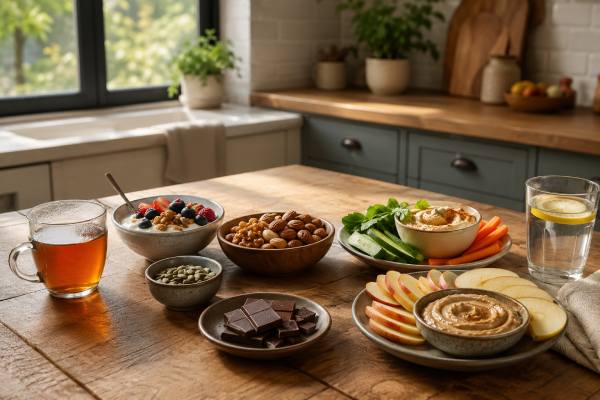
Snacks are often treated as nutritional background noise: a few crackers in the car, a bar at your desk, something sweet to get through the afternoon. But what you eat between meals can shape the quality of your overall diet, and that matters for immune health. The immune system depends on steady access to energy, protein, vitamins, minerals, fiber, and plant compounds that help support barrier tissues, gut microbes, and normal inflammatory balance. A good snack will not “boost” immunity in the marketing sense, and it will not cancel out chronic sleep loss, high stress, or a low-quality diet. What it can do is help close common nutrient gaps. The best immune-healthy snacks are usually simple: minimally processed, rich in nutrients, and balanced enough to keep you satisfied. This guide explains what to look for, what to keep on hand, what to limit, and how to make between-meal eating genuinely useful.
Quick Overview
- Snacks that pair protein with plant foods can help fill nutrient gaps that matter for normal immune function.
- Fruit, vegetables, yogurt, kefir, nuts, seeds, beans, and whole grains usually offer more immune-supportive value than candy, chips, and sugary bars.
- No single snack strengthens immunity on its own; the benefit comes from consistent eating patterns and better overall diet quality.
- Food allergies, diabetes, kidney disease, and immune compromise may require modified choices and closer food-safety habits.
- A practical default is to build most snacks from one protein-rich food plus one fruit, vegetable, or other high-fiber plant food.
Table of Contents
- Why Snacks Matter
- Nutrients to Build Around
- Best Foods to Keep
- Snack Combos That Work
- What Undercuts a Good Snack
- How to Make It Stick
Why Snacks Matter
An immune-healthy snack is not a miracle food. It is a small eating occasion that helps you meet the same core needs that support the rest of your health: enough total calories, enough protein, enough fiber, enough vitamins and minerals, and a dietary pattern that is not dominated by highly refined, ultra-processed foods.
That matters because the immune system is not a separate organ you switch on with one ingredient. It relies on many systems working together. Your skin and mucosal linings need adequate nutrition to stay intact. Your gut microbes respond to what you feed them. Immune cells need amino acids, fatty acids, vitamins, and minerals to do routine repair and defense work. When snacks improve your overall intake, they can support that bigger picture.
For many people, snacks are where diet quality either improves or falls apart. A balanced lunch can easily be followed by a long gap filled with sweet coffee drinks, vending-machine food, or a series of low-satiety nibbles. That pattern often crowds out foods that deliver more useful nutrition. On the other hand, a smart snack can steady energy, reduce evening overeating, and make it easier to eat enough produce, legumes, cultured dairy, nuts, or seeds over the course of a week.
A good between-meal snack usually does at least three things:
- It provides staying power, often through protein, fiber, or both.
- It adds nutrients or bioactive compounds that your main meals may miss.
- It is realistic enough to repeat, which matters more than nutritional perfection.
This is one reason broader food patterns matter more than branded “immune” products. If you want a bigger picture of what supports immune nutrition overall, a practical grocery-first approach to immune-supportive foods is more useful than chasing specialty powders or gummies. It also helps to understand the gut and immune connection, because many strong snack choices work in part by feeding the microbiome and supporting the gut barrier.
One more point matters: snacks should support normal immune function, not promise exaggerated effects. A kiwi and yogurt cup, hummus with carrots, or nuts with fruit may help you eat better. None of them will prevent every infection. The real value is steadier nutrition, fewer major gaps, and a more resilient routine over time.
Nutrients to Build Around
When choosing snacks for immune health, it helps to think in terms of nutrient clusters rather than single “superfoods.” The most useful snack choices tend to combine several of the following.
Protein is a strong place to start. Immune cells, antibodies, enzymes, and repair processes all depend on amino acids. Snacks that include Greek yogurt, kefir, cottage cheese, edamame, roasted chickpeas, tofu, eggs, or nut and seed combinations often keep you fuller and make it easier to meet your daily needs.
Fiber and prebiotic carbohydrates matter because they help nourish beneficial gut microbes. Those microbes produce compounds that support gut lining health and help regulate immune activity. Fruit, vegetables, oats, beans, lentil snacks, chia, flax, nuts, and whole-grain crackers all contribute. If you want to go deeper on this angle, the link between fiber and immune defense is one of the most practical nutrition topics in this space.
Vitamin C-rich foods are especially snack-friendly. Kiwi, citrus, strawberries, bell peppers, and even some cruciferous vegetables fit easily into between-meal eating. Vitamin C is not only associated with citrus fruit, and it does not need to come from a megadose supplement to be useful.
Vitamin A precursors and colorful plant compounds are found in orange, red, purple, and deep green produce. Carrots, red peppers, mango, berries, and leafy greens bring carotenoids and polyphenols that support normal immune function and oxidative balance.
Minerals such as zinc, selenium, iron, copper, and magnesium also matter, although snacks are only one part of meeting those needs. Pumpkin seeds, cashews, yogurt, beans, fortified cereals, and seafood-based snacks can contribute. If you are wondering whether food or supplements deserve your attention, a grounded review of which vitamins and minerals matter most helps put snack choices in perspective.
Healthy fats from nuts, seeds, olives, avocado, and some fish-based snacks can improve satiety and help make a snack feel like real food. They also tend to travel with other beneficial nutrients rather than empty calories.
Fermented foods and live cultures may be valuable for some people, especially when they are part of a broader diet rich in fiber. Yogurt and kefir are the most accessible examples. The key is not to assume every fermented or probiotic product has the same effect. Strains, food matrix, sugar content, and regular use all matter.
Put simply, the best snack is rarely the one with the loudest health claim on the package. It is the one that gives you a meaningful amount of protein, fiber, or micronutrients while fitting your appetite, schedule, and health needs.
Best Foods to Keep
If you want better snacks, the easiest strategy is to stock better defaults. Most immune-healthy snack foods fall into a few dependable categories.
Fruit is one of the best. It is portable, naturally rich in water and fiber, and often high in vitamin C or polyphenols. Kiwis, oranges, berries, apples, pears, and grapes all work. Pair fruit with something richer in protein or fat when you need more staying power.
Vegetables deserve a place in snacking, even though many people reserve them for meals. Baby carrots, sliced bell peppers, cucumbers, cherry tomatoes, sugar snap peas, and radishes are easy to keep on hand. They work well with hummus, bean dips, cottage cheese, or yogurt-based dips.
Yogurt and kefir are especially useful because they can provide protein, calcium, and, in some products, live cultures. Plain or lightly sweetened versions are usually a better base than dessert-style cups. If fermented dairy is new to you, a practical guide to starting fermented foods without stomach upset can help. It is also worth understanding what yogurt labels really mean, because “live cultures” and probiotic claims are not identical.
Nuts and seeds are compact and nutrient-dense. Almonds, walnuts, pistachios, pumpkin seeds, sunflower seeds, and chia can add healthy fats, magnesium, vitamin E, zinc, or selenium depending on the mix. They are easy to overeat mindlessly, so pre-portioned containers can help.
Legume-based snacks are underrated. Roasted chickpeas, edamame, black bean dip, lentil crackers, and hummus bring fiber plus plant protein. They tend to be more filling than refined crackers alone.
Whole-grain basics can still play a role. Oatmeal cups, high-fiber crispbreads, or whole-grain crackers are most useful when they support other foods rather than becoming the whole snack. Whole grains are more helpful when they come with texture and fiber, not just a whole-grain label.
Simple protein foods such as boiled eggs, cottage cheese, tofu cubes, turkey slices from trusted sources, or canned fish can be excellent choices when you need a more substantial snack. For people who are immunocompromised, food safety matters more here than novelty: keep cold foods cold, watch expiration dates, and avoid risky products such as unpasteurized dairy.
You do not need every category in your kitchen. Choose five or six that you genuinely enjoy, then keep them visible, easy to grab, and easy to pair.
Snack Combos That Work
The easiest way to build a better snack is to stop thinking in terms of single items and start pairing foods. One produce-rich food plus one protein-rich or fat-rich food is a strong default. That combination is more likely to satisfy hunger, support steadier energy, and add useful nutrients.
Here are dependable combinations that work well in real life:
- Greek yogurt with berries and chia seeds
This gives you protein, fiber, and colorful plant compounds in one bowl. - Apple slices with peanut or almond butter
Fruit plus healthy fat and a little protein is simple and travel-friendly. - Carrots, bell peppers, or cucumbers with hummus
This is one of the best low-effort ways to eat more vegetables between meals. - Kefir with a kiwi or orange
A good option when you want a quick, drinkable snack that still has substance. - Cottage cheese with pineapple, tomatoes, or cracked pepper
This works for people who prefer savory or need more protein. - Roasted chickpeas with fruit
A useful shelf-stable combination for work or school. - Whole-grain crackers with tuna or salmon
More substantial, especially on active days or when lunch is delayed. - Edamame with citrus fruit
High in plant protein and easy to portion. - Overnight oats with yogurt and walnuts
A strong choice after exercise or on long afternoons. - Trail mix built from nuts, seeds, and a small amount of dried fruit
Better than candy-heavy mixes, especially when portions are controlled.
This pairing approach is also practical for people trying to improve recovery from training, illness, or under-eating. A snack does not need to be large, but it should do something meaningful. For example, if your workouts are frequent or meals are light, adding enough daily protein becomes more important. If you tend to ignore fluids until you feel worn down, snacks that include fruit, yogurt, soup, or other fluid-rich foods can support hydration as part of immune resilience.
The goal is not to snack constantly. It is to make snacks count when you need them. One or two balanced snacks each day is enough for many people, especially when meals are consistent.
What Undercuts a Good Snack
The biggest problem with many snacks is not that they are enjoyable. It is that they are built almost entirely from refined starch, added sugar, salt, and flavor engineering, with very little protein, fiber, or micronutrient value. They create the feeling of having eaten without doing much nutritional work.
This does not mean you need to fear every sweet food. It does mean you should notice patterns. A granola bar with minimal fiber and protein, a pastry with coffee, or a bag of chips in the late afternoon may briefly raise energy and then leave you hungry again. Repeating that pattern every day can crowd out foods that would better support diet quality.
A few common problems show up again and again:
- Too little protein or fiber.
A snack that digests quickly is more likely to send you looking for more food soon after. - Heavy reliance on liquid sugar.
Sweetened coffees, juices, energy drinks, and wellness shots can add sugar without much satiety. - Health halo packaging.
“Immune,” “natural,” “superfood,” and “vitamin-packed” are not the same as balanced or useful. - Overly restrictive snacking rules.
Skipping food all day and then becoming ravenous at night often backfires. - Confusing supplements with snacks.
Gummies and shots are not a substitute for actual food.
It is also wise to be cautious about the broader snack pattern, not just individual items. Diets high in heavily processed convenience foods tend to displace more protective foods over time. If you want a clearer picture of how refined, low-fiber eating patterns can affect health, it helps to look at the discussion around ultra-processed foods and inflammation. The same goes for common claims about whether sugar directly weakens immunity; the more useful question is often what sugary foods are replacing.
Finally, watch the “perfect snack” trap. An elaborate recipe you never make is less helpful than a simple combination you repeat five days a week. Better snacking is usually built on consistency, not purity.
How to Make It Stick
The best immune-healthy snack is the one you will actually prepare, carry, and eat before you get overly hungry. That makes planning more important than nutrition trivia.
Start by choosing a short list of repeat options. Most people do well with two or three refrigerated snacks, two shelf-stable snacks, and one travel backup. For example: yogurt cups, cut vegetables and hummus, fruit, a nut-and-seed mix, roasted chickpeas, and whole-grain crackers. That is enough variety without turning your kitchen into a health-food project.
Next, match snacks to real situations:
- At work: portable, low-mess options such as fruit, nuts, yogurt, or edamame.
- In the car or when flying: sturdier choices that do not melt or spill easily. A small travel plan matters, especially if you are trying to maintain better immune support while flying.
- After workouts: emphasize protein plus carbohydrates.
- During stressful weeks: choose snacks that are easy to reach for when decision-making is low.
- During illness recovery: focus on foods that are gentle, hydrating, and easy to tolerate. Between-meal eating can be useful when appetite is low, and some people benefit from a broader plan for the recovery period after being sick.
Portioning also helps. Prepping grapes, washing berries, slicing peppers, or dividing nuts into small containers can turn a good intention into a repeatable habit. You do not need strict calorie math, but it is smart to notice whether a snack is helping you bridge to the next meal or just extending grazing all day.
A few final adjustments matter for specific groups. People with diabetes may need closer attention to carbohydrate balance. People with kidney disease may need limits on potassium, phosphorus, or protein. Anyone with severe food allergies needs obvious avoidance, not “healthy” experimentation. Immunocompromised people should be more careful with refrigeration, expiration dates, and risky foods such as unpasteurized products.
In the end, immune-healthy snacking is not about exotic ingredients. It is about building small, reliable eating moments around real food: protein, plants, fiber, fluids, and enough variety to cover the week.
References
- Dietary Modulation of the Immune System 2024 (Review)
- Exploring the Impact of Personalized Nutritional Approaches on Metabolism and Immunity: A Systematic Review of Various Nutrients and Dietary Patterns 2024 (Systematic Review)
- Beneficial Effects of Yoghurts and Probiotic Fermented Milks and Their Functional Food Potential 2022 (Review)
- Probiotics for preventing acute upper respiratory tract infections 2022 (Systematic Review)
- The relationship between nutrition and the immune system 2022 (Review)
Disclaimer
This article is for educational purposes only and is not medical advice. Snacks can support normal immune function as part of an overall eating pattern, but they do not diagnose, treat, or prevent disease on their own. If you have diabetes, kidney disease, food allergies, a digestive disorder, trouble maintaining weight, or a condition or medication that affects immunity, get personalized guidance from a qualified clinician or registered dietitian before making major dietary changes.
If you found this article useful, consider sharing it on Facebook, X, or another platform you use.