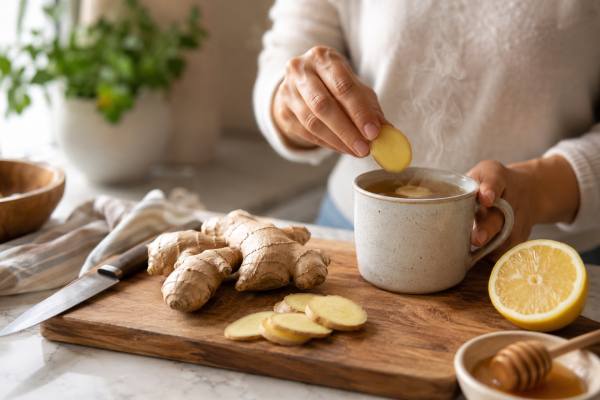
Ginger has a way of sounding both ancient and modern at once. It is a kitchen staple, a traditional remedy, and a common ingredient in immune support teas, shots, and supplement blends. That familiarity can make it seem uncomplicated, but ginger sits in a tricky space between food and therapy. People often use it to soothe a sore throat, settle an upset stomach, or support recovery during cold season, yet the evidence is stronger for some uses than others.
That is what makes ginger worth a closer look. It may not “boost” the immune system in the dramatic way marketing suggests, but it does appear to influence inflammation, oxidative stress, and some symptoms that often show up during illness. The real question is not whether ginger is healthy in the abstract. It is when it actually helps, how to use it well, and where safety and dose still matter.
Quick Facts
- Ginger may help calm nausea and may modestly support inflammatory balance, but it is not a proven shield against everyday infections.
- Warm ginger drinks can be useful for throat comfort, hydration, and symptom support during mild illness.
- Most benefits appear to come from regular, moderate use rather than very high doses or “wellness shot” habits.
- Ginger can cause heartburn, abdominal discomfort, or drug interaction concerns, especially with blood thinners and some diabetes medications.
- For most adults, ginger works best as a food or simple tea first, with supplements reserved for more specific reasons and more careful label checking.
Table of Contents
- What Ginger Can and Cannot Do
- How Ginger Affects Immune Function
- Best Evidence-Backed Uses
- Tea, Fresh Root, and Supplements
- How Much and How Often
- Safety, Interactions, and Red Flags
What Ginger Can and Cannot Do
Ginger is often sold with language that blurs the line between comfort, prevention, and treatment. In real life, its role is narrower and more useful than the broad promise of “immune boosting.” Ginger is better understood as a supportive tool. It may help the body handle certain symptoms and may influence pathways related to inflammation, but that is not the same as preventing infection or replacing medical care.
A good way to think about ginger is through the lens of immune resilience. A resilient immune system is not one that is constantly pushed harder. It is one that responds appropriately, recovers efficiently, and is not dragged off course by chronic irritation, poor sleep, excess alcohol, or a low-quality diet. Ginger may fit into that picture because its bioactive compounds, especially gingerols and shogaols, appear to interact with pathways tied to oxidative stress and inflammatory signaling.
That does not mean the average person should expect ginger to stop a cold, prevent the flu, or shorten every respiratory infection. The direct human evidence for infection prevention is limited. Some lab and animal findings are promising, and ginger has biologically plausible actions, but those findings should not be overstated. What matters most in people is whether those effects translate into practical outcomes. So far, that translation looks strongest for nausea relief and somewhat weaker, though still interesting, for inflammation-related support and symptom relief during illness.
This distinction clears up several common misunderstandings:
- Ginger is not a substitute for vaccines, sleep, nutrition, ventilation, or hygiene.
- Ginger is not a reliable treatment for bacterial infections.
- Ginger is not automatically better because it is “natural.”
- Ginger is not useless, either. It can be practical when used for the right reasons.
For many adults, the most reasonable expectation is that ginger may help with comfort, recovery support, and daily dietary quality. It can make warm fluids more soothing, meals easier to tolerate when appetite is low, and a generally anti-inflammatory eating pattern more appealing. That matters because small improvements in what you can actually sustain often do more than strong claims attached to one ingredient.
The other reason ginger is worth including in an immune health discussion is that it is accessible. Unlike highly marketed supplement stacks, it can be used as a food first. Fresh ginger in soup, grated into stir-fries, or steeped in hot water is a very different proposition from taking several concentrated capsules a day. Food-level use usually brings less risk and makes fewer promises.
So the balanced bottom line is simple: ginger may support some parts of immune-related wellness, especially symptom comfort and inflammatory balance, but it should be framed as an adjunct, not a cure or a shield.
How Ginger Affects Immune Function
Ginger’s relevance to immune health starts with chemistry. Its best-known active compounds include gingerols, shogaols, paradols, and zingerone. These molecules appear to influence cell signaling related to inflammation and oxidative stress. That matters because immune defense is not just about killing pathogens. It also depends on controlling how intense the inflammatory response becomes and how quickly the body returns to balance.
One of the main proposed effects of ginger is on inflammatory messengers. Human research and pooled analyses suggest ginger supplementation may reduce some markers linked with chronic low-grade inflammation, including C-reactive protein and tumor necrosis factor alpha in certain study populations. That does not prove ginger will improve every inflammatory condition, and results are not uniform across all markers, but it supports the idea that ginger may gently shift the inflammatory environment in a more favorable direction.
This matters because chronic inflammation can interfere with recovery, metabolic health, and overall immune balance. A body that is constantly handling low-grade inflammatory stress is not necessarily better prepared for real threats. Ginger’s potential value may lie in helping reduce background inflammatory burden rather than “turning up” immunity.
Ginger may also influence oxidative stress. Illness, hard training, poor sleep, and chronic disease can increase the production of reactive oxygen species. In moderation these molecules are part of normal biology, but in excess they can contribute to tissue stress and prolonged inflammation. Ginger’s antioxidant properties are one reason it is often grouped with other plant compounds that support a steadier internal environment.
There is also interest in ginger’s effects on immune cells and mucosal surfaces. Experimental data suggest ginger compounds may interact with macrophages, neutrophils, dendritic cells, and T-cell related signaling. These are meaningful findings, but they should be interpreted carefully. Effects in cell culture or animals do not always predict useful outcomes in people. The practical takeaway is not that ginger is a direct immune drug. It is that ginger contains compounds capable of influencing processes that matter to immune function.
This is especially relevant when discussing the upper airway. The throat, mouth, and nasal passages are part of the body’s mucosal defenses. When someone drinks warm ginger tea during a mild cold, some of the benefit may be less about a dramatic systemic effect and more about local comfort, hydration, and the anti-irritant feel of warm fluid.
That is why ginger makes the most sense as part of a broader pattern. It can complement an anti-inflammatory diet, regular sleep, good hydration, and basic infection prevention habits. Its influence is real enough to matter, but subtle enough that context decides whether it feels helpful or disappointing.
Best Evidence-Backed Uses
When people search for ginger and immune support, they often want one clear answer: does it work? The honest answer is yes for some things, maybe for others, and not nearly as clearly as the marketing implies for direct infection prevention. The strongest case for ginger in human research is not that it prevents colds. It is that it helps with certain symptoms and may contribute to a more recovery-friendly, less inflammatory environment.
The best-supported use is nausea. Ginger has a long track record here, and this matters in immune contexts more than people sometimes realize. During viral illness, travel, pregnancy, medication side effects, or reduced appetite, nausea can make hydration and eating harder. A remedy that helps settle the stomach can support recovery indirectly. This is one of ginger’s most practical strengths.
A second useful role is soothing the experience of mild upper respiratory illness. Ginger tea will not kill a cold virus on contact, but it can still be valuable. Warm fluid may help throat comfort, support hydration, and make it easier to rest. Ginger is often combined with lemon or honey for sore throat relief, and that combination is often more helpful as a comfort measure than as a direct antiviral strategy.
A third plausible role is longer-term support for inflammatory balance. Research on ginger supplementation suggests modest benefits for some inflammatory and oxidative stress markers. That makes ginger more compelling as part of a pattern than as a rescue remedy. Someone who uses ginger regularly in cooking or tea may be supporting general health in a way that is consistent with better immune function, even if the effect is not dramatic enough to feel obvious day to day.
The most realistic “best uses” look like this:
- Mild nausea support during illness, travel, or pregnancy when a clinician agrees it is appropriate
- Symptom comfort during a sore throat or mild cold, especially in warm drinks
- Dietary support as one part of a plant-rich, less inflammatory eating pattern
- Adjunct use when appetite is low and warm, simple foods are easier to tolerate
By contrast, these are weaker or less proven claims:
- preventing common respiratory infections on its own
- materially shortening most colds in otherwise healthy adults
- replacing evidence-based treatments for influenza, COVID, or bacterial infection
- serving as a stand-alone immune supplement for people with frequent infections
This is why ginger fits best alongside other practical measures, including warm drinks and broths, rest, and adequate calorie intake when sick. It can help create the conditions for recovery, but it should not be mistaken for a direct immune therapy.
Used that way, ginger becomes more useful and less hyped. Instead of asking it to do everything, you use it where the evidence and the experience line up: soothing the stomach, easing throat discomfort, and supporting a healthier overall pattern.
Tea, Fresh Root, and Supplements
Not all ginger products are equivalent, and that matters more than many labels suggest. Fresh ginger root, dried culinary powder, concentrated capsules, liquid extracts, and “immune shots” can all deliver ginger, but they vary widely in dose, concentration, and consistency. The best form depends less on branding and more on why you are using it.
For simple symptom support, fresh ginger or tea is often enough. Sliced fresh root steeped in hot water gives warmth, aroma, and a mild amount of active compounds. That is usually a good match for sore throat comfort, mild nausea, or cold-weather use. It also makes it easier to titrate to tolerance. If one mug feels soothing and two trigger heartburn, the feedback is immediate.
Culinary ginger is useful too. Grated fresh ginger in soup, porridge, broth, stir-fries, or marinades can make food more appealing when appetite is off. This matters because immune support is rarely about one ingredient. It is also about whether you can keep eating and drinking adequately when you feel unwell.
Supplements become more relevant when someone wants a more standardized intake. Capsules or tablets may make sense for motion sickness, recurrent nausea, or a trial of ginger for a specific reason. But concentrated products come with more variability than people expect. Different extracts may contain different amounts of gingerols and shogaols, and labels are not always equally transparent. This is one reason the broader category of immune supplements deserves caution. Strong claims, unclear standardization, and stacked ingredients can make a simple herb harder to use safely.
A practical comparison looks like this:
- Fresh root: best for tea, soups, and food-based use; easiest to incorporate; less standardized
- Dried powder: convenient in cooking, oatmeal, smoothies, and baking; potency varies
- Capsules or tablets: better for more defined dosing; more concentrated; more important to check quality
- Shots and blends: convenient but often expensive; can combine ginger with sugar, caffeine, or many extra ingredients
If you do buy a supplement, quality matters. Look for products with straightforward labeling, a stated amount per serving, and evidence of third-party testing when possible. This is especially important if you take daily medications or have a condition that makes side effects more likely.
There is also a comfort factor that should not be ignored. Tea and food are often easier on the body than capsules, especially when someone is mildly ill. They fit better with the supportive role ginger is most likely to play. Supplements can be useful, but they are not automatically more effective simply because they are stronger.
For many people, the best form of ginger is the one they tolerate, use consistently, and do not over-romanticize. That often means starting with the kitchen before moving to the supplement aisle.
How Much and How Often
Dose is where “natural” remedies stop being vague and start becoming practical. Ginger is not complicated, but dose still changes the experience. Too little may do very little. Too much may shift the benefit-to-side-effect ratio in the wrong direction. The right amount depends on the goal, the form, and the person using it.
For food-level use, the answer is flexible. A few slices of fresh ginger in tea, a spoonful grated into soup, or regular use in cooking is generally enough to provide flavor and some bioactive exposure without pushing tolerance. This is a reasonable everyday approach for people who want ginger as part of a generally healthy pattern rather than as a targeted supplement.
For tea, a simple method is to steep sliced fresh ginger in hot water for 5 to 10 minutes and start with one cup. Some people like stronger preparations, but a milder version is often better tolerated. If nausea or throat irritation is the goal, sipping slowly tends to work better than treating it like a concentrated shot.
Supplement dosing in research varies, but several practical ranges show up repeatedly. For nausea-related uses, daily doses around 500 to 1,500 milligrams in divided servings are common. For studies focused on inflammation or metabolic outcomes, total daily amounts around 1 to 3 grams have often been used over weeks rather than days. That does not mean everyone should take those doses. It means that if a supplement label far exceeds those ranges, the product deserves more skepticism.
A sensible way to use ginger is:
- Start with food or tea if your goal is general support or symptom comfort.
- If using capsules, begin at the lower end of the label dose.
- Avoid taking multiple ginger products at once without realizing it.
- Give it enough time to judge tolerance before increasing.
- Stop if the effect is more irritation than benefit.
It also helps to anchor ginger in a bigger picture. Someone eating a generally anti-inflammatory diet may find ginger more useful than someone relying on it to compensate for poor sleep, irregular meals, or a heavily ultra-processed diet. Herbs and spices tend to work best when they reinforce a pattern that is already moving in the right direction.
The rhythm matters too. Regular moderate use often makes more sense than occasional extremes. A daily mug of ginger tea, steady culinary use, or a short course of a standardized supplement for a specific reason is usually more rational than suddenly taking large doses at the first sign of a scratchy throat.
Ginger works best when it feels proportionate. It is not an emergency tool for every illness, and it does not need to be taken heroically to be helpful. For most people, the most effective amount is the smallest amount that clearly helps without pushing side effects.
Safety, Interactions, and Red Flags
Ginger is widely used and generally well tolerated, but “widely used” is not the same as risk-free. Most problems with ginger are mild, yet they are still worth taking seriously because the people most interested in immune support are often also taking other supplements or prescription medicines. That is where caution matters.
The most common side effects are gastrointestinal. Ginger can cause heartburn, abdominal discomfort, loose stools, belching, and mouth or throat irritation, especially in larger doses or on an empty stomach. People with reflux often discover that ginger is soothing in one form and aggravating in another. Tea may feel gentler than capsules. Fresh ginger in food may feel better than concentrated shots.
Drug interactions are more important. Ginger may affect platelet function and can raise concerns for people taking anticoagulants or antiplatelet drugs. It may also matter for some people taking diabetes medications because blood sugar responses can shift. None of this means ginger is forbidden. It means concentrated use deserves a more careful conversation than casual wellness culture usually allows. If you want a fuller framework for supplement and medication interactions, ginger is one of the examples that shows why this topic is practical, not theoretical.
Pregnancy deserves a balanced approach. Ginger has been used for pregnancy-related nausea and is often considered a reasonable option in that setting, but dosing and individual circumstances still matter. Someone who is pregnant, dealing with severe vomiting, or taking other medications should not self-manage indefinitely. In that context, broader guidance on immune support in pregnancy is more useful than treating ginger as automatically harmless because it is a spice.
Be more cautious with ginger if you:
- take blood thinners or antiplatelet medication
- use glucose-lowering medication
- have significant reflux or frequent heartburn
- are preparing for surgery
- are pregnant and considering regular supplement use rather than occasional food use
There are also times when ginger is simply the wrong tool. Seek medical care rather than layering on home remedies if you have shortness of breath, chest pain, dehydration, persistent high fever, repeated vomiting, signs of an allergic reaction, or worsening illness after a brief improvement. Ginger can support comfort, but it should never delay evaluation of something more serious.
A final point is worth keeping in mind: side effects often rise when the product becomes more concentrated and the reasons for taking it become less clear. Ginger tea with dinner is one thing. Multiple capsules plus an immune shot plus a spicy tonic is another. If your plan sounds intense, it probably is.
The safest use of ginger is thoughtful, moderate, and specific. That is also the version most likely to help.
References
- Ginger: Usefulness and Safety 2025 (Official Guidance)
- A critical review of Ginger’s (Zingiber officinale) antioxidant, anti-inflammatory, and immunomodulatory activities 2024 (Review)
- The “root” causes behind the anti-inflammatory actions of ginger compounds in immune cells 2024 (Review)
- Pharmacological properties of ginger (Zingiber officinale): what do meta-analyses say? a systematic review 2025 (Systematic Review)
- Ginger on Human Health: A Comprehensive Systematic Review of 109 Randomized Controlled Trials 2020 (Systematic Review)
Disclaimer
This article is for educational purposes only and is not medical advice. Ginger may be appropriate as a food, tea, or supplement in some situations, but safety depends on dose, health status, pregnancy, and medication use. If you take blood thinners, antiplatelet drugs, diabetes medications, or have persistent digestive symptoms, speak with a qualified clinician before using concentrated ginger products. Seek prompt medical care for severe or worsening illness, dehydration, trouble breathing, chest pain, or ongoing vomiting.
If this article helped you, consider sharing it on Facebook, X, or your preferred platform so more people can make informed decisions about ginger and immune support.