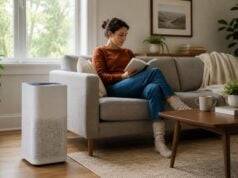
Indoor air is easy to overlook until winter heating starts, your nose feels raw, your throat turns scratchy, and every room seems a little harsher to breathe in. That shift is not just about comfort. Humidity changes how well your airways protect you. When air is too dry, the thin layer of moisture that helps mucus trap and clear germs can become less effective. When air is too damp, other problems appear, including condensation, mold, and dust mites that can irritate the respiratory tract and make symptoms worse.
That is why the best indoor humidity for immune health is not “the more, the better.” It is a middle range that supports the airway lining without encouraging indoor dampness. For most homes, that means aiming for moderate humidity, especially during heating season. The sweet spot is narrower than many people think, and getting it right can improve comfort, support mucus clearance, and reduce one piece of infection risk without creating a new indoor air problem.
Essential Insights
- Moderate indoor humidity helps the nose and airways keep mucus moving so trapped particles and germs can be cleared more effectively.
- Very dry indoor air can worsen throat irritation, dry nose, and stale-air discomfort during heating season.
- Humidity that stays too high raises the chance of condensation, mold, and dust mites, which can worsen respiratory symptoms.
- For most homes, a practical target is about 40 to 50 percent relative humidity, while staying below 60 percent.
- Use a hygrometer to check winter indoor air before adding moisture, and lower humidity if you see window condensation or damp surfaces.
Table of Contents
- Why Humidity Matters for Defenses
- The Best Indoor Humidity Range
- What Dry Air Does
- Why Too Much Humidity Backfires
- How to Measure and Adjust It
- When Humidifiers Help Most
Why Humidity Matters for Defenses
Your respiratory tract has its own built-in cleaning system. The airway lining produces mucus that traps dust, allergens, and infectious particles. Tiny hair-like structures called cilia then move that mucus upward so it can be swallowed or cleared. This process, called mucociliary clearance, is one of the body’s frontline defenses. It works best when the airway surface stays adequately hydrated.
Humidity matters because indoor air can pull water from that surface layer. In winter, outdoor air is often cold and holds less moisture. Once that air is heated indoors, the relative humidity can drop sharply. A room that feels warm enough can still be extremely dry. When that happens, the airway lining may lose moisture, mucus can become thicker and stickier, and cilia may not move as effectively. The result is not just discomfort. It can mean particles and pathogens stay in contact with the airway for longer.
This is one reason dry heated air can leave people with a raw nose, crusting, throat irritation, and a sense that the air feels “sharp” or tiring to breathe. It also helps explain why mucosal immunity is so important. The immune system does not operate only through white blood cells and antibodies. It also depends on physical barriers that stop problems before they become infections.
Humidity may also influence how respiratory viruses behave in the air. At very low relative humidity, exhaled droplets can evaporate quickly, becoming smaller and able to stay airborne longer. Some viruses also appear to remain more stable in dry conditions. That means low humidity may work against you in two ways at once: by weakening the airway’s local defenses and by making indoor transmission conditions more favorable for some viruses.
Still, this topic needs balance. Humidity is one factor, not a magic switch. It does not override crowding, poor ventilation, smoking, sleep loss, or close contact with someone contagious. A room at a healthier humidity level can still be a high-risk room if the air is stale and infectious aerosols are building up. The stronger way to think about humidity is as one part of a layered defense system, alongside healthy barriers in the airway and other tissues.
That perspective helps keep expectations realistic. Good indoor humidity does not “boost” immunity in a dramatic way. What it can do is help preserve normal airway function, reduce drying stress on the mucosa, and create indoor conditions that are less hostile to your natural defenses.
The Best Indoor Humidity Range
If you want one number to aim for, the most practical answer for most homes is about 40 to 50 percent relative humidity. That range is narrow enough to be useful and broad enough to fit real life. It supports comfort and airway moisture for many people without pushing too close to the zone where condensation and mold problems become more likely.
Why not simply say 40 to 60 percent? Research reviews often describe moderate relative humidity in that broader range, and there is good reason for that. Mid-range humidity appears more favorable than very dry air for mucociliary clearance, airway comfort, and in some cases viral behavior indoors. But the broader research range is not always the safest everyday target for homes, especially older homes, colder climates, or rooms with weak insulation. Once indoor humidity starts climbing toward the upper end, cold windows, exterior walls, and hidden surfaces can collect moisture even when the room itself does not feel damp.
That is why home guidance is usually more conservative. A practical rule is this:
- Around 40 to 50 percent is a strong target for most occupied rooms.
- 30 to 50 percent is a sensible general range for homes through changing weather and heating patterns.
- Below 30 percent often feels too dry for many noses, throats, and eyes.
- Above 50 percent, and especially above 60 percent, the risk of condensation, mold, and mite-friendly conditions rises.
It also helps to understand that relative humidity changes with temperature. The same amount of moisture in the air can register as a different relative humidity if the room gets warmer or colder. That is why a bedroom may read one way in the afternoon and another before sunrise. It is also why cold surfaces matter. If a room is set at 45 percent but windows are very cold, you may still see condensation, which is a sign to back off.
Season and building type matter too. In mild weather, many homes naturally sit in a reasonable range. In winter, heated indoor air often drops below 30 percent unless moisture is added. In humid climates, the bigger problem may be excess humidity rather than dryness. So the “best” humidity is not a fixed number for every house on every day. It is a middle zone that protects the airway without feeding dampness problems.
This is also why humidity should sit alongside ventilation and cleaner indoor air, not replace them. Even ideal humidity will not compensate for a room with poor airflow, many occupants, and a contagious person inside it. And it will not cancel the value of basics such as simple habits that reduce infection risk. The goal is not to perfect one variable. It is to build a healthier indoor environment overall.
What Dry Air Does
Dry indoor air is often dismissed as a comfort issue, but it can affect the airway in ways that matter for infection risk. When relative humidity falls too low, especially during heating season, moisture evaporates more readily from the lining of the nose, throat, and upper airway. That change can thicken mucus, slow its movement, and make the surface more vulnerable to irritation.
The symptoms are familiar. Your nose may feel tight, sore, or crusted. You may wake up with a dry throat, hoarse voice, or cough that feels more irritating than productive. Some people notice more nosebleeds, especially children and adults who already have sensitive nasal tissue. Others breathe more through the mouth because the nose feels blocked by dryness and swelling, which can make the throat feel worse by morning.
Those changes matter because dry mucosa is not just uncomfortable. It may be less effective at filtering and clearing what you inhale. In experimental work, low humidity has been linked with impaired barrier function, poorer viral clearance, and slower tissue repair. In real indoor environments, dry air is also associated with higher reports of throat dryness, skin dryness, eye irritation, and other “winter building” symptoms that make people feel run down before they are even sick.
This is where the topic becomes more interesting than “use a humidifier if your lips are dry.” Dry air can set off a chain reaction. You get nasal dryness, so you mouth-breathe more. Mouth breathing dries the throat and may worsen sleep quality. Poor sleep increases fatigue. Fatigue can make the whole respiratory tract feel more reactive and vulnerable. That is one reason topics like dry nose and mucosal defense and mouth breathing and immune health connect so closely to this one.
Low humidity can also change indoor transmission conditions. When exhaled droplets dry faster, some shrink into smaller particles that can remain suspended longer. That does not mean every virus behaves identically, and humidity is not the only factor that affects spread. But dry indoor air tends to be part of the winter pattern that makes respiratory illnesses more common in shared indoor spaces.
There is also a human tendency to underestimate how dry a room really is. By the time you feel obvious dryness, the humidity may already be lower than is ideal. Forced-air heating, space heaters, fireplaces, and constant radiator heat can all drive levels down. Travel can do the same. Hotel rooms and planes are often very dry, which helps explain why some people feel a sore throat or nasal irritation before they ever develop a real infection.
The key point is that dry air does not need to cause dramatic symptoms to matter. It can quietly make the airway less comfortable, less efficient, and less resilient. Moderate humidity will not eliminate winter infections, but it can reduce one of the background stresses that makes the season harder on the respiratory tract.
Why Too Much Humidity Backfires
If dry air is hard on the airway, it is tempting to think that more moisture must always be better. This is where many well-meaning home fixes go wrong. High indoor humidity can create a different set of respiratory problems, and they often build up slowly enough that people miss the connection.
Once humidity stays too high, surfaces begin to matter more than the air itself. Cold windows, corners, closets, exterior walls, and areas behind furniture can collect condensation. Even small amounts of repeated moisture can support mold growth. Dust mites also thrive better in damp conditions, which can worsen nasal congestion, sneezing, itchy eyes, and asthma symptoms in susceptible people. In other words, the point of humidifying the air is to support the airway, not to create an environment that continuously irritates it.
This matters for immune health because inflammation and irritation can make the airway less stable. A person living in a damp home may think they need even more humidity because they feel congested or uncomfortable, when the real problem is the opposite. Dampness, mold, and allergen load can keep the nose and throat inflamed in ways that mimic or magnify infection-prone symptoms.
A few signs suggest you have crossed the line:
- Water beading on windows in the morning
- Damp window frames or peeling paint
- A musty odor in closets or corners
- Visible mold around sills, bathrooms, or HVAC vents
- Carpets or curtains that feel persistently cool and damp
- Worsening allergy symptoms after increasing humidifier use
These signals matter more than the humidifier setting itself. A machine may be set to a “safe” number, but if the room is unevenly heated or poorly insulated, local moisture problems can still develop. That is why a fixed number should never override what your home is telling you.
High humidity also does nothing to solve stale air. People sometimes run a humidifier in a closed room, hoping it will make the space healthier during cold season. But a humid room with poor ventilation can still concentrate particles, odors, and infectious aerosols. Moisture should never be confused with fresh air. This is one reason guidance on mold exposure and immune health and why allergy symptoms can worsen indoors becomes relevant as soon as humidity starts climbing.
The healthiest indoor moisture strategy is not “raise humidity until the room feels softer.” It is “keep humidity in a moderate range while preventing dampness.” That may mean using less humidification than you expected. In some homes, especially in milder or already humid climates, it may mean using none at all and focusing instead on ventilation, source control, and moisture cleanup.
How to Measure and Adjust It
The most useful humidity tool is not a humidifier. It is a hygrometer. These small meters are inexpensive, and without one you are mostly guessing. A room can feel dry because of airflow, heat, or irritation even when humidity is acceptable. Another room can feel comfortable while hidden condensation is forming. Measuring first makes the rest of your decisions more accurate.
Place a hygrometer in the rooms you use most, especially bedrooms and living areas during heating season. Keep it away from direct steam, bathrooms, kitchen exhaust, sunny windows, and the immediate mist stream of a humidifier. If your home is large, use more than one. Humidity often varies from room to room.
Once you know the number, the next step is to match the fix to the problem.
If humidity is too low:
- Check the heating pattern first. Constant high heat can dry indoor air quickly. Sometimes lowering the thermostat slightly at night helps.
- Use a humidifier only where needed. A bedroom or main living room may need support even if the whole house does not.
- Choose the smallest effective change. The goal is moderate humidity, not visible mist everywhere.
- Watch windows and corners. If condensation appears, reduce output.
If humidity is too high:
- Find the moisture source. Bathrooms, laundry, cooking, crawl spaces, leaks, and poorly vented dryers are common causes.
- Use exhaust fans consistently.
- Increase air movement and ventilation where practical.
- Use a dehumidifier if the climate or room consistently runs damp.
It also helps to separate humidity tools from air-cleaning tools. A humidifier adds moisture. A dehumidifier removes it. An air purifier filters particles. These are not interchangeable. If your main issue is airborne allergens or particles, HEPA filtration may help more than changing humidity. If your main issue is winter dryness, filtration alone will not fix it.
Likewise, humidity does not replace fresh-air strategies. In cold season, people sometimes avoid opening windows and turn instead to gadgets. But ventilating versus surface-focused cleaning is often the more important indoor-air question. Moderate humidity helps, but it works best in a room that also has reasonable airflow and moisture control.
The overall strategy is simple: measure first, correct gradually, and keep checking. The right humidity is not a set-and-forget ideal. It is a moving target shaped by weather, heating, insulation, and how your rooms are actually used.
When Humidifiers Help Most
Humidifiers make the most sense when the air is truly dry and you can use them in a controlled, well-maintained way. They are most helpful in winter, in heated homes where relative humidity repeatedly falls below about 30 to 35 percent, and in people who clearly notice nasal dryness, throat irritation, crusting, or overnight discomfort that improves when moisture is restored.
They can also be useful in a few predictable situations: bedrooms with forced-air heat, hotel rooms during winter travel, homes with wood-burning heat, and rooms used by older adults or children who are bothered by dry air. In those settings, a moderate increase in humidity can make sleep more comfortable and reduce the constant drying of the upper airway.
But humidifiers are not harmless background devices. Dirty units can spread minerals and microorganisms into the air. Overused units can push a room into condensation and mold territory. The safest way to use one is to treat it like equipment, not decor.
A smart humidifier routine looks like this:
- Use it only when readings show you need it.
- Aim for a moderate room target, usually about 40 to 50 percent.
- Refill and clean it regularly according to the manufacturer’s directions.
- Do not let water sit stagnant in the tank.
- Lower the setting or stop use if windows fog, surfaces feel damp, or the room starts smelling musty.
- Be especially careful in nurseries, children’s rooms, and homes with asthma or mold history.
People sometimes ask whether humidifiers prevent colds. The honest answer is that the evidence is not strong enough to promise that. Humidification may reduce dryness and may support the airway environment, but it is not a guaranteed infection-prevention tool. It is better framed as a way to reduce one risk factor rather than a way to stop respiratory illnesses on its own.
This is also why humidifiers belong inside a broader routine, not at the center of it. If you are sleeping poorly, dehydrated, congested, and spending long hours in stagnant indoor air, humidity is only one part of the picture. Broader foundations still matter, including age-appropriate immune support for children and the everyday habits that help support immune resilience more generally.
Used thoughtfully, a humidifier can make indoor air friendlier to your nose and throat. Used carelessly, it can create a new indoor air problem. The right question is not whether humidifiers are good or bad. It is whether your home is actually dry, whether your symptoms fit, and whether you can keep the machine clean and the humidity moderate.
References
- A Brief Guide to Mold, Moisture and Your Home 2026 (Official Guidance)
- Use and Care of Home Humidifiers 2025 (Official Guidance)
- Relative Humidity and Its Impact on the Immune System and Infections 2023 (Review)
- Humidification of indoor air for preventing or reducing dryness symptoms or upper respiratory infections in educational settings and at the workplace 2021 (Systematic Review)
- Low ambient humidity impairs barrier function and innate resistance against influenza infection 2019 (Seminal Mechanistic Study)
Disclaimer
This article is for educational purposes only and is not a substitute for medical advice, diagnosis, or treatment. Dry air, congestion, cough, wheezing, nosebleeds, and repeated infections can have many causes beyond humidity, including allergies, asthma, infection, medication effects, and structural nasal problems. Seek medical care if you have persistent breathing symptoms, significant mold exposure, worsening asthma, frequent nosebleeds, or signs of illness that do not improve. If you use a humidifier, follow product directions carefully and stop using it if it seems to worsen respiratory symptoms or contributes to indoor dampness.
If this article helped you, please share it on Facebook, X, or another platform you use.