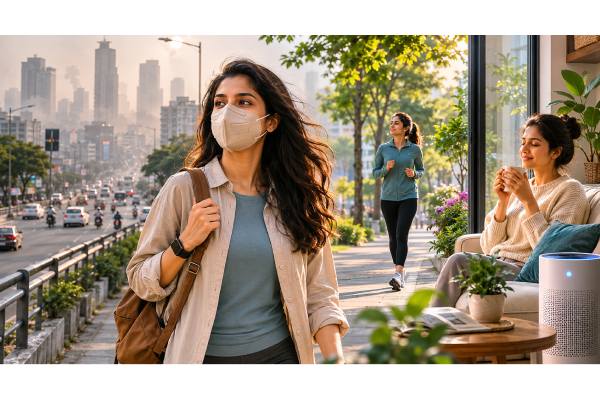
Air pollution often feels abstract until it shows up as a scratchy throat on a smoky day, a tight chest on a traffic-heavy walk, or a stretch of weeks when you simply do not feel as resilient. Among the many pollutants in outdoor and indoor air, PM2.5 matters most for immune health because these particles are small enough to reach deep into the lungs and stir up inflammatory signals that do not stay confined there. Over time, that can affect how well your airways defend themselves, how reactive your immune system becomes, and how much strain your body carries in the background.
This does not mean every exposure causes obvious illness, or that perfect avoidance is possible. It means small, repeatable choices matter. If you understand where PM2.5 comes from, when exposure spikes, and which home and daily habits make the biggest difference, you can lower the burden on your lungs and immune system without turning life into a constant air-quality project.
Essential Insights
- PM2.5 can irritate the airways, increase inflammatory signaling, and make the body less resilient to repeated respiratory stress.
- Lower exposure can support easier breathing, fewer symptom flares, and a steadier airway barrier, especially in people with asthma, allergies, or smoke sensitivity.
- Air cleaners, ventilation, and source control help, but no single tool removes all pollutants or makes poor air completely harmless.
- The most practical routine is to track outdoor air quality, reduce indoor particle sources, and use filtration where you sleep or spend the most time.
Table of Contents
- What PM2.5 does inside the body
- How inflammation changes immune defense
- Who carries the highest risk
- How to spot your biggest exposure windows
- Home steps that cut particle levels
- Safer routines for commutes and smoke days
What PM2.5 does inside the body
PM2.5 means particulate matter that is 2.5 micrometers wide or smaller. That size is the key problem. Larger particles often get trapped higher in the nose or throat, but PM2.5 can travel much deeper into the respiratory tract, reaching the bronchioles and the tiny air sacs where gas exchange happens. Some of these particles are produced directly, such as from wildfire smoke, diesel exhaust, wood burning, and cooking fumes. Others form in the air after gases from traffic, industry, or power generation react chemically.
Once inhaled, PM2.5 does more than just “sit” in the lungs. It can irritate the airway lining, raise oxidative stress, and trigger immune cells to release inflammatory messengers. The airway surface is supposed to act like a smart shield: mucus traps debris, tiny hair-like cilia move it out, and immune cells respond when needed. When particles keep arriving, that system becomes less efficient. Mucus quality can change, cilia can work less effectively, and the lining may become more permeable and reactive.
That matters because your first line of defense is not only about killing germs. It is also about maintaining a stable barrier that knows when to respond and when not to overreact. This is why air pollution can fit into a broader conversation about airway barrier health and why it overlaps with mucosal immunity. The immune system functions best when these surfaces are intact, hydrated, and not under constant assault.
PM2.5 also varies in toxicity. A particle from sea salt is not the same as a particle carrying combustion byproducts, heavy metals, or organic chemicals from smoke. In real life, people are often exposed to complex mixtures rather than one clean source. That is one reason symptoms and risk can differ so much between cities, occupations, seasons, and even homes.
The practical takeaway is simple: PM2.5 is not just a pollution number on an app. It is a biologically active exposure that can press on the lungs, the airway barrier, and immune signaling at the same time. Lowering that pressure, even imperfectly, is worth doing.
How inflammation changes immune defense
When people hear that pollution “causes inflammation,” it can sound vague. In immune terms, inflammation is a coordinated response meant to protect you. The problem is not inflammation itself. The problem is repeated, poorly timed, or excessive inflammation that keeps tissues irritated and immune cells on edge.
PM2.5 can push the immune system in several directions at once. It may activate innate immune cells, increase oxidative stress, and alter the balance of signaling molecules that help coordinate defense. In the short term, that can mean a scratchy throat, more coughing, eye irritation, or a feeling that the chest is tighter than usual. In the longer term, especially with repeated exposure, it can help create a low-grade inflammatory state that makes the airways more sensitive and less efficient at recovery.
That changes immune defense in a few important ways. First, an irritated airway barrier is easier for viruses, allergens, and other inhaled triggers to disturb. Second, immune cells that are repeatedly primed by pollution may respond too aggressively to later challenges. Third, tissues that are constantly inflamed may not clear mucus and debris as well, which can leave the respiratory tract more vulnerable during infection season.
This is why pollution can be linked not only to symptom flares but also to a reduced sense of resilience. You may not be “sick” in a dramatic way, yet your system feels less forgiving. Sleep may be lighter after smoky evenings. Exercise outdoors may produce more coughing than usual. Allergy symptoms may feel bigger and infections may feel harder to shake. In that sense, air pollution is less about an instant event and more about cumulative friction.
It also helps explain why “immune boosting” is the wrong frame. A stronger immune response is not always better. A well-regulated response is better. That is closer to the idea of immune resilience than raw stimulation. And because pollution can contribute to the background burden of chronic inflammation, reducing exposure is part of protecting recovery, not just avoiding a single bad day.
For many people, the immune cost of PM2.5 is subtle until other pressures pile on: poor sleep, heavy traffic, wildfire season, respiratory viruses, or preexisting asthma. Then the combined effect becomes much easier to notice.
Who carries the highest risk
PM2.5 is not equally disruptive for everyone. The highest burden tends to fall on people whose lungs, immune systems, or daily environments already carry extra strain. Children are one major group. Their lungs and immune systems are still developing, they breathe more air relative to body size, and they often spend time close to roads, school pickup zones, sports fields, or indoor spaces with variable ventilation. Older adults are another group, especially when heart or lung disease is already present.
People with asthma, COPD, chronic sinus issues, allergies, or frequent respiratory infections often notice pollution first. Their airways are already more reactive, so a rise in particle exposure may show up quickly as chest tightness, cough, congestion, or reduced exercise tolerance. Those with cardiovascular disease also deserve special attention, because PM2.5 is not only a lung issue. It can drive systemic inflammatory stress that affects the whole body.
Pregnancy increases the importance of clean air as well. So do certain jobs and living situations. Outdoor workers, drivers, cyclists in heavy traffic, people who live near busy roads, and communities exposed to recurring wildfire smoke can accumulate much higher exposure than someone who only glances at a citywide air number and assumes the day is fine.
Indoor conditions matter too. A person in a small apartment with frequent frying, candles, secondhand smoke, or poor kitchen ventilation may face meaningful PM2.5 exposure even when outdoor air is moderate. That is one reason wildfire seasons and winter heating periods can feel especially hard: outdoor particles come in, while indoor sources continue adding more.
Smoking and vaping can further stack the burden. They are not interchangeable with outdoor air pollution, but they create overlapping respiratory stress. If this is part of your picture, reducing inhaled irritants in general can make a bigger difference than focusing on only one source. For some people, that includes learning what improves after quitting smoking or taking a closer look at vaping and immune health.
A simple rule helps here: the less reserve your lungs or immune system have, the more important it becomes to treat air quality as a real health variable. You do not need severe disease for this to matter. Repeated headaches after traffic exposure, cough during smoke events, or frequent irritation at home are already signals worth taking seriously.
How to spot your biggest exposure windows
Most people cannot measure personal PM2.5 exposure perfectly, but they can get close enough to make smart decisions. The first step is to stop thinking of exposure as a fixed trait of where you live. It changes hour to hour. Traffic peaks, wildfire smoke shifts, cooking raises indoor particles quickly, and weather can trap pollution near the ground.
Start with outdoor patterns. The Air Quality Index can help you catch days when particles are high enough to justify changing plans, but it is most useful when you look beyond the color alone. Pay attention to what is driving the number, how long the spike is expected to last, and whether you are in a sensitive group. If PM2.5 is elevated, that may be a good time to shorten a roadside run, move a walk earlier, or keep windows closed for a while.
Then look at indoor sources. Cooking is one of the most underestimated causes of indoor PM2.5, especially high-heat searing, frying, broiling, and cooking on gas without effective ventilation. Wood stoves, fireplaces, candles, incense, and indoor smoking add more. Vacuuming can also stir settled particles unless the machine has good filtration. On bad smoke days, opening windows at the wrong time may make indoor air worse instead of better.
If you want a clearer picture, an indoor air monitor can help reveal patterns rather than perfect numbers. You may discover that dinner raises particles far more than outdoor traffic, or that your bedroom stays cleaner than the kitchen by a large margin. That kind of information makes your next steps more targeted.
This is also where timing matters. Good air habits are not only about equipment. They are about choosing the cleaner window for ventilation, exercise, errands, and commuting. The same principle shows up in guides about cleaner indoor air through ventilation and in the question of whether ventilating matters more than disinfecting. Air quality is dynamic, so your response should be dynamic too.
In practice, your biggest wins usually come from identifying three things: your dirtiest room, your dirtiest daily activity, and your dirtiest part of the day. Once you know those, exposure reduction becomes much more manageable.
Home steps that cut particle levels
The most effective home strategy is not buying gadgets first. It is reducing the particles you create, then filtering what remains. Source control comes before cleanup.
Begin in the kitchen. Use a vented range hood if you have one, and turn it on before heat rises. Back burners often sit closer to the hood capture zone. Lids help. Lower-heat methods such as simmering, baking, or pressure cooking usually create fewer particles than repeated searing or frying. If your hood only recirculates air and does not vent outdoors, it may still help somewhat with grease, but it is less reliable for particle removal than a well-vented system.
Next, remove avoidable indoor particle sources. Skip candles and incense when possible. Avoid indoor smoking entirely. Be cautious with fireplaces and wood stoves, especially in smaller spaces or homes with poor air exchange. If you clean, damp dusting often beats aggressive dry sweeping, which can re-suspend fine particles. A vacuum with sealed filtration is preferable to one that blows dust back into the room.
Filtration matters most in the rooms where you spend the most time, especially the bedroom. A portable unit designed for particles can be a strong addition when properly sized. For many households, the most relevant question is not “Does a purifier work at all?” but “Is it large enough for the room, and will I actually run it long enough?” That is where choosing a unit with appropriate room coverage and a true particle-focused setup becomes more useful than marketing language. If you want to go deeper, this overlaps with how HEPA-based air cleaners fit into home air control.
Whole-home systems can help too. If your HVAC system can handle it, a higher-efficiency filter may reduce particles throughout the house when the fan is running. Filters still need regular replacement, and stronger filtration is only helpful if the system can accommodate it safely.
Humidity deserves a brief note. It does not remove PM2.5, but dry indoor air can make the nose and throat feel more irritated and less comfortable. For airway comfort, the discussion is closer to healthy indoor humidity than particle removal itself. Think of humidity as support for the airway surface, not a substitute for filtration.
The key is not perfection. It is building a home environment where particles are generated less often, cleared more quickly, and kept lower in the places where you rest and recover.
Safer routines for commutes and smoke days
Outdoor exposure reduction works best when it is specific. “Stay inside” is too blunt for daily life and often unrealistic. A better approach is to adjust route, timing, intensity, and protection based on what the air is doing.
Traffic exposure is a good example. Two people can live in the same city yet have very different PM2.5 burdens depending on whether they walk beside a multi-lane road, sit in congested traffic with outside air flowing in, or choose a quieter side street one block away. Distance helps more than many people expect. Even a modest route change can reduce the concentration you inhale. During commutes, keeping car windows closed in heavy traffic and using recirculation mode for stretches can lower the amount of roadway pollution entering the cabin.
On wildfire smoke days, the strategy shifts. Keep outdoor time shorter, especially if you notice eye irritation, coughing, sore throat, or headache. Move intense exercise indoors when particle levels are clearly elevated. If you must be outside for work or essential tasks, a well-fitted respirator designed to filter fine particles can help more than a loose face covering. It is worth remembering that particle-filtering masks are mainly about particles, not gases, and fit matters as much as the material.
These same days are when your indoor plan becomes crucial: close windows when outside air is worse, run filtration in the room you occupy most, and avoid adding indoor smoke or cooking emissions if possible. If a child, older adult, or someone with asthma starts coughing more, needing rescue medication more often, or tiring unusually fast, take that as a sign to step up protection early rather than later.
This is also the season when many people benefit from combining air habits with other straightforward protection steps, such as understanding when masks help most and recognizing why wildfire smoke can hit the immune system harder than an ordinary hazy day.
Seek medical care promptly for severe shortness of breath, chest pain, blue lips, fainting, confusion, wheezing that is not improving, or asthma symptoms that are escalating despite your usual plan. For everything short of that, a lower-exposure routine is still worth building. The body often responds to cleaner air not with a dramatic moment, but with quieter breathing, steadier energy, and fewer setbacks over time.
References
- WHO global air quality guidelines: particulate matter (PM2.5 and PM10), ozone, nitrogen dioxide, sulfur dioxide and carbon monoxide 2021 (Guideline)
- Fine particulate matter manipulates immune response to exacerbate microbial pathogenesis in the respiratory tract 2024 (Review)
- A systematic review and meta-analysis on the association between PM 2.5 exposure and increased influenza risk 2025 (Systematic Review and Meta-analysis)
- Randomized Clinical Trial of Air Cleaners to Improve Indoor Air Quality and Chronic Obstructive Pulmonary Disease Health: Results of the CLEAN AIR Study 2021 (RCT)
- Guide to Air Cleaners in the Home 2026 (EPA Guidance)
Disclaimer
This article is for educational purposes only and is not medical advice, diagnosis, or treatment. Air pollution can worsen asthma, COPD, cardiovascular disease, allergies, and other health conditions, but symptoms and risk vary by person, exposure pattern, and underlying health status. If you have significant breathing symptoms, recurring chest tightness, frequent smoke sensitivity, or questions about masks, medications, pregnancy, or chronic illness, speak with a qualified clinician for personal guidance.
If this article was useful, please consider sharing it on Facebook, X, or your preferred platform to help more people understand how cleaner air supports immune health.