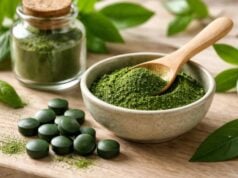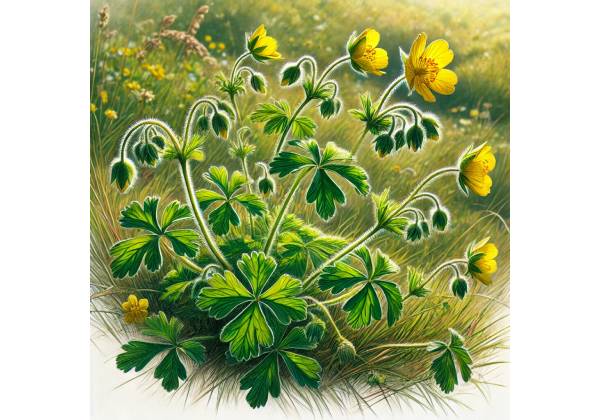
Cinquefoil (Potentilla reptans), often called creeping cinquefoil, is a low-growing Rosaceae plant with five-fingered leaves and small yellow flowers. While it can look like a simple meadow “weed,” traditional herbal practice values its astringent, toning nature—especially when the body feels irritated, weepy, or overly loose. People have used cinquefoil preparations for digestive upset such as mild diarrhea, for mouth and gum discomfort, and as a topical wash for minor skin irritation and seepage. Those uses fit well with what we know about many Potentilla species: they tend to be rich in tannins and other polyphenols that tighten tissues and support the body’s natural barrier defenses.
Cinquefoil is not a quick fix and it is not meant to replace medical care. Its best role is supportive: a short-term “tissue-toning” herb for specific, mild situations, or a topical helper when skin and mucosa need gentle tightening and comfort. In this guide, you’ll learn what’s in Potentilla reptans, how it’s traditionally used, how to prepare it safely, what dose ranges are typical, and who should avoid it.
Key Takeaways
- May help calm mild, noninfectious diarrhea by gently tightening and protecting the gut lining.
- May support gum and throat comfort as a gargle when tissues feel swollen or prone to minor bleeding.
- Typical range: 1–3 g dried root per cup for a decoction, or 2–4 g dried herb per cup as an infusion, up to 2–3 times daily.
- Tannins can reduce absorption of iron and some medicines, so separate doses by 2–3 hours.
- Avoid if you are pregnant, breastfeeding, severely constipated, or taking warfarin unless a clinician approves.
Table of Contents
- What is cinquefoil and whats in it
- Key medicinal properties and benefits
- Does cinquefoil help diarrhea
- Skin mouth and gum support
- How to use and dose it
- Safety interactions and who should avoid
- What the evidence actually says
What is cinquefoil and whats in it
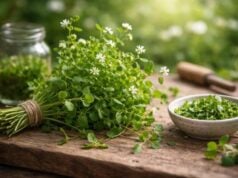
Cinquefoil is a broad common name used for several Potentilla species. Potentilla reptans is the “creeping” type, spreading by runners and forming mats in lawns, field edges, and open ground across parts of Europe and Western Asia. The plant’s look is memorable once you notice it: leaves often appear in five leaflets (hence “five-finger grass”), and the flowers are small, bright yellow, and usually five-petaled.
Which parts are used
Traditional use varies by region, but most herbal preparations focus on one of these:
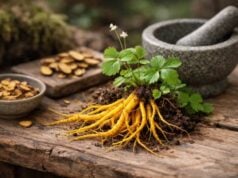
- Rhizome and roots: typically the most astringent, often chosen for short-term digestive use
- Aerial parts (leaf and stem): milder, sometimes used for teas or topical washes
- Whole plant: occasionally used in folk practice, though dosing becomes less predictable
Because Potentilla species can be confused with one another, it matters to buy from a reputable supplier that lists the botanical name. Another common Potentilla in herbal commerce is tormentil (Potentilla erecta), which is more strongly documented in some clinical contexts. Creeping cinquefoil is related, but not interchangeable by default.
Key constituents that shape its actions
Cinquefoil’s reputation as a “toning” herb is largely linked to polyphenols, especially tannins. The most discussed constituent groups include:
- Hydrolyzable tannins and related polyphenols: associated with tissue-tightening and protective effects on mucous membranes
- Flavonoids: antioxidant compounds that may support inflammation balance and microcirculation
- Phenolic acids: supportive for antioxidant activity and barrier function
- Triterpenoids: plant compounds sometimes linked with inflammation-modulating pathways in preclinical research
- Minor aromatic components and sugars: contribute to taste, but are not the primary drivers of action
How to think about cinquefoil compared with other astringents
Cinquefoil belongs to a family of classic astringent plants used when tissues feel “leaky” or irritated. If you’re familiar with strong tannin herbs, you can think of cinquefoil as living in the same functional neighborhood as oak bark astringent uses, though the strength and taste depend heavily on plant part, harvest, and preparation.
In practice, cinquefoil is best viewed as a targeted herb: most useful when there is a clear reason to tighten and protect tissue, and less useful when the goal is simply “general wellness.”
Key medicinal properties and benefits
Cinquefoil’s traditional uses cluster around a few consistent themes: reducing excessive secretions, calming irritation, and supporting tissue integrity. These are not flashy benefits, but they can be very practical—especially when the body is temporarily out of balance due to diet changes, stress, or seasonal bugs.
Astringent and tissue-toning effects
Astringency is the headline property. Tannins bind to proteins on the surface of mucous membranes and skin, creating a mild tightening sensation and a temporary protective layer. This can be helpful when tissues feel:
- swollen or “spongy” (for example, sore gums)
- irritated and weepy (minor skin seepage or friction irritation)
- overly loose in function (mild diarrhea)
The key word is mild. Cinquefoil is not a substitute for rehydration therapy, antibiotics when needed, or medical evaluation. But for minor, short-lived issues, it may help the body settle.
Barrier support and comfort
When the gut lining or mouth tissues are irritated, the body’s barrier function can feel compromised. A tannin-rich tea or gargle can provide a sensation of coating and tightening that many people experience as soothing. This is one reason cinquefoil is often used for mouth discomfort, scratchy throats, or minor gum bleeding in traditional practice.
Antioxidant and inflammation-modulating potential
Like many polyphenol-rich herbs, cinquefoil contains compounds that participate in antioxidant activity in laboratory testing. Practically, this may support the body’s ability to manage oxidative stress during irritation or mild inflammation. That does not mean you will feel an “antioxidant effect,” but it helps explain why the herb shows up in folk traditions for inflamed tissues.
Antimicrobial and cleansing support
Astringent herbs are often used topically not only because they tighten tissue, but because they can make the environment less friendly for microbial overgrowth. A cinquefoil wash may be used for minor skin issues where hygiene and gentle tightening help recovery. This should be framed as supportive care—cleaning, protecting, and reducing irritation—rather than a stand-alone antimicrobial treatment.
Realistic outcomes to expect
Cinquefoil works best when you define the goal clearly. Reasonable, trackable outcomes might include:
- fewer urgent stools and less watery texture during mild diarrhea
- reduced gum tenderness or less minor bleeding with brushing
- less “weepiness” and faster comfort in minor skin irritation
- a calmer throat feel during short-term scratchiness
If symptoms are severe, persistent, or accompanied by fever, blood, dehydration, or significant pain, that is a sign to seek medical care rather than intensifying herbal self-treatment.
Does cinquefoil help diarrhea
Cinquefoil is most often discussed for diarrhea because astringent herbs can reduce excessive fluid loss and help irritated tissue regain tone. The best fit is mild, short-term diarrhea where you suspect irritation, dietary triggers, stress, or a brief viral upset—especially when stool is loose and frequent but not bloody, and when there are no serious red-flag symptoms.
How it may help
A tannin-rich infusion or decoction can support diarrhea management in a few practical ways:
- Tightening and protecting the intestinal lining: tannins can reduce the “leaky” sensation and support barrier comfort
- Reducing excessive secretions: astringency may lessen the watery character of stools in some cases
- Soothing irritation: warm fluids can be calming, and astringent herbs may reduce the raw, inflamed feeling that sometimes follows frequent stools
This does not mean cinquefoil is appropriate for every kind of diarrhea. If diarrhea is caused by food poisoning, parasites, inflammatory bowel disease flare, or antibiotic-associated infection, self-treatment can delay proper care.
How to use it in a sensible diarrhea plan
If you’re using cinquefoil for a mild episode, think in layers:
- Hydration first: water, broths, oral rehydration solutions if needed
- Food choices that calm the gut: bland meals, smaller portions, avoiding alcohol and very fatty foods
- Short-term astringent support: cinquefoil tea or decoction for 1–3 days
- Reassessment: if symptoms persist beyond 48–72 hours or worsen, escalate care
If you prefer a gentler, more demulcent approach rather than astringency, you may compare it with arrowroot for digestive soothing, which is often used as a calming starch in unsettled digestion.
When not to use cinquefoil for diarrhea
Avoid self-treatment and seek evaluation if you have:
- blood or black, tarry stools
- high fever, severe abdominal pain, or signs of dehydration
- diarrhea lasting more than 3 days in adults, or any concerning symptoms in children
- recent antibiotic use with worsening diarrhea
- chronic diarrhea or unexplained weight loss
Also, be cautious if you are prone to constipation. Astringent herbs can overshoot, especially when taken at high doses or for too long.
What a reasonable trial looks like
A realistic approach is a short trial with a clearly defined stop point. If your stool frequency and urgency improve within a day or two, that’s a sign the herb may be a good fit for that situation. If not, do not keep escalating the dose—switch to supportive hydration and seek medical guidance.
Skin mouth and gum support
Cinquefoil’s astringency is not only for the gut. The same tissue-toning quality is why it appears in traditional care for the mouth, throat, and skin—areas where “tightening and protecting” can improve comfort when tissues are irritated or prone to minor bleeding.
Mouth, gums, and throat comfort
A cooled infusion can be used as a gargle or mouth rinse when you have:
- mild gum tenderness or swelling
- minor bleeding with brushing (not unexplained heavy bleeding)
- sore throat discomfort that feels raw or irritated
- mouth ulcers that feel weepy or inflamed
The goal is not to “sterilize” the mouth. It is to support tissue comfort and reduce that swollen, boggy feeling. For best results, use the rinse after meals and before bed, and keep the approach gentle—vigorous gargling can irritate inflamed tissue.
Topical washes and compresses
Cinquefoil tea can be used externally as a wash or compress for minor issues such as:
- friction irritation that feels warm and weepy
- minor skin seepage from scratching
- sweaty skin folds that feel irritated (while also improving hygiene and airflow)
- mild hemorrhoid discomfort where an astringent rinse feels soothing
A simple method is to brew a strong tea, cool it fully, then apply with clean cotton or a cloth for 10–15 minutes. For hemorrhoids or sensitive areas, always patch-test first and stop if stinging is significant.
If you are looking for another classic astringent commonly used topically, witch hazel topical uses is often chosen for similar goals, though individual tolerance varies.
When topical use is not appropriate
Do not apply cinquefoil preparations to:
- deep wounds, burns, or punctures
- infected skin with spreading redness, warmth, pus, or fever
- large areas of broken skin (absorption and irritation risk rise)
If a rash worsens, becomes painful, or spreads, discontinue and seek medical care.
Practical tips for better outcomes
- Use freshly prepared tea and store refrigerated for no more than 24 hours if you must save it.
- Keep the solution clean and avoid double-dipping cloths into the container.
- Pair topical astringents with barrier protection (gentle moisturizers) if skin becomes overly dry.
- For gum issues, also address mechanical irritants: brush gently, floss carefully, and consider whether toothpaste additives are aggravating tissues.
Cinquefoil’s external use is often where it feels most immediately “logical”: when tissues are tender, swollen, and leaky, gentle tightening can be a real comfort.
How to use and dose it
Cinquefoil can be used as an infusion (tea), a decoction (simmered root), a tincture, or an external rinse. Choosing the right form is mostly about matching strength to the situation. As a rule, roots and rhizomes are stronger and more astringent, while aerial parts are gentler.
Infusion for mild needs
An infusion is best for light, repeatable use—especially for mouth rinses or mild digestive support.
- Use 2–4 g dried aerial parts (or a mixed herb product labeled for tea) per cup
- Pour hot water over the herb and steep 10–15 minutes
- Drink 1–2 cups daily, or use as a rinse up to 2–3 times daily (spit out rinses rather than swallowing if you’re using a strong brew)
If the tea tastes extremely bitter or drying, reduce the dose or steep time.
Decoction for stronger astringency
If you are using cinquefoil specifically for short-term diarrhea support, the root/rhizome decoction is often preferred.
- Use 1–3 g dried root or rhizome per cup of water
- Simmer gently for 10–20 minutes, then strain
- Take up to 2–3 times daily for 1–3 days, then reassess
Avoid prolonged use. Astringent herbs can dry the gut and contribute to constipation when used beyond the window of need.
Tinctures, capsules, and extracts
Commercial products vary widely. If you use a tincture, common traditional patterns are:
- 1:5 tincture (typical strength) at 2–4 mL, up to 2–3 times daily
- For dried extracts or capsules, a common range is 250–600 mg up to 2 times daily, depending on concentration and label guidance
If the label does not clarify the equivalent amount of dried herb, treat the product cautiously and start at the low end.
Timing, spacing, and short-term use
Because tannins can bind minerals and interfere with absorption, it helps to:
- take cinquefoil away from iron supplements and mineral supplements
- separate it from medications by 2–3 hours when possible
- use it short term for acute needs and intermittently for topical rinses
Blending and practical pairing
Cinquefoil’s drying nature can be balanced by gentle, soothing herbs when appropriate. For example, in topical use some people prefer to pair an astringent rinse with a skin-calming herb such as calendula uses for skin comfort—not by mixing everything blindly, but by using the astringent first and the soothing herb later if dryness becomes an issue.
The most important dosing principle is simple: use the smallest amount that achieves the goal, and stop once the goal is met.
Safety interactions and who should avoid
Cinquefoil is generally used in food-like, short-term ways, but safety still matters. Most concerns come from its tannin content (which can be drying and binding) and from the fact that some people try to use astringent herbs as long-term solutions for problems that deserve medical evaluation.
Common side effects
Side effects are usually mild and dose-related:
- constipation or reduced bowel motility
- stomach discomfort, nausea, or a “tight” feeling in the gut
- dry mouth or throat if used too strongly as a tea
- skin dryness or mild irritation with repeated topical use
If you feel overly dried out or constipated, reduce the dose or stop.
Medication and nutrient interactions
Tannins can bind to compounds in the gut. The most practical risks are:
- reduced absorption of iron and possibly other minerals
- reduced absorption of some oral medications if taken at the same time
A simple rule is to separate cinquefoil from medicines and supplements by 2–3 hours. If you rely on iron therapy or you have anemia, avoid long-term cinquefoil use and talk with a clinician.
Who should avoid cinquefoil
Avoid self-treatment (especially internal use) if you:
- are pregnant or breastfeeding (insufficient safety data for medicinal dosing)
- have chronic constipation or slow gut motility
- have chronic diarrhea or unexplained GI symptoms (needs evaluation)
- have a known allergy to Rosaceae plants (uncommon, but possible)
- have significant kidney disease and are using concentrated extracts without supervision
If you take anticoagulants such as warfarin, do not assume an herb is safe just because it is “not known” to interact. Discuss it with your clinician, especially if you plan to use tinctures or extracts.
Safety for children
For children, diarrhea can become dangerous quickly due to dehydration. If you are considering any astringent herb, the priority remains hydration and professional guidance. In young children, do not use cinquefoil internally without pediatric supervision.
When to stop and seek care
Stop use and seek medical evaluation for:
- worsening abdominal pain, fever, or persistent vomiting
- dehydration signs (dizziness, very dark urine, confusion)
- blood in stool or black stools
- mouth sores that persist, worsen, or are accompanied by fever
- expanding redness, warmth, pus, or severe pain in a skin area
Cinquefoil is best used with a “clear stop sign.” It can be a helpful short-term tool, but it should not become a way to avoid diagnosis when symptoms keep returning.
What the evidence actually says
Cinquefoil (Potentilla reptans) sits in a common herbal situation: strong traditional use, clear chemistry that makes the traditional use plausible, and a growing but still incomplete modern evidence base. The most honest summary is that cinquefoil’s actions make sense—especially as an astringent—but the leap from “plausible” to “proven” depends on human trials, standardized preparations, and clinical endpoints.
What is best supported
Across the Potentilla genus, modern studies frequently highlight polyphenols (including tannins and flavonoids) and report antioxidant or inflammation-related activity in laboratory or animal models. Studies specific to P. reptans also exist, supporting the idea that the plant contains bioactive compounds and can show measurable effects in experimental settings. This aligns with traditional use for irritated tissues, but it does not automatically confirm specific outcomes like “stops diarrhea” or “heals gum disease.”
Where human evidence is stronger and how it applies
The strongest clinical signal in the broader cinquefoil family is not always from P. reptans itself, but from related species such as tormentil (Potentilla erecta). Tormentil root extract has been studied in children with rotavirus diarrhea, and this is often cited as evidence that tannin-rich Potentilla roots can shorten symptom duration when used appropriately and alongside standard care. That does not prove that creeping cinquefoil works identically, but it strengthens the case that the traditional “astringent diarrhea” pathway is clinically relevant within the genus.
If you want to understand the difference between creeping cinquefoil and a closely related astringent Potentilla used in European herbal practice, see tormentil natural uses overview.
What remains uncertain
Key limitations are practical:
- Species confusion: “cinquefoil” can mean many plants, and not all have the same constituent profile.
- Product variability: tea, decoctions, tinctures, and extracts can differ greatly in tannin content.
- Outcome mismatch: many studies focus on antioxidant markers rather than everyday outcomes like stool frequency or gum bleeding.
- Short-term vs long-term use: most traditional uses are short-term, but many people try to use astringents chronically.
A balanced way to use the evidence
A good evidence-respecting approach looks like this:
- Use cinquefoil for situations that match its most plausible actions (short-term astringent support).
- Keep trials short and track outcomes clearly.
- Prefer reputable suppliers and clearly labeled species.
- Escalate care promptly when symptoms are severe, persistent, or recurrent.
Cinquefoil can be a valuable traditional herb when used in the right scenario, with realistic expectations and a clear safety plan.
References
- Recent phytochemical and pharmacological advances in the genus Potentilla L. sensu lato – An update covering the period from 2009 to 2020 2021 (Review)
- Potentilla reptans L. postconditioning protects reperfusion injury via the RISK/SAFE pathways in an isolated rat heart 2021 (Preclinical Study)
- Six new triterpenoids from the root of Potentilla reptans and their cardioprotective effects in silico 2022 (Phytochemistry Study)
- Antioxidant and anti-inflammatory activity of Potentilla reptans L 2015 (Preclinical Study)
- Effect of oral administration of tormentil root extract (Potentilla tormentilla) on rotavirus diarrhea in children: a randomized, double blind, controlled trial 2003 (RCT)
Disclaimer
This article is for educational purposes only and does not provide medical advice, diagnosis, or treatment. Herbal products can cause side effects and may interact with medications. Cinquefoil is tannin-rich and may reduce absorption of iron and certain oral medicines, so spacing doses away from supplements and prescriptions is important. Do not use cinquefoil as a substitute for medical care, especially for severe or persistent diarrhea, dehydration, high fever, blood in stool, significant mouth bleeding, or infected wounds. If you are pregnant, breastfeeding, managing a chronic condition, or taking prescription medications (including anticoagulants), consult a qualified healthcare professional before using cinquefoil internally or in concentrated extracts.
If you found this guide useful, please share it on Facebook, X (formerly Twitter), or your favorite platform to help others make safer, more informed choices.