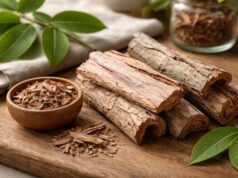
Annatto is a tropical shrub whose brick-red seeds have colored and flavored foods for centuries. You may know it from the warm hue of certain cheeses, but annatto is more than a natural dye: the seed coat contains distinctive pigments and vitamin E–family compounds that are being studied for antioxidant and inflammation-modulating effects. In traditional practice, annatto (also called achiote) has been used in teas, poultices, and infused oils for skin comfort, digestion, and general resilience. Today, it appears in cooking as whole seeds, powder, and paste, and in supplements most often as annatto-derived tocotrienols.
A useful way to approach annatto is to separate food-level use (seasoning and coloring) from concentrated extracts (standardized capsules). The first is usually about culinary value and gentle exposure; the second raises practical questions about dose, interactions, and who should avoid it. This guide walks you through what annatto contains, what benefits are plausible, how to use it well, and how to stay on the safe side.
Quick Overview
- May support antioxidant defenses and healthy inflammatory balance, especially via annatto pigments and tocotrienols
- Common supplemental range is 250–600 mg per day of annatto-derived tocotrienols taken with food
- Rare allergic reactions can occur; stop immediately if you develop hives, swelling, or breathing symptoms
- Avoid high-dose supplements if pregnant, breastfeeding, taking blood thinners, or preparing for surgery
Table of Contents
- What is annatto and how its made
- Key ingredients in annatto extract
- Annatto health benefits and realistic expectations
- How to use annatto in food and on skin
- How much annatto per day dosage and timing
- Annatto side effects interactions and who should avoid it
- What the evidence says about annatto
What is annatto and how its made
Annatto comes from the seeds of Bixa orellana, a plant native to parts of Central and South America and now grown in many tropical regions. The “annatto” you buy is usually the seed itself, the ground seed coat, or an extract made from the seed’s outer layer. That outer layer is where the famous pigments live, which is why annatto can tint foods a golden-yellow to deep orange-red.
Why it looks so vivid
Annatto’s color mainly comes from two related compounds: bixin (more oil-soluble) and norbixin (more water-soluble). This matters because it shapes how annatto is used:
- Oil-based preparations (like infused oils or fat-rich foods) tend to pull out more bixin-like pigments.
- Water-based systems and some commercial colorants rely more on norbixin-type extracts.
In everyday cooking, that translates to a simple rule: annatto colors best when it touches fat (oil, butter, coconut milk, cheese).
What you will see on labels
Annatto can show up as:
- Whole seeds (often labeled achiote seeds)
- Powder (ground seed or pigment-rich coating)
- Paste (achiote paste, usually with spices and salt)
- Extracts (used as a food colorant; sometimes labeled as annatto coloring)
- Annatto-derived tocotrienols (a supplement form, different from the culinary spice)
If your goal is color and flavor, culinary forms make sense. If your goal is “health benefits,” check whether a product is a general annatto extract (pigments) or a tocotrienol concentrate (vitamin E family). For comparison, other kitchen-friendly colorants like paprika wellness and culinary compounds can overlap in the “antioxidant pigment” story, but their active compounds and dosing logic are not the same.
Key ingredients in annatto extract
Annatto is often described as a “natural color,” but the pigments and companion compounds are precisely why it attracts research interest. The key is understanding what each component is best known for and what is still uncertain.
Bixin and norbixin
Bixin and norbixin are apocarotenoids (carotenoid-related pigments). In lab and animal research, these compounds are often explored for:
- Antioxidant behavior (helping neutralize reactive molecules that can stress cells)
- Inflammation signaling modulation (influencing pathways that turn inflammatory responses up or down)
- Lipid oxidation effects (how easily fats oxidize after meals or under stress)
A practical nuance: “antioxidant” does not automatically mean “disease treatment.” In real life, outcomes depend on dose, absorption, the person’s baseline diet, and whether the compound reaches target tissues in meaningful levels.
Tocotrienols and other fat-soluble compounds
Some annatto supplements are not focused on pigments at all. They are standardized to tocotrienols, which are part of the broader vitamin E family. Annatto is notable because it tends to be rich in delta- and gamma-tocotrienols with relatively little alpha-tocopherol. Tocotrienols are studied for cell membrane protection, oxidative balance, and cardiometabolic pathways. If you want a clearer foundation on how tocotrienols fit into the vitamin E family, see vitamin E forms, dosage, and safety considerations.
Annatto seeds and extracts may also contain:
- Geranylgeraniol (a plant-derived compound sometimes included in annatto-derived supplement blends)
- Minor aromatic compounds that influence flavor
- Trace plant constituents that vary by processing method
Why processing changes the “active” profile
Two products labeled “annatto” can behave very differently. Whole seeds and paste behave like culinary spices. Pigment extracts emphasize bixin and norbixin. Tocotrienol concentrates behave more like a targeted vitamin E supplement. Before you judge “does annatto work,” decide which annatto you mean.
Annatto health benefits and realistic expectations
People look to annatto for antioxidant support, inflammation balance, skin-related benefits, and sometimes cholesterol or metabolic support. The honest summary is that annatto is biologically interesting, but outcomes in humans depend heavily on the form used and the dose.
Antioxidant and oxidative stress support
Annatto pigments and tocotrienols are both studied for antioxidant roles, but they act differently:
- Pigments (bixin and norbixin) are often discussed in the context of cellular protection and lipid oxidation.
- Tocotrienols act more like membrane-protective, fat-soluble nutrients.
What you can realistically expect: modest support for oxidative balance when annatto compounds are part of an overall nutrient-dense pattern (healthy fats, colorful plants, adequate protein). What you should not expect: annatto “detoxing” your body or replacing sleep, movement, and medical care.
Inflammation signaling and recovery
Early research suggests annatto compounds may influence inflammatory signaling pathways. For some people, that translates into interest for joint comfort, post-exercise recovery, or cardiometabolic inflammation. In practice, the most credible “annatto supplement” pathway here tends to be annatto-derived tocotrienols, because dosing and standardization are clearer than for culinary seed powders.
Eye and skin interest
Because annatto is pigment-rich, it often gets grouped with carotenoid discussions (eye and skin). It is reasonable to see annatto as part of a broader “carotenoid story,” but it is not interchangeable with better-studied carotenoids. If your goal is vision support, you will usually get more direct guidance from evidence-based carotenoids such as those discussed in lutein dosing and eye health support. Annatto may still fit into a colorful diet, but it should not be your only strategy.
Metabolic and cholesterol claims
You may see claims about lipids, glucose balance, or body composition. The evidence is mixed and often indirect (animal studies, small trials, or trials focused on tocotrienols rather than annatto pigments). If you take medications for cholesterol or blood sugar, treat annatto supplements as “adjunct only” and prioritize clinician-guided monitoring.
How to use annatto in food and on skin
Annatto is at its best when used deliberately: a small amount for color, a controlled infusion for consistent flavor, and careful selection if you use it topically.
Culinary forms and what they are good for
Whole seeds (achiote seeds)
Best for: infusing oil, soups, stews, rice dishes, beans, and marinades.
How: heat gently in oil until the oil turns golden-orange, then strain out the seeds (they are usually too hard to chew).
Ground annatto powder
Best for: dry rubs, spice blends, and quick color.
Tip: mix with oil or a fat-containing ingredient for better color dispersion.
Achiote paste
Best for: marinades (especially with citrus), grilled meats, tofu, and roasted vegetables.
Note: pastes can be salty and may contain added spices, so taste before adding more seasoning.
A simple “annatto oil” method:
- Warm 1 cup (240 mL) oil over low heat.
- Add 1–2 teaspoons whole annatto seeds.
- Stir for 2–5 minutes until the oil turns richly colored.
- Remove from heat and strain.
- Store refrigerated and use within 1–2 weeks for best flavor.
Topical and skin-adjacent use
Traditional use includes annatto-infused oils for skin comfort, but topical use is not risk-free. Pigments can stain, and plant compounds can irritate sensitive skin. If you try a topical preparation:
- Patch test on a small area for 24 hours.
- Avoid broken skin unless a clinician advises otherwise.
- Stop if you notice burning, itching, or rash.
If your goal is astringent, oil-control, or post-shave skin comfort, you may find more predictable results from well-characterized topical botanicals such as those discussed in witch hazel topical uses and precautions.
How much annatto per day dosage and timing
Annatto dosing only makes sense once you define the form. A teaspoon of seeds in cooking is not comparable to a standardized capsule. Use the guidance below as a conservative framework, and keep the goal modest unless you are working with a clinician.
Culinary use: practical ranges
For food and home cooking:
- Whole seeds (infusion): 1–2 teaspoons seeds per 1 cup (240 mL) oil is a common culinary range. Many people use 1–2 tablespoons of the finished infused oil in a meal.
- Powder: often used in small amounts (for color and mild flavor), typically 1/8 to 1/2 teaspoon in a dish, adjusted to taste.
- Paste: 1–2 teaspoons per recipe is common, but varies widely by brand strength and salt content.
Culinary use is the safer default because dosing is naturally limited and spread across meals.
Supplements: what “annatto” usually means
In supplements, annatto most often shows up as annatto-derived tocotrienols (not simply ground seeds). Common label patterns include “tocotrienols” listed in milligrams, sometimes with delta and gamma amounts.
A cautious, widely used approach:
- Typical daily range: 250–600 mg per day of annatto-derived tocotrienols
- How to take: with a meal that contains fat (absorption is better)
- Start low: begin near the lower end for 1–2 weeks before increasing
- Duration check: reassess after 6–12 weeks; if you notice no meaningful benefit, reconsider rather than escalating indefinitely
If a product is a pigment-based annatto extract (bixin or norbixin focused), dosing guidance can be less standardized. In that case, treat the label dose as an upper boundary, avoid stacking multiple “antioxidant” products, and prioritize third-party tested brands.
Common variables that change the right dose
- Your medication list (especially blood thinners and antiplatelet drugs)
- Digestive tolerance (fat malabsorption, reflux, IBS tendencies)
- The product’s standardization (seed powder vs extract vs tocotrienols)
- Your goal (color and flavor vs targeted supplementation)
Annatto side effects interactions and who should avoid it
Most people encounter annatto as a food coloring or seasoning and tolerate it well. Side effects are more likely when annatto is concentrated, taken daily, or used by someone with a sensitivity to food additives or seeds.
Possible side effects
Food-level annatto is usually uneventful. With higher exposures (especially supplements), some people report:
- Stomach upset, nausea, or loose stools
- Headache or “off” feeling (nonspecific, often dose-related)
- Skin irritation if used topically without patch testing
A small but important risk is allergy. Annatto has been implicated in rare allergic reactions in sensitive individuals. Treat these symptoms seriously:
- hives, facial swelling, throat tightness
- wheezing, shortness of breath
- rapid onset flushing or faintness after exposure
If these occur, stop immediately and seek urgent medical care.
Medication and supplement interactions
Annatto-derived tocotrienols behave like fat-soluble antioxidants in the vitamin E family. That raises a practical caution: high-dose antioxidant fats can influence bleeding tendency in some people, especially when combined with anticoagulants or antiplatelet medications.
Use extra caution and get clinician guidance if you take:
- Warfarin or other anticoagulants
- Prescription antiplatelet drugs
- Regular high-dose aspirin regimens
- Multiple supplements that may affect clotting (for example, high-dose fish oil or concentrated garlic extracts)
Also consider spacing and monitoring if you are on glucose- or lipid-lowering medications, since people sometimes add annatto supplements for “metabolic support” and then misattribute changes.
Who should avoid annatto supplements
Avoid high-dose annatto supplements (and use culinary amounts only) if you are:
- Pregnant or breastfeeding (safety data for concentrated extracts is limited)
- Preparing for surgery or dental procedures (stop supplements in advance if your clinician recommends)
- Known to react to food dyes, seed extracts, or certain spices
- Managing bleeding disorders or unexplained bruising
When in doubt, treat annatto supplements as optional and food use as the safer middle ground.
What the evidence says about annatto
Annatto sits in an evidence “in-between zone.” It has long-standing culinary and industrial use, clear chemistry (pigments and tocotrienols), and a growing research footprint. But the strongest human evidence still clusters around standardized tocotrienols rather than culinary seed use.
What is relatively solid
- Food coloring and seasoning use: long history, predictable exposure, and broad tolerability for most people.
- Biological plausibility: annatto pigments and tocotrienols can act as antioxidants and may influence inflammatory signaling in controlled settings.
- Short-term supplementation tolerability: controlled studies of annatto-derived tocotrienols suggest that several hundred milligrams per day can be tolerated in specific adult groups when monitored.
Where evidence is promising but limited
- Inflammation and oxidative stress markers: some studies suggest improvements in certain markers, but results vary by population, baseline diet, and dose.
- Lipids and cardiometabolic outcomes: tocotrienols have mechanistic reasons to matter, yet clinical outcomes are not consistently strong across studies, and effects may be modest.
- Skin and photoprotection concepts: lab and formulation studies are interesting, but translating that into reliable real-world skin outcomes is not straightforward.
How to interpret annatto claims wisely
A helpful filter is to ask three questions:
- Is the study using tocotrienols or seed pigments?
- Is the product standardized, and does the dose match what was studied?
- Are the outcomes patient-important (symptoms, function), or only lab markers?
If you want a reference point for how a heavily studied anti-inflammatory spice is evaluated (including what good evidence looks like and where hype appears), compare the structure of claims to turmeric bioactive components and medicinal applications. Annatto can be useful, but it should be framed as supportive rather than curative.
References
- Therapeutic potential of bixin on inflammation: a mini review 2023 (Review)
- Pharmacokinetics and bioavailability of tocotrienols in healthy human volunteers: a systematic review 2023 (Systematic Review)
- Plant Food Dyes with Antioxidant Properties and Allergies—Friend or Enemy? 2023 (Review)
- Short-term intake of delta-tocotrienol on lipid profiles in healthy subjects 2024 (Clinical Study)
- A 12-week evaluation of annatto tocotrienol supplementation for postmenopausal women: safety, quality of life, body composition, physical activity, and nutrient intake 2018 (RCT)
Disclaimer
This article is for educational purposes only and does not provide medical advice, diagnosis, or treatment. Herbs and supplements can affect people differently and may interact with medications or medical conditions. If you are pregnant, breastfeeding, have a chronic condition, take prescription medicines (especially blood thinners), or are preparing for surgery, consult a qualified healthcare professional before using annatto supplements. Seek urgent medical care if you develop signs of a severe allergic reaction such as facial swelling, hives, wheezing, or difficulty breathing.
If you found this guide useful, consider sharing it on Facebook, X (formerly Twitter), or your favorite platform so others can make more informed and safer choices.