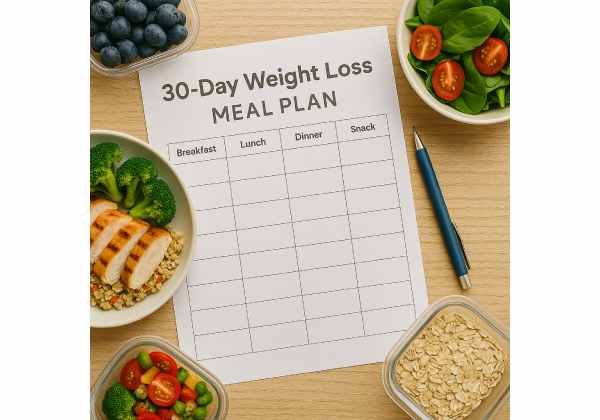
A 30-day weight loss meal plan should make eating simpler, not turn your kitchen into a second job. The most useful plans are not the ones with 30 completely different days. They are the ones you can repeat with small changes, shop for in one trip, prep in a few batches, and follow even when work gets busy or motivation drops. That is what this template is built to do.
Instead of giving you a rigid menu that falls apart after one missed meal, this article shows you how to build a repeatable month of breakfasts, lunches, dinners, and snacks around a realistic calorie deficit, steady protein, and enough fiber and volume to keep hunger manageable. You will learn how to set your targets, use a weekly rotation that lasts all month, shop and prep efficiently, and adjust the plan when progress slows or real life interrupts it.
Table of Contents
- Why a repeatable template works
- Set calories, protein, and meal structure
- Your repeatable 7-day base week
- How to repeat it for 30 days
- Grocery list and meal-prep system
- How to adjust without starting over
Why a repeatable template works
Most people do not struggle with weight loss because they lack nutrition information. They struggle because everyday eating decisions add up fast. Breakfast is skipped, lunch is improvised, dinner gets pushed late, and snacks fill the gaps. A repeatable 30-day meal plan works because it reduces the number of decisions you need to make while still leaving room for normal life.
That balance matters. A plan that is too loose often becomes guesswork. A plan that is too strict usually breaks the first time you eat out, work late, or run out of groceries. A template sits in the middle. It gives you a stable structure you can run again next week, with enough variety to keep food from feeling repetitive.
A good repeatable template usually has five features:
- Consistent calorie control: you stay in a realistic deficit most days instead of swinging between very low intake and overeating
- Protein at each meal: this helps meals feel more satisfying and makes a fat-loss phase easier to sustain
- High-fiber foods built in: vegetables, fruit, beans, oats, potatoes, and whole grains help with fullness
- Simple food repetition: a few repeated meals make shopping, prep, and portioning much easier
- Flexible substitutions: you can swap proteins, carb sources, or vegetables without breaking the plan
This approach also helps with one of the biggest hidden problems in dieting: decision fatigue. By the end of a long day, most people are less likely to weigh options carefully and more likely to choose what is quickest, most rewarding, or already in front of them. A repeatable template protects you from that. You already know what breakfast looks like, what lunch options are available, and what dinner portions make sense.
The goal is not to make every day identical. The goal is to make the month predictable enough that your nutrition supports weight loss even when motivation is average. That is why this article uses one repeatable base week and then shows you how to rotate it across four weeks. If you need more background on how meal plans fit into a sustainable deficit, it helps to review simple calorie-deficit steps. And if you are trying to build a plan that feels realistic on top of work, family, and commuting, a weight loss routine that fits your life is just as important as the food itself.
Set calories, protein, and meal structure
Before you fill a calendar with meals, decide what the plan is supposed to do. A 30-day weight loss meal plan should usually create steady progress, not extreme loss in week one followed by rebound hunger in week two. That starts with three basic targets: calories, protein, and meal timing.
For calories, most adults do better with a moderate deficit than an aggressive one. The exact number varies, but the right starting point is the lowest intake you can repeat calmly for a month, not the lowest intake you can force for three days. If you are not sure where to begin, use a reasonable estimate and adjust after two to four weeks of consistent tracking. Many people do well with a structure that keeps meals similar on weekdays and slightly more flexible on weekends, while still protecting the weekly average.
Protein should be intentional, not accidental. A lot of “healthy eating” plans end up too low in protein because the day is built around cereal, toast, salads, and snack foods. A better target for many adults in a fat-loss phase is to include a clear protein source in every meal and snack, aiming for roughly 25 to 40 grams at main meals. That usually improves fullness and makes the month easier to stick with. If you want a more precise starting point, use protein targets by body weight and compare them with your current intake.
Next, choose a meal structure that you can actually live with. Three patterns tend to work well:
- Three meals and one snack: best for people who like predictable eating and tend to over-snack when meals are too small
- Three meals and two smaller snacks: useful for long workdays or early workouts
- Two larger meals, one lighter meal, and one snack: helpful for people who prefer larger portions later in the day
The best structure is the one that reduces unplanned eating. That usually matters more than whether you eat at 7:30 or 8:15. A practical daily framework looks like this:
- Breakfast: 300 to 450 calories
- Lunch: 400 to 550 calories
- Dinner: 450 to 650 calories
- Snack: 150 to 250 calories
That adds up to a realistic daily range for many people while leaving room to scale portions up or down. If you like more precision, you can build your plan around macro ratios for weight loss. If you prefer less tracking, use portions and repeat the same meal shapes until they become automatic.
Your repeatable 7-day base week
The easiest way to build a 30-day weight loss meal plan template is to create one strong base week and repeat it with a few food swaps. That gives you structure without forcing you to invent four separate weeks from scratch.
Use the base week below as a framework. Portion sizes can be adjusted to fit your calorie needs, but the pattern stays the same.
Day 1
- Breakfast: Greek yogurt, berries, oats, and chia
- Lunch: Chicken, rice, and roasted vegetables
- Snack: Cottage cheese and fruit
- Dinner: Salmon, potatoes, and broccoli
Day 2
- Breakfast: Eggs, egg whites, toast, and fruit
- Lunch: Turkey wrap with salad and a side of carrots
- Snack: Protein shake or skyr
- Dinner: Lean beef stir-fry with rice and mixed vegetables
Day 3
- Breakfast: Protein oatmeal with banana and cinnamon
- Lunch: Tuna and chickpea salad bowl
- Snack: Apple and a measured portion of nuts
- Dinner: Chicken fajita bowl with beans, peppers, and rice
Day 4
- Breakfast: Cottage cheese bowl with pineapple and seeds
- Lunch: Lentil soup with grilled chicken or turkey on the side
- Snack: Hard-boiled eggs and cucumber
- Dinner: Turkey meatballs, pasta, marinara, and salad
Day 5
- Breakfast: Smoothie with Greek yogurt, protein powder, berries, and spinach
- Lunch: Meal-prep burrito bowl with lean protein, rice, beans, and lettuce
- Snack: Edamame or roasted chickpeas
- Dinner: Shrimp, couscous, and zucchini
Day 6
- Breakfast: Omelet with vegetables and toast
- Lunch: Chicken pasta salad with a yogurt-based dressing
- Snack: Cottage cheese and berries
- Dinner: Pork tenderloin, sweet potato, and green beans
Day 7
- Breakfast: Overnight oats with yogurt and fruit
- Lunch: Turkey sandwich, salad, and fruit
- Snack: Protein pudding or skyr
- Dinner: Sheet-pan chicken, potatoes, and Brussels sprouts
This works because the meals follow the same logic every day:
- breakfast starts with protein
- lunch is built from a protein, a carb, and vegetables
- dinner is filling but not oversized
- snacks are planned, not random
If you want to expand the lunch and dinner options without changing the overall structure, make-ahead lunch ideas and easy high-protein dinners are the best places to borrow from. The key is to replace meals with similar calorie and protein value, not simply swap in whatever sounds healthy.
How to repeat it for 30 days
Once you have a solid base week, the next step is making it feel sustainable across a full month. You do not need 30 different menus. You need a repeat system that keeps boredom low and compliance high.
A useful method is to keep the meal structure the same while changing the ingredients each week. Think of week one as your blueprint, then use weeks two through four as controlled variations.
Week 1: learn the structure
- Follow the base week closely
- Measure portions more carefully than usual
- Notice which meals keep you full the longest
- Identify any meals that feel too small, too large, or too inconvenient
Week 2: keep the structure, change two proteins and two carb sources
- Swap chicken for turkey or tofu
- Swap salmon for white fish or shrimp
- Rotate rice with potatoes, quinoa, or pasta
- Keep breakfast and snack choices mostly stable
Week 3: repeat your best-performing meals
- Bring back the breakfasts and lunches that felt easiest
- Use the dinners that gave the best fullness for the calories
- Simplify further if the month is getting busy
Week 4: plan for realism, not perfection
- Keep weekday meals very predictable
- Build in one flexible meal for a social event or restaurant
- Keep protein and vegetables steady even when the meal is less structured
This kind of repetition is a strength, not a weakness. People often assume meal plans have to look highly varied to be healthy. In practice, the opposite is often true. Repeating a few reliable meals tends to improve consistency, reduce grocery waste, and make calorie control easier.
A few smart rotation rules help:
- Change seasonings before changing the entire meal
- Rotate sauces carefully because they can shift calories fast
- Use the same protein with different carb and vegetable pairings
- Keep one or two “emergency meals” ready for chaotic days
- Repeat breakfasts more often than dinners, since breakfast boredom is usually easier to tolerate
A month-long template also works better when you set expectations correctly. The plan should feel mildly repetitive. That is part of why it works. Weight loss tends to go better when meals are satisfying enough to repeat, not exciting enough to trigger constant extra eating. If weekends are where your structure usually slips, a simple strategy from staying on track on weekends can protect your progress without making the month feel restrictive.
Grocery list and meal-prep system
A repeatable meal plan depends less on willpower than on setup. If your kitchen contains the right foods in the right form, the plan feels easy. If every meal requires a full cooking session, the plan becomes fragile by day four.
The easiest way to shop is by building a “monthly core list” and then restocking it weekly.
Core protein list
- Chicken breast or thighs
- Lean ground turkey
- Eggs and egg whites
- Greek yogurt or skyr
- Cottage cheese
- Canned tuna or salmon
- Shrimp or frozen fish
- Lean beef or pork tenderloin
- Beans, lentils, chickpeas, or edamame
- Protein powder if you use it
Core carb list
- Oats
- Rice
- Potatoes or sweet potatoes
- Whole-grain bread or wraps
- Pasta, quinoa, or couscous
- Fruit for breakfasts and snacks
- Beans for extra fiber and volume
Core produce list
- Salad greens
- Cucumbers and tomatoes
- Peppers and onions
- Broccoli, green beans, zucchini, or Brussels sprouts
- Carrots
- Frozen vegetables for backup
- Berries, apples, bananas, oranges, or pineapple
Core extras
- Salsa
- Marinara
- Hummus
- Light dressing
- Olive oil
- Seasonings and spice blends
- Nuts or seeds in measured portions
Then use a simple prep system once or twice a week:
- Cook two proteins in bulk
- Prepare one or two carb bases
- Roast or steam a large tray of vegetables
- Portion grab-and-go snacks
- Wash fruit and salad ingredients ahead of time
That is enough for most people. You do not need to prep every meal into a container. You only need to remove the hardest part of weekday eating: the effort required to get started. If you want a more structured version of this, a one-hour weekend meal-prep plan can make the month much smoother.
Portions matter too. A meal plan can look healthy and still overshoot calories if oils, nuts, dressings, cereal, granola, or restaurant-size starch portions creep upward. A helpful shortcut is using a consistent visual system for your plate: lean protein as the anchor, vegetables taking up major volume, and starches measured with more intention. That is where a plate method and visual portion guide becomes useful, especially if you do not want to count every gram.
How to adjust without starting over
A good 30-day weight loss meal plan template does not need to be replaced the moment something goes wrong. It needs a system for adjustment. Most stalls are not signs that the plan is broken. They are signs that portions drifted, weekends expanded, hunger rose, or activity dropped.
Start with a two-to-four-week review before making major changes. Ask:
- Have I followed the plan consistently enough to judge it?
- Are portions still close to what I intended?
- Are snacks still planned, or have they become casual extras?
- Have weekends erased part of the weekday deficit?
- Has step count or general movement dropped?
If fat loss is slower than expected, make the smallest useful change first. Good options include:
- remove one calorie-dense extra, such as a large handful of nuts or extra dressing
- tighten up one meal that tends to grow in portion size
- replace an unplanned snack with a protein-based option
- increase daily movement modestly
- keep restaurant meals to one flexible slot instead of multiple open-ended ones
Do not cut calories immediately every time the scale stalls for a few days. Water retention, sodium, menstrual cycle changes, harder training, and constipation can all mask fat loss in the short term. That is why trend data matters more than one weigh-in. If you are unsure whether the problem is a real stall or normal fluctuation, how to check a true plateau can help you decide.
Hunger also deserves adjustment, not denial. If the plan leaves you constantly preoccupied with food, make it easier to live with. You can:
- raise protein at breakfast and lunch
- add more vegetables, fruit, beans, or potatoes
- choose lower-calorie, higher-volume snacks
- reduce liquid calories
- make dinner slightly larger and snacks slightly smaller
- keep tempting, easy-to-overeat foods less visible at home
For many people, the most useful fix is improving snack quality rather than eliminating snacks. A measured, protein-forward snack can prevent the kind of late-evening overeating that ruins an otherwise solid day. That is where smart snack options earn their place in a monthly plan.
The point of a repeatable template is not to avoid adjustments. It is to make adjustments small. When the structure stays stable, you can change one lever at a time and keep moving forward without rebuilding your entire month.
References
- Obesity Management in Adults: A Review 2023 (Review). ([PubMed][1])
- Enhanced protein intake on maintaining muscle mass, strength, and physical function in adults with overweight/obesity: A systematic review and meta-analysis 2024 (Systematic Review and Meta-Analysis). ([PubMed][2])
- Meal Timing and Anthropometric and Metabolic Outcomes: A Systematic Review and Meta-Analysis 2024 (Systematic Review and Meta-Analysis). ([PubMed][3])
- The role of dietary fibers in regulating appetite, an overview of mechanisms and weight consequences 2024 (Review). ([PubMed][4])
- Scientific Report of the 2025 Dietary Guidelines Advisory Committee 2024 (Guideline Report). ([Dietary Guidelines][5])
Disclaimer
This article is for general educational purposes only and does not replace medical advice, diagnosis, or treatment. Calorie needs, protein needs, and safe rates of weight loss vary by age, body size, activity level, medical history, medications, and life stage. If you are pregnant, breastfeeding, under 18, managing diabetes, kidney disease, an eating disorder, or any condition that affects appetite, metabolism, or nutrition, speak with a qualified clinician or registered dietitian before starting a 30-day weight loss meal plan.
If this template helped, please share it on Facebook, X, or your preferred platform so someone else can use it to build a more realistic month of eating.