
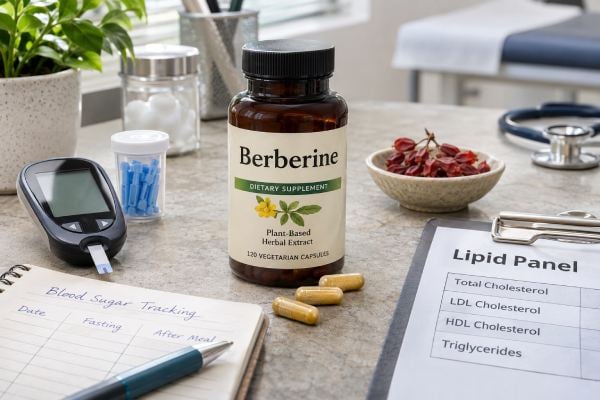
Berberine may modestly improve LDL cholesterol, triglycerides, and blood sugar in some adults, but it is not a substitute for proven cholesterol or diabetes treatment. Clinical trials and meta-analyses suggest that berberine can lower several cardiometabolic markers, yet the evidence has important limitations: many studies are short, supplement quality varies, and long-term data on heart attacks, strokes, and other clinical outcomes are lacking.
Typical research doses are about 900–1,500 mg per day, often divided into two or three doses. That does not mean this dose is appropriate for everyone. Berberine can cause nausea, diarrhea, constipation, and abdominal discomfort, and it can interact with medications by affecting drug-metabolizing enzymes and transporters. The safest way to use it is as an optional adjunct after reviewing your medication list and treatment goals with a clinician or pharmacist—especially if you take glucose-lowering drugs, blood thinners, transplant medicines, or multiple prescriptions.
Table of Contents
- What Berberine Is and How It May Work
- Benefits for Cholesterol and Triglycerides
- Benefits for Blood Sugar and Insulin Resistance
- Berberine Dosage: What Studies Commonly Use
- Drug Interactions and Who Should Avoid It
- Side Effects and Product Quality
- How to Decide Whether Berberine Is Worth Trying
What Berberine Is and How It May Work
Berberine is a plant alkaloid found in several plants used in traditional medicine, including barberry species. Supplements usually contain berberine hydrochloride. It is marketed for cholesterol, blood sugar, weight management, and “metabolic health,” but the strongest human evidence is for modest changes in laboratory risk factors rather than prevention of heart attacks or diabetes complications.
Berberine appears to act through several pathways. Research suggests effects on hepatic glucose production, insulin signaling, lipid metabolism, gut microbiota, and cholesterol regulation. Some laboratory work also points to effects on PCSK9 expression, a pathway involved in LDL receptor recycling. These mechanisms are biologically interesting, but mechanism alone does not prove clinical benefit.
That distinction matters. A supplement can lower a laboratory value without having the same outcome evidence as a statin, GLP-1 medicine, SGLT2 inhibitor, metformin, or other prescription therapy. For cardiovascular prevention, medications with large outcome trials remain the standard when indicated.
Berberine is also poorly absorbed by mouth, and product formulation may change exposure. Supplement labels do not guarantee that two brands provide identical bioavailability. This is one reason it is hard to translate a study dose into a guaranteed effect from an over-the-counter product.
Benefits for Cholesterol and Triglycerides
Meta-analyses generally find that berberine lowers LDL cholesterol and triglycerides by a modest amount. One placebo-controlled meta-analysis reported an average LDL reduction of about 18 mg/dL and a triglyceride reduction of about 30 mg/dL across trials using roughly 900–1,500 mg per day. Another broader analysis found smaller average LDL effects but consistent improvement across several lipid markers.
Those averages hide substantial variation. People with higher starting levels may see a larger numerical change, while others see little effect. Trials also differ in duration, background diet, other supplements, and whether berberine is used alone or as part of a combination product.
Berberine should not be considered equivalent to a statin or other established LDL-lowering drug. Moderate- and high-intensity statins can reduce LDL by much larger percentages, and they have decades of cardiovascular outcome evidence. Ezetimibe, PCSK9-targeting therapies, and bempedoic acid also have clearer pharmaceutical dosing and quality control.
If your goal is to lower cholesterol, establish the target first. Someone with mild LDL elevation and low overall risk is in a different situation from someone with prior heart attack, stroke, familial hypercholesterolemia, or very high ApoB. A modest supplement effect may be insufficient in higher-risk settings.
Benefits for Blood Sugar and Insulin Resistance
Berberine has also been studied in type 2 diabetes and insulin resistance. Recent meta-analyses suggest reductions in fasting glucose, two-hour post-meal glucose, and HbA1c, especially when berberine is added to standard therapy. Reported HbA1c reductions across analyses are often around half a percentage point, although study quality and results vary.
That may sound clinically meaningful, but caution is important. Many trials are relatively small and short, and a large proportion were conducted in China. Different background therapies make it difficult to know how well the average result applies to an individual patient.
If you already take diabetes medication, adding berberine without supervision could increase the chance of low blood sugar, depending on the drug regimen. The risk is more relevant with insulin or medicines that directly increase insulin release. Even when hypoglycemia is not severe, gastrointestinal side effects may make it difficult to continue the supplement.
Use standard measurements to judge effect. Fasting glucose can vary day to day, so HbA1c or structured home glucose data are more useful than a single reading. If you are tracking how blood sugar relates to cardiovascular risk, A1C and heart risk explains why glucose is only one part of the picture.
Berberine Dosage: What Studies Commonly Use
Most cholesterol and glucose trials use total daily doses around 900–1,500 mg, often divided into two or three doses. Common supplement instructions are 500 mg two or three times daily with meals. Research does not establish one universally “best” dose, and higher doses do not necessarily produce proportionally better results.
Dividing the dose may improve gastrointestinal tolerability because taking a large amount at once can worsen cramping, nausea, diarrhea, or constipation. Some people start lower for several days before increasing, but this is a tolerance strategy rather than a proven requirement.
Do not use dosing from a study as a personal prescription. Kidney and liver function, pregnancy status, age, medication interactions, and the exact product all matter. Supplement quality is another issue: over-the-counter products are not regulated with the same premarket standards as prescription medicines.
If you and your clinician decide on a trial, define a time-limited plan. For example, use one consistent product, keep other major lifestyle changes stable if possible, and recheck the relevant lab marker after about 8–12 weeks. If there is no meaningful benefit or side effects are troublesome, there is little reason to continue indefinitely.
Avoid “stacking” multiple cholesterol or glucose supplements without review. Combining berberine with red yeast rice, high-dose niacin, or other active products can make side effects and interactions harder to identify.
Drug Interactions and Who Should Avoid It
Berberine can affect cytochrome P450 enzymes and transport proteins involved in drug metabolism. A recent review describes effects on CYP3A4/5, CYP2D6, CYP2C9, CYP1A enzymes, and others. This creates the potential for clinically relevant interactions, particularly with drugs that have a narrow therapeutic range.
Extra caution is warranted with anticoagulants or antiplatelet medicines, diabetes drugs, immunosuppressants such as cyclosporine or tacrolimus, and medications heavily dependent on CYP metabolism. The exact interaction risk depends on the drug, dose, and patient. A pharmacist is often the best person to screen the full list.
Berberine is generally avoided during pregnancy and breastfeeding because of insufficient safety data and concerns about effects in newborns. It should not be given to infants. People with significant liver or kidney disease should also obtain medical guidance before use.
If you are already using several prescription medicines, do not assume a supplement is safe because it is “natural.” Natural products can be pharmacologically active. Bring the bottle or a photo of the Supplement Facts label to your appointment so the clinician can review the exact ingredients and dose.
Side Effects and Product Quality
The most common side effects are gastrointestinal: diarrhea, constipation, nausea, abdominal pain, bloating, and cramping. These effects are usually mild in trials but can be enough to stop treatment. Taking berberine with meals or lowering the dose may improve tolerance for some people.
Serious adverse events appear uncommon in short-term trials, but that does not prove long-term safety. Supplement studies often include fewer people and shorter follow-up than prescription-drug trials, so rare harms are easier to miss.
Product quality matters because dietary supplements can vary in purity and dose accuracy. Choose products from manufacturers that use independent testing when possible. Third-party certification does not prove that berberine works, but it can increase confidence that the product contains what the label claims and has been screened for contaminants.
Be skeptical of combination formulas that do not disclose exact amounts. A proprietary blend makes it difficult to know how much berberine you are taking or which ingredient caused a side effect. It also complicates medication-interaction checks.
If your main goal is LDL lowering, food strategies such as a soluble-fiber “stack” of oats, psyllium, and legumes have fewer drug-interaction concerns and can be used whether or not you take medication.
How to Decide Whether Berberine Is Worth Trying
Start with the clinical problem, not the supplement. If you have high LDL, calculate cardiovascular risk and identify a reasonable LDL or ApoB target. If you have diabetes or prediabetes, know your HbA1c, fasting glucose, kidney function, and current medications. A supplement only makes sense if it fits into that larger plan.
Berberine may be reasonable for some adults who want an adjunct and understand that the expected effect is modest. It is a poor substitute for indicated medication in high-risk disease. If LDL is very high or you already have cardiovascular disease, delaying proven therapy while experimenting with supplements can create avoidable risk.
If you proceed, use a simple monitoring plan:
- Record your baseline labs and medication list.
- Choose one transparent, consistently dosed product.
- Avoid adding several supplements at once.
- Recheck cholesterol or HbA1c after a defined interval, usually about 8–12 weeks.
- Stop and seek advice if you develop significant side effects or signs of an interaction.
The most useful question is not “Does berberine work?” but “Is the likely benefit large enough, safe enough, and necessary enough for me compared with better-studied options?”
One more limitation deserves emphasis: supplement studies often measure surrogate outcomes such as LDL or HbA1c rather than clinical outcomes such as heart attack, stroke, kidney failure, or mortality. Surrogate improvements can be valuable, but they do not automatically prove that long-term complications will fall by the same amount.
Quality control also changes the real-world equation. Prescription medicines are manufactured to tight standards for potency and purity. Dietary supplements may be manufactured well, but oversight is different and batch-to-batch variability can occur. Independent certification can reduce uncertainty about contents, though it cannot establish effectiveness.
If you are tempted to use berberine because it is “natural,” remember that its ability to affect glucose, lipids, and drug-metabolizing enzymes is exactly why it can also cause side effects and interactions. Pharmacologic activity cuts both ways.
How Berberine Compares With Lifestyle Changes
Berberine is often marketed as a shortcut for “metabolic health,” but the basics still matter more. Losing excess weight when appropriate, replacing saturated fat with unsaturated fat, increasing soluble fiber, exercising regularly, sleeping adequately, and reducing excess alcohol can improve several risk factors at the same time. A supplement that lowers LDL modestly does not compensate for smoking, untreated hypertension, or consistently high blood sugar.
Lifestyle changes also have fewer medication interactions. Oats, beans, nuts, vegetables, and regular walking can be used alongside most prescription regimens, whereas berberine may require a detailed drug-interaction check. That does not mean lifestyle changes are always enough. If LDL or HbA1c remains above target, prescription therapy may provide a larger and more reliable effect.
For someone with prediabetes, a supplement trial should not replace weight management, exercise, or a structured diabetes-prevention plan. For someone with established type 2 diabetes, treatment decisions should be based on cardiovascular and kidney risk as well as glucose. Some modern diabetes medicines reduce heart and kidney events in specific high-risk groups; berberine has not shown equivalent outcomes.
What Lab Changes Would Count as Meaningful?
Before starting, define success. If LDL is 150 mg/dL and the goal is below 100 mg/dL, an average berberine response may not be enough. If HbA1c is 8.5%, a half-point reduction can help but still leaves glucose well above target. The treatment plan should match the gap between your current values and the goal.
This is why a baseline and repeat lab are useful. For cholesterol, repeat testing after about 8–12 weeks is common. For HbA1c, three months is a practical interval because the test reflects average glucose over roughly that period. Fasting glucose can respond sooner, but single readings are noisy.
If the numbers improve only slightly and side effects are bothersome, continuing indefinitely may not make sense. If the numbers improve substantially and the supplement is well tolerated, you still need periodic review because medications, kidney function, body weight, and overall risk can change over time.
Questions to Ask a Pharmacist or Clinician
Bring a full medication and supplement list, not just prescription drugs. Ask whether berberine could alter the exposure of any medicine you take, whether the timing should be separated, and what symptoms would suggest an interaction. If you take diabetes drugs, ask whether you need more frequent glucose monitoring during the first weeks.
Also ask what evidence-based alternatives exist. If the main issue is statin intolerance, ezetimibe, bempedoic acid, or PCSK9-targeting therapy may be more appropriate. If the main issue is glucose, standard diabetes medications have clearer dosing and outcome data.
Finally, ask how the supplement fits into pregnancy plans, surgery, or acute illness. “Natural” products are often omitted from preoperative medication lists, yet pharmacologically active supplements can matter. Treat berberine like a real drug exposure: disclose it, monitor it, and stop if the risk begins to outweigh the benefit.
Situations Where Berberine Is a Poor Fit
Berberine is a poor fit when the treatment gap is large or the interaction risk is high. Someone with LDL above 190 mg/dL, prior heart attack or stroke, or poorly controlled diabetes usually needs therapies with stronger and more predictable evidence. Likewise, someone taking a transplant drug, warfarin-like anticoagulant, or several glucose-lowering medicines may gain little from adding a supplement that complicates monitoring.
It is also a poor fit when a person is unwilling to recheck labs. Because you cannot feel LDL or HbA1c directly, using berberine without follow-up turns treatment into guesswork. A supplement should earn its place by producing a measurable benefit that is large enough to matter.
If you stop berberine, do not expect the effect to persist indefinitely. Like most metabolic treatments, any benefit depends on continued exposure and the rest of the lifestyle pattern. This is another reason to build the foundation around diet, exercise, sleep, weight, and prescribed therapy rather than making the supplement the center of the plan.
The most useful way to apply this information is to make one change, measure the result, and then decide whether it deserves a permanent place in your routine. Cardiovascular risk factors respond to the total pattern over time, so a modest intervention can still be worthwhile when it is safe, affordable, and easy to sustain. At the same time, do not let a modest food or supplement effect delay treatment that has stronger evidence when your risk is high.
Keep records simple: note the product or food amount, the dates you used it, relevant home measurements, and the next lab value or clinic reading. This prevents memory from exaggerating benefits or side effects. If the expected benefit does not appear after a reasonable trial, reassess rather than automatically increasing the dose. If it does help, keep the rest of the plan in place—diet quality, physical activity, sleep, smoking avoidance, and prescribed treatment remain the foundation of cardiovascular prevention.
References
- Impact of Berberine or Berberine Combination Products on Lipoprotein, Triglyceride and Biological Safety Marker Concentrations in Patients with Hyperlipidemia: A Systematic Review and Meta-Analysis 2024 (Systematic Review)
- Overall and Sex-Specific Effect of Berberine for the Treatment of Dyslipidemia in Adults: A Systematic Review and Meta-Analysis of Randomized Placebo-Controlled Trials. 2023 (Systematic Review)
- Effects of administering berberine alone or in combination on type 2 diabetes mellitus: a systematic review and meta-analysis 2024 (Systematic Review)
- The effects of berberine supplementation on cardiovascular risk factors in adults: A systematic review and dose-response meta-analysis 2022 (Systematic Review)
- Effects of Berberis vulgaris, and its active constituent berberine on cytochrome P450: a review. 2024 (Review)
Disclaimer
Berberine is a biologically active supplement and can interact with prescription medicines. Do not use it as a replacement for prescribed cholesterol or diabetes treatment without medical guidance, and avoid it during pregnancy or breastfeeding unless a qualified clinician specifically recommends it.





