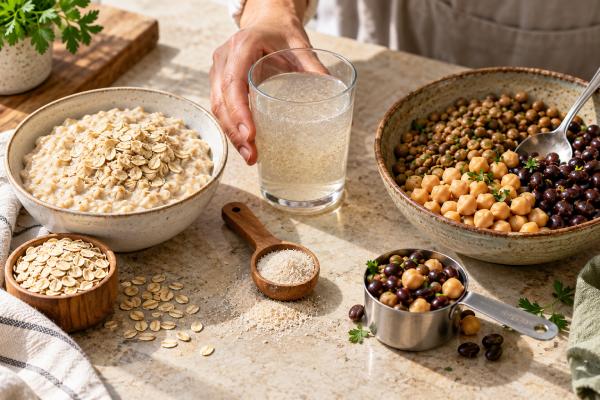
A practical soluble-fiber “stack” can lower LDL cholesterol by combining several proven sources instead of relying on one food. Oats supply beta-glucan, psyllium provides a concentrated dose of highly viscous fiber, and beans or lentils add soluble fiber while replacing foods that may be higher in saturated fat. The point is not to pile on extreme amounts of fiber or assume the effects add together perfectly. It is to reach an effective daily intake consistently and in a way your digestive system can tolerate. For many people, a reasonable target is about 5 to 10 grams of viscous soluble fiber per day, with around 3 grams of oat or barley beta-glucan and roughly 7 to 10 grams of psyllium among the best-studied specific doses. LDL can begin responding within a few weeks. The fastest practical gains usually come from combining fiber with lower saturated fat, not from endlessly increasing psyllium or eating enormous servings of oats and legumes.
Table of Contents
- What a Soluble Fiber Stack Means
- Which Fiber Sources Have the Strongest LDL Evidence
- A Practical Daily Stack
- How Fast LDL Can Drop
- How to Get More Benefit Without More Fiber
- Common Mistakes With High-Fiber Cholesterol Plans
- When to Recheck Cholesterol and Add Treatment
What a Soluble Fiber Stack Means
A soluble-fiber stack simply means using more than one effective fiber source across the day. It is not a formal medical protocol and it does not require supplements. The idea is useful because different foods solve different problems.
Oats and barley provide beta-glucan, a viscous soluble fiber with consistent cholesterol-lowering evidence. Psyllium is highly concentrated, making it easier to add a measurable amount without a large meal. Legumes provide soluble fiber, resistant starch, plant protein, and a strong replacement option for refined grains or animal foods high in saturated fat.
The cholesterol effect comes partly from viscosity. When certain soluble fibers absorb water, they form a gel in the intestine. That gel interferes with bile-acid recycling. The liver then uses more cholesterol to replace bile acids, which can increase clearance of LDL particles from the blood.
Fermentation by gut bacteria may add metabolic benefits, but the fibers with the clearest LDL evidence are often the ones that remain sufficiently viscous in the digestive tract. This is why “more total fiber” and “more LDL-lowering fiber” are related but not identical goals.
A stack also spreads fiber through the day. Instead of taking a large psyllium dose at once, you might eat oats at breakfast, legumes at lunch, and a smaller psyllium dose later. That can be easier on the digestive system and easier to sustain.
The stack should complement, not replace, the rest of a cholesterol-lowering diet. Foods that lower LDL quickly often work through several mechanisms at once, including soluble fiber, lower saturated fat, plant sterols, and replacement of refined or highly processed foods.
Which Fiber Sources Have the Strongest LDL Evidence
Psyllium: the most concentrated option
Psyllium husk is one of the most efficient ways to add viscous soluble fiber. Recent meta-analyses of randomized trials show reductions in LDL and total cholesterol with regular use. Many studies use roughly 7 to 10 grams of psyllium per day, often divided into two doses.
The exact amount of soluble fiber depends on the product. Read the label rather than assuming a teaspoon equals a particular fiber dose. Psyllium must also be taken with enough liquid because it expands quickly.
For people who want a targeted supplement, psyllium is often more predictable than trying to calculate soluble fiber from a mixed meal. A dedicated psyllium guide for LDL lowering can help with dose and side effects.
Oats: the easiest food-based anchor
Oats are rich in beta-glucan. About 3 grams per day of oat beta-glucan is the classic evidence-based target for cholesterol lowering. Meta-analyses show that this amount can lower LDL by a modest but meaningful amount.
A standard bowl of oatmeal may or may not provide the full 3 grams, depending on the product and serving size. Oat bran is more concentrated than many oat products. Checking the label is useful if you are using oats therapeutically rather than simply as a healthy breakfast.
Whole oats also replace breakfast foods that may be higher in saturated fat or refined carbohydrate. The meal matters: oatmeal topped with fruit and nuts is a different cholesterol strategy from oats mixed with large amounts of butter, cream, or coconut oil.
Legumes: fiber plus replacement value
Beans, lentils, chickpeas, and peas lower LDL modestly in trials and meta-analyses. A recent dose-response analysis found favorable effects on LDL and other atherogenic lipid measures with whole dietary pulses, with roughly 1/2 to 2/3 cup per day common across studies and potential benefit up to around 1 cup for beans.
Legumes are valuable because they often replace something. A lentil chili replacing a beef-heavy meal lowers saturated fat while adding fiber. Chickpeas replacing refined crackers at a snack changes both the nutrient profile and fullness.
If beans are the part you struggle to use consistently, the best beans and portions for cholesterol can help turn the idea into meals.
A Practical Daily Stack
You do not need to hit a perfect gram target at every meal. A simple pattern can provide a meaningful viscous-fiber dose while keeping the diet normal.
| Time | Fiber choice | Practical example |
|---|---|---|
| Breakfast | Oats or oat bran | Oatmeal with berries, ground flax, and nuts |
| Lunch | Beans or lentils | Lentil soup or chickpea grain bowl |
| Afternoon or evening | Psyllium | A measured dose mixed with a full glass of water |
| Snacks | Fruit | Apple, pear, orange, or berries instead of juice |
This pattern may provide enough soluble fiber for many people without extreme portions. If your baseline fiber intake is low, introduce one component at a time.
A more aggressive stack is not automatically better. Doubling psyllium can increase bloating or constipation without doubling the LDL reduction. Large legume portions can cause gas, and very high total fiber can make it difficult to eat enough calories or protein in people with smaller appetites.
Use the lowest effective plan you can sustain. For example:
- Start with oats at breakfast for one week.
- Add 1/2 cup of beans or lentils daily the next week.
- Add a small psyllium dose only if you still need a more targeted viscous-fiber intake.
- Increase psyllium gradually according to product directions and tolerance.
If you already eat plenty of oats and legumes, psyllium may be the simplest addition. If you dislike supplements, you can build the stack entirely from food using oats, barley, beans, lentils, chia, flax, fruit, and vegetables.
The goal is not to create a “fiber challenge.” It is to make cholesterol-lowering foods routine enough that you are still eating them three months later.
One way to judge the stack is by how little friction it creates. If breakfast already includes oats, keep that habit. If lunch is usually a sandwich, add lentil soup or a bean-based side a few days per week. If food alone does not reliably provide enough viscous fiber, psyllium can fill the gap without redesigning every meal. The best stack is the one that fits your existing routine rather than demanding a completely new diet.
Portion size also matters more than the number of ingredients. A tablespoon of oats sprinkled on yogurt is not equivalent to a serving that provides a meaningful beta-glucan dose, and a spoonful of hummus is not the same as 1/2 cup of chickpeas. Use actual serving sizes when you are trying to produce a measurable lipid change.
How Fast LDL Can Drop
LDL can begin changing within a few weeks of a consistent fiber intervention. Many randomized trials of oats, psyllium, and soluble-fiber supplements run for roughly 4 to 12 weeks, and measurable changes often appear during that window.
The expected reduction is usually modest. A soluble-fiber strategy may lower LDL by several percent; psyllium and oat beta-glucan can sometimes produce reductions around the mid-single digits or somewhat more, depending on baseline LDL, dose, and the rest of the diet. Legumes add a smaller but useful effect.
Do not add the percentages from different studies as if they are guaranteed to stack mathematically. If oats lower LDL 5% in one trial and psyllium lowers it 7% in another, using both does not prove that your LDL will fall 12%. The same mechanisms overlap, study populations differ, and responses vary.
The faster practical win often comes from substitution. If oatmeal replaces a breakfast high in butter and processed meat, and lentils replace a high-saturated-fat dinner several times a week, LDL can benefit from both added viscous fiber and lower saturated fat.
This is why a person can get a better result from a moderate fiber stack plus smart substitutions than from a very high fiber intake layered onto the same high-saturated-fat diet. The liver responds to the entire nutrient pattern. Fiber helps remove bile acids, while reducing saturated fat helps the liver clear LDL particles more effectively. Using both mechanisms is usually more efficient than pushing either one to an extreme.
It is also reasonable to expect some day-to-day variation in intake. Missing one psyllium dose or eating a lower-fiber meal does not erase progress. LDL responds to the repeated pattern over weeks. Aim for consistency across most days rather than perfection at every meal.
A repeat lipid panel after about 6 to 12 weeks is a reasonable way to judge the overall result, depending on your clinician’s plan. Testing too soon can make normal biologic and laboratory variation look like success or failure.
If you want to know how quickly a broader diet plan can work, cholesterol-lowering timelines can help set realistic expectations.
How to Get More Benefit Without More Fiber
Once you have a solid soluble-fiber intake, the best next step is usually not another scoop of psyllium. Improve the rest of the diet.
Lower saturated fat
Saturated fat can raise LDL by reducing LDL-receptor activity in the liver. Common sources include butter, fatty red meat, processed meat, high-fat cheese, cream, coconut oil, and palm oil. Replacing some of these foods with olive oil, nuts, seeds, fish, avocado, and other unsaturated-fat sources can lower LDL further.
Add plant sterols or stanols when appropriate
Plant sterols and stanols reduce intestinal cholesterol absorption. Around 2 grams per day from fortified foods or supplements can lower LDL in many people. They work through a different mechanism from soluble fiber, so this combination is often more rational than simply adding more fiber.
Choose whole foods that improve multiple targets
Beans, nuts, vegetables, fruit, and whole grains help with more than LDL. They support fullness, blood pressure, blood sugar, and overall diet quality. This matters because cardiovascular risk is not determined by LDL alone.
Exercise and weight management
Exercise has many cardiovascular benefits even when LDL changes only modestly. If excess body weight is contributing to high triglycerides, insulin resistance, or blood pressure, gradual weight loss can improve the broader risk profile.
Stop smoking
Smoking cessation does not primarily lower LDL, but it sharply improves cardiovascular risk. A lower LDL level is much more valuable when other major risk factors are controlled too.
Common Mistakes With High-Fiber Cholesterol Plans
The most common mistake is increasing fiber too fast. Going from very little fiber to oats, two cups of beans, chia, flax, and a full psyllium dose in one day is a reliable way to feel bloated.
Increase one component at a time. Drink enough fluid, especially with psyllium. Split doses if needed.
Another mistake is using fiber to “cancel out” a diet high in saturated fat. Psyllium does not neutralize a daily pattern of butter, fatty meat, high-fat cheese, and coconut oil. The net LDL effect depends on the whole diet.
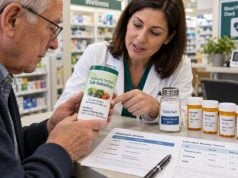
A third mistake is ignoring medication timing. Psyllium can interfere with absorption of some drugs and supplements. Follow the product instructions and ask a pharmacist whether your medicines should be separated from psyllium by a specific interval.
Do not take dry psyllium or use it with inadequate fluid. It swells quickly and can be a choking risk, especially for people with swallowing difficulty. Anyone with significant swallowing problems, prior bowel obstruction, or certain gastrointestinal conditions should get medical advice before using it.
Finally, avoid turning cholesterol management into an endless supplement stack. If LDL remains high despite a strong diet, the answer may be medication rather than a fifth fiber product.
Another common mistake is changing the plan every few days. Cholesterol does not respond quickly enough to tell you whether Monday’s oatmeal or Thursday’s psyllium “worked.” Pick a reasonable plan, follow it for several weeks, and judge the result with a lipid panel. Constantly rotating supplements makes the plan more expensive and harder to evaluate.
If gastrointestinal symptoms become persistent rather than mild and temporary, reduce the most recently added fiber source and reassess. Severe abdominal pain, vomiting, inability to pass stool or gas, or difficulty swallowing are not normal adaptation symptoms and require medical attention.
When to Recheck Cholesterol and Add Treatment
A soluble-fiber stack is most useful when you can measure whether it worked. If you make a substantial dietary change, a repeat lipid panel after roughly 6 to 12 weeks is often reasonable. Your clinician may choose a different interval based on medication changes or cardiovascular risk.
Compare LDL, non-HDL cholesterol, and, when available and appropriate, apolipoprotein B. Triglycerides can improve with weight loss, lower refined carbohydrate intake, less alcohol, and better blood sugar control, but soluble fiber is primarily an LDL strategy.
If LDL is 190 mg/dL or higher, if you have known atherosclerotic cardiovascular disease, diabetes, familial hypercholesterolemia, or a very high overall risk, do not wait for fiber alone to solve the problem. Medication may be strongly indicated. Statin benefits and eligibility can help explain why drug treatment may be recommended even with a good diet.
A good response to the stack might be a 5% to 10% LDL reduction. That is worthwhile, but it may not reach the LDL level appropriate for your risk. Food and medication are not competing philosophies; they often work together.
If your LDL barely changes, review the actual dose and the rest of the diet before concluding that fiber “doesn’t work.” You may not be getting enough beta-glucan or psyllium, saturated fat may still be high, adherence may be inconsistent, or genetics may dominate the response.
The fastest safe LDL wins usually come from combining several modest effects: enough viscous soluble fiber, lower saturated fat, plant sterols when useful, weight management when relevant, and medication when indicated. Oats, psyllium, and legumes are valuable because they are simple, evidence-based tools—not because they can replace the rest of cardiovascular prevention.
You can also build the stack around convenience foods without losing the core idea. Plain instant oats, frozen cooked grains, low-sodium canned beans, microwave lentil pouches, and pre-portioned psyllium can all work. The cholesterol benefit does not require elaborate cooking. What matters is the amount of effective fiber and what those foods replace. A convenient bean soup that replaces fast food can be more useful than a complicated recipe you rarely make.
If you track intake, do it for a short period. A week of labels and portions can show whether you are actually reaching a meaningful beta-glucan or psyllium dose. After that, repeating the same meals is often easier than continuing to log every gram. The aim is to create defaults: a breakfast that usually contains oats, a lunch or dinner that often contains legumes, and a psyllium routine if needed.
Finally, judge the stack by LDL reduction and tolerability together. A plan that lowers LDL slightly more but causes persistent bloating, interferes with medication timing, or is too complicated to maintain is not necessarily the better plan. The best “fast win” is the smallest sustainable set of changes that moves your laboratory numbers in the right direction without creating new problems.
A final practical point: keep the stack affordable. Generic oats, dry or canned beans, lentils, and plain psyllium usually provide the same core fiber mechanisms as premium “heart health” products. Paying more does not guarantee a larger LDL effect. Choose products with clear fiber amounts, minimal unnecessary saturated fat, and portions you will actually use.
References
- Effect of Different Types of Whole Dietary Pulses on Established Therapeutic Lipid Targets for Cardiovascular Risk Reduction: An Updated Systematic Review and Dose-Response Meta-Analysis of Randomized Controlled Trials. 2026 (Systematic Review)
- Psyllium supplementation and lipid profiles: systematic review and dose-response meta-analysis of randomized controlled trials 2025 (Systematic Review)
- Plantago consumption significantly reduces total cholesterol and low-density lipoprotein cholesterol in adults: A systematic review and meta-analysis 2024 (Systematic Review)
- Soluble Fiber Supplementation and Serum Lipid Profile: A Systematic Review and Dose-Response Meta-Analysis of Randomized Controlled Trials 2023 (Systematic Review)
- Effects of Oat Beta-Glucan Intake on Lipid Profiles in Hypercholesterolemic Adults: A Systematic Review and Meta-Analysis of Randomized Controlled Trials 2022 (Systematic Review)
- Authorized Health Claims That Meet the Significant Scientific Agreement (SSA) Standard 2024
Disclaimer
This article is for general education and does not replace individualized medical or nutrition advice. Ask a clinician or pharmacist before using psyllium if you have swallowing difficulty, significant gastrointestinal disease, or medications that may need timing separation. Very high LDL or established cardiovascular disease may require medication even with a strong high-fiber diet.