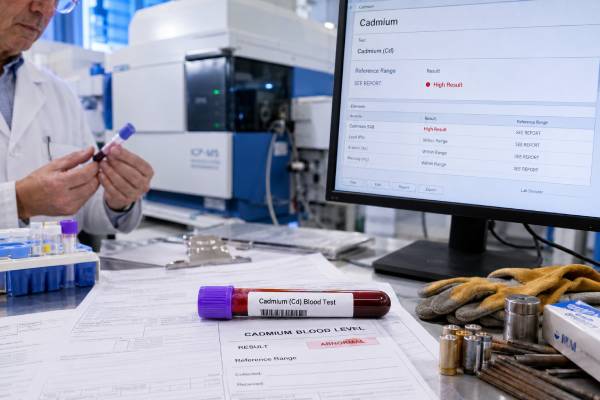
A cadmium blood test measures the amount of cadmium in your blood, usually to check for recent or ongoing exposure to this toxic metal. Cadmium can enter the body through cigarette smoke, contaminated food, certain workplaces, welding or cutting cadmium-containing metal, battery manufacturing, pigments, plating, smelting, and polluted soil or dust. A high blood cadmium result does not automatically mean poisoning, but it should be taken seriously because cadmium can build up in the body over time and damage the kidneys, bones, lungs, and other organs. Blood testing is most helpful after a suspected recent exposure, while urine cadmium is often better for estimating long-term body burden. Results need context: smoking status, job history, kidney markers, urine testing, symptoms, and whether the sample was collected in a trace-element-free tube can all change the interpretation.
- A cadmium blood test mainly reflects recent or ongoing cadmium exposure, not total lifetime body burden.
- Many non-occupationally exposed adults have blood cadmium below about 1 µg/L, but ranges vary by lab.
- Blood cadmium at or above 5 µg/L is often treated as a significant occupational comparison level and deserves follow-up.
- Urine cadmium, urine protein markers, creatinine, and eGFR are often checked when chronic exposure is suspected.
- Smoking is a major cadmium source and can raise blood and urine cadmium compared with nonsmokers.
- Shortness of breath, chest tightness, or cough after cadmium fume exposure needs urgent medical care.
Table of Contents
- What the Cadmium Blood Test Measures
- Normal Range and High Results
- Blood vs Urine Cadmium Testing
- Common Sources of Cadmium Exposure
- Symptoms and Health Risks of Cadmium Toxicity
- Follow-Up Tests and Next Steps
- How to Lower Exposure and Prevent Reexposure
What the Cadmium Blood Test Measures
A cadmium blood test measures cadmium in whole blood. Cadmium is a toxic metal with no known useful role in the human body. Small amounts are common in the environment, but higher exposure can occur from smoking, industrial work, contaminated dust, certain foods grown in cadmium-rich soil, and inhaling cadmium-containing fumes.
Most laboratories report blood cadmium in micrograms per liter, written as µg/L or mcg/L. Some reports use nanograms per milliliter, written as ng/mL. These units are numerically equivalent for cadmium blood testing: 1 µg/L equals 1 ng/mL.
Blood cadmium is usually ordered when recent exposure is possible. Examples include welding or cutting cadmium-plated metal, working around smelting or battery materials, cleaning up industrial dust, possible contamination from old pigments or coatings, or an unexplained high result on a broader heavy metals blood test panel.
The test is also used in occupational health programs. Workers with possible cadmium exposure may need periodic monitoring, especially if their job involves cadmium dust, fumes, solder, alloys, pigments, batteries, plating, plastics, or recycling of metal-containing materials. In those settings, results are interpreted alongside workplace air monitoring, respiratory protection, job tasks, and occupational safety rules.
Blood cadmium is not a stand-alone diagnosis of cadmium poisoning. A result can show exposure, but it cannot by itself prove organ damage. Cadmium toxicity depends on dose, route, duration, individual susceptibility, kidney function, nutritional status, smoking, and whether exposure is continuing.
Good sample collection matters. Cadmium is measured at very low concentrations, so contamination from the collection tube, needle, skin, or environment can distort the result. Blood for trace metals is usually collected in a certified trace-element tube, often a royal-blue-top tube. If a result is unexpected, repeating the test with careful trace-metal collection is often the first practical step.
Normal Range and High Results
A normal cadmium blood result depends on the laboratory method and reference interval. Always compare your number with the reference range printed on your own report. In general, adults without known occupational exposure often have blood cadmium below about 1 µg/L. Smokers often run higher than nonsmokers because tobacco plants absorb cadmium from soil and cigarette smoke delivers cadmium directly to the lungs.
There is no single universal line where cadmium changes from “safe” to “toxic.” Lower is generally better, especially when exposure is avoidable. A mildly elevated blood cadmium level may reflect smoking or a recent exposure that has already stopped. A higher or rising level suggests ongoing exposure or a more substantial recent exposure.
| Blood cadmium result | Common interpretation | Usual next step |
|---|---|---|
| Below about 1 µg/L | Often seen in people without known workplace exposure, especially nonsmokers | Review the lab’s reference range and exposure history |
| About 1 to 4.9 µg/L | May reflect smoking, diet, recent low-level exposure, or workplace contact | Look for sources, consider urine cadmium if chronic exposure is possible |
| 5 µg/L or higher | Often treated as a significant occupational comparison level | Repeat if unexpected, assess workplace risk, check kidney markers |
| 10 µg/L or higher | Suggests substantial recent or ongoing exposure | Prompt medical and occupational/environmental health evaluation |
| 25 µg/L or higher | Concerning for heavy exposure, especially if urine cadmium or kidney markers are abnormal | Specialist evaluation and urgent exposure control |
These ranges are a practical guide, not a personal diagnosis. A person with a lower blood cadmium result can still have a meaningful long-term body burden if urine cadmium is elevated. A person with a higher blood level may not yet have measurable organ damage if exposure was recent and quickly controlled.
Results also need smoking context. A smoker with a mildly elevated blood cadmium result may still need follow-up, but the most effective first intervention is often quitting smoking and avoiding secondhand smoke. If the level remains elevated after smoking stops, or if it is higher than expected for smoking alone, other sources should be investigated.
A high cadmium blood result should never be ignored in a worker. Cadmium can damage the kidney slowly, before obvious symptoms appear. If the exposure is job-related, the worker may need repeat testing, urine cadmium, urine protein markers, medical surveillance, workplace air monitoring, respirator review, hygiene changes, and temporary removal from exposure depending on the setting and rules that apply.
Blood vs Urine Cadmium Testing
Blood and urine cadmium answer different questions. Blood cadmium is better for recent or ongoing exposure. Urine cadmium is usually better for long-term accumulation because cadmium builds up in the kidneys and leaves the body slowly.
Cadmium can stay in the body for years to decades, especially in kidney tissue. That is why a person can have a normal or only mildly elevated blood cadmium result but still show evidence of chronic cadmium burden on urine testing. The reverse can also happen: after a recent fume or dust exposure, blood cadmium may rise before urine cadmium fully reflects longer-term accumulation.
| Test | Best use | Limitations |
|---|---|---|
| Blood cadmium | Recent or ongoing exposure; workplace monitoring; suspected acute inhalation or ingestion | Does not fully measure total body burden; may fall after exposure stops |
| Urine cadmium | Long-term exposure, body burden, kidney accumulation, chronic risk assessment | Needs creatinine correction or careful collection; can be harder to interpret in kidney disease |
| Hair or nail cadmium | Rarely useful for medical decisions | High risk of external contamination; poor timing information |
| Kidney markers | Detecting possible cadmium-related kidney effects | Abnormal results can have many causes besides cadmium |
For chronic exposure, clinicians often look at cadmium alongside kidney function. A focused cadmium and kidney markers evaluation may include urine cadmium, urine protein, beta-2 microglobulin or other tubular injury markers, serum creatinine, and eGFR.
Hair and nail testing can sound appealing because it seems simple, but it is not usually the best way to make medical decisions about cadmium. Dust, soil, cosmetics, workplace particles, or washing practices can contaminate hair and nails from the outside. Blood and urine are more useful when interpreted by a clinician familiar with toxic metal exposure.
A single test also has limits. Cadmium exposure often needs a pattern: current blood level, urine level, kidney markers, symptoms, exposure history, and sometimes repeat testing after removing a suspected source. Testing without source control can identify a problem but not fix it.
Common Sources of Cadmium Exposure
Cadmium exposure usually comes from inhalation or ingestion. Skin absorption is generally a minor route compared with breathing contaminated dust or fumes and swallowing contaminated food, water, or dust.
Smoking is one of the most common cadmium sources. Tobacco plants can absorb cadmium from soil, and inhaled smoke delivers cadmium efficiently into the body. Smokers often have higher blood and urine cadmium than nonsmokers. Secondhand smoke can also contribute, especially in enclosed spaces.
Food is the main source for many nonsmokers. Cadmium can accumulate in crops grown in contaminated soil or soil treated with phosphate fertilizers that contain cadmium. Higher-cadmium foods can include rice, wheat and other grains, potatoes, leafy vegetables, root vegetables, cocoa, sunflower seeds, shellfish, and organ meats such as liver and kidney. This does not mean these foods should be avoided completely. For most people, a varied diet is safer and more realistic than trying to eliminate every possible cadmium-containing food.
Workplace exposure can be much higher than ordinary diet exposure. Higher-risk settings include:
- Battery manufacturing, especially nickel-cadmium batteries
- Metal smelting, refining, soldering, brazing, and alloy work
- Electroplating and cadmium coating
- Welding, cutting, grinding, or heating cadmium-plated metal
- Pigment production or use of cadmium-containing pigments
- Plastics manufacturing involving cadmium stabilizers
- E-waste, battery, and metal recycling
- Industrial cleanup involving contaminated dust
Cadmium fumes are especially dangerous. Heating cadmium-containing metal can create fumes that are easy to inhale deeply into the lungs. Symptoms may be delayed, so a person can feel well at first and become seriously ill hours later.
Take-home exposure is also possible. Workers can carry cadmium dust on shoes, clothes, hair, tools, bags, or vehicles. Changing clothes, showering at work when available, using proper laundry procedures, and keeping work shoes out of the home can protect family members.
Some exposures overlap with other toxic metals. A person with suspected cadmium exposure may also need testing for lead, mercury, arsenic, or chromium depending on the source. For example, old industrial dust, smelting, contaminated soil, and certain imported products can involve more than one metal. In some cases, a blood lead test is ordered with cadmium because the exposure setting can involve both metals.
Symptoms and Health Risks of Cadmium Toxicity
Cadmium toxicity can be acute or chronic. Acute toxicity usually follows a large inhaled exposure, such as cadmium fumes from welding or cutting. Chronic toxicity usually follows repeated lower-level exposure over months or years.
Acute inhalation exposure can cause throat irritation, cough, chest tightness, shortness of breath, fever, chills, muscle aches, weakness, and headache. Severe exposure can cause chemical pneumonitis and pulmonary edema, where fluid builds up in the lungs. This can be life-threatening and may worsen after a delay. Anyone with breathing symptoms after possible cadmium fume exposure should seek urgent care.
Acute ingestion can cause nausea, vomiting, abdominal pain, diarrhea, and dehydration. Large ingestion can injure the liver and kidneys. Accidental ingestion is more likely when contaminated dust, pigments, industrial chemicals, or improperly stored materials are mistaken for something else.
Chronic cadmium exposure most often affects the kidneys. Cadmium can injure the proximal tubules, the part of the kidney that reabsorbs small proteins, minerals, bicarbonate, and other filtered substances. Early injury may show up as low-molecular-weight protein in the urine before a person feels sick. Over time, chronic exposure can contribute to proteinuria, reduced kidney function, and changes in calcium and phosphate handling.
Kidney follow-up often includes a kidney function blood test panel and urine testing. Serum creatinine and eGFR testing help estimate filtration, while urine markers can show tubular injury that may appear earlier than a major change in eGFR.
Bone effects can occur because cadmium-related kidney injury can disturb vitamin D activation, calcium balance, and phosphate balance. Long-term exposure has been linked with osteomalacia, osteoporosis, bone pain, and fractures. Severe historical cadmium poisoning caused “itai-itai” disease, a painful bone and kidney disorder described in communities exposed to cadmium-contaminated rice.
Lung disease is another concern. Chronic inhalation exposure has been linked with reduced lung function and emphysema-like changes. Cadmium and cadmium compounds are also recognized as carcinogenic, with occupational inhalation exposure most strongly linked to lung cancer risk.
Symptoms are not a reliable screening tool. Early chronic cadmium toxicity may be silent. Fatigue, weakness, bone pain, frequent urination, foamy urine, or unexplained kidney changes can have many causes, so cadmium testing should be guided by exposure history and medical evaluation rather than symptoms alone.
Follow-Up Tests and Next Steps
A high cadmium blood result should lead to two questions: Where is the exposure coming from, and has it affected the body? The next step depends on the level, symptoms, job setting, and whether the result was expected.
If the result is mildly elevated and the person smokes, smoking is the first exposure to address. Quitting can reduce ongoing cadmium intake and lowers many other health risks. The clinician may repeat blood cadmium after a period without exposure and may order urine cadmium if there is concern for long-term accumulation.
If the result is unexpected, repeating the test is often useful. Trace-metal testing is sensitive to contamination. The repeat sample should be collected in the correct tube, with careful skin cleaning and handling. The lab should know that cadmium is being measured so the right collection materials are used.
Follow-up testing may include:
- Urine cadmium, often corrected to urine creatinine
- Urinalysis for protein, glucose, and other abnormalities
- Urine beta-2 microglobulin, retinol-binding protein, or N-acetyl-beta-D-glucosaminidase when tubular injury is suspected
- Serum creatinine, eGFR, BUN, electrolytes, bicarbonate, calcium, phosphate, and uric acid
- Liver enzymes if acute ingestion or high exposure is possible
- CBC if there are symptoms or mixed metal exposure concerns
- Chest X-ray or CT if inhalation exposure caused respiratory symptoms
- Bone density testing if chronic exposure, fractures, or bone pain are present
Occupational exposure needs workplace action. Testing the worker without reducing exposure is incomplete. Employers and occupational health teams may need to review air monitoring, ventilation, respirators, protective clothing, housekeeping, handwashing, eating areas, medical surveillance, and whether workers are bringing dust home.
Do not start chelation or detox treatments on your own. Cadmium is difficult to remove from the body, and chelation is not a routine treatment for mild chronic cadmium elevation. Some “detox” products can cause harm, interfere with minerals, or contain contaminants. Treatment usually focuses on stopping exposure, monitoring kidneys and bones, correcting nutritional deficiencies, and managing complications.
Urgent medical care is needed after a significant fume exposure, especially if there is cough, chest tightness, shortness of breath, fever, weakness, or worsening symptoms over several hours. Urgent care is also needed after suspected ingestion of cadmium salts, industrial chemicals, battery materials, or cadmium-containing powders.
How to Lower Exposure and Prevent Reexposure
Stopping exposure is the most effective way to lower risk. Cadmium leaves the body slowly, so prevention matters more than trying to “flush it out” after years of accumulation.
For smokers, quitting is the most direct step. Smoking raises cadmium exposure and also increases lung, cardiovascular, kidney, and cancer risks. Avoiding secondhand smoke helps reduce exposure for children and other household members.
At work, prevention depends on the source. Good controls include local exhaust ventilation, wet methods or HEPA-filtered cleanup for dust, respirators selected for the specific exposure, protective clothing, separate clean and dirty areas, safe laundry practices, and no eating or drinking in contaminated areas. Dry sweeping, compressed air cleaning, and taking dusty clothing home can spread contamination.
For home and hobby exposures, identify materials before sanding, grinding, heating, or cutting. Old coatings, pigments, metal parts, batteries, and salvaged industrial materials can be hazardous. Heating unknown plated metal is especially risky. Art pigments and ceramic materials should be handled with care, especially powders. Children should not have access to nickel-cadmium batteries, industrial dust, pigments, or contaminated soil.
Diet can reduce exposure without becoming extreme. A varied diet helps avoid repeated intake from one high-cadmium food source. Washing produce, peeling root vegetables when appropriate, limiting dust on homegrown foods, and checking local advisories for contaminated soil can help. People who eat large amounts of rice, organ meats, shellfish, sunflower seeds, cocoa products, or foods grown near industrial or mining sites may want to discuss exposure risk with a clinician or public health office.
Iron deficiency can increase cadmium absorption from the gut. If iron deficiency is suspected, testing and proper treatment may reduce vulnerability. This is one reason cadmium interpretation sometimes overlaps with iron markers, especially in women of reproductive age. Low iron should be confirmed before treatment; unnecessary iron can be harmful. If anemia or iron deficiency is part of the picture, a clinician may order iron studies such as ferritin, serum iron, and transferrin saturation, rather than relying on symptoms alone.
Household dust control matters near industrial sites, old smelters, battery recycling, or contaminated soil. Use wet mopping or HEPA vacuuming instead of dry sweeping. Remove shoes at the door. Wash children’s hands after outdoor play. Cover bare soil in play areas if contamination is known or suspected.
After an elevated result, retesting should follow a plan. A falling blood cadmium level suggests recent exposure has decreased. A persistently high blood level suggests ongoing exposure. Urine cadmium may remain elevated longer because it reflects stored cadmium and kidney burden. Kidney markers may need periodic follow-up even after exposure stops.
References
- Toxicological Profile for Cadmium 2012 (Review)
- Biomonitoring Summary 2017 (Official Page)
- Cadmium – Health Effects 2026 (Official Page)
- Cadmium – Standards 2026 (Official Page)
- The Effects of Cadmium Toxicity 2020 (Review)
- Heavy Metal Toxicity 2023 (Review)
Disclaimer
Cadmium results should be interpreted by a qualified clinician, occupational medicine specialist, or toxicologist who can review the exposure history, sample quality, kidney markers, and symptoms. Seek urgent medical care for breathing symptoms after possible cadmium fume exposure or after suspected ingestion of cadmium-containing chemicals. This information is educational and is not a substitute for personal medical advice.