• Home
  • Health Topics
  • Human Body
  • Diagnostics
  • Conditions
  • Treatments
  • Foods
  • Herbs
  • Supplements
  • Weight Loss
  • Longevity
Search
VitaLibrary
  • Home
  • Health Topics
  • Human Body
  • Diagnostics
  • Conditions
  • Treatments
  • Foods
  • Herbs
  • Supplements
  • Weight Loss
  • Longevity
  • Blood Tests and Blood Biomarkers
  • Brain, Cognitive, and Mental Health Tests and Diagnostics
  • Genetic and Molecular Biomarkers
  • Hormone Tests
  • Inflammation and Immune Markers
  • Tumor Markers
  • Urine Tests and Kidney Markers
    Latest
    • Latest
    • Featured posts
    • Most popular
    • 7 days popular
    • By review score
    • Random
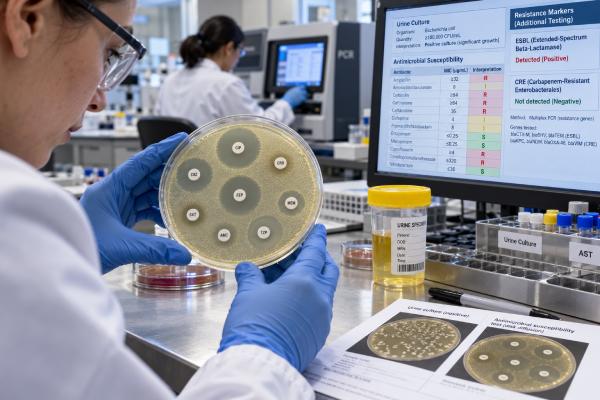
    Learn how antibiotic-resistant UTI testing identifies ESBL, CRE, resistance genes, and antibiotic susceptibility, and how culture results guide treatment and follow-up.

    Antibiotic-Resistant UTI Test: ESBL, CRE, Resistance Markers, and Culture Meaning

    Learn what asymptomatic bacteriuria means, how a positive urine culture without UTI symptoms is interpreted, and when screening, treatment, or follow-up matters.

    Asymptomatic Bacteriuria Test: Positive Culture Without Symptoms and When It Matters

    Learn how bacteria in urine are interpreted using urinalysis, culture, colony count, symptoms, and sample quality, including when contamination or follow-up testing matters.

    Bacteria in Urine Test: UTI, Contamination, Colony Count, and Culture Follow-Up

    Learn how a catheter urine culture helps diagnose catheter-associated UTI, how samples are collected, and what colony counts, pyuria, resistance, and positive results mean.

    Catheter Urine Culture Test: Catheter-Associated UTI and Culture Meaning

    Learn how a chlamydia and gonorrhea urine NAAT works, how to collect first-catch urine, what positive or negative results mean, and when follow-up testing is needed.

    Chlamydia and Gonorrhea Urine NAAT Test: STI Screening, Positive Result, and Meaning

    Learn how to collect a clean-catch urine culture, reduce contamination, handle the sample correctly, and understand mixed flora, colony counts, repeat testing, and accurate results.

    Clean-Catch Urine Culture Test: Sample Collection, Contamination, and Accurate Results

    Diagnostics

    Home Diagnostics Page 114
    Understand the vitamin B6 PLP blood test normal range, low and high results, symptoms, causes, supplement risks, preparation tips, and follow-up testing.

    Vitamin B6 (Pyridoxal-5-Phosphate/PLP) Test Normal Range: Reference Values and Meaning

    Learn what a vitamin B7 biotin test measures, normal range examples, causes of low biotin, deficiency symptoms, high supplement levels, lab interference, and follow-up testing.

    Vitamin B7 (Biotin) Test: Low Biotin, Deficiency, Normal Range, and Results

    Learn how vitamin B12 and MMA results are interpreted together, what high MMA can mean, when supplements help, and how to avoid overdoing B12 replacement.

    Vitamin B12 and MMA: Interpreting B12 Status Without Overdoing Supplements

    Understand the vitamin B12 blood test normal range, low and high B12 results, borderline values, symptoms, causes, and follow-up tests like MMA and homocysteine.

    Vitamin B12 Blood Test Normal Range: Reference Values and Meaning

    Learn how vitamin B12 and folate deficiencies differ, how CBC patterns, MMA, homocysteine, and folate tests help interpret macrocytic anemia, and when follow-up matters.

    Vitamin B12 vs Folate: Interpreting Anemia and Nutrient Deficiency

    Understand the vitamin C blood test, including normal range, low vitamin C, deficiency cutoffs, scurvy risk, symptoms, preparation, false results, and follow-up testing.

    Vitamin C Blood Test: Low Vitamin C, Deficiency, Normal Range, Scurvy...

    Learn how to interpret vitamin D, calcium, PTH, phosphorus, magnesium, and kidney-related blood tests, including low vitamin D patterns, high calcium causes, low calcium symptoms, and when follow-up matters.

    Vitamin D and Calcium: Interpreting Bone and Mineral Blood Tests

    Learn the difference between 25-hydroxy vitamin D and 1,25-dihydroxy vitamin D, including which test checks deficiency, when calcitriol testing is useful, and how calcium, PTH, and kidney function change interpretation.

    Vitamin D vs 1,25-Dihydroxy Vitamin D: What Is the Difference?

    Learn what a vitamin E alpha-tocopherol blood test measures, the normal adult range, causes of low or high results, preparation, follow-up tests, and supplement safety.

    Vitamin E (Alpha-Tocopherol) Test Normal Range: Reference Values and Meaning

    Learn what a vitamin K blood test measures, what low vitamin K means, how deficiency affects PT/INR and bleeding risk, and what abnormal results may need next.

    Vitamin K Blood Test: Low Vitamin K, Deficiency, Bleeding Risk, and...

    Learn what the vitamin K1 phylloquinone test measures, what low vitamin K1 means, common reference ranges, deficiency causes, preparation tips, and follow-up tests.

    Vitamin K1 (Phylloquinone) Test: Low Vitamin K1, Normal Range, Deficiency, and...

    Interpret zinc and copper blood tests with confidence, including normal ranges, deficiency and excess patterns, supplement risks, ceruloplasmin, diet, and when to follow up.

    Zinc and Copper: Interpreting Mineral Balance Without Overdoing Supplements

    Learn the zinc blood test normal range, what low and high zinc levels mean, common causes, testing accuracy issues, follow-up labs, and supplement safety.

    Zinc Blood Test Normal Range: Reference Values and Meaning

    Learn what the zinc protoporphyrin test measures, why ZPP rises with iron deficiency or lead exposure, how ranges are reported, and what follow-up tests may be needed.

    Zinc Protoporphyrin (ZPP) Test: High ZPP, Lead Exposure, Iron Deficiency, and...

    Learn how zinc protoporphyrin and ferritin help distinguish iron deficiency, inflammation-related iron restriction, and lead exposure, plus what follow-up tests usually matter.

    Zinc Protoporphyrin and Ferritin: Interpreting Iron Deficiency and Lead Exposure

    Learn the normal absolute neutrophil count range, how ANC is calculated, what low or high ANC means, and when neutropenia or neutrophilia needs follow-up.

    Absolute Neutrophil Count (ANC) Normal Range: Reference Values and Meaning

    1...113114115...137Page 114 of 137
    • Disclaimer
    • Privacy Policy
    • About Us
    © 2026 Vita Library. All rights reserved.
    Contact us: contact@vitalibrary.com