• Home
  • Health Topics
  • Human Body
  • Diagnostics
  • Conditions
  • Treatments
  • Foods
  • Herbs
  • Supplements
  • Weight Loss
  • Longevity
Search
VitaLibrary
  • Home
  • Health Topics
  • Human Body
  • Diagnostics
  • Conditions
  • Treatments
  • Foods
  • Herbs
  • Supplements
  • Weight Loss
  • Longevity
  • Blood Tests and Blood Biomarkers
  • Brain, Cognitive, and Mental Health Tests and Diagnostics
  • Genetic and Molecular Biomarkers
  • Hormone Tests
  • Inflammation and Immune Markers
  • Tumor Markers
  • Urine Tests and Kidney Markers
    Latest
    • Latest
    • Featured posts
    • Most popular
    • 7 days popular
    • By review score
    • Random
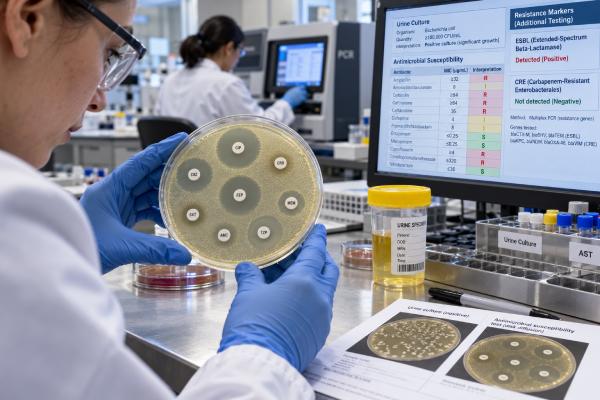
    Learn how antibiotic-resistant UTI testing identifies ESBL, CRE, resistance genes, and antibiotic susceptibility, and how culture results guide treatment and follow-up.

    Antibiotic-Resistant UTI Test: ESBL, CRE, Resistance Markers, and Culture Meaning

    Learn what asymptomatic bacteriuria means, how a positive urine culture without UTI symptoms is interpreted, and when screening, treatment, or follow-up matters.

    Asymptomatic Bacteriuria Test: Positive Culture Without Symptoms and When It Matters

    Learn how bacteria in urine are interpreted using urinalysis, culture, colony count, symptoms, and sample quality, including when contamination or follow-up testing matters.

    Bacteria in Urine Test: UTI, Contamination, Colony Count, and Culture Follow-Up

    Learn how a catheter urine culture helps diagnose catheter-associated UTI, how samples are collected, and what colony counts, pyuria, resistance, and positive results mean.

    Catheter Urine Culture Test: Catheter-Associated UTI and Culture Meaning

    Learn how a chlamydia and gonorrhea urine NAAT works, how to collect first-catch urine, what positive or negative results mean, and when follow-up testing is needed.

    Chlamydia and Gonorrhea Urine NAAT Test: STI Screening, Positive Result, and Meaning

    Learn how to collect a clean-catch urine culture, reduce contamination, handle the sample correctly, and understand mixed flora, colony counts, repeat testing, and accurate results.

    Clean-Catch Urine Culture Test: Sample Collection, Contamination, and Accurate Results

    Diagnostics

    Home Diagnostics Page 113
    Understand selenium blood test normal ranges, low and high selenium results, deficiency and toxicity causes, thyroid links, preparation, and safe follow-up steps.

    Selenium Blood Test Normal Range: Reference Values and Meaning

    Serum folate reflects recent folate intake, while RBC folate reflects longer-term folate status. Learn how the tests differ, what low or high results can mean, and how to interpret folate results with B12, CBC, MMA, homocysteine, diet, medications, and pregnancy needs.

    Serum Folate vs RBC Folate: What Is the Difference?

    Serum iron normal range, low and high result meanings, iron panel context, preparation tips, and when abnormal iron levels need medical follow-up.

    Serum Iron Test Normal Range: Reference Values and Meaning

    Serum magnesium is usually the first and most useful magnesium test, while RBC magnesium can add context in selected chronic cases. Learn how to interpret both tests, common result patterns, and when follow-up matters.

    Serum Magnesium vs RBC Magnesium: Which Magnesium Test Matters More?

    Understand the soluble transferrin receptor test, what high sTfR can mean, how it helps detect iron deficiency, and how results compare with ferritin, TSAT, and CBC findings.

    Soluble Transferrin Receptor (sTfR) Test: High sTfR, Iron Deficiency, Anemia, and...

    TIBC and transferrin both help interpret iron panels, but they measure different things. Learn how high or low results relate to iron deficiency, inflammation, liver disease, and iron overload.

    TIBC vs Transferrin: What Is the Difference in an Iron Panel?

    Learn the normal range for the TIBC blood test, what high and low total iron-binding capacity mean, and how TIBC fits with ferritin, serum iron, and transferrin saturation.

    Total Iron-Binding Capacity (TIBC) Test Normal Range: Reference Values and Meaning

    Learn the normal transferrin blood test range, what high and low transferrin mean, and how transferrin fits with ferritin, TIBC, serum iron, and TSAT.

    Transferrin Blood Test Normal Range: Reference Values and Meaning

    Learn the normal transferrin saturation range, what low or high TSAT means, how it is calculated, and how TSAT fits with ferritin, serum iron, TIBC, and anemia testing.

    Transferrin Saturation (TSAT) Normal Range: Reference Values and Meaning

    Learn what the UIBC blood test measures, the common normal range, and how high or low UIBC results relate to iron deficiency, iron overload, ferritin, TIBC, and transferrin saturation.

    Unsaturated Iron-Binding Capacity (UIBC) Test Normal Range: Reference Values and Meaning

    Learn what a vitamin A retinol blood test measures, common normal ranges, low and high result meanings, deficiency cutoffs, toxicity concerns, preparation tips, and follow-up tests.

    Vitamin A (Retinol) Test Normal Range: Reference Values and Meaning

    Learn what a vitamin and mineral blood test panel measures, how to interpret low or high nutrient levels, which markers matter, and when follow-up testing is needed.

    Vitamin and Mineral Blood Test Panel: Deficiency, Toxicity, Nutrient Levels, and...

    Learn what a vitamin B1 thiamine test measures, common normal ranges, low and high result meanings, deficiency symptoms, causes, preparation, and follow-up steps.

    Vitamin B1 (Thiamine) Test: Low Thiamine, Deficiency, Normal Range, and Results

    Learn what a vitamin B2 riboflavin test measures, normal ranges for plasma, whole blood, and EGRAC, causes of low riboflavin, deficiency symptoms, and follow-up testing.

    Vitamin B2 (Riboflavin) Test: Low Riboflavin, Deficiency, Normal Range, and Results

    Learn what a vitamin B3 niacin test measures, what low or high results mean, common normal ranges, deficiency symptoms, pellagra risk, test preparation, and safe follow-up.

    Vitamin B3 (Niacin) Test: Low Niacin, Deficiency, Normal Range, and Results

    Learn what a vitamin B5 blood test measures, what low pantothenic acid may mean, how normal ranges vary, and how to interpret deficiency or high results.

    Vitamin B5 (Pantothenic Acid) Test: Low Pantothenic Acid, Deficiency, Normal Range,...

    1...112113114...137Page 113 of 137
    • Disclaimer
    • Privacy Policy
    • About Us
    © 2026 Vita Library. All rights reserved.
    Contact us: contact@vitalibrary.com