• Home
  • Health Topics
  • Human Body
  • Diagnostics
  • Conditions
  • Treatments
  • Foods
  • Herbs
  • Supplements
  • Weight Loss
  • Longevity
Search
VitaLibrary
  • Home
  • Health Topics
  • Human Body
  • Diagnostics
  • Conditions
  • Treatments
  • Foods
  • Herbs
  • Supplements
  • Weight Loss
  • Longevity
  • Blood Tests and Blood Biomarkers
  • Brain, Cognitive, and Mental Health Tests and Diagnostics
  • Genetic and Molecular Biomarkers
  • Hormone Tests
  • Inflammation and Immune Markers
  • Tumor Markers
  • Urine Tests and Kidney Markers
    Latest
    • Latest
    • Featured posts
    • Most popular
    • 7 days popular
    • By review score
    • Random
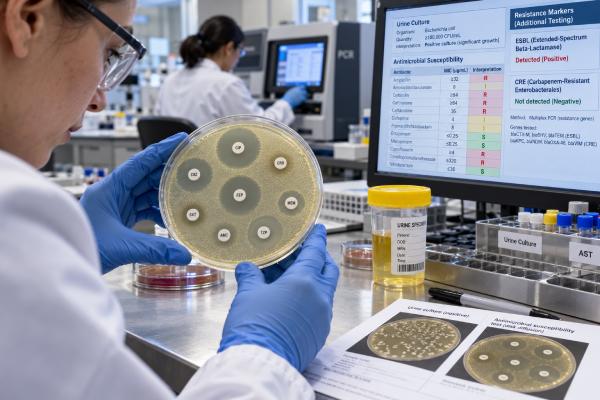
    Learn how antibiotic-resistant UTI testing identifies ESBL, CRE, resistance genes, and antibiotic susceptibility, and how culture results guide treatment and follow-up.

    Antibiotic-Resistant UTI Test: ESBL, CRE, Resistance Markers, and Culture Meaning

    Learn what asymptomatic bacteriuria means, how a positive urine culture without UTI symptoms is interpreted, and when screening, treatment, or follow-up matters.

    Asymptomatic Bacteriuria Test: Positive Culture Without Symptoms and When It Matters

    Learn how bacteria in urine are interpreted using urinalysis, culture, colony count, symptoms, and sample quality, including when contamination or follow-up testing matters.

    Bacteria in Urine Test: UTI, Contamination, Colony Count, and Culture Follow-Up

    Learn how a catheter urine culture helps diagnose catheter-associated UTI, how samples are collected, and what colony counts, pyuria, resistance, and positive results mean.

    Catheter Urine Culture Test: Catheter-Associated UTI and Culture Meaning

    Learn how a chlamydia and gonorrhea urine NAAT works, how to collect first-catch urine, what positive or negative results mean, and when follow-up testing is needed.

    Chlamydia and Gonorrhea Urine NAAT Test: STI Screening, Positive Result, and Meaning

    Learn how to collect a clean-catch urine culture, reduce contamination, handle the sample correctly, and understand mixed flora, colony counts, repeat testing, and accurate results.

    Clean-Catch Urine Culture Test: Sample Collection, Contamination, and Accurate Results

    Diagnostics

    Home Diagnostics Page 120
    Learn how reticulocyte count and hemoglobin work together to show anemia recovery, marrow response, treatment progress, and when follow-up or urgent care may be needed.

    Reticulocyte Count and Hemoglobin: Interpreting Anemia Recovery

    Learn the reticulocyte count normal range, what high and low reticulocytes mean, how corrected reticulocyte count and RPI work, and which follow-up tests help explain anemia.

    Reticulocyte Count Test Normal Range: Reference Values and Meaning

    Learn what a positive or negative sickle cell screen means, how trait differs from disease, when confirmatory testing is needed, and what results mean for anemia, pregnancy, newborns, and follow-up care.

    Sickle Cell Screen Test: Positive, Negative, Trait, Disease, and Meaning

    Learn how WBC and neutrophil patterns help interpret infection, inflammation, stress responses, high counts, low ANC, neutropenia risk, and when urgent follow-up is needed.

    WBC and Neutrophils: Interpreting Infection and Inflammation Patterns

    Learn the normal WBC count range, what high and low white blood cell results mean, how the WBC differential changes interpretation, and when follow-up matters.

    White Blood Cell (WBC) Count Test Normal Range: Reference Values and...

    Learn what the activated clotting time (ACT) test measures, how it monitors heparin, what normal and high ACT results mean, and why targets vary by procedure.

    Activated Clotting Time (ACT) Test: Heparin Monitoring, Normal Range, High ACT,...

    Learn the aPTT normal range, what high and low activated partial thromboplastin time results mean, and how doctors interpret aPTT with PT, INR, heparin monitoring, mixing studies, and clotting factor tests.

    Activated Partial Thromboplastin Time (aPTT) Normal Range: Reference Values and Meaning

    Learn what the activated protein C resistance test measures, how it screens for Factor V Leiden, what abnormal ratios mean, and when genetic confirmation or follow-up matters.

    Activated Protein C Resistance Test: Factor V Leiden Screening and Results

    Learn what an antiphospholipid antibody panel measures, why lupus anticoagulant matters, how APS results are confirmed, and how positive tests relate to clotting risk and pregnancy loss.

    Antiphospholipid Antibody Panel: Clotting Risk, Pregnancy Loss, Lupus Anticoagulant, and Results

    Learn what the antithrombin activity test measures, what low antithrombin means, common acquired and inherited causes, clot risk, heparin resistance, normal ranges, and follow-up testing.

    Antithrombin Activity Test: Low Antithrombin, Blood Clot Risk, Deficiency, and Results

    Anti-Xa and aPTT are heparin monitoring tests, but they measure different things. Learn therapeutic ranges, timing, discordant results, and when each test is preferred.

    Anti-Xa and aPTT: Heparin Monitoring Tests Compared

    Learn what the anti-Xa test measures, common therapeutic ranges for UFH and LMWH, how timing affects results, and what low or high anti-Xa means during heparin treatment.

    Anti-Xa Test Therapeutic Range: Heparin Monitoring and Meaning

    Learn how aPTT and mixing studies help interpret prolonged clotting time, including corrected vs non-corrected results, factor deficiencies, inhibitors, lupus anticoagulant, heparin effects, and follow-up testing.

    aPTT and Mixing Study: Interpreting Prolonged Clotting Time

    Understand coagulation panel results, including PT, INR, aPTT, fibrinogen, and D-dimer, with normal ranges, causes of abnormal results, follow-up tests, and urgent warning signs.

    Coagulation Panel Test: PT, INR, aPTT, Fibrinogen, D-Dimer, Normal Ranges, and...

    Understand D-dimer and fibrinogen results, including normal ranges, high and low patterns, clot breakdown, DIC, inflammation, bleeding risk, and next steps after abnormal coagulation blood tests.

    D-Dimer and Fibrinogen: Interpreting Clot Formation and Breakdown

    Learn what a D-dimer blood test measures, what high and normal D-dimer results mean, how it helps rule out DVT or pulmonary embolism, and when urgent care is needed.

    D-Dimer Blood Test: High D-Dimer, Normal Range, Blood Clots, Pulmonary Embolism,...

    1...119120121...137Page 120 of 137
    • Disclaimer
    • Privacy Policy
    • About Us
    © 2026 Vita Library. All rights reserved.
    Contact us: contact@vitalibrary.com