• Home
  • Health Topics
  • Human Body
  • Diagnostics
  • Conditions
  • Treatments
  • Foods
  • Herbs
  • Supplements
  • Weight Loss
  • Longevity
Search
VitaLibrary
  • Home
  • Health Topics
  • Human Body
  • Diagnostics
  • Conditions
  • Treatments
  • Foods
  • Herbs
  • Supplements
  • Weight Loss
  • Longevity
  • Blood Tests and Blood Biomarkers
  • Brain, Cognitive, and Mental Health Tests and Diagnostics
  • Genetic and Molecular Biomarkers
  • Hormone Tests
  • Inflammation and Immune Markers
  • Tumor Markers
  • Urine Tests and Kidney Markers
    Latest
    • Latest
    • Featured posts
    • Most popular
    • 7 days popular
    • By review score
    • Random
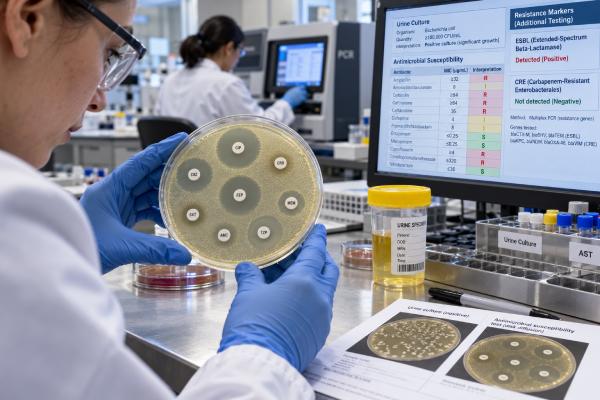
    Learn how antibiotic-resistant UTI testing identifies ESBL, CRE, resistance genes, and antibiotic susceptibility, and how culture results guide treatment and follow-up.

    Antibiotic-Resistant UTI Test: ESBL, CRE, Resistance Markers, and Culture Meaning

    Learn what asymptomatic bacteriuria means, how a positive urine culture without UTI symptoms is interpreted, and when screening, treatment, or follow-up matters.

    Asymptomatic Bacteriuria Test: Positive Culture Without Symptoms and When It Matters

    Learn how bacteria in urine are interpreted using urinalysis, culture, colony count, symptoms, and sample quality, including when contamination or follow-up testing matters.

    Bacteria in Urine Test: UTI, Contamination, Colony Count, and Culture Follow-Up

    Learn how a catheter urine culture helps diagnose catheter-associated UTI, how samples are collected, and what colony counts, pyuria, resistance, and positive results mean.

    Catheter Urine Culture Test: Catheter-Associated UTI and Culture Meaning

    Learn how a chlamydia and gonorrhea urine NAAT works, how to collect first-catch urine, what positive or negative results mean, and when follow-up testing is needed.

    Chlamydia and Gonorrhea Urine NAAT Test: STI Screening, Positive Result, and Meaning

    Learn how to collect a clean-catch urine culture, reduce contamination, handle the sample correctly, and understand mixed flora, colony counts, repeat testing, and accurate results.

    Clean-Catch Urine Culture Test: Sample Collection, Contamination, and Accurate Results

    Diagnostics

    Home Diagnostics Page 121
    Learn what factor II activity measures, the normal prothrombin activity range, what low or high results mean, and which follow-up tests help explain abnormal clotting results.

    Factor II (Prothrombin) Activity Normal Range: Reference Values and Meaning

    Learn the factor IX activity test normal range, what low and high results mean, how hemophilia B severity is classified, and which follow-up tests help explain abnormal results.

    Factor IX Activity Test Normal Range: Reference Values and Meaning

    Learn what the factor V activity test measures, the normal range, what low or high results mean, and how factor V differs from factor V Leiden testing.

    Factor V Activity Test Normal Range: Reference Values and Meaning

    Learn what the factor VII activity test measures, normal adult and pediatric ranges, causes of low or high results, PT/INR patterns, bleeding risk, and follow-up testing.

    Factor VII Activity Test Normal Range: Reference Values and Meaning

    Learn what the factor VIII activity test normal range means, how low and high results are interpreted, and how factor VIII relates to hemophilia A, von Willebrand disease, bleeding risk, and clot risk.

    Factor VIII Activity Test Normal Range: Reference Values and Meaning

    Understand factor VIII and von Willebrand factor test results, including low VWF, hemophilia A patterns, von Willebrand disease, high factor VIII, bleeding risk, clot risk, and follow-up testing.

    Factor VIII and von Willebrand Factor: Interpreting Bleeding and Clot Risk

    Learn what the factor X activity test measures, the usual normal range, what low or high results mean, and how doctors interpret abnormal factor X levels with PT, aPTT, bleeding risk, medications, vitamin K status, and liver health.

    Factor X Activity Test Normal Range: Reference Values and Meaning

    Learn the factor XI activity test normal range, what low or high results mean, why bleeding risk varies, and what follow-up testing is commonly used.

    Factor XI Activity Test Normal Range: Reference Values and Meaning

    Learn what a factor XII activity test measures, the normal adult reference range, why low factor XII prolongs aPTT, and what abnormal results usually mean.

    Factor XII Activity Test Normal Range: Reference Values and Meaning

    Learn what a factor XIII activity test measures, what low factor XIII means, normal range guidance, bleeding risks, symptoms, causes, and follow-up testing.

    Factor XIII Activity Test: Low Factor XIII, Bleeding Risk, Normal Range,...

    Understand the FDP blood test, high FDP causes, DIC patterns, clot breakdown, normal ranges, FDP vs D-dimer, follow-up testing, and urgent warning signs.

    Fibrin Degradation Products (FDP) Test: High FDP, DIC, Blood Clot Breakdown,...

    Learn how fibrinogen and FDP patterns help identify DIC, including low fibrinogen, high FDP, platelet changes, PT/aPTT results, causes, and urgent warning signs.

    Fibrinogen and FDP: Interpreting DIC Blood Test Patterns

    Learn the normal fibrinogen blood test range, what high and low fibrinogen levels mean, and how doctors interpret results with PT, INR, aPTT, platelets, and D-dimer.

    Fibrinogen Blood Test Normal Range: Reference Values and Meaning

    High aPTT means blood is taking longer than expected to clot. Learn common causes, bleeding risk, lupus anticoagulant, heparin effect, mixing studies, and follow-up tests.

    High Activated Partial Thromboplastin Time (aPTT) Test: Causes, Bleeding Risk, and...

    Learn what a high anti-Xa test result means, including heparin and enoxaparin ranges, common causes, sample timing errors, bleeding risk, and dose follow-up.

    High Anti-Xa Test Result: Causes, Heparin Dose, Bleeding Risk, and Meaning

    High D-dimer with normal results can mean recent clot breakdown, inflammation, age, infection, surgery, pregnancy, or other causes. Learn when it needs urgent follow-up.

    High D-Dimer With Normal Results: What This Blood Test Pattern Can...

    1...120121122...137Page 121 of 137
    • Disclaimer
    • Privacy Policy
    • About Us
    © 2026 Vita Library. All rights reserved.
    Contact us: contact@vitalibrary.com