• Home
  • Health Topics
  • Human Body
  • Diagnostics
  • Conditions
  • Treatments
  • Foods
  • Herbs
  • Supplements
  • Weight Loss
  • Longevity
Search
VitaLibrary
  • Home
  • Health Topics
  • Human Body
  • Diagnostics
  • Conditions
  • Treatments
  • Foods
  • Herbs
  • Supplements
  • Weight Loss
  • Longevity
  • Blood Tests and Blood Biomarkers
  • Brain, Cognitive, and Mental Health Tests and Diagnostics
  • Genetic and Molecular Biomarkers
  • Hormone Tests
  • Inflammation and Immune Markers
  • Tumor Markers
  • Urine Tests and Kidney Markers
    Latest
    • Latest
    • Featured posts
    • Most popular
    • 7 days popular
    • By review score
    • Random
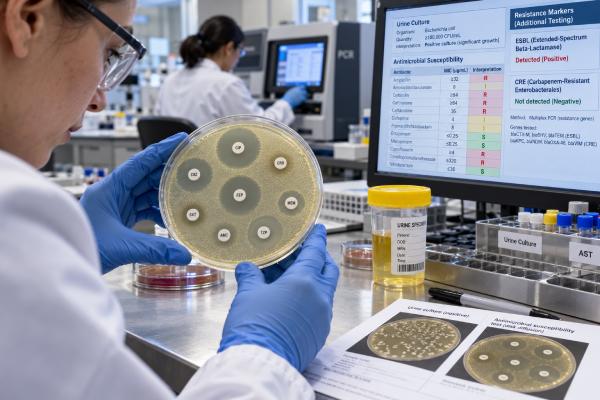
    Learn how antibiotic-resistant UTI testing identifies ESBL, CRE, resistance genes, and antibiotic susceptibility, and how culture results guide treatment and follow-up.

    Antibiotic-Resistant UTI Test: ESBL, CRE, Resistance Markers, and Culture Meaning

    Learn what asymptomatic bacteriuria means, how a positive urine culture without UTI symptoms is interpreted, and when screening, treatment, or follow-up matters.

    Asymptomatic Bacteriuria Test: Positive Culture Without Symptoms and When It Matters

    Learn how bacteria in urine are interpreted using urinalysis, culture, colony count, symptoms, and sample quality, including when contamination or follow-up testing matters.

    Bacteria in Urine Test: UTI, Contamination, Colony Count, and Culture Follow-Up

    Learn how a catheter urine culture helps diagnose catheter-associated UTI, how samples are collected, and what colony counts, pyuria, resistance, and positive results mean.

    Catheter Urine Culture Test: Catheter-Associated UTI and Culture Meaning

    Learn how a chlamydia and gonorrhea urine NAAT works, how to collect first-catch urine, what positive or negative results mean, and when follow-up testing is needed.

    Chlamydia and Gonorrhea Urine NAAT Test: STI Screening, Positive Result, and Meaning

    Learn how to collect a clean-catch urine culture, reduce contamination, handle the sample correctly, and understand mixed flora, colony counts, repeat testing, and accurate results.

    Clean-Catch Urine Culture Test: Sample Collection, Contamination, and Accurate Results

    Diagnostics

    Home Diagnostics Page 99
    Learn what a pancreatic amylase test measures, what high pancreatic amylase can mean, how normal ranges vary, and how results relate to pancreatitis, lipase, and pancreas health.

    Pancreatic Amylase Test: High Pancreatic Amylase, Normal Range, Pancreatitis, and Pancreas...

    Learn what the PEth blood test measures, how PEth levels are interpreted, how long PEth stays detectable, and how results compare with CDT, GGT, EtG, and liver enzyme tests.

    Phosphatidylethanol (PEth) Blood Test: Alcohol Biomarker, PEth Levels, Detection Window, and...

    Learn what the PIIINP blood test measures, why high PIIINP can suggest liver fibrosis activity, how normal ranges vary, and how results fit with ELF, FIB-4, liver enzymes, and elastography.

    Procollagen III N-Terminal Peptide (PIIINP) Test: High PIIINP, Liver Fibrosis, Normal...

    Learn what a serum bile acids test measures, what high bile acids can mean, normal ranges, cholestasis patterns, pregnancy concerns, liver function links, and follow-up steps.

    Serum Bile Acids Test: High Bile Acids, Normal Range, Cholestasis, Liver...

    Learn what the TIMP-1 blood test measures, why high TIMP-1 can be linked to liver fibrosis, how ELF scores use TIMP-1, and what abnormal results may mean.

    Tissue Inhibitor of Metalloproteinase-1 (TIMP-1) Test: Liver Fibrosis Marker, High Levels,...

    Learn what a total bilirubin blood test measures, the normal range, what high bilirubin can mean, how jaundice develops, and when follow-up testing or urgent care matters.

    Total Bilirubin Blood Test: High Bilirubin, Normal Range, Jaundice, and Causes

    Learn the total protein blood test normal range, what high and low results can mean, how albumin, globulin, and A/G ratio affect interpretation, and when follow-up testing may be needed.

    Total Protein Blood Test Normal Range: Reference Values and Meaning

    Learn what the trypsinogen blood test measures, common adult normal ranges, and what high or low trypsinogen may mean for pancreatic inflammation, pancreatic insufficiency, and newborn cystic fibrosis screening.

    Trypsinogen Blood Test Normal Range: Reference Values and Meaning

    Learn what an advanced lipid panel measures, including ApoB, Lp(a), LDL-P, particle size, and small dense LDL, and how results help refine heart disease risk.

    Advanced Lipid Panel Test: ApoB, Lp(a), LDL-P, Particle Size, and Heart...

    Learn how ApoB and LDL cholesterol differ, when ApoB adds useful heart risk insight, and how to interpret high or discordant results without overreacting.

    ApoB and LDL Cholesterol: Interpreting Heart Risk Without Overdoing It

    ApoB vs LDL cholesterol explained in plain language, including what each marker measures, when ApoB is more useful, target ranges, testing tips, and how to lower particle-related heart risk.

    ApoB vs LDL Cholesterol: Which Heart Risk Marker Matters More?

    Learn what the ApoB/ApoA1 ratio test measures, normal and high ranges, cardiovascular risk meaning, common causes, preparation, and ways to improve results.

    ApoB/ApoA1 Ratio Test: Normal Range, High Ratio, Cardiovascular Risk, and Results

    Learn what the ApoA1 blood test measures, what low ApoA1 means, normal ranges, HDL function, ApoB/ApoA1 ratio, and how results relate to heart risk.

    Apolipoprotein A1 (ApoA1) Test: Low ApoA1, Normal Range, HDL Function, and...

    Learn what the ApoB blood test measures, what high ApoB means, common ApoB targets, why ApoB can reveal LDL particle risk, and how results are used with cholesterol testing.

    Apolipoprotein B (ApoB) Test: High ApoB, Normal Range, LDL Particle Risk,...

    Learn what an ApoE genotype test shows, how ε2, ε3, and ε4 affect cholesterol and Alzheimer’s risk, and how to interpret results with lipid markers and clinical context.

    Apolipoprotein E (ApoE) Genotype Test: Cholesterol Risk, Alzheimer’s Risk, Genetics, and...

    Learn what a ceramide blood test measures, how to interpret high ceramide levels and risk scores, common reference ranges, cardiovascular risk meaning, and follow-up steps.

    Ceramide Blood Test: High Ceramide Levels, Normal Range, Cardiovascular Risk, and...

    1...9899100...137Page 99 of 137
    • Disclaimer
    • Privacy Policy
    • About Us
    © 2026 Vita Library. All rights reserved.
    Contact us: contact@vitalibrary.com