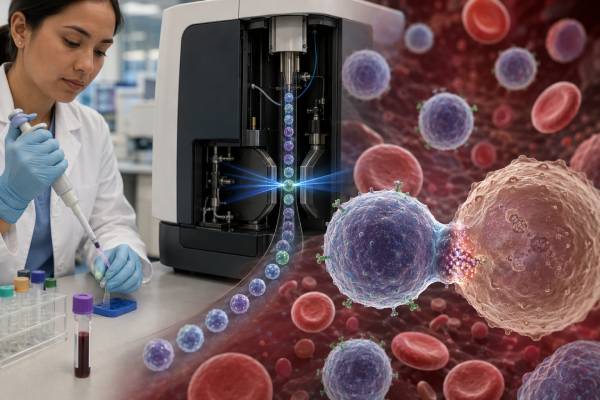
A CD8 count measures a major group of T lymphocytes involved in recognizing and removing virus-infected, damaged, or abnormal cells. The cells are often called cytotoxic T cells, although a routine count includes CD8 cells with different stages, functions, and activation states. Laboratories usually report both the percentage of lymphocytes that are CD8 positive and the absolute number of cells per microliter.
A high CD8 count commonly appears during viral immune responses and can persist with chronic antigen stimulation, including HIV or cytomegalovirus. A low count can follow chemotherapy, immune-suppressing treatment, bone marrow disease, severe illness, transplantation, or an inherited immune disorder. Neither result identifies a cause by itself. Reference ranges vary by age and laboratory, and the same absolute count may have different significance depending on the CD4 count, total lymphocytes, symptoms, medicines, and whether the change is temporary or persistent. In routine HIV care, viral load and CD4 count are more important than CD8 count alone.
- The test counts CD8-positive T lymphocytes: Results are commonly reported as cells/µL and as a percentage of total lymphocytes.
- A high CD8 count often reflects immune stimulation: Viral infection, chronic antigen exposure, smoking, and some inflammatory conditions can expand CD8 cells.
- A low count is nonspecific: Treatment effects, marrow suppression, severe illness, and immune deficiencies are possible causes.
- CD8 count does not measure killing ability: Normal cell numbers can coexist with impaired function, exhaustion, or poor antigen-specific responses.
- The CD4/CD8 ratio adds context: A low ratio may result from high CD8 cells even when the CD4 count is adequate.
- Fasting is generally unnecessary: A fresh anticoagulated blood sample is analyzed by flow cytometry.
Table of Contents
- The Role of CD8 T Cells
- What the Laboratory Counts
- How to Read the Numbers
- Why CD8 Counts Rise
- Why CD8 Counts Fall
- CD8 Results in HIV and Other Viral Infections
- What the Test Cannot Show
- Testing, Follow-Up, and Warning Signs
The Role of CD8 T Cells
CD8 T cells belong to the adaptive immune system. They recognize short protein fragments displayed by major histocompatibility complex class I molecules on nearly all nucleated cells. When a CD8 T cell recognizes a matching foreign or abnormal peptide and receives the right activating signals, it can multiply and develop into an effector cell.
Effector CD8 cells kill targets through several mechanisms. They release perforin, which helps create pores in the target-cell membrane, and granzymes, which enter the cell and trigger controlled death. They can also use death-receptor pathways and release cytokines such as interferon-gamma and tumor necrosis factor. These actions help contain viral infections and contribute to surveillance against some cancers.
The CD8 compartment is diverse. It includes:
- Naïve cells that have not yet encountered their specific antigen
- Effector cells that actively respond during infection
- Central-memory and effector-memory cells that support faster future responses
- Tissue-resident memory cells that remain in organs such as skin, lung, or intestine
- Activated or exhausted populations shaped by ongoing antigen exposure
- Regulatory or suppressive CD8 subsets described in specialized research settings
A blood count combines many of these populations. It cannot tell which pathogen a cell recognizes or whether that cell can kill effectively. It also misses most tissue-resident CD8 cells, which may be crucial at the actual site of infection.
CD8 cells should not be confused with natural killer cells. Both can kill abnormal targets, but NK cells use different recognition systems and are usually identified with markers such as CD16 and CD56. A lymphocyte subset panel separates CD8 T cells from NK cells and other lymphocytes.
What the Laboratory Counts
The test is performed by flow cytometry. Fluorescent antibodies bind to CD45, CD3, CD8, and often CD4. The laboratory first identifies lymphocytes, then CD3-positive T cells, then CD8-positive cells. Additional markers may be included if the clinical question involves activation, maturation, malignancy, or immune reconstitution.
A report generally contains:
| Reported value | Meaning |
|---|---|
| CD8 percentage | Proportion of lymphocytes or T cells classified as CD8 positive |
| Absolute CD8 count | Estimated number of CD8 T cells per microliter |
| CD4 count | Helper T-cell number for comparison |
| CD4/CD8 ratio | CD4 count divided by CD8 count |
| Total CD3 count | Overall circulating T-cell number |
The denominator matters. A CD8 percentage of 40% may be high, normal, or method-dependent. If total lymphocytes are low, the absolute count can still be reduced. If lymphocytes are high, a percentage within range can correspond to a high absolute count.
Absolute counting can use a single-platform method with counting beads or a dual-platform method that combines flow-cytometry percentages with a complete blood count. Small differences between methods are expected. Serial results are easiest to compare when the same laboratory uses the same technique.
CD8 is not exclusive to classic cytotoxic T cells. A small subset of other lymphocytes may express CD8, and the protein can appear as different molecular forms. Clinical gating with CD3 helps ensure the count represents T cells. Expanded panels can separate CD8 cells by CD45RA, CCR7, CD27, CD28, CD57, HLA-DR, CD38, or programmed-death markers, but these are not part of every routine count.
The test is often ordered with a total T-cell count rather than alone. That broader view can distinguish selective CD8 change from general lymphopenia.
How to Read the Numbers
Reference intervals vary substantially. Many adult laboratories use an absolute range somewhere around 150 to 1,000 cells/µL, but some healthy populations extend above or below that span. Percent ranges also differ. Infants and children have age-specific values, and normal lymphocyte distributions change through adolescence.
The laboratory’s printed interval is the starting point, not a universal target. Interpretation should answer four questions:
- Is the absolute count high or low for age?
- Is the percentage abnormal in the same direction?
- Are CD4 and total T-cell counts also abnormal?
- Is the pattern persistent and clinically relevant?
Examples show why this matters. A CD8 count of 1,200 cells/µL with a normal CD4 count and recent viral infection may represent reactive expansion. A count of 1,200 with progressive lymphocytosis, cytopenias, and an abnormal flow phenotype needs a hematologic evaluation. A count of 120 in a patient receiving chemotherapy may be expected but still signal infection vulnerability. The same value in a previously healthy child requires age-specific confirmation and a different workup.
The CD4/CD8 ratio can fall because CD8 cells are high, CD4 cells are low, or both. An inverted ratio does not automatically mean the CD8 count itself is dangerous. It describes relative distribution and must be paired with the component counts.
A result just outside the reference interval may reflect biological variation. Counts shift with time of day, acute illness, stress hormones, corticosteroids, exercise, and sample handling. Clinicians focus more on major or sustained changes than on a small one-time deviation.
No evidence-based “optimal” CD8 count applies to every person. More cells are not always better: persistent expansion may accompany chronic immune activation, while effective antiviral protection also depends on diversity, memory, trafficking, and function.
Why CD8 Counts Rise
CD8 cells expand when their receptors recognize antigen and appropriate costimulatory signals are present. Viral infection is the classic trigger, but the differential diagnosis is broader.
Acute viral responses
Epstein-Barr virus, cytomegalovirus, influenza, hepatitis viruses, SARS-CoV-2, and other infections can produce temporary CD8 lymphocytosis. Activated cells may appear in blood while symptoms are active and then contract over weeks or months. Epstein-Barr virus can cause striking atypical lymphocytosis in infectious mononucleosis, much of it composed of reactive CD8 T cells responding to infected B cells.
Persistent infections and chronic antigen exposure
Cytomegalovirus can leave a large long-lived CD8 memory population, especially in older adults. HIV commonly causes CD8 expansion and activation, sometimes persisting despite viral suppression. Chronic hepatitis, tuberculosis, and other infections may also influence counts, although a high CD8 value cannot identify the pathogen.
Inflammation, smoking, and tissue disease
Smoking can alter lymphocyte distribution and is associated with increased cytotoxic-cell populations in some studies. Autoimmune and inflammatory diseases may expand selected CD8 subsets. Severe systemic inflammation and cytokine-storm syndromes can produce activated cytotoxic populations, although total blood counts may be high, normal, or low depending on timing and tissue migration.
Treatment and immune recovery
CD8 cells may recover faster than CD4 cells after stem-cell transplantation, chemotherapy, radiation, or profound lymphopenia. This can temporarily create a high percentage and an inverted ratio. Vaccination or immunotherapy may also expand antigen-specific cytotoxic cells without causing a large change in the total count.
Clonal lymphocyte disorders
Persistent CD8 lymphocytosis occasionally reflects a clonal T-cell proliferation, such as T-cell large granular lymphocytic leukemia or another lymphoproliferative disorder. Warning features include neutropenia, anemia, autoimmune disease, splenomegaly, persistent symptoms, abnormal cell morphology, or a restricted immunophenotype. Diagnosis requires more than a high count and may include T-cell receptor gene-rearrangement testing and bone marrow evaluation.
A reactive increase is usually polyclonal and fits the clinical timeline. Repeat testing after recovery can show contraction. Persistent or rising counts without an obvious trigger deserve review of the blood smear and full flow-cytometry pattern.
Why CD8 Counts Fall
A low CD8 count may be isolated or part of broad lymphopenia. It does not prove that antiviral defense has failed, but marked or persistent reduction can contribute to immune vulnerability.
Possible causes include:
- Chemotherapy, radiation, or marrow-suppressing treatment
- Corticosteroids and other immune-suppressing medicines
- Stem-cell or solid-organ transplantation
- Bone marrow failure, leukemia, lymphoma, or marrow infiltration
- Severe acute infection, sepsis, or critical illness
- Primary combined immune deficiencies
- Advanced malnutrition or protein-losing conditions
- Autoimmune disease and systemic inflammation
- Rare genetic defects affecting T-cell development or cytotoxic pathways
- Normal age-related or individual variation near the lower reference boundary
A low absolute count can result from a temporary fall in total lymphocytes. The percentage may remain normal, suggesting a general rather than selective loss. If CD4, B-cell, and NK-cell counts are also reduced, clinicians think about broad lymphocyte suppression or production failure.
Some cytotoxic immune disorders do not cause a low count. Familial hemophagocytic lymphohistiocytosis, for example, can involve impaired killing despite abundant or highly activated CD8 cells. This illustrates why quantity cannot substitute for function. Specialized degranulation, perforin-expression, or genetic tests may be needed when a cytotoxic defect is suspected.
The clinical history determines importance. A stable mildly low count in an asymptomatic adult may need only repeat testing. A very low count with recurrent viral infections, unusual opportunistic infections, persistent warts, severe herpesvirus disease, or poor recovery after transplantation warrants specialist evaluation.
CD8 Results in HIV and Other Viral Infections
CD8 cells expand early in HIV infection and help reduce the initial peak of viremia. They exert pressure on infected cells, but HIV can escape through mutation, hide in reservoirs, and drive chronic activation. Over time, some HIV-specific CD8 cells become dysfunctional or exhausted even while the total CD8 count remains high.
This explains an apparent paradox: a person can have many CD8 cells but incomplete viral control without treatment. The count does not show whether the cells recognize current viral variants, reach tissue reservoirs, retain proliferative capacity, or execute effective killing.
In routine adult HIV care, current U.S. guidance does not recommend serial monitoring of CD8 or other lymphocyte subsets beyond CD4 because it has not been shown to improve routine management. HIV RNA viral load determines virologic control, and CD4 count testing guides immune-risk assessment. CD8 and ratio values may still appear on a panel and can support research or specialist interpretation.
A persistently high CD8 count and low ratio during suppressive therapy may correlate with immune activation and some non-AIDS outcomes at the population level. This does not create a specific medication target. Changing an effective antiretroviral regimen solely to lower CD8 cells is not recommended.
In other infections, total counts are also limited. Antigen-specific assays may stimulate cells with viral peptides and measure interferon-gamma, activation markers, or killing. These tests answer a narrower functional question and are used mainly in research or selected clinical settings. A routine CD8 count cannot determine immunity to SARS-CoV-2, influenza, cytomegalovirus, or another virus.
Timing matters. During an acute infection, cells may expand in blood, migrate into tissues, or temporarily decline during severe illness. A single measurement captures one point in a changing response.
What the Test Cannot Show
A CD8 count cannot show whether cells are naïve, recently activated, antigen-specific, exhausted, senescent, or functionally cytotoxic unless additional markers and assays are performed. It also cannot identify infection, measure viral load, diagnose cancer, or prove autoimmune tissue damage.
Common interpretation errors include:
- Calling a high count “strong immunity” without checking for chronic activation
- Calling a low percentage deficient without reviewing the absolute count
- Assuming an inverted ratio means untreated HIV
- Comparing a child with an adult reference interval
- Comparing results from different laboratories as if the methods were identical
- Using total CD8 count to judge vaccine protection
- Ignoring medicines and acute illness
Activation markers such as HLA-DR and CD38 can identify a stimulated phenotype, but even an activated T-cell marker panel remains nonspecific. Functional cytotoxicity tests, intracellular perforin and granzyme studies, degranulation assays, T-cell receptor sequencing, and antigen-specific tests are ordered only for particular questions.
Blood is not the whole immune system. Tissue-resident CD8 cells in lung, gut, liver, skin, tumors, or lymph nodes may not be reflected in circulation. A normal blood count cannot exclude strong tissue inflammation or a local immune defect.
The result should therefore be treated as a population count. Its value comes from fitting it into a larger pattern, not from assigning a disease to one number.
Testing, Follow-Up, and Warning Signs
Fasting is not usually required. The sample is collected in an EDTA or other validated anticoagulant tube. Flow-cytometry laboratories need viable cells and may restrict collection times for samples sent to another city. Continue prescribed medicines unless the clinician gives different instructions.
Tell the ordering team about recent infection, vaccination, steroids, chemotherapy, immune therapy, transplantation, and the date of any major treatment. When monitoring change, using the same laboratory and a similar time of day reduces avoidable variation.
A practical follow-up plan may include:
- Repeat complete blood count and lymphocyte subsets after acute illness resolves
- Review of CD4, B-cell, NK-cell, and total T-cell counts
- HIV, cytomegalovirus, Epstein-Barr virus, hepatitis, or other testing when clinically indicated
- Blood-smear review and extended flow cytometry for persistent lymphocytosis
- Immunoglobulins and vaccine responses for recurrent infections
- Cytotoxic-function or genetic testing when an inherited killing defect is suspected
The count itself is rarely an emergency. Urgency comes from symptoms and the broader laboratory picture. Seek prompt assessment for persistent high fever, shortness of breath, confusion, severe weakness, rapidly enlarging lymph nodes, unusual bleeding, recurrent severe viral infections, or deterioration during chemotherapy or transplant care.
Examples of integrated interpretation
A patient recovering from infectious mononucleosis may have an absolute CD8 count well above the adult interval, a low CD4/CD8 ratio, atypical lymphocytes on the smear, and improving symptoms. In that setting, the result can fit a reactive antiviral response. Repeating the count after clinical recovery may show gradual contraction; immediate investigation for a clonal disorder is less likely unless the pattern persists or other warning signs appear.
A person with HIV may have a CD8 count of 1,400 cells/µL, CD4 of 650 cells/µL, and an undetectable viral load. The high CD8 count and ratio below 0.5 can indicate persistent immune activation at a population level, but the suppressed viral load shows that treatment is controlling replication. The clinician focuses on adherence and proven preventive care rather than changing therapy to chase a normal ratio.
After stem-cell transplantation, a CD8 count may return before the CD4 count and B-cell function. A seemingly robust CD8 number does not mean immune reconstitution is complete. Vaccination timing, infection prophylaxis, immunoglobulins, graft-versus-host disease, and the broader cell profile remain central.
A patient receiving chemotherapy may have CD8 at 80 cells/µL, CD4 at 100 cells/µL, and a ratio near 1.25. The ratio looks ordinary, but both populations are profoundly low. This pattern supports broad T-cell suppression rather than selective CD8 deficiency and may affect infection precautions based on the treatment protocol.
A persistently high CD8 count with neutropenia, anemia, splenomegaly, and large granular lymphocytes is different from a post-viral rise. Extended phenotyping and clonality testing may be needed. These examples show why the clinical setting and accompanying counts determine meaning more reliably than a single high or low flag.
When results are borderline, the clinician may wait for recovery from an acute event before repeating the panel. When counts are extreme, progressive, or paired with serious symptoms, follow-up should proceed promptly rather than assuming harmless normal variation too quickly.
Ask the clinician which component caused the abnormality, whether the result is expected for treatment timing, and what decision the test is meant to support. A repeat count is useful only when it can distinguish temporary variation from a persistent pattern or guide a defined next step.
CD8 cells are essential to antiviral and antitumor immunity, but their number tells only part of the story. Effective immune defense depends on recognition, activation, killing, memory, regulation, and access to tissues. The count is most informative when these limits remain explicit.
References
- CD8+ T Cell Biology in Cytokine Storm Syndromes 2024 (Review)
- Epigenetics behind CD8+ T cell activation and exhaustion 2024 (Review)
- Recent advances in CD8+ T cell-based immune therapies for HIV cure 2023 (Review)
- HIV DNA positively correlates with HLA-DR+CD8+ T lymphocytes over 8-year suppressive antiretroviral therapy 2023 (Clinical Study)
- Plasma HIV-1 RNA (Viral Load) and CD4 Count Monitoring 2025 (Guideline)
- CD4/CD8 ratio and CD8+ T-cell count as prognostic markers for non-AIDS mortality in people living with HIV: a systematic review and meta-analysis 2024 (Systematic Review)
Disclaimer
This article provides general information and does not diagnose infection, immune deficiency, or a blood disorder. CD8 counts must be interpreted with age-specific laboratory ranges, other lymphocyte subsets, medicines, symptoms, and the reason for testing. Do not change HIV treatment, immune therapy, or infection precautions based on a CD8 value without clinical guidance.