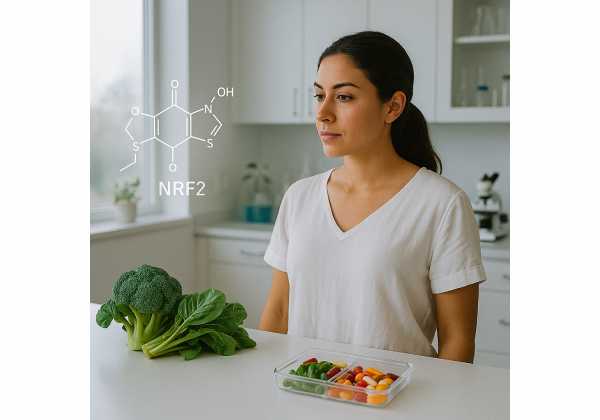
NRF2 is one of the body’s main switches for cellular defense. When cells sense a small burst of stress, NRF2 helps turn on genes involved in antioxidant enzymes, detoxification, glutathione recycling, inflammation control, mitochondrial quality, and protein cleanup. This is useful for healthy aging because older cells often face more oxidative strain and recover more slowly from damage.
The mistake is treating NRF2 like a button that should stay pressed all day. Cellular defense works best as a rhythm: a mild challenge, a clear response, and enough recovery for the body to reset. Exercise, cruciferous vegetables, polyphenol-rich foods, heat exposure, good sleep, and metabolic health all support this rhythm. High-dose supplements, stacked stressors, and constant “activation” often move the signal from helpful to messy. NRF2 works like a smoke alarm and repair crew, not a permanent emergency siren.
Table of Contents
- What NRF2 Does Inside Cells
- Why NRF2 Becomes More Important With Age
- The Nudge Principle: Mild Stress, Then Recovery
- Food Signals That Support NRF2
- Movement, Heat, and Cold as NRF2 Inputs
- When NRF2 Support Goes Too Far
- A Simple Weekly NRF2 Rhythm
- Tracking Progress and Knowing When to Pause
What NRF2 Does Inside Cells
NRF2 is a transcription factor, which means it helps control which genes get turned on. Its full name is nuclear factor erythroid 2-related factor 2, and the gene that makes it is called NFE2L2. Under calm conditions, another protein called KEAP1 holds NRF2 in check and marks it for breakdown. When cells detect certain stress signals, KEAP1 releases its grip. NRF2 then moves into the nucleus and helps activate antioxidant response element genes.
That sounds technical, but the role is practical: NRF2 helps cells prepare their own defense tools instead of relying only on antioxidant molecules from food or supplements.
NRF2 influences several major defense systems:
- Glutathione production and recycling, which helps cells handle oxidative stress
- Phase II detoxification enzymes, which help process reactive compounds
- Heme oxygenase-1, often written as HO-1, which helps manage heme breakdown and inflammatory signaling
- NADPH-related pathways, which help keep antioxidant systems ready
- Mitochondrial protection, especially during energy stress
- Proteasome and protein quality-control activity, which helps clear damaged proteins
Reactive oxygen species, often called ROS, are not only “bad molecules.” They also work as signals. During exercise, heat exposure, fasting intervals, infection, and normal energy production, cells generate small amounts of ROS. In the right dose, that signal tells cells to build stronger defenses. In the wrong dose, or without recovery, ROS damages lipids, proteins, DNA, and mitochondria.
That is why NRF2 fits into the larger idea of mitohormesis: small stress signals train cells to become more resilient. A walk after meals, a strength session, a sauna session, or a plate of broccoli sprouts does not “fight aging” by removing every free radical. It gives cells a reason to upgrade their own response.
NRF2 also works alongside other cellular longevity pathways. AMPK responds to low-energy states and supports mitochondrial repair. mTOR responds to nutrients and mechanical loading, supporting growth and rebuilding. Autophagy helps recycle old cellular parts. These systems overlap but do different jobs. Healthy aging needs repair signals and building signals, not one pathway forced in the same direction every day.
Why NRF2 Becomes More Important With Age
Aging cells deal with more background noise. Mitochondria leak more reactive oxygen species when they are stressed. Senescent cells release inflammatory signals. Blood sugar swings, poor sleep, visceral fat, air pollution, smoking, alcohol excess, and chronic psychological stress all add to the burden. Over time, cells face more oxidative pressure while their response systems become less flexible.
NRF2 activity often becomes less efficient with age. The issue is not that older adults need constant antioxidant flooding. The issue is that the stress-response rhythm gets weaker. A young, resilient system receives a challenge, mounts a response, repairs, and returns to baseline. An older or metabolically unhealthy system often stays inflamed, under-recovers, or fails to increase defense enzymes enough when needed.
This difference matters because redox balance is dynamic. Redox refers to reduction and oxidation, the electron-transfer chemistry behind many energy and defense reactions. A healthy redox state is not “zero oxidation.” It is the ability to create signals, respond to them, and prevent those signals from turning into injury. A deeper guide to this balance is covered in redox balance and antioxidants.
Several age-related patterns weaken NRF2 signaling:
- Chronic inflammation keeps cells in a low-grade alarm state.
- Insulin resistance increases oxidative pressure after meals.
- Poor sleep reduces overnight repair and immune regulation.
- Low muscle mass reduces metabolic buffering and antioxidant capacity.
- Sedentary behavior removes the repeated exercise signals that train defense systems.
- Micronutrient gaps limit the raw materials needed for enzymes.
NRF2 also connects to telomeres, which are protective caps at the ends of chromosomes. Telomeres shorten with cell division and oxidative stress. This does not mean NRF2 “lengthens telomeres” in a simple supplement-driven way. It means oxidative damage adds extra strain to telomere maintenance, and NRF2-related defense helps reduce one source of that strain.
The most useful view is simple: NRF2 support belongs in the same lane as sleep, movement, metabolic health, and inflammation control. It is a resilience pathway, not a shortcut. When someone has uncontrolled blood pressure, untreated sleep apnea, high alcohol intake, poor glucose control, or chronic under-recovery, NRF2 supplements do not fix the main problem. They add another variable to a system already asking for basics.
The Nudge Principle: Mild Stress, Then Recovery
NRF2 responds best to nudges. A nudge is a stressor strong enough to create adaptation but small enough to recover from cleanly. This is hormesis: a low dose of stress strengthens the system, while too much stress weakens it. The dose-response curve is not linear. More is not better after the useful range.
The right NRF2 nudge has three parts:
- A clear signal, such as exercise, heat, cold, plant compounds, or a short fasting interval.
- Enough resources, including protein, minerals, polyphenols, sleep, and calories that match the person’s needs.
- A recovery window, so the body completes the adaptation instead of piling stress on stress.
This is why a hard workout, sauna, calorie deficit, poor sleep, and high-dose botanical stack on the same day often backfires. The body does not score hormetic stressors as separate wellness points. It experiences the total load. A moderate dose of one stressor often works better than an aggressive mix of several.
| Input | Helpful nudge | Overdone version |
|---|---|---|
| Exercise | Progressive training with easy days | Daily hard sessions with poor sleep |
| Cruciferous vegetables | Several servings per week, prepared well | Large extracts stacked with many supplements |
| Heat | Comfortably challenging sauna or hot bath | Long sessions despite dizziness or dehydration |
| Fasting | Overnight fasting that preserves energy and protein intake | Long fasts during heavy training or illness |
| Antioxidants | Food-first intake from plants, herbs, tea, and spices | High-dose pills around every workout |
The minimum effective dose matters. Start with the smallest repeatable input that improves energy, sleep, performance, digestion, or recovery. The phrase “repeatable” matters because resilience grows through rhythm. One extreme sauna session or one huge cruciferous smoothie does not build a durable defense system. Consistent, recoverable signals do.
A practical way to frame the dose is covered in the hormesis dose-response. NRF2 fits that model closely. The pathway rewards gentle pressure and punishes overconfidence.
Food Signals That Support NRF2
Food supports NRF2 through two routes. First, it provides plant compounds that act as mild stress signals. Second, it provides the nutrients needed to build antioxidant enzymes, glutathione, and repair systems. Both routes matter. A diet full of “activators” but low in protein, minerals, and calories does not create better defense.
Cruciferous vegetables are the best-known food group for NRF2 support. Broccoli, broccoli sprouts, kale, arugula, cabbage, bok choy, Brussels sprouts, mustard greens, and watercress contain glucosinolates. When chopped, chewed, or lightly prepared, some glucosinolates convert into isothiocyanates. Sulforaphane, formed from glucoraphanin, is the most studied example.
Broccoli sprouts are especially concentrated. Fresh sprouts often provide far more glucoraphanin than mature broccoli, although amounts vary by seed, growing conditions, storage, and preparation. Light steaming mature broccoli for 1 to 3 minutes helps preserve texture and nutrients. Boiling for a long time reduces water-soluble compounds. With frozen broccoli, adding a small amount of raw mustard seed powder after heating supplies myrosinase, the enzyme that helps convert glucoraphanin into sulforaphane.
Sulforaphane supplements sit in a different category from vegetables. Some products provide glucoraphanin, some provide sulforaphane, and some include active myrosinase. Labels vary widely. People taking thyroid medication, anticoagulants, chemotherapy, or multiple supplements should treat concentrated extracts as active compounds, not casual greens. A dedicated guide to sulforaphane and NRF2 activation covers that topic in more detail.
Other food compounds also influence NRF2-related pathways:
- Hydroxytyrosol and other olive polyphenols from extra-virgin olive oil
- Catechins from green tea
- Quercetin from onions, apples, capers, and leafy herbs
- Curcumin from turmeric, especially when used as a culinary spice
- Anthocyanins from berries, purple cabbage, and deeply colored plants
- Organosulfur compounds from garlic, onions, leeks, and shallots
- Cocoa flavanols from unsweetened cocoa and high-cocoa dark chocolate
Food patterns beat isolated “hero” compounds. A Mediterranean-style pattern rich in legumes, vegetables, herbs, extra-virgin olive oil, fish, nuts, fruit, and fermented foods gives repeated low-dose signals without forcing one pathway. This style also supports blood pressure, lipids, gut health, and glucose control. A broad rotation of polyphenol-rich foods gives the body varied signals instead of one concentrated input.
Protein also belongs in the NRF2 conversation. Glutathione depends on amino acids, especially cysteine, glycine, and glutamate. Older adults often need higher protein quality and better distribution across meals to support repair. Eggs, fish, poultry, dairy, soy foods, legumes, and lean meats all help. Glycine-rich foods such as collagen-containing cuts, bone broth, skin-on poultry, and gelatin-containing foods add useful building blocks, though they do not replace complete protein.
Minerals matter too. Selenium supports glutathione peroxidase enzymes. Zinc supports immune and repair functions. Magnesium supports energy metabolism. Iron is necessary but harmful in excess, so routine high-dose iron does not belong in a general NRF2 plan. Food-first mineral intake is safer than self-prescribing high-dose supplements without lab context.
Movement, Heat, and Cold as NRF2 Inputs
Exercise is one of the strongest practical NRF2 inputs because it creates a natural pulse of reactive oxygen species, mechanical strain, blood-flow changes, and inflammatory cleanup. The body answers by strengthening antioxidant defenses, improving mitochondrial function, building capillaries, and remodeling tissue.
The most useful exercise mix includes three layers. Zone 2 aerobic work improves mitochondrial density and fat oxidation. Strength training preserves muscle, glucose disposal, bone loading, and independence. Short higher-intensity intervals challenge cardiovascular capacity and metabolic flexibility. Together, they create repeated signals without relying on pills.
A weekly pattern might include:
- 2 to 4 sessions of moderate aerobic work
- 2 to 3 strength sessions
- 1 short interval session when recovery is solid
- Daily walking, especially after meals
- Mobility and balance work as needed
This connects naturally with mTOR and AMPK timing. Hard training activates repair and growth signals. Easy aerobic work and overnight fasting support energy-sensing pathways. The body needs both. People who only chase repair signals often lose strength. People who only chase growth signals often miss metabolic cleanup.
Heat exposure also nudges cellular defense. Sauna and hot baths raise heart rate, increase blood flow, and stimulate heat shock proteins. Heat shock proteins help protect and refold stressed proteins, which complements NRF2-related defense. Beginners do best with short, comfortable exposures: 5 to 10 minutes in a sauna or 10 to 15 minutes in a hot bath, followed by cooling and fluids. More experienced users often tolerate 15 to 20 minutes, but dizziness, chest pain, confusion, or nausea means stop immediately.
Heat does not suit everyone. People with unstable heart disease, fainting episodes, uncontrolled blood pressure, pregnancy, fever, dehydration, or certain medications need clinician guidance. Sauna after alcohol is a bad combination. Sauna after an all-out workout also needs caution because dehydration and heat strain add up. For a deeper look at related mechanisms, heat shock proteins explain why heat stress has a different but overlapping role in cellular defense.
Cold exposure works differently. Cold can increase norepinephrine, alertness, and vascular tone. It also creates a stress signal. The useful dose is usually much lower than social media suggests. Cool showers, outdoor walks in cold weather with proper clothing, or brief cold-water exposure after acclimation are enough for many people. Ice baths are not required for NRF2 health. Cold exposure also interferes with some strength and hypertrophy signaling when used immediately after lifting, so timing matters.
The safest rule is to avoid stacking intense cold, intense heat, hard exercise, fasting, and sleep restriction in the same window. A strong body adapts to stress; a strained body absorbs damage.
When NRF2 Support Goes Too Far
NRF2 has a protective side and a risky side. Short, controlled activation helps normal cells handle stress. Persistent activation is not automatically healthy. In cancer biology, NRF2 becomes complicated because some tumor cells use NRF2-related defense to survive oxidative stress and resist treatment. This does not mean broccoli is dangerous. It means concentrated, chronic pathway manipulation deserves respect, especially in people with active cancer or those receiving chemotherapy or radiation.
Overdoing NRF2 support usually shows up as total-load problems rather than one dramatic symptom. Watch for patterns such as poor sleep, irritability, lower training performance, frequent soreness, digestive upset, headaches, lightheadedness, menstrual disruption, reduced libido, or feeling “wired but tired.” These signs often mean the stress dose exceeds recovery capacity.
High-dose antioxidant supplementation is another common mistake. Vitamins C and E, taken in high doses around training, reduce oxidative stress markers in some settings, but that is not always the desired effect. Exercise adaptation uses ROS as part of the signal. Blunting that signal repeatedly risks weakening some benefits of training. Food antioxidants rarely create this issue because they arrive with fiber, minerals, water, carbohydrates, and a broad mix of compounds.
A practical supplement caution list includes:
- Avoid stacking multiple “NRF2 activators” daily without a clear reason.
- Do not combine high-dose antioxidant pills with every workout.
- Pause concentrated extracts before surgery unless a clinician says otherwise.
- Discuss sulforaphane, curcumin, green tea extract, quercetin, and similar products during cancer treatment.
- Treat liver disease, kidney disease, anticoagulant use, pregnancy, and complex medication lists as reasons for professional guidance.
- Stop any supplement that causes rash, persistent digestive upset, palpitations, dizziness, or unusual fatigue.
The same caution applies to fasting. Short overnight fasting, such as 12 to 14 hours, suits many adults. Long fasts are a stronger intervention. They interact with training, medication timing, glucose control, menstrual health, sleep, and frailty risk. Older adults trying to preserve muscle should not let fasting shrink total protein intake or push meals too late in the day.
NRF2 support should leave you more stable, not more depleted. Better morning energy, steadier glucose, fewer aches after normal activity, improved training tolerance, and calmer recovery are good signs. Needing more caffeine, losing strength, or feeling cold and restless are not signs of better hormesis.
A Simple Weekly NRF2 Rhythm
A good NRF2 plan uses small, repeatable habits. It does not need a complicated supplement stack. Start with food, movement, sleep, and recovery, then add optional stressors only when the basics feel steady.
Here is a simple framework for a healthy adult with no major medical restrictions:
| Day type | Main signal | Food support | Recovery guardrail |
|---|---|---|---|
| Strength day | Progressive resistance training | Protein at 2 to 3 meals plus colorful plants | Skip intense cold right after lifting |
| Aerobic day | Zone 2 walk, bike, swim, or jog | Legumes, greens, olive oil, and berries | Keep intensity conversational |
| Heat day | Sauna or hot bath | Fluids, sodium as needed, mineral-rich foods | Stop before dizziness or heavy fatigue |
| Plant-signal day | Crucifers, herbs, tea, cocoa, or berries | Broccoli sprouts, arugula, cabbage, or bok choy | Avoid turning food into a mega-dose challenge |
| Recovery day | Walking, mobility, easy daylight exposure | Adequate calories and protein | Prioritize sleep over extra hormesis |
This rhythm is flexible. Someone new to training should start with walking and two short strength sessions. Someone already fit might use two strength sessions, three aerobic sessions, one interval session, and two sauna sessions. Someone under heavy work stress might get more benefit from sleep regularity and gentle walking than from cold plunges or fasting.
A useful beginner week looks like this:
- Eat cruciferous vegetables 3 to 5 times per week.
- Walk 10 to 20 minutes after the largest meal on most days.
- Strength train twice weekly with basic push, pull, squat, hinge, carry, and core patterns.
- Do 2 easy aerobic sessions of 25 to 45 minutes.
- Add one heat session only after hydration and sleep are stable.
- Keep a 12-hour overnight fasting window if it feels natural.
- Leave at least one low-stress day each week.
This is not a rigid protocol. It is a rhythm that protects the signal-to-recovery ratio. People who love data can run careful N of 1 experiments, changing one variable at a time and watching sleep, energy, digestion, training, and lab markers. That approach beats adding five interventions and guessing which one helped or harmed.
The “don’t overdo” part becomes more important during travel, grief, illness, injury, menopause transition, caregiving, calorie restriction, or intense work periods. These are not times to prove toughness. They are times to lower the stress dose and preserve routine. Cellular defense improves when the body trusts the pattern.
Tracking Progress and Knowing When to Pause
NRF2 activity is not something most people need to measure directly. Research labs measure gene expression and pathway markers, but everyday health decisions work better with practical signals. The body gives enough feedback when you track the right things.
Useful at-home signals include:
- Resting heart rate on waking
- Heart rate variability trends, if measured consistently
- Sleep duration and sleep regularity
- Training performance and perceived effort
- Morning energy
- Muscle soreness lasting more than 48 hours
- Post-meal sleepiness or cravings
- Digestive tolerance
- Mood stability
Wearables help when they show trends, not when they create anxiety. A single poor HRV reading after a hard workout does not mean failure. A two-week pattern of falling HRV, rising resting heart rate, poor sleep, and lower performance means the total stress dose is too high. In that case, remove the strongest stressor first: intervals, sauna, fasting, cold exposure, or concentrated supplements.
Lab markers add context. No single blood test proves NRF2 is working, but several markers show whether the surrounding terrain supports cellular defense. Fasting glucose, A1c, fasting insulin, triglycerides, HDL cholesterol, ALT, AST, hs-CRP, ferritin, vitamin D, kidney markers, and thyroid markers all matter in the bigger picture. Inflammation markers are especially useful when symptoms and recovery feel off; hs-CRP and related inflammation markers give a practical starting point.
Pause NRF2-focused stressors during acute illness. Fever, infection, stomach illness, injury flare-ups, and major sleep loss already activate stress pathways. During those periods, the best cellular defense plan is plain: fluids, food you tolerate, enough protein, sleep, medication as prescribed, and gentle movement when appropriate. Restart hormetic inputs gradually after energy and appetite return.
People should also pause and seek medical guidance when symptoms do not fit normal adaptation. Chest pain, fainting, unexplained weight loss, blood in stool, persistent night sweats, new neurological symptoms, severe shortness of breath, or marked exercise intolerance need evaluation. Longevity practices should never delay care for red flags.
NRF2 is powerful because it belongs to the body’s own adaptive intelligence. The smartest approach is not to force the pathway. It is to create a life pattern that gives cells clear reasons to defend, repair, and renew themselves: plants with bite and color, muscles that work, mitochondria that get trained, heat and cold used with restraint, sleep that lets signals settle, and enough patience to repeat the pattern for years.
References
- The Nrf2-HO-1 system and inflammaging 2024 (Review)
- NRF2 signaling pathway and telomere length in aging and age-related diseases 2024 (Review)
- Effect of Physical Activity/Exercise on Oxidative Stress and Inflammation in Muscle and Vascular Aging 2022 (Review)
- Sulforaphane—A Compound with Potential Health Benefits for Disease Prevention and Treatment: Insights from Pharmacological and Toxicological Experimental Studies 2024 (Review)
- Effect of high-dose vitamin C and E supplementation on muscle recovery and training adaptation: a mini review 2023 (Review)
- The Multifaceted Roles of NRF2 in Cancer: Friend or Foe? 2024 (Review)
Disclaimer
This article is educational and does not replace care from a qualified clinician. NRF2-related supplements, fasting, heat exposure, cold exposure, and intense training need extra caution for people with cancer, cardiovascular disease, pregnancy, kidney or liver disease, fainting risk, eating disorders, or complex medication use. Seek professional guidance before using concentrated extracts or aggressive hormetic routines.