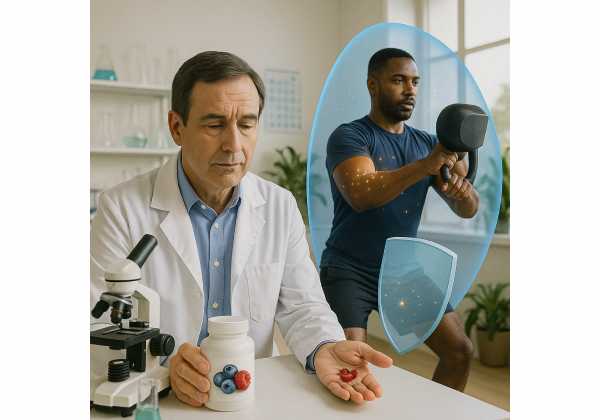
Redox balance is the body’s way of using controlled oxidation without letting it turn into damage. Every breath, meal, workout, infection, and repair process creates reactive molecules. In the right amount, those molecules act like text messages between cells: they help mitochondria adapt, immune cells respond, blood vessels relax, muscles grow more resilient, and repair systems turn on. In excess, the same chemistry damages lipids, proteins, DNA, and cell membranes.
Antioxidants matter, but the body does not work best when every reactive signal gets silenced. A better approach is to build strong internal antioxidant defenses, eat plant-rich foods, recover well, and avoid routine high-dose antioxidant supplements that might blunt useful training and stress-adaptation signals. The useful target is not “zero oxidation.” It is flexible control: enough redox signaling to adapt, enough defense to prevent chronic oxidative strain.
Table of Contents
- Redox Balance in Plain Language
- Why Reactive Signals Are Needed
- Oxidative Stress Is a Dose Problem
- Your Built-In Antioxidant System
- How Antioxidant Overuse Can Blunt Adaptation
- Food-First Antioxidants Support Rather Than Silence
- Smart Timing Around Training, Heat, and Recovery
- When Targeted Antioxidant Support Makes Sense
- A Practical Redox Plan
Redox Balance in Plain Language
Redox means reduction and oxidation. In simple terms, it describes the movement of electrons between molecules. Cells use this electron flow to make energy, send signals, neutralize threats, and repair damage.
Reactive oxygen species and reactive nitrogen species are part of this system. The common examples include superoxide, hydrogen peroxide, nitric oxide, peroxynitrite, and hydroxyl radicals. Some are short-lived and highly reactive. Others, especially hydrogen peroxide and nitric oxide, act as signaling molecules when produced in the right place at the right time.
The old idea that all “free radicals” are bad is too simple. Cells do not treat every reactive molecule as a toxin. They use tiny, local bursts of reactive species to change enzyme activity, switch genes on or off, reshape mitochondria, and guide immune responses.
Redox balance has three broad states:
| Redox state | What is happening | Common result |
|---|---|---|
| Too little signaling | Reactive signals are muted too much | Weaker adaptation, lower training signal, less cellular defense activation |
| Controlled signaling | Reactive molecules rise briefly, then resolve | Better resilience, repair, mitochondrial renewal, and defense gene activation |
| Oxidative distress | Reactive load overwhelms defense and repair | Damage to lipids, proteins, DNA, and cell structures |
The useful zone sits in the middle. A walk after meals, strength training, sauna, cold exposure, fasting intervals, and plant compounds all create small challenges. Those challenges work because the body senses them and responds. Removing the signal too aggressively weakens the message.
This is why redox balance fits closely with mitohormesis, the idea that modest mitochondrial stress helps cells become more resilient over time.
Why Reactive Signals Are Needed
Reactive oxygen and nitrogen species help the body adapt. They are involved in energy production, immune defense, muscle repair, blood vessel function, and cellular housekeeping.
During exercise, working muscle fibers increase oxygen use and mechanical strain. Mitochondria, NADPH oxidases, xanthine oxidase, and other enzymes produce reactive signals. Those signals help activate pathways linked with mitochondrial biogenesis, glucose handling, capillary growth, and antioxidant enzyme production. This is one reason repeated training makes muscle more efficient instead of simply “wearing it out.”
Several important adaptation pathways respond to redox signals:
- AMPK senses low cellular energy and supports glucose uptake, fat oxidation, and mitochondrial renewal.
- PGC-1α helps drive mitochondrial biogenesis, especially after endurance work.
- NRF2 turns on many genes involved in antioxidant defense, detoxification, and cellular stress resistance.
- FOXO proteins influence repair, stress resistance, and protein turnover.
- NF-κB helps coordinate immune and inflammatory responses, though chronic overactivation becomes harmful.
- Autophagy and mitophagy pathways help remove damaged cell components and worn mitochondria.
Mitochondria are central to this story. They do not only produce ATP, the cell’s main energy currency. They also produce redox signals that tell the cell how hard it is working and whether it needs more repair capacity. When the signal stays brief and well controlled, mitochondria adapt. When the signal becomes chronic and unresolved, mitochondrial damage accumulates.
This is one reason mitophagy and mitochondrial renewal matter for healthy aging. Damaged mitochondria produce more reactive leakage, while healthy mitochondrial turnover keeps the signal cleaner and easier to control.
Redox signals also support immune defense. Neutrophils and macrophages use bursts of reactive species to kill microbes. Blood vessels use nitric oxide to relax and regulate blood flow. Cells use reversible oxidation of sulfur-containing amino acids, especially cysteine residues, to change protein activity quickly without rebuilding the whole protein.
The body therefore uses oxidation as information. Suppressing every signal is like turning down the fire alarm, the thermostat, and the repair crew at the same time.
Oxidative Stress Is a Dose Problem
Oxidative stress becomes harmful when reactive molecules exceed the body’s antioxidant and repair capacity for too long. The problem is not a single burst after a workout or a short heat session. The problem is repeated overload without resolution.
Short redox pulses support adaptation. Chronic oxidative distress damages structures and drives inflammation. The difference comes from dose, duration, location, tissue health, and recovery capacity.
Common drivers of chronic oxidative strain include:
- smoking and air pollution
- poorly controlled blood sugar
- excess visceral fat
- sleep loss
- heavy alcohol intake
- untreated sleep apnea
- chronic infections or inflammatory disease
- overtraining without recovery
- nutrient deficiencies
- high exposure to ultraviolet radiation
- some medications, toxins, and occupational exposures
Aging adds another layer. Older cells often have weaker mitochondrial quality control, lower glutathione availability, reduced proteostasis, and more chronic inflammation. This does not mean aging requires constant antioxidant supplementation. It means the margin for recovery narrows, so sleep, protein intake, training dose, and metabolic health matter more.
Oxidative distress leaves fingerprints. Lipids oxidize, proteins misfold or lose function, DNA develops oxidative lesions, and membranes become less stable. Oxidized LDL contributes to atherosclerotic plaque biology. Oxidized proteins place extra burden on proteasomes and autophagy. Oxidative DNA damage increases repair demand.
The body has repair systems for all of this. Trouble starts when damage arrives faster than cleanup. A person who trains hard, sleeps poorly, under-eats protein, drinks alcohol at night, and adds long sauna sessions has stacked too many stressors. In that context, more antioxidant capsules do not fix the pattern. Better dosing and recovery fix the pattern.
This is where the broader hormesis concept helps. A stressor is useful only when the dose fits the person. The best redox plan follows the same logic as a good hormesis dose-response: apply enough challenge to trigger adaptation, then allow the system to rebuild.
Your Built-In Antioxidant System
The strongest antioxidant system is made inside the body. Food supplies raw materials and helpful plant compounds, but cellular defense relies heavily on enzymes, recycling systems, and repair pathways.
The main internal defenses include:
- Superoxide dismutase, which converts superoxide into hydrogen peroxide.
- Catalase, which helps break hydrogen peroxide into water and oxygen.
- Glutathione peroxidases, which reduce peroxides and depend on selenium.
- Glutathione, a major cellular redox buffer made from amino acids, including cysteine, glycine, and glutamate.
- Thioredoxin and peroxiredoxins, which help control protein oxidation and peroxide signaling.
- NADPH, which provides reducing power to regenerate antioxidant systems.
- Proteasomes, autophagy, and DNA repair enzymes, which remove or repair damaged components.
This network works through control and recycling, not simple “mopping up.” An antioxidant molecule that neutralizes one radical is only useful if the body restores it or removes its oxidized form. That is why overall metabolic health matters. Cells need energy, amino acids, minerals, and intact mitochondrial function to keep antioxidant defenses running.
NRF2 is one of the master regulators. Under calm conditions, NRF2 stays mostly restrained. Under mild stress, NRF2 moves into the nucleus and helps activate genes for glutathione production, detoxification enzymes, heme oxygenase-1, NAD(P)H quinone dehydrogenase 1, and other defense systems. This is a smart design: the body raises defense when it senses stress.
The aim is to nudge this system, not hammer it. Exercise, cruciferous vegetables, allium vegetables, coffee, tea, berries, cocoa, herbs, spices, and heat exposure all interact with defense pathways in different ways. For a deeper look at this defense switch, NRF2 and cellular defense explains why the best strategy is usually a moderate nudge rather than maximal stimulation.
Several nutrients support internal antioxidant enzymes:
| Nutrient | Redox-related role | Food examples |
|---|---|---|
| Selenium | Glutathione peroxidase function | Brazil nuts, seafood, eggs |
| Zinc | Supports antioxidant enzymes and immune function | Meat, shellfish, pumpkin seeds, beans |
| Copper | Part of copper-zinc superoxide dismutase | Shellfish, nuts, seeds, cocoa |
| Manganese | Part of mitochondrial superoxide dismutase | Whole grains, legumes, nuts |
| Riboflavin | Helps redox enzymes and energy metabolism | Dairy, eggs, mushrooms, almonds |
| Protein | Supplies amino acids for glutathione and repair | Fish, poultry, yogurt, legumes, tofu |
Deficiency weakens defense. Mega-dosing does not automatically improve it. The body needs adequacy, variety, and rhythm.
How Antioxidant Overuse Can Blunt Adaptation
High-dose antioxidant supplements create the biggest concern when they are used daily, taken near training, or stacked without a clear reason. The issue is not an orange, a bowl of berries, or vegetables with dinner. The concern centers on concentrated doses that change redox signaling beyond normal food exposure.
Vitamin C and vitamin E are the classic examples. In food-level amounts, they support health. In high supplemental doses, such as 1,000 mg/day of vitamin C or 400 IU/day of vitamin E, they have shown mixed effects in exercise research. Some studies find blunted cellular signaling linked with mitochondrial biogenesis or strength adaptation. Some meta-analyses find little change in final performance outcomes. This mixed evidence still points to a cautious practical rule: do not use high-dose antioxidant supplements as a default when training adaptation is the priority.
The body adapts to exercise partly because exercise creates a temporary redox challenge. If that challenge is muted too much, the signal to build stronger defenses weakens. This matters most for people using exercise to improve VO₂max, insulin sensitivity, muscle quality, mitochondrial density, and long-term resilience.
This does not mean antioxidants “ruin workouts.” Real life is more nuanced. Dose, timing, training type, baseline diet, age, health status, and supplement form all influence the result. Still, the safest routine for most healthy adults is clear: build a colorful diet, avoid routine mega-dosing, and keep high-dose antioxidant capsules away from the training window unless a clinician gives a specific reason.
Other supplements deserve the same caution. N-acetylcysteine, alpha-lipoic acid, high-dose polyphenol extracts, high-dose green tea extract, and concentrated “antioxidant blends” are pharmacologically active. They do not behave like normal meals. Some have legitimate use cases, but more is not automatically better.
| Situation | Better approach |
|---|---|
| Training to improve fitness or metabolic health | Avoid high-dose antioxidant capsules close to workouts |
| Eating fruits, vegetables, herbs, and spices | Continue; food-level antioxidants support overall health |
| Short-term intense competition with heavy muscle damage | Consider targeted support only when performance or recovery needs justify it |
| Chronic fatigue, inflammation, or poor recovery | Fix sleep, energy intake, training load, and medical causes before adding more supplements |
| Cancer therapy, surgery, anticoagulants, or complex medication use | Review antioxidants with a qualified clinician |
Redox signaling also connects with nutrient sensing. AMPK and mTOR help decide when cells repair, recycle, or build. Training, protein intake, fasting windows, and recovery all influence these pathways. Antioxidant overuse adds another signal to that network, which is why mTOR and AMPK balance belongs in the same conversation.
Food-First Antioxidants Support Rather Than Silence
Food gives the body antioxidants in a slower, more balanced form. A blueberry does not act like a high-dose capsule. It brings fiber, water, minerals, vitamin C, anthocyanins, and many other compounds in a food matrix. A serving of broccoli brings vitamin C, fiber, folate, glucosinolates, and sulfur-containing compounds that influence NRF2-related pathways. Coffee and tea bring polyphenols in amounts that fit daily life for many adults.
Plant compounds often work less like direct radical sponges and more like mild biological signals. They irritate the system just enough to activate defense pathways, improve enzyme expression, and support vascular and metabolic function. This is sometimes called xenohormesis: the body responds to plant stress compounds as small cues to strengthen its own defenses.
A food-first redox pattern looks simple:
- Eat at least 5 servings of vegetables and fruit on most days.
- Include deeply colored plants: berries, leafy greens, red cabbage, beets, citrus, peppers, tomatoes, and herbs.
- Add cruciferous vegetables several times per week: broccoli, cabbage, arugula, kale, cauliflower, or Brussels sprouts.
- Use extra-virgin olive oil, nuts, seeds, legumes, and whole grains for a wider mix of plant compounds.
- Drink coffee or tea if tolerated, without turning caffeine into a sleep problem.
- Use herbs and spices often: turmeric, ginger, rosemary, oregano, cinnamon, cloves, garlic, and parsley.
- Choose protein consistently so repair systems have amino acids.
This pattern supplies antioxidants without trying to overpower redox signaling. It also improves the conditions that reduce chronic oxidative burden: better glucose control, healthier gut fermentation, improved lipid handling, and lower inflammatory load. For a practical food list, polyphenol-rich foods are a useful place to start.
Food also prevents the “single compound” trap. Isolated supplements often target one molecule or pathway. Meals create a network effect. Vitamin C helps regenerate vitamin E. Polyphenols interact with gut microbes. Fiber supports short-chain fatty acid production. Minerals support antioxidant enzymes. Protein supports glutathione and tissue repair.
This is the right kind of redundancy. It supports redox resilience instead of forcing one pathway hard.
Smart Timing Around Training, Heat, and Recovery
Redox signals rise during exercise, heat exposure, cold exposure, hypoxia, and fasting. These stressors work best when they are dosed and separated well enough for recovery. Stacking them aggressively often turns a useful signal into strain.
For most people, the cleanest rule is to keep high-dose antioxidant supplements away from the main adaptation window after training. A practical buffer is 3 to 6 hours around hard sessions. Food does not need that restriction. A normal meal with vegetables, fruit, protein, and carbohydrates supports recovery without acting like a pharmacological redox blocker.
Training context changes the choice:
| Main aim | Redox strategy |
|---|---|
| Build VO₂max, mitochondrial density, or insulin sensitivity | Preserve the exercise signal; avoid routine high-dose antioxidant supplements near sessions |
| Improve strength and muscle quality | Prioritize protein, sleep, progressive loading, and recovery; avoid unnecessary antioxidant mega-doses |
| Compete in heat, altitude, or repeated events | Target recovery support carefully; do not introduce new supplements during competition |
| Return from illness or overreaching | Reduce training stress first; support nutrition and sleep before adding capsules |
| Maintain general health | Use food variety, moderate training, and recovery rhythms |
Heat exposure adds another layer. Sauna and heat acclimation raise heat shock proteins, cardiovascular strain, and redox-related signals. That does not mean longer is better. A hard interval workout followed by a long sauna and poor sleep creates too much stress for many adults. A shorter heat session after easier training, with fluids and cooling afterward, gives a cleaner signal.
Cold exposure also interacts with adaptation. Cold immediately after strength training can reduce some muscle-building signals in certain contexts. It also helps soreness for some people. The timing should match the purpose. Recovery tools are not automatically adaptation tools.
A useful weekly rhythm separates the hardest stressors. Do demanding intervals, heavy strength work, long sauna, fasting, and cold exposure on different days or in lower combinations. This approach fits the same logic as a simple hormesis plan: repeat small challenges consistently instead of chasing bigger stress.
Recovery is the redox reset. Sleep supports glutathione metabolism, mitochondrial repair, immune regulation, and glucose control. Carbohydrate after hard endurance work helps reduce prolonged stress hormone elevation. Protein supports tissue repair. Fluids and electrolytes keep circulation stable. Rest days let adaptive signals finish their work.
Redox balance improves when stress and recovery form a rhythm. Constant “biohacking” noise weakens that rhythm.
When Targeted Antioxidant Support Makes Sense
Some situations call for targeted antioxidant support. The problem is casual, indefinite, high-dose use without a reason. A clear use case is different from a daily habit built on fear of oxidation.
Targeted support deserves consideration when there is a documented deficiency, a specific medical indication, unusually high oxidative burden, or a clinician-guided protocol. Examples include low dietary intake, malabsorption, bariatric surgery history, restrictive diets, chronic gastrointestinal disease, heavy smoking exposure, certain medication patterns, and specific clinical uses such as N-acetylcysteine in acetaminophen toxicity under medical care.
There are also situations where antioxidant supplements require extra caution:
- chemotherapy or radiation therapy
- planned surgery
- anticoagulant or antiplatelet medication use
- kidney disease
- liver disease
- hemochromatosis or high ferritin
- pregnancy
- autoimmune disease flares
- high-dose green tea extract use
- multiple supplement stacks with overlapping ingredients
Cancer treatment deserves special caution because some therapies use oxidative damage to kill cancer cells. No one should add high-dose antioxidants during chemotherapy or radiation without the oncology team’s approval.
Testing helps when symptoms, risk factors, or medical history point to a problem. There is no single perfect “redox test” for healthy adults. Many oxidative stress markers vary by lab method and do not translate cleanly into decisions. More practical signals include fasting glucose, A1c, fasting insulin, triglycerides, liver enzymes, kidney function, ferritin, vitamin D, omega-3 status, and inflammation markers. Persistent inflammation raises oxidative load, so hs-CRP and related inflammation markers often provide more useful context than exotic oxidative stress panels.
Symptoms also need context. Soreness, fatigue, poor sleep, slow recovery, and brain fog do not prove antioxidant deficiency. They more often reflect poor sleep, excess training load, low energy intake, low protein, alcohol, illness, stress, medication effects, or untreated metabolic issues.
Use supplements as tools, not background noise. A tool has a reason, a dose, a timeframe, and a review point.
A Practical Redox Plan
Redox balance improves through repeated basics done well. The plan below protects useful signals while reducing chronic oxidative strain.
- Train most weeks. Combine zone 2 cardio, strength training, and occasional higher-intensity work. Consistent training raises internal antioxidant capacity better than sporadic extremes. For aerobic structure, zone 2 training is one of the most repeatable ways to support mitochondrial health.
- Eat colorful plants daily. Aim for variety across the week rather than chasing one “superfood.” Rotate berries, greens, crucifers, legumes, herbs, citrus, cocoa, tea, coffee, and olive oil.
- Do not fear normal post-exercise oxidation. Temporary oxidative signals after training help drive adaptation. Eat a normal meal, hydrate, and recover.
- Avoid routine antioxidant mega-dosing. High-dose vitamin C, vitamin E, NAC, alpha-lipoic acid, and concentrated blends should have a clear reason. Daily use “just in case” is not a redox strategy.
- Separate supplements from adaptation windows. When a supplement is needed, avoid placing high-dose antioxidants right before or after the training sessions where adaptation is the main purpose.
- Reduce chronic oxidative inputs. Smoking, poor sleep, heavy alcohol, uncontrolled glucose, visceral fat, and untreated sleep apnea create more oxidative strain than a lack of antioxidant capsules.
- Use recovery as a signal amplifier. Better sleep, rest days, deloads, fluids, electrolytes, and adequate calories let the body complete the adaptation cycle. Recovery after hormetic stress is where many redox benefits become real.
- Treat medical issues directly. Iron overload, diabetes, kidney disease, chronic infection, inflammatory disease, and medication side effects need proper evaluation. Antioxidants should not hide warning signs.
- Review the stack. Many multivitamins, greens powders, sports products, immune blends, and longevity formulas overlap. Add up the total vitamin C, vitamin E, selenium, zinc, green tea extract, curcumin, resveratrol, quercetin, and NAC before assuming the dose is modest.
- Match the dose to the season. Heavy training blocks, illness recovery, travel, heat exposure, and stressful life periods change tolerance. Reduce stressors first when recovery drops.
Redox balance rewards restraint. The strongest plan does not chase maximum antioxidant intake. It builds cells that respond well: mitochondria that turn over, enzymes that activate when needed, immune cells that resolve inflammation, and tissues that recover after challenge.
Oxidation is part of life. The body uses it to learn. The best longevity strategy keeps that signal clear, brief, and recoverable.
References
- Targeting oxidative stress in disease: promise and limitations of antioxidant therapy 2021 (Review)
- Hormesis and Oxidative Distress: Pathophysiology of Reactive Oxygen Species and the Open Question of Antioxidant Modulation and Supplementation 2022 (Review)
- Redox signaling and skeletal muscle adaptation during aerobic exercise 2024 (Review)
- The effects of vitamin C and E on exercise-induced physiological adaptations: a systematic review and Meta-analysis of randomized controlled trials 2020 (Systematic Review and Meta-analysis)
- Potential harms of supplementation with high doses of antioxidants in athletes 2022 (Review)
- The effect of dietary phytochemicals on nuclear factor erythroid 2-related factor 2 (Nrf2) activation: a systematic review of human intervention trials 2021 (Systematic Review)
Disclaimer
This article is educational and does not replace care from a qualified healthcare professional. Antioxidant supplements can interact with medications, cancer therapies, surgery, and chronic medical conditions. Discuss high-dose or long-term antioxidant use with a clinician, especially if you have a diagnosed disease or take prescription medication.