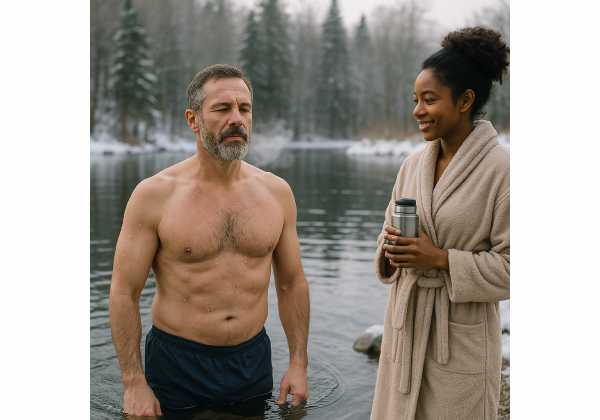
Cold exposure has a strong appeal because the effect is immediate: sharper breathing, faster alertness, and a clear sense that the body has been challenged. For healthy aging, that challenge is useful only when the dose is controlled. A cold shower, winter walk, cold plunge, or open-water swim all create a short stress signal that affects the nervous system, blood vessels, metabolism, and heat production. The same signal also raises risk when the exposure is too sudden, too cold, too long, or used by someone with heart, blood pressure, breathing, or fainting problems.
Cold works best as a small, repeatable hormetic stressor: enough to trigger adaptation, not enough to drain recovery. It does not replace strength training, sleep, protein, cardiovascular fitness, or medical care. Used carefully, it belongs in a healthy aging plan as a tool for stress tolerance, mood, recovery, and metabolic flexibility.
Table of Contents
- What Cold Exposure Means in Real Life
- How Cold Stress Works in the Body
- Benefits With Realistic Expectations
- Myths That Distort Cold Exposure
- Who Should Be Careful or Avoid It
- How to Start Safely
- Timing Cold With Exercise, Sleep, and Recovery
- A Simple Longevity-Minded Cold Plan
What Cold Exposure Means in Real Life
Cold exposure means deliberate contact with cold air or cold water for a short period. The exposure should feel challenging but controlled. The body should stay able to breathe steadily, think clearly, and exit safely.
Cold water creates a much stronger stimulus than cold air because water pulls heat from the body far faster. A 12°C lake is not the same as a 12°C walk outside. A cold shower also differs from a full cold plunge because the head, chest, hands, feet, and total skin area exposed change the response.
Common forms include:
- Cool showers: often 15–25°C, easy to control, useful for beginners.
- Cold showers: often below 15°C, stronger breathing and skin-cooling response.
- Cold plunges or baths: usually 5–15°C, higher cardiovascular and breathing load.
- Open-water swimming: variable temperature, current, depth, weather, and exit risk.
- Cold outdoor walks: milder, slower cooling, often safer for people who dislike plunges.
- Cryotherapy chambers: very cold dry air for 2–4 minutes, different from water immersion.
Cold exposure for healthy aging does not require extreme temperatures. A brief cool shower, a brisk winter walk, or hands-free face exposure to cool air often gives a useful stress signal with less risk than an ice bath. The best dose is the one repeated consistently without dread, injury, poor sleep, or lingering fatigue.
| Method | Typical intensity | Best use | Main caution |
|---|---|---|---|
| Cool shower | Low to moderate | Starting habit, morning alertness | Do not force breath-holding |
| Cold shower | Moderate | Breathing control, stress tolerance | Stop if dizzy or chest-tight |
| Cold plunge | Moderate to high | Short, controlled hormetic dose | Strong blood pressure and heart load |
| Open-water swim | High and variable | Experienced swimmers only | Drowning, hypothermia, exit difficulty |
| Cold outdoor walk | Low to moderate | Gentle acclimation | Protect fingers, toes, and airway |
For cellular longevity, cold exposure sits within the larger idea of hormesis: a small stress that nudges the body to become more resilient. The same principle applies to exercise, heat, fasting, and some plant compounds. The art is finding a dose that triggers adaptation without stealing resources from repair, sleep, and training. A good starting point is to treat cold as one small signal inside a broader safe hormesis plan, not as a stand-alone anti-aging shortcut.
How Cold Stress Works in the Body
Cold exposure starts at the skin. Cold receptors detect rapid cooling and send signals through the nervous system. The body responds by protecting core temperature and preserving function. This response involves breathing, blood vessels, stress hormones, muscles, fat tissue, and attention.
The first response is cold shock
Sudden cold water, especially on the chest, neck, or face, triggers the cold shock response. Breathing becomes faster. The first gasp happens before conscious control fully catches up. Heart rate and blood pressure rise. Blood vessels in the skin narrow, pushing blood toward the core.
This response is strongest during the first 30–90 seconds and often settles after a few minutes in healthy, acclimated people. That first minute is also the most dangerous time for new users. Gasping under water, panic breathing, or trying to swim hard before breathing settles creates real drowning risk.
Gradual practice reduces the cold shock response. Repeated exposure teaches the nervous system that the cold is stressful but manageable. This is one reason a slow cold acclimation approach beats sudden extreme plunges.
Cold activates the sympathetic nervous system
Cold increases sympathetic nervous system activity, the “mobilize and respond” branch of the autonomic nervous system. The body releases norepinephrine and other catecholamines. Many people feel more alert, awake, and emotionally lifted afterward.
This is not magic. It is a strong arousal signal. For someone under-recovered, anxious, over-caffeinated, sleep-deprived, or already stressed, the same signal feels harsh instead of helpful. Cold exposure should leave the person steadier after recovery, not wired, shaky, or depleted.
Cold changes heat production and metabolism
The body produces heat through shivering and non-shivering thermogenesis. Shivering uses muscle contractions. Non-shivering thermogenesis uses brown adipose tissue, often called brown fat, which burns fuel to generate heat. Adults have varying amounts of active brown fat, often around the neck and upper chest.
Cold exposure increases energy use during the exposure. In research settings, mild cold has raised daily energy expenditure by roughly 100–200 kcal in some conditions, though individual results vary widely. This does not turn cold plunges into a weight-loss solution. Appetite, compensation, body size, sex, acclimation, and daily movement matter more over time.
Cold also affects glucose and fat handling. In some studies, cold-activated brown fat improves glucose uptake and shifts lipid use. These metabolic effects are interesting for healthy aging because insulin sensitivity, mitochondrial function, and vascular health all influence long-term resilience. Still, cold does not replace walking after meals, resistance training, or healthy eating.
Cold creates a hormetic signal
Cold exposure stresses cells through temperature change, blood flow shifts, and increased energy demand. The body responds by adjusting antioxidant defenses, inflammation control, vascular tone, and stress signaling. This overlaps with mitohormesis, where a manageable energy challenge encourages mitochondrial adaptation.
Cold is not the strongest tool for building mitochondria. Aerobic exercise and resistance training have better evidence and broader benefits. Cold works best as a small extra nudge, especially for people who already have a foundation of movement, sleep, nutrition, and recovery.
Benefits With Realistic Expectations
Cold exposure has promising benefits, but the strongest claims often outrun the evidence. Human studies vary by water temperature, exposure time, training status, sex, age, and acclimation. Many trials are small. Some involve young healthy adults rather than older adults or people with chronic disease.
A sensible view is simple: cold exposure offers short-term nervous system and mood effects, possible recovery benefits, and interesting metabolic signals. It is not proven to extend lifespan.
Stress tolerance and mood
The most noticeable benefit is psychological. Cold creates a short, voluntary stressor. The person enters, controls breathing, stays calm, and exits. Repeating that cycle trains a useful skill: staying composed during discomfort.
Many people report better mood, less perceived stress, and more energy after cold water exposure. This likely reflects a mix of catecholamine release, endorphins, breathing control, accomplishment, social ritual, and outdoor light when swimming outside.
For healthy aging, this matters because stress resilience shapes sleep, blood pressure, glucose control, relationships, and exercise consistency. Cold exposure should support emotional regulation, not become punishment. A 60-second cool shower practiced calmly beats a brutal plunge that leaves someone dreading the next session.
Inflammation and immune signals
Cold exposure affects inflammatory markers, but the pattern is not simple. An acute cold plunge initially acts as a stressor. Repeated exposure appears to shift some immune and inflammatory responses in regular users. Some studies suggest fewer self-reported infections or changes in immune cells, but the evidence remains mixed.
Cold does not “boost immunity” in the cartoon sense. The immune system does not need constant boosting; it needs regulation. Healthy aging favors an immune system that reacts strongly when needed and quiets down when the threat passes. Cold exposure belongs in that conversation as a possible regulatory stressor, not a cure for inflammation.
People tracking inflammation should focus first on sleep, oral health, visceral fat, fitness, smoking status, diet quality, and chronic infection. Lab markers such as hs-CRP give a broader view of inflammatory load; a dedicated guide to inflammation markers for healthy aging fits better than guessing from how invigorated a plunge feels.
Metabolic flexibility and brown fat
Cold activates heat production and raises fuel use during exposure. Brown fat activity draws attention because it uses glucose and fatty acids to produce heat. Higher brown fat activity has been linked with healthier metabolic patterns in research, though cause and effect remain under study.
Cold exposure also teaches the body to handle temperature stress with less dramatic discomfort over time. That adaptation has practical value: better tolerance of winter, less fear of cool weather, and easier movement outdoors. More outdoor activity often delivers bigger health gains than the cold itself.
The metabolic benefit should not be oversold. A cold plunge after a day of overeating and sitting does not cancel the effect of the day. Cold is a small lever. Muscle mass, daily steps, protein intake, sleep timing, and aerobic fitness move metabolic health more powerfully.
Recovery and soreness
Cold water immersion often reduces soreness after hard exercise. Athletes use it because it helps them feel fresher when competition or frequent training matters. Cold reduces skin and muscle temperature, changes blood flow, and dampens some inflammatory signaling.
That benefit has a tradeoff. Inflammation after training is not purely bad; it also participates in adaptation. When the goal is muscle growth or strength development, using cold water immediately after lifting appears to blunt some hypertrophy signals. For older adults trying to preserve muscle, this matters. Muscle is one of the strongest healthspan assets, so cold should not interfere with progressive strength training.
A practical rule: use cold after endurance events, hot days, soreness-heavy activities, or mental stress; avoid it immediately after strength sessions when muscle growth is the priority.
Sleep and relaxation
Some people sleep better when cold exposure happens earlier in the day. Others feel too stimulated, especially after evening plunges. Cold raises arousal first, then often produces a calm after-effect. Timing determines which part dominates bedtime.
For sleep, the most reliable cold-related habit is a cool bedroom, not an ice bath. Evening cold plunges also raise safety concerns because fatigue, darkness, and reduced supervision increase risk. People using sauna, cold, or contrast routines near bedtime should keep the cold mild and watch how sleep quality responds.
Myths That Distort Cold Exposure
Cold exposure attracts extreme claims because it feels dramatic. Strong sensation makes benefits feel obvious, but sensation is not the same as proof. Several myths lead people to use too much cold, at the wrong time, or for the wrong reason.
Myth: colder is always better
Colder is not always better. Colder water increases shock, breathing disruption, blood pressure rise, pain, numbness, and exit risk. Once the stimulus is strong enough to challenge breathing and attention, more cold often adds risk faster than benefit.
For many adults, 10–15°C water for 1–3 minutes is already a strong dose. A cool shower that ends at 15–20°C also works well for beginners. There is no healthy aging award for suffering through near-freezing water.
The right dose follows the minimum effective dose principle: use the smallest cold exposure that creates a clear response and still allows fast recovery.
Myth: cold plunges burn enough fat to matter
Cold exposure burns energy, but the total is usually modest. Shivering and brown fat activation increase expenditure, yet a few minutes in cold water does not match the effect of daily walking, strength training, or maintaining lean mass.
Cold also increases appetite in some people. A person who feels colder, hungrier, and less active afterward loses the metabolic advantage quickly. Cold supports metabolic health best when it encourages movement, improves mood, and reinforces routine.
Myth: cold exposure proves toughness
Cold exposure should build self-trust, not ego. Pushing past warning signs is not resilience. It is poor risk management.
The useful skill is calm control: entering slowly, breathing through the first shock, recognizing limits, and leaving before judgment declines. Older adults especially benefit from keeping cold practice boring, repeatable, and safe.
Myth: cold water guarantees faster recovery
Cold often reduces soreness, but feeling less sore does not always mean the body adapted better. After resistance training, soreness relief and muscle-building signals pull in different directions. A lifter who cold plunges immediately after every session might feel recovered while losing part of the growth signal.
That tradeoff matters for aging muscle. Sarcopenia prevention depends on strength training, protein, and recovery. Cold should support those priorities, not compete with them.
Myth: cold exposure triggers deep autophagy
Autophagy is the cell’s recycling and cleanup system. Cold stress interacts with cellular stress pathways, but human cold showers and plunges should not be promoted as a proven way to produce meaningful, whole-body autophagy. Exercise, energy balance, sleep, and time between meals have clearer roles in cellular maintenance.
Readers interested in the mechanism should treat cold as one input among many and understand the basics of autophagy for healthy aging before chasing extreme protocols.
Who Should Be Careful or Avoid It
Cold exposure is not safe for everyone. The main risks come from sudden breathing changes, blood pressure spikes, abnormal heart rhythm, fainting, hypothermia, and impaired movement. Cold water also reduces hand grip, coordination, and clear thinking as exposure continues.
People should get medical guidance before cold plunges or cold-water swimming if they have:
- Coronary artery disease, previous heart attack, heart failure, cardiomyopathy, or unexplained chest pain.
- Known arrhythmia, atrial fibrillation, long QT syndrome, implanted defibrillator, or unexplained fainting.
- Uncontrolled high blood pressure or large blood pressure swings.
- Stroke history, transient ischemic attack, or significant vascular disease.
- Raynaud’s phenomenon, severe peripheral artery disease, or cold urticaria.
- Asthma or cold-triggered bronchospasm.
- Seizure disorder, balance problems, or frequent falls.
- Diabetes with neuropathy or reduced temperature sensation.
- Pregnancy, unless specifically cleared by a clinician.
- Current illness, fever, infection, vomiting, diarrhea, or dehydration.
Cold plunges also pair badly with alcohol, sedatives, recreational drugs, extreme fasting, exhaustion, and solo open-water swimming. Alcohol gives a false sense of warmth, impairs judgment, and increases drowning risk.
Warning signs mean the session ends immediately:
- Chest pain, pressure, or unusual tightness.
- Faintness, confusion, tunnel vision, or loss of coordination.
- Severe headache or sudden visual changes.
- Wheezing, uncontrolled coughing, or inability to slow breathing.
- Blue lips, clumsy hands, slurred speech, or intense shivering that does not settle after warming.
- Numbness that persists after rewarming.
Cold should never be used to “push through” illness. The body needs resources to fight infection and maintain temperature. Adding cold stress while sick usually increases strain without adding benefit.
How to Start Safely
A safe cold practice starts with control. Control means predictable temperature, easy exit, no breath-holding, no deep water, and no competition. The first month should feel almost too conservative.
Start with showers or cool air
Begin with the lowest-risk version:
- Finish a normal warm shower with 15–30 seconds of cool water.
- Keep the water on the legs and arms first, then the torso.
- Breathe out slowly and keep the face relaxed.
- Increase by 15–30 seconds every few sessions.
- Stop at 1–2 minutes once the habit feels repeatable.
Another beginner option is a brisk outdoor walk in cool weather. Wear enough clothing to stay safe, but allow the face and hands brief exposure when conditions permit. This builds confidence without the shock of immersion.
Progress by one variable at a time
Do not make water colder, exposure longer, and immersion deeper at the same time. Change one variable every 1–2 weeks. The body adapts best to steady practice.
A reasonable progression:
- Week 1: 15–30 seconds cool shower, 3–5 days.
- Week 2: 30–60 seconds cool shower, 3–5 days.
- Week 3: 60–90 seconds colder shower, 3–4 days.
- Week 4: 1–2 minutes cold shower or controlled bath, 2–4 days.
A cold plunge should wait until the person handles cold showers calmly. The first plunge should be shallow, supervised, and short. Keep the head above water. Enter slowly. Focus on breathing. Exit before numbness, shaking, or mental fog develops.
Use simple breathing rules
The safest breathing rule is: never hold the breath during cold immersion. Breath-holding and face immersion add diving-reflex effects that conflict with the cold shock response. That combination stresses heart rhythm control.
Use this pattern instead:
- Exhale before entering.
- Keep the mouth above water.
- Take small breaths until the first shock settles.
- Lengthen the exhale.
- Leave if breathing feels uncontrollable.
Breathing control is not a performance display. It is a safety tool.
Rewarm calmly
After cold exposure, dry off, dress warmly, and move gently. Do not jump into a scorching shower while dizzy or numb. Rapid heating feels pleasant but can worsen lightheadedness in some people.
A good rewarming sequence is simple: towel dry, warm clothes, warm drink if desired, and 5–10 minutes of easy walking or household movement. Shivering that quickly settles is common. Shivering that escalates, confusion, or clumsiness means the exposure was too long.
Recovery after cold is part of the dose. A healthy stressor should be followed by adequate fluids, food, and rest when needed. Cold fits the same recovery logic as training, heat, and fasting; recovery after hormetic stress determines whether the signal becomes adaptation or overload.
Timing Cold With Exercise, Sleep, and Recovery
Cold exposure has different effects depending on timing. The same plunge that helps after a hot endurance session might interfere with muscle-building after lifting.
After strength training
Avoid cold water immersion immediately after resistance training when the session’s purpose is muscle growth, strength gain, or bone-loading adaptation. The first few hours after lifting are when blood flow, inflammation, protein synthesis, and cell signaling help the body rebuild.
Older adults usually need more muscle, not less. Strength training supports glucose control, joint function, balance, bone density, and independence. Cold should not blunt that signal. Place cold at least 4–6 hours away from lifting, or use it on non-lifting days.
This is especially important for people following a strength training plan for longevity or trying to regain muscle after illness, menopause, weight loss, or inactivity.
After endurance training or heat
Cold works better after long endurance sessions, hot-weather exercise, or events where the priority is cooling and comfort rather than muscle growth. A brief cool shower or short cold bath reduces perceived heat stress and soreness for many people.
Endurance athletes still need adaptation, so cold after every session is not always necessary. Use it when recovery speed matters, when heat load is high, or when soreness would interfere with the next day’s movement.
On rest days
Rest days are often the best place for cold exposure. The body receives a stress signal without competing with the adaptation window from strength training. A short morning cold shower, a brief plunge, or a cool outdoor walk fits well.
Do not stack cold on top of every other stressor. A hard interval session, poor sleep, fasting, sauna, and cold plunge on the same day creates a large total load. Healthy aging favors rhythm, not random intensity. People who use multiple stressors should learn how to stack hormetic stressors without burnout.
Morning versus evening
Morning cold exposure suits most people because the arousal signal supports wakefulness. It also gives the body many hours to settle before sleep.
Evening cold exposure should be milder. If it improves sleep, keep it. If it delays sleep, raises heart rate, or creates nighttime alertness, move it earlier. Wearables that track resting heart rate and heart rate variability offer clues, though they should not override how the person feels.
A Simple Longevity-Minded Cold Plan
Cold exposure for healthy aging should be simple enough to keep for years. The plan should protect muscle, cardiovascular safety, sleep, and enthusiasm. Most adults do not need daily ice baths. They need a repeatable routine that leaves them calmer, more capable, and more consistent with the bigger longevity habits.
Beginner plan
Use this plan for the first 4–6 weeks:
- Frequency: 3 days per week.
- Method: cool-to-cold shower.
- Duration: 30 seconds to 2 minutes.
- Timing: morning or early afternoon.
- Intensity: cold enough to change breathing, not cold enough to cause panic.
- Exit rule: stop while still coordinated and clear-headed.
The main goal is not toughness. It is calm breathing under mild stress.
Intermediate plan
Use this plan after cold showers feel easy:
- Frequency: 2–4 days per week.
- Method: cold shower, controlled bath, or plunge.
- Water temperature: often 10–15°C for plunges.
- Duration: 1–3 minutes per exposure.
- Weekly total: 5–10 minutes of deliberate cold is plenty for many people.
- Timing: away from strength training by at least 4–6 hours.
More is not automatically better. The session should end with a sense of control, not collapse.
Cold plunge safety checklist
Before entering:
- Someone else is nearby or aware.
- The exit is easy and non-slippery.
- The head stays above water.
- No alcohol, sedatives, or recreational drugs.
- No illness, fever, chest symptoms, or faintness.
- A towel and warm clothing are ready.
- The session has a planned time limit.
During the plunge:
- Enter slowly.
- Exhale and keep breathing.
- Do not compete.
- Do not submerge the face.
- Leave early if breathing, coordination, or thinking feels wrong.
Afterward:
- Dry and dress.
- Walk gently.
- Avoid driving until fully warm and clear-headed.
- Record the dose and response if tracking.
How to know the dose is right
The dose is right when cold exposure produces a short challenge and a clean recovery. Good signs include steadier breathing, improved mood, warmer hands and feet after rewarming, no sleep disruption, and no lingering fatigue.
The dose is too high when it causes dread, poor sleep, irritability, heavy fatigue, numbness, prolonged shivering, chest symptoms, or a drop in training quality. A helpful longevity practice should make the next healthy action easier. If cold makes exercise, eating, work, or sleep worse, reduce it.
Cold exposure earns its place when it supports the basics: movement, muscle, metabolic health, recovery, and emotional steadiness. It should feel like a controlled conversation with the nervous system, not a battle. The body adapts best when the signal is strong enough to notice, brief enough to recover from, and repeated with respect for safety.
References
- Effects of cold-water immersion on health and wellbeing: A systematic review and meta-analysis 2025 (Systematic Review)
- Habituation of the cold shock response: a systematic review and meta-analysis 2024 (Systematic Review)
- The effects of cold exposure (cold water immersion, whole- and partial- body cryostimulation) on cardiovascular and cardiac autonomic control responses in healthy individuals: A systematic review, meta-analysis and meta-regression 2024 (Systematic Review)
- Effect of Acute Cold Exposure on Energy Metabolism and Activity of Brown Adipose Tissue in Humans: A Systematic Review and Meta-Analysis 2022 (Systematic Review)
- Throwing cold water on muscle growth: A systematic review with meta-analysis of the effects of postexercise cold water immersion on resistance training-induced hypertrophy 2024 (Systematic Review)
- Cold Water Swimming—Benefits and Risks: A Narrative Review 2020 (Review)
Disclaimer
This article is educational and does not replace medical advice from a qualified health professional. Cold exposure creates real cardiovascular, breathing, fainting, drowning, and hypothermia risks, especially for people with heart disease, arrhythmias, uncontrolled blood pressure, asthma, Raynaud’s phenomenon, diabetes-related neuropathy, pregnancy, or current illness. Discuss cold plunges or cold-water swimming with a clinician before starting if you have any medical condition or take medication that affects heart rate, blood pressure, alertness, or temperature regulation.