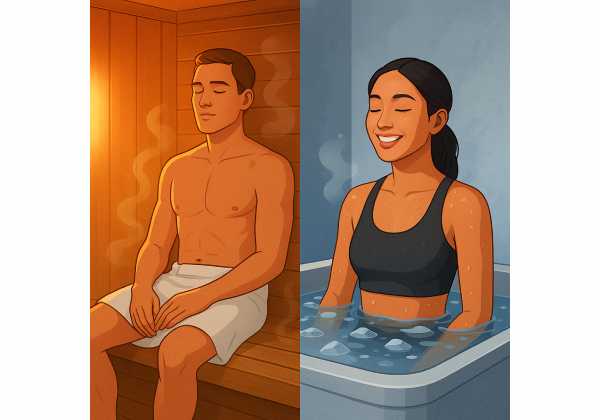
Contrast therapy uses repeated heat and cold exposure to create short, controlled stress. A sauna, steam room, hot bath, cold plunge, cold shower, or natural cold water all fit the idea when used with care. The appeal is simple: heat raises circulation and core temperature, while cold rapidly activates the nervous system and constricts blood vessels. Moving between them feels powerful because the body must adjust quickly.
For healthy aging, contrast therapy belongs in the hormesis family. Hormesis means a small stress that prompts repair, adaptation, and better resilience when the dose stays manageable. Heat and cold do not replace exercise, sleep, protein, blood pressure control, or metabolic health. They work best as optional tools that support recovery, stress tolerance, circulation, and consistency. The most useful routine is not the harshest one. It is the one you repeat safely, recover from well, and fit around training, sleep, and real life.
Table of Contents
- What Contrast Therapy Is
- How Heat and Cold Affect the Body
- What the Longevity Evidence Shows
- What to Expect During and After a Session
- Beginner Protocols That Are Safe and Repeatable
- Timing Contrast Therapy Around Training and Sleep
- Who Should Avoid or Modify Contrast Therapy
- Common Mistakes and a Four-Week Plan
What Contrast Therapy Is
Contrast therapy means alternating heat and cold in the same session or within the same routine. The classic version is sauna followed by cold water, repeated for several rounds. A simpler version is a hot shower followed by 30–60 seconds of cool water. A more intense version uses a dry sauna at 70–100°C followed by cold water around 10–15°C.
The “contrast” is the active part. Heat expands blood vessels near the skin, raises heart rate, increases sweating, and creates a warm cardiovascular load. Cold narrows blood vessels, triggers a sharp breathing response, increases alertness, and shifts circulation toward the core. Alternating them trains the body to move between states.
This does not mean stronger is always better. A routine that leaves you shaky, sleepless, dizzy, or drained is too much. In a longevity context, contrast therapy should feel challenging but controlled. You should finish calmer, clearer, and warm again within a reasonable time.
Contrast therapy sits beside other small stressors such as exercise, fasting windows, altitude exposure, and plant compounds that nudge cellular defense pathways. The same rule applies across all of them: dose and recovery decide whether the stress helps or backfires. A structured hormesis plan works better than random hard sessions.
The main tools include:
- Dry sauna: Hot air, low humidity, often 70–100°C.
- Steam room: Lower air temperature than sauna, higher humidity, strong heat load.
- Hot bath: Usually 38–41°C, easier to dose at home.
- Cold plunge: Water commonly 7–15°C, intense because water removes heat fast.
- Cold shower: Less intense than immersion and easier for beginners.
- Outdoor cold water: Variable and riskier because temperature, current, footing, and exit conditions change.
The best setup is the one you control. A safe exit, clean water, hydration, and a way to rewarm matter more than chasing the coldest plunge or hottest sauna.
How Heat and Cold Affect the Body
Heat and cold act through different stress signals. Together, they challenge circulation, temperature control, breathing, and the autonomic nervous system. The autonomic nervous system runs automatic functions such as heart rate, blood vessel tone, sweating, and digestion.
Heat raises circulation and cellular repair signals
Heat exposure increases skin blood flow and heart rate. A sauna session often feels like light-to-moderate cardiovascular work even though you are sitting still. Sweating helps remove heat, but sweat also removes fluid and electrolytes. Longer or hotter sessions increase the demand on blood pressure control.
At the cellular level, heat strongly links to heat shock proteins. These proteins help protect and refold damaged proteins, support proteostasis, and assist cells during stress. Proteostasis means keeping proteins correctly folded, cleared, and replaced. That matters with aging because damaged proteins accumulate more easily over time.
Heat also interacts with nitric oxide signaling, blood vessel function, insulin sensitivity, and mitochondrial stress responses. These effects overlap with some exercise pathways, but heat is not exercise. It lacks the mechanical loading needed for muscle, tendon, and bone. For a deeper look at heat-specific cellular signaling, see heat shock proteins and healthy aging.
Cold activates alertness and vascular control
Cold exposure quickly activates the sympathetic nervous system. That is the “fight or flight” branch. Breathing speeds up, heart rate changes, blood pressure rises, and the body releases norepinephrine. Norepinephrine supports alertness, focus, and mood, which explains why many people feel awake and clear after cold exposure.
Cold also constricts blood vessels near the skin. This reduces heat loss and sends blood toward the core. After the cold ends, blood flow returns to the skin and limbs, especially during rewarming. Repeated cold exposure often reduces the shock response over time. That is cold acclimation: the same cold feels less threatening because the body learns the pattern.
Cold exposure has a narrow comfort window. A cold shower at the end of bathing is a mild stress. A long plunge in near-freezing water is a major physiological event. Gradual progress works better than shock tactics, especially for midlife and older adults. A gentle cold acclimation approach reduces the chance of panic breathing, dizziness, and avoidance.
The switch between hot and cold is the extra challenge
The transition itself is a stressor. After heat, blood vessels near the skin are open and heart rate is elevated. Entering cold water then forces fast constriction and a breathing response. That rapid shift creates the strong “contrast” sensation.
This is why contrast therapy should start conservatively. The body manages heat. The body manages cold. Managing both back-to-back requires more from blood pressure regulation and the heart.
A useful session creates a clear stimulus without turning into a test of toughness. Signs of a good dose include steady breathing, awareness, mild discomfort, and a smooth return to baseline. Signs of excess include chest pressure, faintness, confusion, numbness that lingers, uncontrolled shivering, or exhaustion later in the day.
What the Longevity Evidence Shows
The evidence is strongest for sauna and general heat therapy, more limited for cold exposure, and still incomplete for combined contrast routines. That does not make contrast therapy useless. It means the claims need careful wording.
Sauna research includes observational studies, mechanistic reviews, and smaller trials. Frequent sauna bathing in Finnish cohorts has been associated with lower cardiovascular and all-cause mortality risk, but observational studies do not prove that sauna caused the benefit. Sauna users may differ in fitness, income, social habits, alcohol intake, or overall lifestyle. Still, the pattern is biologically plausible because heat affects blood pressure, vascular function, inflammation, autonomic tone, and stress physiology.
Cold water immersion research is more mixed. A 2025 systematic review of healthy adults included 11 studies and 3,177 participants. Cold protocols ranged from 7°C to 15°C and from 30 seconds to 2 hours. The review found time-dependent effects on inflammation, stress, immunity, sleep quality, and quality of life, but it also noted few randomized trials, small sample sizes, and limited diversity in study populations.
For longevity, cold exposure is best viewed as a nervous system and resilience tool, not a proven life-extension method. It creates a strong signal. Whether that signal improves long-term outcomes depends on dose, timing, health status, and recovery.
Contrast therapy as a combined hot-cold practice has less direct longevity research than its separate parts. Most contrast water therapy studies focus on athletic recovery, soreness, and short-term performance. They do not answer whether decades of contrast therapy extend healthspan.
The most defensible benefits are:
- Stress tolerance: Regular, controlled exposure teaches the body to stay calm under discomfort.
- Vascular flexibility: Heat and cold challenge blood vessel dilation and constriction.
- Recovery support: Some people sleep better, feel less sore, or unwind more easily after heat.
- Mood and alertness: Cold often produces a short-term lift in energy and focus.
- Consistency ritual: A repeatable routine supports relaxation, body awareness, and habit structure.
The least defensible claims are:
- “Detoxing” through sweat: Sweat contains small amounts of substances, but the liver, kidneys, lungs, gut, and lymphatic system handle detoxification.
- Guaranteed fat loss: Cold increases energy use briefly, but it does not override food intake, muscle mass, or daily movement.
- Proven life extension: Human evidence does not show that contrast therapy directly extends lifespan.
- More autophagy from every hard session: Heat, cold, fasting, and exercise interact with repair pathways, but direct human autophagy claims are often exaggerated.
The most useful framing is resilience. Contrast therapy nudges the body to adapt to thermal stress. That fits the broader idea behind mitohormesis, where small stress signals support stronger cellular defense when recovery keeps pace.
What to Expect During and After a Session
A well-run contrast session has a predictable rhythm: heat, cool transition, cold, rewarming, then either another round or rest. The first few sessions should feel almost too easy. The goal is to learn your response, not to impress anyone.
During the heat phase
In the sauna or hot bath, expect warmth to build over several minutes. Heart rate rises. Skin flushes. Sweat begins. Breathing should stay controlled. You should feel hot, but not trapped or distressed.
Leave the heat phase before symptoms appear. Do not wait for dizziness, nausea, headache, pounding heartbeat, or tunnel vision. Those signs mean the dose has already gone too far.
Typical beginner heat ranges:
| Heat method | Beginner dose | Experienced dose | Notes |
|---|---|---|---|
| Dry sauna | 5–10 minutes | 10–20 minutes | Higher temperatures require shorter sessions. |
| Steam room | 5–8 minutes | 8–15 minutes | Humidity makes cooling harder. |
| Hot bath | 10–15 minutes at 38–40°C | 15–30 minutes at 39–41°C | Stand up slowly after soaking. |
During the cold phase
Cold water creates an immediate gasp reflex. The first job is breathing control. Exhale slowly. Keep your face relaxed. Do not dunk your head as a beginner. The face and neck intensify the cold shock response.
The first 15–30 seconds usually feel the hardest. After that, breathing often settles. Hands and feet may ache. Skin may burn or tingle. Mild shivering after exit is common. Strong shivering, clumsiness, numbness, or mental fog means the session was too cold or too long.
Typical beginner cold ranges:
| Cold method | Beginner dose | Experienced dose | Notes |
|---|---|---|---|
| Cool shower | 30–60 seconds | 1–3 minutes | Best starting point for most people. |
| Cold plunge 12–15°C | 30–90 seconds | 2–5 minutes | Use a timer and easy exit. |
| Very cold water below 10°C | Skip at first | 30 seconds to 2 minutes | Higher risk, especially without acclimation. |
After the session
Most people feel calm, alert, warm, and relaxed after a well-dosed session. Some feel sleepy after heat-heavy routines. Others feel energized after cold-heavy routines. Track your response for the next 12–24 hours, not just the first 10 minutes.
Good signs include:
- Stable mood
- Warm hands and feet within 20–30 minutes
- Normal appetite
- Good sleep that night
- No unusual fatigue the next day
- No headache or prolonged dizziness
Poor recovery signs include:
- Sleep disruption
- Irritability
- Heavy fatigue
- Lingering chills
- Headache
- Soreness that feels worse rather than better
- Lower training performance for more than a day
Thermal stress is still stress. It belongs in the same recovery budget as hard exercise, fasting, poor sleep, work stress, travel, illness, and alcohol.
Beginner Protocols That Are Safe and Repeatable
A beginner protocol should teach control. It should not require grit, breath-holding, or extreme temperatures. Start with one variable: either add heat, add cold, or add a small contrast. Do not maximize all three.
Protocol 1: Shower contrast
This is the easiest place to start.
- Take a normal warm shower.
- Turn the water cool for 30 seconds.
- Return to warm for 1–2 minutes.
- Finish with 30 seconds cool.
- Dry off and rewarm naturally.
Use this 3–5 times per week for two weeks. Lower the cold temperature slowly. Keep breathing smooth. This routine builds confidence without requiring special equipment.
Protocol 2: Sauna plus cool shower
This is a good first sauna contrast routine.
- Sauna for 5–10 minutes.
- Sit or stand outside the sauna for 2 minutes.
- Cool shower for 30–60 seconds.
- Rest for 5 minutes.
- Repeat once only if you feel steady.
This works well for people who want the benefits of sauna for cellular health without jumping into a cold plunge. The short rest between sauna and cold also reduces the abruptness of the switch.
Protocol 3: Hot bath plus cool rinse
This is practical at home.
- Hot bath at 38–40°C for 10–15 minutes.
- Stand up slowly and sit on the edge if needed.
- Cool shower for 30–60 seconds.
- Dress warmly and rest.
Hot baths create a strong heat load because much of the body is immersed. Avoid very hot baths when alone, dehydrated, or tired. Keep the first sessions boringly safe.
Protocol 4: Sauna plus cold plunge
Use this only after you tolerate heat and cold separately.
- Sauna for 8–12 minutes.
- Rest outside for 2–3 minutes.
- Cold plunge at 12–15°C for 30–90 seconds.
- Rewarm for 5–10 minutes.
- Repeat for 2 rounds.
Cold plunges below 10°C are not necessary for longevity. They mainly add intensity and risk. Most people get a strong stimulus at 12–15°C if they stay calm and consistent.
A useful weekly dose for many healthy adults is 2–4 sessions per week. Start with 1–2. Add frequency before intensity. Add time only when sleep, energy, and training stay stable.
Timing Contrast Therapy Around Training and Sleep
Timing changes the result. A contrast session before bed, after lifting, or on a rest day affects the body differently.
Heat often fits well in the evening. It raises body temperature, then the post-session cooling period helps some people feel sleepy. A sauna or hot bath 1–2 hours before bed works better than jumping into bed overheated. Give the body time to cool down, drink fluids, and settle.
Cold exposure is more stimulating. Morning or midday cold fits better for many people. A cold plunge late at night leaves some people alert, hungry, or restless. Others sleep well after cold, especially when followed by warmth. Your response matters more than the trend.
Strength training needs special care. Cold water immersion soon after lifting may reduce muscle growth signals when used repeatedly. That does not mean cold ruins all strength training. It means the timing matters. If muscle gain, bone strength, or power is the priority, avoid cold plunges in the first 4–6 hours after resistance training. Use sauna, walking, mobility, food, and sleep as the main recovery tools instead. The balance between building and repair also connects with mTOR and AMPK signaling, where training, nutrition, and recovery shape adaptation.
For endurance training, cold water sometimes helps short-term soreness and perceived recovery. It is more useful during heavy training blocks, competitions, or heat stress. For normal weekly fitness, do not use cold to erase every training signal. Soreness is not always bad. It often reflects adaptation.
A simple timing guide:
| Situation | Best choice | Why |
|---|---|---|
| Morning energy | Cold shower or brief cold plunge | Supports alertness without late-day stimulation. |
| Evening relaxation | Sauna or hot bath, then gentle cooling | Heat followed by cooling often supports sleep readiness. |
| After strength training | Delay cold 4–6 hours | Protects muscle growth signaling. |
| Rest day recovery | Full contrast session | Less interference with training adaptation. |
| High stress or poor sleep | Short heat-only or skip | Avoids stacking stress on a depleted system. |
Hydration matters. Drink water before and after sauna. If you sweat heavily, add sodium through food or an electrolyte drink. Avoid alcohol before and after thermal stress. Alcohol increases dehydration, impairs judgment, and raises the risk of fainting or overheating.
Wearables offer clues but not verdicts. Resting heart rate, HRV, sleep quality, and next-day energy help you judge dose. A drop in HRV after a hard contrast session does not always mean harm, but repeated drops with fatigue and poor sleep suggest overload. For recovery tracking, resting heart rate and HRV are more useful as trends than single-day scores.
Who Should Avoid or Modify Contrast Therapy
Contrast therapy stresses the heart, blood vessels, breathing, and temperature regulation. Healthy people usually tolerate mild routines well. Higher-risk adults need medical guidance before using sauna, hot tubs, cold plunges, or strong hot-cold cycles.
Avoid unsupervised contrast therapy if you have:
- Unstable angina, recent heart attack, or severe coronary artery disease
- Uncontrolled high blood pressure
- Serious heart rhythm problems
- Fainting episodes or unexplained dizziness
- Severe aortic stenosis or advanced heart failure
- Peripheral artery disease with poor circulation
- Raynaud’s disease that causes severe pain or color change
- Cold urticaria or known cold-triggered allergic reactions
- Advanced kidney disease or fluid restriction
- Fever, acute infection, vomiting, or diarrhea
- Pregnancy without clinician guidance
- Neuropathy that limits heat or cold sensation
- Open wounds or skin infections
Blood pressure deserves extra attention. Heat can lower blood pressure during and after the session, especially when you stand up. Cold can raise blood pressure sharply, especially at entry. Moving from hot to cold can challenge both directions quickly. If you monitor blood pressure at home, learn proper technique with home blood pressure measurement before using numbers to guide decisions.
Medication also matters. Beta blockers, nitrates, diuretics, alpha blockers, sedatives, antihistamines, and some psychiatric medications can alter heat tolerance, heart rate response, sweating, blood pressure, or alertness. Do not stop medication for contrast therapy. Adjust the thermal routine instead, with professional guidance when needed.
Older adults should favor lower intensity and better supervision. Aging often reduces thirst, sweating efficiency, balance, and temperature sensitivity. A hot bath or sauna also raises fall risk when standing up. Use handrails, sit before standing, and avoid locking the door.
Cold water has specific risks. The gasp reflex can cause panic breathing. If your face is near water, that panic can lead to inhaling water. Natural water adds current, slippery surfaces, hidden depth, and delayed rescue. For cold plunges, use a controlled tub, keep the head above water, and exit before coordination drops.
Stop immediately if you feel chest pain, pressure, severe shortness of breath, faintness, confusion, irregular heartbeat, weakness on one side, or symptoms that feel unusual for you. Thermal stress should never require pushing through warning signs.
Common Mistakes and a Four-Week Plan
The most common mistake is chasing intensity before building tolerance. Cold social media often celebrates ice, suffering, and long holds. Sauna culture sometimes celebrates extreme heat and endurance. Longevity routines need the opposite: small stress, repeated safely, with full recovery.
Common mistakes include:
- Starting too cold: A cold shower trains control. An ice bath often trains panic.
- Staying in heat too long: More heat increases dehydration and fainting risk.
- Skipping the transition: Resting 1–3 minutes between sauna and plunge helps the body adjust.
- Using cold after every lift: Frequent post-lifting cold may work against muscle growth.
- Doing contrast when ill: Fever and dehydration turn thermal stress into unnecessary risk.
- Ignoring sleep: A routine that worsens sleep is poorly timed or overdosed.
- Treating discomfort as proof: The best dose produces adaptation, not drama.
- Forgetting rewarming: Warm clothes, gentle movement, and food help the body return to baseline.
A four-week progression keeps the signal manageable:
| Week | Routine | Frequency | Progress rule |
|---|---|---|---|
| 1 | Warm shower plus 30 seconds cool at the end | 3–5 days | Breathing stays smooth. |
| 2 | Warm shower, 30–60 seconds cool, warm reheat, 30 seconds cool | 3–5 days | No lingering chills or sleep disruption. |
| 3 | Sauna 5–10 minutes plus cool shower 30–60 seconds | 1–3 days | Energy is normal the next day. |
| 4 | Sauna 8–12 minutes, rest, cold plunge 30–90 seconds, rewarm | 1–2 days | Only add a second round if the first feels controlled. |
After four weeks, choose one of three directions:
- Recovery focus: 1–3 heat-heavy sessions per week, cold used briefly.
- Stress resilience focus: 2–4 short cold exposures per week, heat optional.
- Full contrast focus: 1–3 contrast sessions per week with 1–3 rounds.
Keep total cold exposure modest. Many people do well with 5–10 total minutes per week across all cold sessions. More is not automatically better. Heat dose varies more, but 2–4 sauna sessions per week of 10–20 minutes is a realistic range for experienced, healthy users.
You can also cycle intensity. Use more contrast during lower training weeks and less during heavy lifting, travel, illness recovery, or poor sleep. Thermal stress should support the life you are building, not compete with it. Good recovery after hormetic stress includes fluids, food, downshifting, and sleep; those basics matter as much as the session itself. A structured post-stress recovery routine helps keep the signal beneficial.
Contrast therapy works best when it becomes calm and repeatable. You enter heat before you are depleted. You enter cold with control. You exit before your body has to force the decision. That style builds trust with the practice and gives the body enough stimulus to adapt without turning longevity into another source of strain.
References
- Effects of cold-water immersion on health and wellbeing: A systematic review and meta-analysis 2025 (Systematic Review)
- The multifaceted benefits of passive heat therapies for extending the healthspan: A comprehensive review with a focus on Finnish sauna 2024 (Review)
- Heat therapy: mechanistic underpinnings and applications to cardiovascular health 2021 (Review)
- The Cardiometabolic Health Benefits of Sauna Exposure in Individuals with High-Stress Occupations. A Mechanistic Review 2021 (Review)
- Throwing cold water on muscle growth: A systematic review with meta-analysis of the effects of postexercise cold water immersion on resistance training-induced hypertrophy 2024 (Systematic Review)
- Effects of Cold-Water Immersion Compared with Other Recovery Modalities on Athletic Performance Following Acute Strenuous Exercise in Physically Active Participants: A Systematic Review, Meta-Analysis, and Meta-Regression 2023 (Systematic Review)
Disclaimer
This article is educational and does not replace care from a qualified health professional. Heat, cold, and contrast therapy can stress the cardiovascular system, especially in people with heart disease, blood pressure problems, fainting, pregnancy, neuropathy, or medication-related heat and cold sensitivity. Speak with a clinician before starting intense thermal exposure if you have a medical condition or unusual symptoms.