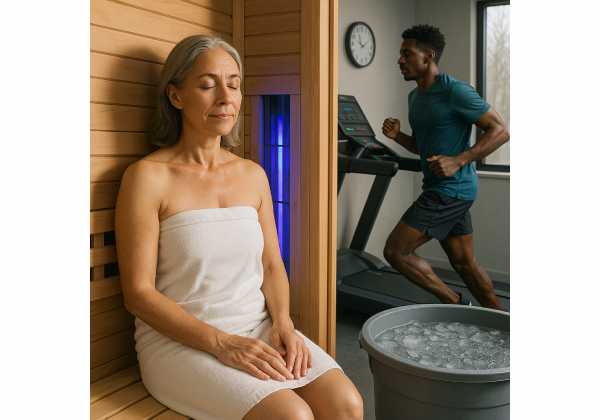
Heat, cold, and exercise all challenge the body in useful ways. Strength training loads muscle and bone. Intervals push the heart, lungs, and mitochondria. Sauna raises thermal strain and triggers heat-defense pathways. Cold exposure sharpens the nervous system and adds a short survival signal. Used well, these stressors build resilience. Used carelessly, they turn into one long demand with too little repair.
Smart stacking means arranging stress so each signal has room to land. A hard lifting session, a long sauna, poor sleep, and a cold plunge on the same evening do not automatically create four times the benefit. They often create one oversized recovery bill. The body adapts during the quiet period after the challenge, not during constant stimulation. A good plan keeps the dose small enough to repeat, separates competing signals when needed, and treats sleep, food, fluids, and easy days as part of the protocol.
Table of Contents
- How Stress Stacking Works Inside the Body
- Use the Minimum Effective Dose Before Adding More
- Heat, Cold, and Training Send Different Signals
- A Weekly Structure That Builds Without Draining You
- Timing Rules for Sauna, Cold, Strength, and Cardio
- Recovery Signals That Tell You to Push, Hold, or Back Off
- Common Mistakes That Turn Hormesis Into Burnout
- Safer Starting Plans for Different Fitness Levels
How Stress Stacking Works Inside the Body
Hormesis describes the pattern where a small stress makes the body stronger after recovery. Exercise is the clearest example. A set of squats briefly damages muscle fibers, disrupts energy balance, and raises local inflammation. With enough protein, sleep, and time, the body repairs the tissue and adds capacity. The next session feels easier or supports a slightly higher load.
Heat and cold follow the same broad rule, but they press different buttons. Heat raises heart rate, skin blood flow, sweating, and cellular heat-defense systems. Cold raises sympathetic nervous system activity, breathing drive, blood pressure response, and alertness. Training uses mechanical load, energy demand, oxygen demand, and coordination. Each one creates a signal. The useful question is whether the signal improves adaptation or only adds strain.
The body does not separate every stressor into neat categories. A hard work deadline, poor sleep, alcohol, illness, a long fast, emotional conflict, and heavy intervals all draw from the same recovery pool. That pool includes nervous system readiness, glycogen, hydration, immune balance, connective tissue tolerance, and mental bandwidth. This is why a plan that works during a calm week feels punishing during a stressful month.
At the cellular level, stressors often converge on overlapping systems:
- AMPK rises when energy availability drops, such as during endurance work, fasting, or intense intervals.
- mTOR supports building and repair, especially after resistance training and protein intake.
- Heat shock proteins help protect and refold stressed proteins after heat exposure.
- Mitochondrial signaling responds to endurance work, intervals, heat, and some cold exposure.
- Autophagy and mitophagy help recycle damaged cellular parts, especially when energy stress and recovery are balanced.
These pathways do not operate like simple on/off switches. The body runs many of them at once, and the dose, timing, and context decide the result. A moderate sauna after an easy Zone 2 ride creates a different burden than a long sauna after heavy deadlifts, a calorie deficit, and six hours of sleep.
A simple rule works well: stack stressors only when they serve the same day’s purpose. If the day is for endurance, adding mild heat after easy aerobic work fits better than adding maximal lifting. If the day is for strength and muscle growth, cold exposure immediately after training deserves caution because cold water immersion after lifting has been linked with smaller strength or hypertrophy gains in some studies. If the day is for recovery, a gentle walk and brief heat exposure beat turning “recovery” into another hidden workout.
For a deeper cellular frame, a repeatable hormesis plan helps connect these signals to a sustainable weekly rhythm.
Use the Minimum Effective Dose Before Adding More
The best stress dose is the smallest dose that creates the desired response and still lets you recover on schedule. More is useful only after the current dose feels repeatable. A person who gets stronger from three well-planned lifting sessions does not need five lifting sessions plus sauna plus cold plus fasting to prove commitment.
Minimum effective dose matters because heat, cold, and training all show dose-response curves. Too little does not move the needle. The right amount builds adaptation. Too much increases fatigue, pain, sleep disruption, irritability, or injury risk. The curve is not fixed. Age, sleep, fitness, medications, hydration, body size, menstrual cycle, menopause, work stress, and climate shift the dose that feels productive.
Start by defining the main adaptation you want from each stressor:
| Desired adaptation | Primary stressor | Good starting dose | What to avoid early |
|---|---|---|---|
| Strength and muscle | Resistance training | 2–3 sessions weekly, 2–4 hard sets per main pattern | Cold plunge immediately after every lifting session |
| Aerobic base | Zone 2 cardio | 2–4 sessions weekly, 30–60 minutes | Turning every easy session into intervals |
| Cardiorespiratory power | Intervals | 1 session weekly at first | Intervals plus long sauna plus calorie deficit on the same day |
| Heat tolerance | Sauna or hot environment exposure | 10–15 minutes, 2–3 times weekly | Staying in because of ego, dizziness, or peer pressure |
| Cold tolerance | Cold shower, cool bath, or cold plunge | 30 seconds to 2 minutes, 2–4 times weekly | Very cold exposure while breath control is poor |
| Recovery and relaxation | Sleep, walking, gentle heat, mobility | Daily basics before advanced tools | Replacing rest with more protocols |
The minimum effective dose is especially important for midlife and older adults. Recovery capacity often remains strong, but it becomes less forgiving of chaotic programming. Tendons and joints adapt more slowly than the cardiovascular system. Motivation also comes in waves. A smaller plan repeated for six months beats an intense three-week sprint followed by soreness, poor sleep, and abandonment.
Progress one variable at a time. Add minutes to sauna before adding more sauna days. Add cold frequency before lowering temperature. Add sets before adding an extra lifting day. Add one interval before adding a second high-intensity session. This makes cause and effect easier to read. When sleep worsens or soreness lingers, you know which dial changed.
A useful progression rule is the “two-week repeat.” Keep a new dose steady for two weeks before increasing it. If performance, mood, sleep, and resting heart rate stay stable, increase slightly. If two or more markers worsen, hold or reduce. This approach mirrors the logic of finding the minimum effective hormesis dose rather than chasing the biggest possible stress.
Heat, Cold, and Training Send Different Signals
Heat, cold, and training overlap, but they do not produce identical adaptations. Understanding the signal helps you place each stressor where it supports the day instead of fighting it.
Heat supports circulation, thermal tolerance, and cellular defense
Sauna and other passive heat exposures raise heart rate and skin blood flow without mechanical joint loading. Many people experience a sauna session as relaxing, but the body still treats heat as a real stress. Sweating increases fluid and electrolyte loss. Heart rate rises. Blood vessels widen. Heat shock proteins and other protective systems respond to the thermal challenge.
For healthy adults, a beginner sauna dose often starts around 10–15 minutes at a tolerable temperature, followed by cooling down and rehydrating. Experienced users often tolerate 15–20 minutes per round, but duration should never override symptoms. Lightheadedness, nausea, chest discomfort, confusion, or feeling faint means the session is over.
Heat pairs well with easy aerobic days, mobility days, or evenings when relaxation is the main purpose. It also works as a heat-acclimation tool before summer training or travel to a hotter climate. Heat acclimation usually requires repeated exposure over 1–2 weeks, not a single heroic sauna session. The early gains often include lower heart rate during heat exposure, better sweating response, and less perceived strain.
For detailed dosing and safety, a sauna plan for cellular health is more useful than copying extreme routines online.
Cold exposure is a nervous system and vascular challenge
Cold exposure triggers a fast sympathetic response. Breathing speeds up, the skin’s blood vessels constrict, and alertness rises. This is why cold feels energizing. It is also why cold deserves respect in people with cardiovascular disease, uncontrolled high blood pressure, fainting history, arrhythmias, Raynaud’s phenomenon, cold urticaria, or panic triggered by breathlessness.
A cold shower or cool bath is enough for many beginners. The first target is calm breathing, not maximum cold. A practical starting point is 30–60 seconds of cool water at the end of a shower. Once breathing stays controlled, the dose can rise to 1–3 minutes. Very cold plunges create a stronger shock and do not suit everyone.
Cold after hard training has two different faces. It helps some people feel less sore and more ready for another near-term performance bout. That is useful during tournaments, multi-day hiking trips, or demanding work weeks. But routine cold water immersion immediately after resistance training appears less ideal when the main target is muscle size and strength. The cold signal can dampen some of the inflammation and blood flow involved in remodeling.
Cold fits best away from lifting when hypertrophy is the goal. Morning cold on a non-lifting day, cold after an easy walk, or cold several hours after strength training usually makes more sense than plunging straight from the squat rack into ice water. For nuance on benefits and myths, cold exposure for healthy aging deserves its own decision process.
Training remains the foundation
Heat and cold are useful add-ons, but exercise carries the largest return for muscle, bone, insulin sensitivity, balance, VO₂max, and independence. Resistance training sends mechanical signals that heat and cold cannot replace. Aerobic training creates oxygen-demand signals that passive heat only partly mimics. Power, coordination, and balance require movement.
A longevity-minded training week usually includes strength work, easy aerobic work, some higher-intensity conditioning when appropriate, and daily movement. Heat and cold should support that base. They should not crowd it out. When time is limited, lift, walk, build aerobic capacity, sleep well, and eat enough protein before adding advanced recovery tools.
A Weekly Structure That Builds Without Draining You
A good week alternates challenge and repair. It also separates the hardest stressors so the nervous system and connective tissues have space to adapt. The exact plan changes with training age, goals, and health status, but the structure stays simple: two to four meaningful training days, one to three easy movement days, and heat or cold placed with intent.
Here is a balanced week for a healthy intermediate adult who wants strength, aerobic fitness, and mild heat/cold exposure:
| Day | Main session | Optional heat or cold | Purpose |
|---|---|---|---|
| Monday | Strength training | No cold immediately after; gentle walk later | Muscle, bone, tendon loading |
| Tuesday | Zone 2 cardio, 40–50 minutes | Sauna 10–15 minutes | Aerobic base and heat tolerance |
| Wednesday | Mobility or brisk walking | Brief cold shower | Recovery and nervous system practice |
| Thursday | Strength training | Optional easy sauna only if well hydrated | Second mechanical signal |
| Friday | Rest or easy walk | None or gentle heat | Absorb the week |
| Saturday | Intervals or hills | Skip long sauna; cool down normally | VO₂max and power |
| Sunday | Long walk, light cycling, or rest | Contrast only if it feels restorative | Circulation, relaxation, readiness |
This plan avoids the common trap of making every day hard in a different way. Monday and Thursday emphasize strength. Tuesday builds aerobic capacity and layers mild heat. Wednesday keeps cold short and skill-based. Saturday gives one true high-intensity dose. Friday and Sunday create room for repair.
Beginners need less. Two full-body lifting sessions, two easy cardio sessions, and one short heat or cold exposure per week provide plenty of signal. Advanced athletes need more careful separation, not just more intensity. If a person already trains six days per week, adding sauna and cold requires replacing some stress, not simply piling on top.
The weekly rhythm should also match the season. In hot summer weather, outdoor training already includes heat stress, so sauna volume should drop. During winter, cold exposure from outdoor walks or commuting adds strain, especially in people with poor circulation. During illness, travel, grief, or major work stress, the plan should narrow to basics.
Strength training deserves priority because muscle protects metabolic health, bone, glucose handling, and daily function. A simple weekly strength plan gives the body a clearer building signal than random hard classes stacked with recovery fads. Easy aerobic work also deserves a steady place. Zone 2 training builds a base that makes every other stressor easier to tolerate.
Timing Rules for Sauna, Cold, Strength, and Cardio
Timing decides whether stacking feels productive or draining. The body handles combined stress better when the signals point in the same direction and the hardest demands do not collide.
After strength training
After lifting, the priority is remodeling. Muscle protein synthesis, glycogen restoration, connective tissue repair, and nervous system downshifting need support. Eat a protein-rich meal, rehydrate, and sleep. A gentle walk helps circulation without stealing recovery.
Avoid routine cold plunging immediately after lifting when muscle and strength gains are the main target. This does not mean cold is “bad.” It means the timing is wrong for that goal. A cold plunge after lifting makes more sense when short-term soreness control matters more than long-term hypertrophy, such as during a race weekend, a military course, or a demanding event schedule.
Sauna after lifting is more flexible but still counts as stress. A short, moderate sauna after an easier strength session often feels fine. A long sauna after a high-volume leg day, poor sleep, and low food intake is a different story. When lifting is hard, keep heat short or move it to another day.
After Zone 2 cardio
Easy aerobic work pairs well with mild heat. The cardiovascular system is already active, but the session should not leave you depleted. Sauna after Zone 2 often supports relaxation and heat acclimation without competing strongly with the aerobic signal.
Cold after Zone 2 is also reasonable when the dose is short. It adds alertness and cold tolerance practice. The main caution is total stress. A long ride, low carbohydrate intake, and a harsh cold plunge create a larger burden than the label “Zone 2” suggests.
After intervals or hard conditioning
Intervals are already a high-stress dose. They raise lactate, breathing, sympathetic drive, and muscle damage more than easy cardio. Keep add-ons conservative. Cool down, rehydrate, and eat. If heat is used, keep it brief and avoid chasing discomfort. If cold is used for soreness or next-day readiness, treat it as a recovery tool, not a toughness contest.
Most adults do well with one true interval session per week at first. People with a strong aerobic base sometimes use two. More than that often turns into hidden overreaching unless the rest of the week is carefully managed. A structured VO₂max interval plan beats random all-out efforts.
Morning versus evening
Morning cold feels energizing for many people because it increases arousal. Evening cold sometimes delays sleep if it leaves the nervous system too activated. Some people sleep well after cold exposure, but others feel wired. Track your own response.
Evening sauna often supports relaxation when it ends early enough to allow body temperature to fall before bed. Many adults do best finishing sauna at least one to two hours before sleep. Replace fluids and electrolytes, especially after sweating heavily.
Contrast therapy
Hot-cold contrast feels good to many people, but it is still a combined stressor. Use contrast sparingly at first: one or two rounds, moderate heat, short cold, and full breathing control. Contrast belongs on recovery-focused days or after easy training more often than after maximal lifting. For people who enjoy it, contrast therapy works best when the session ends feeling refreshed rather than conquered.
Recovery Signals That Tell You to Push, Hold, or Back Off
The body gives early warnings before full burnout appears. The skill is noticing small changes while they are still easy to fix. One bad night or one sore day does not require panic. Patterns matter.
Use three types of signals: performance, physiology, and behavior.
Performance signals include bar speed, grip strength, pace at a familiar heart rate, coordination, and motivation to start. If warm-up weights feel unusually heavy for two sessions in a row, reduce the day’s load. If an easy run sits 10–15 beats per minute higher than normal at the same pace, keep it easy or walk.
Physiology signals include resting heart rate, heart rate variability, sleep quality, appetite, body weight swings from dehydration, and unusual soreness. A higher resting heart rate for several mornings, lower HRV than your own baseline, and poor sleep together suggest the body is still paying the recovery bill. Wearables are not perfect, but trends help. resting heart rate and HRV tracking works best when combined with how you feel and perform.
Behavior signals are just as important. Irritability, dread before normal sessions, cravings that feel unusual, loss of patience, and needing extra caffeine to function all point to accumulating strain. Many people ignore these because they do not look like “fitness data.” They often show up before injury or illness.
A simple traffic-light system helps:
| Status | Signs | Best action |
|---|---|---|
| Green | Normal sleep, stable mood, normal resting heart rate, good warm-up | Train as planned; use heat or cold if it fits the day |
| Yellow | Mild soreness, one poor night of sleep, slightly higher heart rate, low enthusiasm | Keep the session but reduce volume 20–30%; skip extra stressors |
| Red | Persistent poor sleep, illness signs, dizziness, unusual chest symptoms, sharp pain, major fatigue | Rest, walk gently, hydrate, and seek medical guidance when symptoms warrant it |
Recovery is trainable, but it is not optional. Sleep is the strongest recovery tool because it supports immune control, tissue repair, glucose regulation, memory, and hormonal rhythm. Adults generally need about 7–9 hours per night, with some variation. A person stacking stressors while sleeping six hours is building on a weak base.
Food matters too. Hard training plus heat increases fluid needs. Sweating removes sodium as well as water. Low-carbohydrate intake can work for some easy sessions, but intervals and heavy lifting usually perform better with adequate carbohydrate. Protein supports muscle repair; many active adults benefit from roughly 1.6 g/kg/day, spread across meals, though needs vary with body size, age, kidney health, and goals.
The best recovery plan is not glamorous: sleep, enough total energy, protein, fluids, sodium when sweating heavily, easy movement, and days without heroic stress. recovery after hormetic stress is where the adaptation becomes real.
Common Mistakes That Turn Hormesis Into Burnout
Burnout rarely comes from one sauna or one cold plunge. It comes from repeating small mismatches until the body stops compensating.
The first mistake is stacking for identity instead of adaptation. A person starts to believe the hardest routine is the best routine. They lift, sprint, sauna, plunge, fast, and restrict calories because the routine feels disciplined. But discipline without feedback becomes noise. The body adapts to a clear signal followed by recovery, not constant proof of toughness.
The second mistake is copying elite athletes or influencers. Elite athletes often have years of tissue adaptation, coaches, nutrition support, naps, massage, and planned deloads. Influencers often show the dramatic part, not the quiet recovery. A 20-minute ice bath after a brutal workout looks impressive. It is not automatically useful for a 52-year-old trying to build muscle, sleep better, and keep joints healthy.
The third mistake is adding heat on dehydrated days. Sauna after a sweaty outdoor workout requires caution. Check urine color, thirst, body weight change, and symptoms. Rehydrate before heat if you feel depleted. Include sodium-containing foods or drinks after heavy sweating. Do not use sauna to “cut weight” for health or longevity. Rapid water loss is not fat loss and adds cardiovascular strain.
The fourth mistake is treating cold as harmless because it feels natural. Cold shock raises breathing and cardiovascular demand. Cold water also reduces dexterity and increases risk when done outdoors or alone. Never combine cold plunging with alcohol, sedatives, breath-hold contests, or unsafe water conditions. Enter gradually, keep the face out at first if the shock is strong, and end while control remains good.
The fifth mistake is ignoring strength adaptation. Some people add frequent post-lifting cold exposure because it reduces soreness. Less soreness feels like better recovery, but soreness is not the only measure. If the goal is muscle, strength, and bone, the remodeling signal matters. Use cold strategically, not automatically.
The sixth mistake is never deloading. A deload is a planned reduction in training volume, intensity, or added stress. Many adults do well with a lighter week every 4–8 weeks, or sooner during stressful life periods. A deload does not mean doing nothing. It means fewer hard sets, easier cardio, shorter sauna, less cold, and more sleep.
The seventh mistake is using stressors to compensate for poor basics. Sauna does not erase chronic sleep restriction. Cold exposure does not fix under-eating. Intervals do not replace daily walking. Fasting does not make a chaotic training plan safer. Advanced tools work best on top of boring consistency.
Red flags deserve immediate respect: chest pain, fainting, confusion, severe shortness of breath, heat illness symptoms, irregular heartbeat, new neurological symptoms, severe headache during exertion, or sharp joint pain. Stop the session and seek appropriate medical help. People with cardiovascular disease, uncontrolled hypertension, kidney disease, pregnancy, seizure history, autonomic disorders, or medications affecting blood pressure, sweating, hydration, or alertness should get individualized guidance before using intense heat or cold.
Safer Starting Plans for Different Fitness Levels
A smart plan starts below your maximum and builds trust with your body. The best starting point depends on current fitness, stress load, and medical history. Choose the plan that feels almost too manageable, then repeat it for two weeks before adding more.
Beginner plan: build the base first
This plan suits people returning after a long break, beginners, and anyone under high life stress.
- Strength: 2 full-body sessions weekly. Use basic patterns: squat or sit-to-stand, hinge, push, pull, carry, and core.
- Cardio: 2 easy walks or bike sessions weekly, 25–40 minutes.
- Heat: 1–2 sauna sessions weekly, 8–12 minutes, moderate temperature.
- Cold: 2 cool shower finishes weekly, 30–60 seconds.
- Recovery rule: no hard intervals for the first month.
This phase teaches consistency and body awareness. The main win is finishing sessions with energy left. Cold and heat stay short enough that they do not interfere with training.
Intermediate plan: separate hard signals
This plan suits people already training three to five days per week.
- Strength: 2–3 sessions weekly.
- Zone 2: 2 sessions weekly, 35–60 minutes.
- Intervals: 1 session weekly, such as 4 rounds of 3 minutes hard with easy recovery.
- Heat: 2–3 sauna sessions weekly, 10–20 minutes depending on tolerance.
- Cold: 2–3 short exposures weekly, placed away from strength when muscle gain is the priority.
- Recovery rule: one low-stress day after the hardest interval or leg session.
Intermediate trainees often need restraint more than novelty. Keep hard days hard enough to matter and easy days truly easy. Use sauna after easy cardio or on separate evenings. Use cold for alertness, mood, or acute soreness, not as a badge after every lift.
Advanced plan: use blocks, not constant stacking
Advanced trainees benefit from training blocks. A block emphasizes one adaptation while maintaining others.
A four-week heat-acclimation block might include three short sauna sessions weekly after easy aerobic work while keeping cold minimal. A strength block might include three lifting days weekly, reduced intervals, and no immediate post-lift cold. A VO₂max block might include two interval sessions weekly, lower lifting volume, and only mild heat.
Blocks prevent signal confusion. They also make progress easier to measure. If everything increases at once, fatigue rises and the cause becomes unclear.
Older adults and people with lower recovery capacity
Older adults often gain the most from strength, balance, walking, and careful heat tolerance. The plan should protect sleep, hydration, and joints. Heat exposure should start shorter. Cold should begin with cool, not icy, water. Power training can be valuable, but it needs skilled progression and safe exercises.
The aim is not fragility. The aim is precision. A 65-year-old can build strength, improve aerobic capacity, and tolerate heat and cold. The dose just needs better spacing and fewer ego-driven jumps.
A simple two-week reset when you feel overdone
When the system feels overloaded, reduce stress before quitting entirely:
- Cut lifting volume in half but keep light technique work.
- Replace intervals with Zone 2 or walking.
- Stop cold plunges; use normal showers.
- Keep sauna short or pause it if sleep, hydration, or dizziness are issues.
- Eat enough protein and carbohydrate for training.
- Set a consistent sleep window for 14 nights.
After two weeks, rebuild from the last dose that felt good. This is not failure. It is how long-term training stays alive through real life.
Stressors are tools. Training builds the base. Heat expands thermal and cardiovascular tolerance. Cold trains composure and offers short-term recovery support when placed well. The strongest longevity routine is not the most extreme stack; it is the one you can repeat, recover from, and adjust before your body has to force the lesson.
References
- The multifaceted benefits of passive heat therapies for extending the healthspan: A comprehensive review with a focus on Finnish sauna 2024 (Review)
- Quantifying Exercise Heat Acclimatisation in Athletes and Military Personnel: A Systematic Review and Meta-analysis 2024 (Systematic Review)
- ACSM Expert Consensus Statement on Exertional Heat Illness: Recognition, Management, and Return to Activity 2021 (Consensus Statement)
- Throwing cold water on muscle growth: A systematic review with meta-analysis of the effects of postexercise cold water immersion on resistance training-induced hypertrophy 2024 (Systematic Review)
- Effects of Cold-Water Immersion Compared with Other Recovery Modalities on Athletic Performance Following Acute Strenuous Exercise in Physically Active Participants: A Systematic Review, Meta-analysis, and Meta-regression 2023 (Systematic Review)
- Recovery and Performance in Sport: Consensus Statement 2018 (Consensus Statement)
Disclaimer
This article is educational and does not replace care from a qualified health professional. Heat exposure, cold immersion, and hard exercise place real strain on the cardiovascular, nervous, and thermoregulatory systems. People with medical conditions, pregnancy, medication changes, fainting history, or symptoms during exertion should seek individualized guidance before using intense protocols.