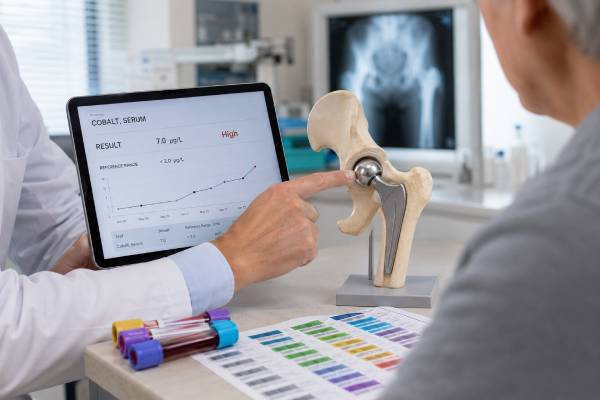
A cobalt blood test measures the amount of cobalt circulating in the blood, usually to check possible exposure from a metal-on-metal hip implant, certain workplace materials, or less common toxic sources. Cobalt is not always harmful; it is part of vitamin B12 and is normally present in the body at very low levels. The concern is excess inorganic cobalt, especially when a result is clearly above the lab’s reference range, rising over time, or paired with symptoms such as hip pain, hearing or vision changes, nerve symptoms, shortness of breath, thyroid problems, or heart-related symptoms. A single number rarely tells the whole story. The sample type, lab method, kidney function, implant history, occupation, supplements, and repeat trends all affect interpretation. The most useful result is one that is matched to the right clinical question and followed up with the right next step.
- A cobalt blood test checks recent or ongoing cobalt exposure, not vitamin B12 status.
- Normal blood cobalt is lab-specific, but people without cobalt-containing implants usually have very low results, often below about 1 mcg/L.
- High cobalt may come from metal-on-metal hip implants, cobalt-chromium hardware, hard-metal work, battery or alloy production, pigments, or contaminated supplements.
- In metal-on-metal hip monitoring, whole blood is preferred, and rising levels often matter more than one isolated result.
- A whole blood cobalt level around 7 mcg/L or higher in metal-on-metal hip guidance usually calls for closer follow-up and imaging, not automatic surgery.
- Urgent evaluation is important if high cobalt is paired with chest pain, severe shortness of breath, fainting, rapidly worsening nerve symptoms, vision or hearing changes, or major hip swelling or pain.
Table of Contents
- What the Cobalt Blood Test Measures
- Normal Range and High Cobalt Results
- Common Sources of Cobalt Exposure
- Symptoms and Health Risks of High Cobalt
- Metal-on-Metal Hip Implants and Cobalt Testing
- How the Test Is Done and How to Prepare
- Follow-Up After an Abnormal Cobalt Result
- Reducing Exposure and Knowing When to Get Help
What the Cobalt Blood Test Measures
A cobalt blood test measures cobalt in a blood sample, usually reported in micrograms per liter, written as mcg/L or µg/L. Some reports may use nanograms per milliliter, written as ng/mL. These two units are numerically the same: 1 mcg/L equals 1 ng/mL.
The test is mainly used when a clinician needs evidence of excess cobalt exposure. It is not a routine screening test for everyone, and it is not the test used to diagnose vitamin B12 deficiency. Vitamin B12 contains cobalt, but a standard cobalt blood test measures cobalt as a trace element, not whether your body has enough active B12.
Cobalt testing may be ordered when someone has:
- A metal-on-metal hip implant or another cobalt-chromium implant
- Hip pain, swelling, clicking, reduced walking ability, or a new limp after hip replacement
- Work exposure to cobalt-containing dust, fumes, powders, hard metals, alloys, or battery materials
- Possible exposure from pigments, ceramics, metal grinding, tool manufacturing, or recycling work
- Unexplained symptoms that fit possible cobalt toxicity, especially with a known exposure source
- A need to compare cobalt with chromium as part of implant or heavy metal evaluation
Whole blood is often preferred when monitoring metal-on-metal hip implants because it gives a more consistent picture for cobalt and chromium trends. Serum or plasma cobalt may be used by some laboratories for other clinical questions, but results from different sample types are not interchangeable. If a doctor is following cobalt over time, using the same sample type, same laboratory, and same method helps avoid false comparisons.
Cobalt may also be measured in urine, especially in occupational exposure monitoring. Urine can reflect recent exposure and excretion, while blood is often more useful when the concern is a circulating burden from an implant or ongoing systemic exposure. Hair and nail testing are much harder to interpret because outside contamination can make results look high even when internal exposure is not high.
Normal Range and High Cobalt Results
A normal cobalt result depends on the laboratory, the sample type, and the reason for testing. Most people without cobalt-containing implants have very low blood cobalt levels. Many labs use a reference limit near or below 1 mcg/L for people without significant exposure, but some reference intervals differ. The safest way to read your report is to use the reference range printed next to your result.
For more detail on how labs frame reference values, see cobalt blood test normal range.
A high cobalt result does not automatically mean cobalt poisoning. It means cobalt is above the expected range for that lab and sample type. The next question is why it is high, whether it is rising, and whether it fits the person’s symptoms, implant history, workplace history, and kidney function.
| Result pattern | What it often means | Common next step |
|---|---|---|
| Within the lab’s reference range | No clear evidence of unusual cobalt exposure from that sample. | No follow-up may be needed unless symptoms or exposure risk remain concerning. |
| Slightly above range | Possible low-level exposure, lab variation, sample contamination, implant contribution, or occupational exposure. | Review exposures, confirm sample type, and consider repeat testing if clinically needed. |
| Clearly elevated | More likely to reflect a real exposure source, especially if repeat testing confirms it. | Evaluate implants, work exposures, supplements, kidney function, and related symptoms. |
| Rising over time | May suggest ongoing exposure, implant wear, corrosion, or incomplete exposure control. | Use the same lab and sample type for trend testing; consider imaging or specialist review when relevant. |
| High result plus symptoms | More concerning for clinically important cobalt toxicity or implant-related disease. | Prompt medical evaluation, targeted organ testing, and source control are important. |
For metal-on-metal hip implants, a whole blood cobalt level around 7 mcg/L, also described as 7 ppb, has been used in some follow-up guidance as a level that calls for closer follow-up and cross-sectional imaging. This is not a universal toxic level, and it does not automatically mean revision surgery is needed. It is a signal to look more carefully at symptoms, hip function, imaging, implant type, and whether cobalt and chromium are rising.
Some people with serious cobalt toxicity have much higher levels than 7 mcg/L, but toxicity cannot be reduced to one number. A person with symptoms and a rising result deserves attention even if the number is below a particular guidance threshold. A person with an elevated result but no symptoms still needs thoughtful interpretation, not panic. For a focused explanation of abnormal results, see high cobalt blood test results.
Common Sources of Cobalt Exposure
Cobalt exposure can come from medical implants, work settings, environmental sources, and rarely from supplements or unusual ingestion. Food and water normally contain tiny amounts of cobalt, and the body needs cobalt as part of vitamin B12. Ordinary dietary exposure is not the usual reason for a high cobalt blood test.
The most clinically important source in many adults is a cobalt-chromium orthopedic implant, especially older metal-on-metal hip systems. In these implants, metal surfaces can release cobalt and chromium particles or ions through wear and corrosion. Some ions enter the bloodstream, while local metal debris can irritate tissue around the joint.
Cobalt and chromium are often tested together because many implant alloys contain both metals. A related chromium blood test may help complete the pattern, especially in metal-on-metal hip monitoring.
Workplace exposure is another major category. Higher-risk settings include:
- Hard-metal tool production, grinding, polishing, or sharpening
- Tungsten carbide and cobalt-containing cutting tool work
- Metal alloy manufacturing, welding, or thermal spraying
- Battery production, battery recycling, or cobalt powder handling
- Aerospace, turbine, and superalloy work
- Pigment, ceramic, glass, or enamel work involving cobalt compounds
- Industrial processes that create cobalt dust, fumes, or fine particles
Cobalt dust and fumes are especially important because inhaled cobalt can irritate the lungs and trigger asthma-like disease or chronic lung problems in exposed workers. Skin contact can also cause dermatitis in sensitive people. In workplaces, air monitoring, ventilation, respirators, hygiene practices, and biological monitoring may all be part of exposure control.
Less common sources include contaminated supplements, intentional cobalt salt use, or unusual ingestion. Cobalt chloride has been misused because cobalt can stimulate red blood cell production, but this is unsafe. A complete blood count may show a high red blood cell pattern in some situations, but many other conditions can also raise red blood cells.
Cobalt may also appear on broader toxicology testing. A heavy metals blood test panel can be useful when the exposure source is unclear, but panels vary widely. Some include cobalt, and some do not.
Symptoms and Health Risks of High Cobalt
High cobalt can affect different people in different ways. Some people with elevated cobalt have no symptoms, especially at lower levels. Others develop local implant problems, lung symptoms from occupational exposure, or systemic symptoms affecting the heart, nerves, thyroid, hearing, vision, blood, skin, or kidneys.
Symptoms are more concerning when they appear after a clear exposure source, worsen over time, and match a rising cobalt level. They are also more concerning when several body systems are involved at once.
Local symptoms near a hip implant
Metal debris around a hip implant can cause local tissue irritation and damage. This is sometimes called an adverse local tissue reaction. Symptoms may include:
- Pain in the groin, hip, thigh, or buttock
- Swelling or a mass near the joint
- Clicking, grinding, squeaking, or a new mechanical feeling
- Limping or a change in walking ability
- Reduced range of motion
- Hip weakness or trouble climbing stairs
- Recurrent dislocation or a sense that the hip is unstable
Local symptoms can have many causes, including infection, loosening, fracture, tendon problems, bursitis, or mechanical implant issues. Cobalt testing helps with the pattern, but imaging and orthopedic evaluation are usually needed.
Systemic symptoms
Systemic cobalt toxicity is uncommon, but it can be serious. Reported problems have included:
- Heart symptoms: shortness of breath, chest discomfort, swelling in the legs, exercise intolerance, palpitations, or heart failure from cardiomyopathy
- Nerve and brain symptoms: numbness, tingling, weakness, tremor, headaches, cognitive changes, mood changes, or balance problems
- Hearing and vision symptoms: hearing loss, ringing in the ears, dizziness, visual changes, or optic nerve concerns
- Thyroid symptoms: fatigue, cold intolerance, weight change, constipation, neck discomfort, or abnormal thyroid blood tests
- Blood changes: increased red blood cell production in some cases
- Skin and allergy symptoms: rash, eczema-like dermatitis, or metal sensitivity reactions
- Lung symptoms: cough, wheezing, shortness of breath, or occupational asthma-like symptoms after inhalation exposure
- Kidney concerns: reduced cobalt clearance may increase risk when kidney function is impaired
Kidney function matters because cobalt is cleared partly through urine. If kidney filtration is reduced, cobalt may persist longer. Doctors often compare cobalt with creatinine, eGFR, and other markers of kidney health. A kidney function blood test panel may be part of the follow-up plan.
Symptoms that need urgent care
Seek urgent medical care if a high cobalt result is paired with chest pain, fainting, severe shortness of breath, new heart failure symptoms, rapidly worsening weakness, sudden vision or hearing changes, severe confusion, or major hip swelling with fever or severe pain. These symptoms may not be from cobalt, but they should not wait for routine follow-up.
Metal-on-Metal Hip Implants and Cobalt Testing
Metal-on-metal hip implants are one of the main reasons cobalt and chromium are measured in whole blood. In these devices, the metal ball and metal cup move against each other. Wear and corrosion can release metal particles into the joint area and metal ions into the bloodstream.
Many people with metal-on-metal hips have no major problems. Still, some develop local tissue reactions, implant loosening, pain, or systemic symptoms. Cobalt testing is one part of monitoring. It works best when paired with symptoms, physical exam findings, hip function scores, X-rays, and soft-tissue imaging when needed.
Whole blood is generally preferred for cobalt and chromium monitoring in this setting. The sample should be collected in a trace-element-appropriate tube and analyzed by a validated method, commonly inductively coupled plasma mass spectrometry. Because low-level cobalt testing is sensitive to contamination and method differences, the same lab is best for repeat testing.
A single cobalt result should not be used alone to decide whether a hip implant is failing. Imaging can carry more weight than a cobalt number when the question is local tissue damage. MARS MRI, ultrasound, CT, and radiographs may be used depending on the question, the implant, and the patient’s situation. MARS MRI is often useful for soft tissue around metal implants because it is designed to reduce metal artifact.
Doctors may consider cobalt and chromium testing when a person with a metal-on-metal hip has:
- New or worsening hip pain more than a few months after surgery
- Reduced walking ability, limp, weakness, or instability
- Swelling, a mass, or suspected fluid collection around the hip
- Imaging changes suggesting tissue reaction, loosening, or wear
- Bilateral metal-on-metal implants
- Known renal insufficiency
- Systemic symptoms that could fit cobalt or chromium exposure
Asymptomatic people with well-functioning implants may still need periodic orthopedic follow-up, but routine metal ion testing practices vary by country, implant type, risk group, and clinician judgment. Some guidance uses whole blood cobalt or chromium at or above 7 mcg/L as a reason for closer follow-up and imaging. Other guidance cautions that no single blood level reliably predicts outcome or mandates revision.
After revision surgery, cobalt and chromium levels are usually expected to fall. If symptoms continue and levels do not fall, doctors may look for ongoing exposure, retained metal debris, another source of cobalt, infection, loosening, instability, or another diagnosis.
How the Test Is Done and How to Prepare
A cobalt blood test is a standard blood draw, but trace metal testing requires careful collection. Small amounts of metal contamination from needles, tubes, stoppers, or the environment can affect low-level results. That is why the lab may use special collection tubes and handling instructions.
Most people do not need to fast. The most important preparation is making sure the ordering clinician and lab know why cobalt is being tested. The correct sample type and method depend on the clinical question.
Before the test, tell your clinician about:
- Any hip, knee, shoulder, dental, spinal, or other metal implants
- The exact type of hip implant if you know it
- Hip pain, swelling, clicking, reduced function, or walking changes
- Work with metal grinding, hard metals, batteries, pigments, alloys, welding, or recycling
- Hobbies involving metal dust, ceramics, pigments, enamels, or jewelry work
- Supplements, injections, or performance products
- Kidney disease or reduced eGFR
- Previous cobalt, chromium, or heavy metal results
- Whether the test is for a one-time check or a trend over time
Avoiding unneeded supplements before testing may be reasonable, but do not stop prescribed medications unless your clinician tells you to. Vitamin B12 supplements generally do not cause the kind of inorganic cobalt exposure seen with implant wear or cobalt salt exposure, but all supplements should still be reported.
If the result will be compared with earlier values, try to use the same lab, same sample type, and same timing whenever possible. Switching from serum to whole blood, or from one lab to another, can make a trend look better or worse than it really is.
Follow-Up After an Abnormal Cobalt Result
Follow-up depends on how high the result is, whether it is rising, and whether symptoms are present. A mild, unexpected elevation may simply need a careful exposure review and repeat test. A clearly high or rising result needs a more structured evaluation.
The first step is to confirm the basics:
- Was the sample whole blood, serum, plasma, or urine?
- Was the collection tube appropriate for trace metal testing?
- Was the result reported in mcg/L, ng/mL, ppb, or another unit?
- What reference range did the laboratory provide?
- Does the person have a cobalt-containing implant, workplace exposure, supplement exposure, or kidney impairment?
- Are chromium or other metals also elevated?
- Are there symptoms that match cobalt exposure or another urgent condition?
For implant-related concerns, doctors often check cobalt and chromium together, assess hip symptoms, review the implant type, and order imaging if needed. Orthopedic surgeons may also use hip function scores, X-rays, MARS MRI, ultrasound, or CT depending on the situation.
For systemic symptoms, the follow-up may include tests for organs that cobalt can affect. These may include:
- Kidney function testing with creatinine, eGFR, BUN, and urinalysis
- Thyroid tests such as TSH and free T4
- CBC to look for red blood cell changes
- Liver enzymes if broader toxicity or medication issues are possible
- Electrocardiogram, echocardiogram, or cardiology evaluation for heart symptoms
- Hearing, vestibular, or vision testing when those symptoms are present
- Neurologic exam or nerve testing for numbness, weakness, or balance problems
- Occupational medicine evaluation for workplace exposure
Treatment focuses on finding and reducing the source. For workplace exposure, this may mean improved ventilation, respirator use, process changes, hygiene practices, and occupational monitoring. For implant-related exposure, management may range from observation with repeat testing to imaging, closer orthopedic follow-up, or revision surgery when the whole clinical picture supports it.
Chelation is not a routine answer for most high cobalt results. It may be considered only in selected severe cases under expert toxicology care. Removing or controlling the source usually matters more than trying to force cobalt out after exposure continues.
Reducing Exposure and Knowing When to Get Help
The best way to lower cobalt is to reduce the source that is raising it. The right step depends on where the cobalt is coming from.
For people with metal-on-metal hip implants, the most useful step is not self-treatment. It is consistent orthopedic follow-up, especially if symptoms change. Keep records of implant type, surgery date, cobalt and chromium results, imaging reports, and symptom changes. Trends are easier to interpret when the information is organized.
For workplace exposure, reducing cobalt usually requires industrial hygiene changes rather than relying only on medical testing. Good controls include local exhaust ventilation, wet methods or enclosed processes to reduce dust, appropriate respirators, protective clothing, handwashing before eating or using tobacco, and avoiding take-home dust on clothes or shoes. Workers with symptoms such as cough, wheeze, dermatitis, or abnormal cobalt monitoring should involve occupational health.
For supplement-related concerns, stop unverified cobalt-containing products and bring the label to a clinician. Do not use cobalt salts for energy, performance, anemia, or red blood cell production. These uses can be dangerous and are not a safe substitute for proper diagnosis and treatment.
For unclear exposure, a clinician may compare cobalt with chromium and other metals, review kidney function, and decide whether broader toxicology testing is worthwhile. If kidney function is reduced, even moderate cobalt exposure may deserve closer review because clearance can be slower.
Get medical help promptly if you have a known cobalt exposure and develop shortness of breath, chest pain, fainting, palpitations, sudden hearing or vision changes, rapidly worsening numbness or weakness, confusion, or severe hip swelling or pain. Get routine but timely follow-up for persistent hip discomfort, rising cobalt levels, abnormal chromium results, thyroid symptoms, nerve symptoms, or unexplained fatigue after a known exposure.
A cobalt blood test is most useful when it starts a practical investigation. The number helps identify exposure, but the full answer comes from symptoms, trend testing, exposure control, kidney function, imaging when needed, and the right specialist input.
References
- Toxicological Profile for Cobalt 2024 (Review)
- Information about Soft Tissue Imaging and Metal Ion Testing 2019 (Guidance)
- Information for Orthopaedic Surgeons 2019 (Guidance)
- All metal-on-metal (MoM) hip replacements: updated advice for follow-up of patients 2017 (Guidance)
- All metal-on-metal (MoM) hip replacements: updated advice for follow-up of patients 2017 (Guidance)
- Cobalt metal dust and fume (as Co) 2019 (Occupational Guidance)
Disclaimer
A cobalt blood test should be interpreted by a qualified clinician who can review your symptoms, implant history, work exposures, kidney function, and the laboratory’s reference range. High cobalt can be serious, but a single result does not diagnose toxicity or decide whether an implant needs revision. Seek urgent medical care for chest pain, severe shortness of breath, fainting, sudden vision or hearing changes, rapidly worsening neurologic symptoms, or severe hip swelling or pain.