
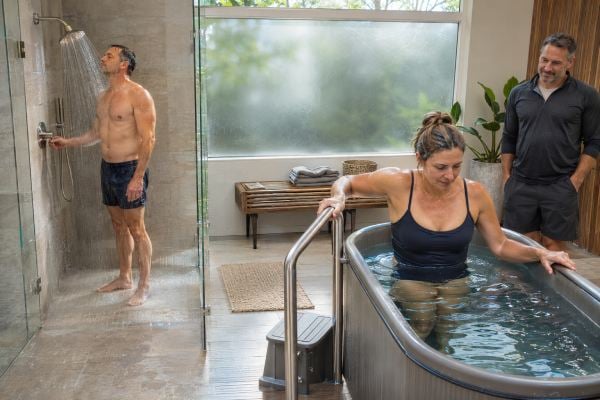
Cold showers and cold plunges are not the same cardiovascular stress. Both cool the skin and trigger blood-vessel constriction, but a plunge exposes a much larger body surface to cold water at once. Water pressure also shifts blood toward the chest, and sudden immersion can provoke a strong cold-shock response with gasping, rapid breathing, a sharp rise in blood pressure, and a rapid change in heart rate. A brief cool shower usually produces a smaller and more controllable stimulus.
That difference matters if you have high blood pressure, coronary artery disease, heart failure, an arrhythmia, or a history of fainting. Neither practice has strong evidence showing that it prevents heart disease, so there is no need to tolerate extreme cold for cardiovascular benefit. If you enjoy cold exposure, a gradual cool shower can be a lower-intensity option. If you choose a plunge, use more conservative temperatures, short durations, controlled breathing, and supervision rather than treating discomfort as the goal.
Table of Contents
- Cold Shower vs Cold Plunge: What Changes Physiologically?
- Blood Pressure and Heart-Rate Effects
- Arrhythmia Risk
- Which Is Safer for the Heart?
- Who Should Avoid or Get Clearance First?
- How to Use Cold More Safely
- What Benefits Are Actually Proven?
- Common Questions About Cold Showers and Plunges
Cold Shower vs Cold Plunge: What Changes Physiologically?
A shower cools the body unevenly. Water contacts one region at a time, much of the skin remains exposed to air, and you can instantly step away or turn the temperature warmer. A plunge surrounds most of the body with water, which removes heat much faster than air and exposes a large skin surface simultaneously.
Immersion adds hydrostatic pressure. Water compresses the legs and abdomen and shifts blood toward the chest. This increases venous return to the heart. At the same time, cold constricts peripheral blood vessels, increasing resistance against which the heart must pump.
Sudden cold immersion can also trigger involuntary gasping and hyperventilation. The first 30–90 seconds are often the most intense. A shower can trigger some of the same sympathetic response, especially if the water is very cold and directed at the face or chest, but the reaction is usually less dramatic.
A plunge therefore creates three stresses at once: rapid cooling, widespread vasoconstriction, and immersion-related fluid shift. Add breath-holding or swimming and the autonomic challenge becomes greater.
This is why comparing a 60-second cool shower with three minutes submerged to the neck in 8°C/46°F water is misleading. They may both be called “cold exposure,” but the cardiovascular dose is very different.
Blood Pressure and Heart-Rate Effects
Both practices can raise blood pressure temporarily. Cold stimulates sympathetic nerves and constricts small arteries in the skin. The colder and more sudden the exposure, the stronger the response tends to be.
In a 2024 systematic review and meta-analysis of cold-water immersion and cryostimulation studies in healthy adults, cold exposure produced a small average increase in mean blood pressure and changes in heart-rate variability. Those pooled averages include different protocols and do not capture every person’s peak response.
During a plunge, blood pressure can rise quickly while heart rate also changes. In some people the initial sympathetic surge raises heart rate substantially. In others, facial cooling or breath-holding activates the diving reflex and slows it. The coexistence of those competing signals may help explain why cold immersion occasionally provokes ectopic beats or more significant arrhythmias.
A cold shower generally causes less central blood-volume shift because the body is not submerged. That makes it a more conservative choice for someone who simply wants the sensation of cold exposure without the full immersion response.
If you already have hypertension, first make sure you understand how to track home blood pressure accurately. A wellness practice should not take priority over getting the baseline pressure under control.
Arrhythmia Risk
The heart’s electrical system is influenced by both sympathetic and parasympathetic input. Cold shock strongly activates sympathetic signaling. Facial immersion and breath-holding can simultaneously increase vagal activity. This “autonomic conflict” is one proposed mechanism for arrhythmias during cold-water immersion.
Most healthy people will not develop a dangerous rhythm from a brief exposure. A 2026 field study of 20 screened middle-aged recreational athletes in 7°C water found a large heart-rate rise but very few arrhythmias during immersion. The study is reassuring within that narrow group, but it cannot be generalized to people with structural heart disease, inherited electrical conditions, or poorly controlled hypertension.
Risk deserves more attention if you have atrial fibrillation, ventricular arrhythmias, long QT syndrome, cardiomyopathy, significant coronary disease, or unexplained fainting. Swimming is a recognized trigger in some people with long QT syndrome type 1.
Palpitations that occur only during cold exposure should not simply be normalized. Stop the exposure, warm up gradually, and avoid repeating it until the cause is clearer. If symptoms are recurring, review when heart palpitations should be checked.
Which Is Safer for the Heart?
For most people, a cool or cold shower is the lower-risk option because it is easier to control and produces less abrupt whole-body cooling. You can adjust temperature immediately, keep your head out of the water, and stop without needing to climb out of a tub or pool.
A plunge is more intense even when the water temperature is identical. Water surrounding the torso produces more rapid heat loss, and immersion changes central circulation. A person who tolerates a 15°C/59°F shower should not assume a 15°C plunge will feel or behave the same.
A practical comparison:
| Feature | Cold shower | Cold plunge |
|---|---|---|
| Body surface cooled | Partial and changing | Large area at once |
| Hydrostatic pressure | Minimal | Meaningful central blood shift |
| Cold-shock intensity | Usually lower | Usually higher |
| Ease of stopping | Very easy | Requires exiting safely |
| Drowning risk | Very low | Present |
| Best choice for cautious beginners | Generally yes | Not first choice |
“Safer” does not mean risk-free. A very cold shower directed at the head and chest can still trigger intense hyperventilation or dizziness, especially in a frail or cardiovascularly vulnerable person.
Who Should Avoid or Get Clearance First?
Cold plunging deserves clinician input if you have uncontrolled hypertension, known coronary artery disease, angina, prior heart attack, heart failure, cardiomyopathy, significant valve disease, recurrent arrhythmias, an implanted defibrillator, or unexplained syncope.
Inherited rhythm disorders require particular caution. Cold-water swimming and sudden facial immersion can be powerful autonomic triggers. A cardiologist familiar with your diagnosis should guide what is safe.
Avoid deliberate cold exposure when you are acutely ill, dehydrated, intoxicated, or using recreational drugs. Alcohol is especially dangerous around a plunge because it impairs judgment and increases drowning risk while giving a false sensation of warmth.
Do not use a plunge for “training” if you have active chest discomfort or unexplained exertional shortness of breath. Those symptoms deserve evaluation. A wellness routine should never become a stress test you perform on yourself.
Pregnant people, older adults with frailty, and people with severe Raynaud phenomenon or cold urticaria should also seek individualized advice.
How to Use Cold More Safely
Start with a cool shower rather than an extreme plunge. Finish a normal shower with 15–30 seconds of cooler water, then gradually extend the exposure if you tolerate it well. There is no evidence that the coldest temperature produces the best cardiovascular outcome.
If you later choose a plunge:
- Use a moderate temperature first, such as 15–20°C/59–68°F.
- Enter gradually rather than jumping in.
- Keep your head and face above water during the first exposure.
- Breathe slowly; do not deliberately hyperventilate.
- Avoid prolonged breath holds.
- Keep initial sessions brief—about one to three minutes is enough.
- Have another adult nearby.
- Exit immediately for chest pain, severe breathlessness, marked dizziness, confusion, weakness, or sustained palpitations.
Do not combine cold exposure with stimulant-heavy pre-workout supplements or energy drinks. If caffeine already makes your heart race, adding a cold-shock response can make the experience more uncomfortable. Caffeine sensitivity is worth considering separately.
Warm up after a session with dry clothing and a comfortable environment. Shivering for a prolonged period is a sign that the exposure was excessive.
What Benefits Are Actually Proven?
Cold exposure can produce real short-term effects: increased alertness, changes in mood, altered autonomic activity, and a strong sensation of activation. Some people enjoy the ritual and feel energized afterward.
What has not been established is that routine cold showers or plunges reduce heart attacks, treat hypertension, reverse arterial plaque, or substitute for exercise. Studies are generally small, use varied protocols, and often focus on physiological markers rather than hard cardiovascular outcomes.
Habituation occurs with repeated cold-water immersion. A 2024 systematic review found that heart-rate and respiratory components of the cold-shock response become less pronounced after several exposures. That may make immersion feel easier and could reduce some acute risk, but it does not eliminate underlying cardiac disease.
If your goal is cardiovascular health, prioritize interventions with robust outcome evidence: aerobic exercise, resistance training, blood-pressure control, LDL lowering, smoking cessation, healthy diet, adequate sleep, and diabetes management. Cold exposure is optional.
For people who enjoy it, the most rational approach is to use the least intense exposure that produces the desired subjective effect. A short cool shower may deliver the experience without imposing the same cardiovascular load as a near-freezing plunge.
Common Questions About Cold Showers and Plunges
The safest choice depends less on wellness trends and more on how much cardiovascular stress the exposure creates for you.
How cold does a shower need to be?
There is no evidence-based “heart-health temperature.” Tap-water temperature varies by season and location, and studies use many different protocols. For a beginner, a comfortably cool finish to a normal shower is enough to test tolerance. Progressively colder water is optional, not a requirement for benefit.
If you are shivering intensely for a long time afterward, the exposure was more than a simple brief stimulus.
Does ending a warm shower with cold water shock the heart?
It can produce a sudden sympathetic response, but because only part of the body is exposed and you are not immersed, the overall circulatory shift is usually smaller than with a plunge. You can reduce the abruptness by turning the water cooler in stages over 15–30 seconds rather than switching instantly to the coldest setting.
People with cardiovascular disease should still ask for individualized advice before using extreme temperature changes.
Is face immersion different from keeping the head out?
Yes. Cold water on the face can activate the diving reflex, which increases parasympathetic activity and tends to slow heart rate. At the same time, cold on the rest of the body may be increasing sympathetic activity. That competing autonomic input is one reason face immersion plus breath-holding can be more arrhythmogenic than a cold shower to the legs and torso.
For cautious exposure, keep the face out of a plunge, especially during the first minute.
Are cold showers safe with high blood pressure?
A mild cool shower may be tolerated by many people with controlled hypertension, but very cold exposure can raise pressure abruptly. If home readings are uncontrolled, stabilize the hypertension first. Someone with severe hypertension does not gain a cardiovascular advantage by provoking additional pressure surges.
If you choose a cool shower after getting medical advice, start mild and stop for headache, chest discomfort, severe dizziness, or unusual shortness of breath.
Can cold exposure replace a morning workout?
No. The heart-rate and catecholamine response to cold does not provide the same training stimulus as aerobic exercise. Exercise improves cardiorespiratory fitness, endothelial function, glucose metabolism, blood pressure, and long-term cardiovascular outcomes through mechanisms that a brief cold shower does not replicate.
Cold exposure can be a ritual before or after exercise, but it is not a substitute for meeting physical-activity goals.
Is a plunge safe if you stay only 30 seconds?
Shorter duration reduces total cooling, but the strongest cold-shock response often occurs in the first seconds. That means a 30-second plunge can still provoke the most abrupt breathing and cardiovascular response. Temperature, entry speed, facial immersion, and underlying disease matter as much as duration.
A brief moderate-cold plunge is generally less risky than a prolonged near-freezing one, but “only 30 seconds” should not be treated as automatic clearance.
Which option is better after waking up?
If the goal is alertness, a cool shower is easier to control and carries far less drowning risk. It also avoids the need for a spotter, specialized tub, or extreme temperature. For most people seeking a morning routine rather than athletic recovery, that makes the shower the more proportionate choice.
What should determine whether you continue?
Your response should be predictable and controlled. You should be able to breathe normally within a short time, exit easily, and recover without prolonged dizziness, chest discomfort, severe shivering, or sustained palpitations. Needing to “white-knuckle” every session is not evidence of cardiovascular conditioning.
The most useful comparison is not which method is more impressive. It is which method, if any, gives you the subjective benefit you want with the least unnecessary risk.
A simple decision guide
If you are healthy and only want an alertness boost, start with a cool shower. It is easier to stop, does not create the same hydrostatic fluid shift, and carries almost no drowning risk. If you enjoy that and later want stronger cold exposure, progress gradually rather than jumping directly to near-freezing immersion.
If you have controlled hypertension but no other heart disease, ask your clinician whether mild cold exposure is reasonable and keep the first trials modest. If you have uncontrolled hypertension, stabilize it before experimenting. If you have coronary disease, heart failure, an inherited rhythm condition, recurrent AFib, or unexplained fainting, a plunge is not a casual self-test; get condition-specific advice first.
People often ask whether a cold shower “counts” if it does not feel extreme. From a cardiovascular-safety perspective, less extreme is often the point. There is no validated dose showing that a painful or gasping-inducing exposure produces superior long-term heart outcomes.
A useful wellness practice should be repeatable, voluntary, and easy to stop. If the routine requires you to ignore chest symptoms, breathe through severe dizziness, or depend on willpower to remain in dangerously cold water, it has moved beyond a reasonable health habit. Choose the lower-intensity option unless there is a clear reason to do otherwise.
When a shower is enough
A shower is often the better long-term choice when your goal is simply to feel awake, practice controlled exposure to discomfort, or cool down without adding unnecessary risk. It can be repeated without specialized equipment, supervision, or prolonged rewarming.
The ability to adjust temperature in seconds is an important safety feature. If breathing becomes uncomfortable, you can turn the water warmer immediately instead of climbing out of a tub while cold, wet, and possibly dizzy. That matters for older adults and anyone prone to lightheadedness.
If you repeatedly tolerate a cool shower with normal breathing and no cardiovascular symptoms, there is no health requirement to progress to immersion. More intense exposure should be chosen because you specifically want it and can do it safely, not because a plunge is assumed to deliver a stronger heart benefit.
References
- The effects of cold exposure (cold water immersion, whole- and partial- body cryostimulation) on cardiovascular and cardiac autonomic control responses in healthy individuals: A systematic review, meta-analysis and meta-regression 2024 (Systematic Review)
- Habituation of the cold shock response: A systematic review and meta-analysis 2024 (Systematic Review)
- Cardiac arrhythmia during cold-water immersion: a self-controlled field study with extended rhythm monitoring 2026 (Clinical Study)
- Cardiovascular and mood responses to an acute bout of cold water immersion 2023 (Clinical Study)
- The influence of training status and parasympathetic blockade on the cardiac rate, rhythm, and functional response to autonomic stress 2023 (Clinical Study)
Disclaimer
This article is educational and does not provide medical clearance for cold exposure. If you have cardiovascular disease, uncontrolled hypertension, an arrhythmia, fainting, or significant medication concerns, ask your clinician before cold plunging. Seek urgent care for chest pain, fainting, severe shortness of breath, or a sustained symptomatic abnormal rhythm.