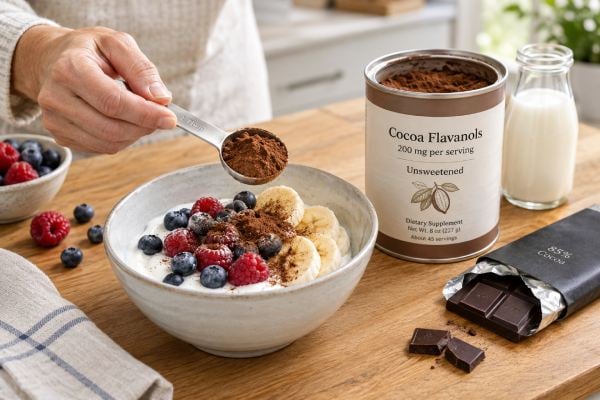
Cocoa flavanols can produce a small blood-pressure benefit, but the amount of cocoa in a food and the amount of flavanols it contains are not the same thing. Flavanols are plant compounds in cocoa that can support nitric-oxide signaling and blood-vessel relaxation. Recent randomized-trial reviews suggest that regular flavanol-rich cocoa can lower systolic blood pressure by roughly 2–3 mmHg on average, with larger effects sometimes seen in people who start with higher pressure. The catch is that processing can remove flavanols, and a bar labeled 70%, 85%, or even 90% cocoa does not tell you its flavanol dose. Eating more chocolate to chase flavanols can also add substantial calories, saturated fat, and sugar. A better strategy is to prioritize products that state a measured cocoa-flavanol amount, or use unsweetened cocoa thoughtfully, while treating dark chocolate as a small food portion rather than a blood-pressure treatment. Medication, exercise, sodium reduction, and an overall heart-healthy diet remain more important.
Table of Contents
- What Cocoa Flavanols Do
- How Much May Help Blood Pressure
- Why Cocoa Percentage Is Not a Flavanol Dose
- How to Get Flavanols With Less Sugar
- Dark Chocolate Serving Size and Tradeoffs
- Who Should Be Cautious
- A Practical Cocoa-Flavanol Plan
What Cocoa Flavanols Do
Cocoa contains a family of compounds called flavan-3-ols, commonly shortened to flavanols. Epicatechin is one of the best studied. These compounds appear to influence the endothelium, the thin layer of cells lining blood vessels. One important pathway involves nitric oxide, a signaling molecule that helps arteries relax and widen.
That mechanism is biologically plausible, but the practical effect is modest. A 2026 systematic review and meta-analysis of 25 randomized trials found that cocoa flavanols reduced systolic blood pressure by about 2.7 mmHg and diastolic pressure by about 1.8 mmHg on average. The review also found improvement in flow-mediated dilation, a measure of endothelial function. A larger 2025 review of flavan-3-ol-rich foods and supplements reported similar average office blood-pressure reductions, with greater effects among people whose starting pressure was elevated.
A few millimeters of mercury can matter at the population level, but it is not comparable to replacing prescribed treatment in someone with hypertension. It is better to think of cocoa flavanols as one possible supportive food component within a broader blood-pressure plan.
The evidence also varies because trials use very different products. Some provide cocoa drinks, some use high-flavanol chocolate, and others use standardized cocoa extracts. The control foods differ too. Study duration, baseline blood pressure, dose, and processing all affect the result.
Another important point is that a vascular effect does not prove that ordinary chocolate prevents heart attacks or strokes. In the large COSMOS trial, 500 milligrams of cocoa flavanols per day did not significantly reduce the primary composite of total cardiovascular events in the main intention-to-treat analysis, although some secondary results were encouraging. That distinction keeps expectations realistic: blood-pressure and endothelial changes are not the same as proven disease prevention.
If your main goal is hypertension control, cocoa should sit behind higher-impact habits such as a DASH-style eating pattern, lower sodium intake, regular activity, adequate sleep, and medication when prescribed.
How Much May Help Blood Pressure
There is no universally established “blood-pressure dose” of cocoa flavanols. Trials have used a wide range, from very small amounts to more than 1,000 milligrams per day. The 2026 meta-analysis included daily doses from 10.6 to 1,680 milligrams and found an overall blood-pressure effect, but its dose-response analysis did not identify one clear threshold that everyone should target.
The 2022 meta-analysis of cocoa beverages and dark chocolate found that blood pressure fell with cocoa intake overall and observed larger effects in studies providing at least 900 milligrams of flavanols or at least 100 milligrams of epicatechin per day. That does not mean 900 milligrams is a recommended daily dose. It means higher-dose trials in that analysis tended to show greater effects. Eating enough ordinary chocolate to reach such a flavanol dose could add far too many calories because the flavanol concentration of retail chocolate is uncertain.
A useful research reference point is 500 milligrams per day. COSMOS used a standardized cocoa extract providing 500 milligrams of cocoa flavanols, including 80 milligrams of epicatechin. A 2025 analysis of incident hypertension in COSMOS used that same dose. Again, this was a standardized extract in a clinical trial, not a recommendation to obtain 500 milligrams by eating a large chocolate bar.
Another number you may see is 200 milligrams per day. In 2023, the U.S. Food and Drug Administration allowed narrowly worded qualified health claims for certain high-flavanol cocoa powders that contain at least 4% naturally conserved cocoa flavanols. The FDA also emphasized that the scientific evidence for reduced cardiovascular disease risk is very limited and that the qualified claim does not apply to ordinary cocoa powder or chocolate in general.
So how should a shopper use these numbers? If a product actually states a validated cocoa-flavanol amount, a range around 200–500 milligrams per day is a reasonable way to understand doses used in research without jumping to very high-dose intake. If the label does not state flavanols, you cannot reliably calculate the dose from cocoa percentage or grams of chocolate.
That uncertainty is important. The goal should not be “more chocolate equals lower pressure.” It should be “if I choose cocoa for flavanols, can I get a known amount without turning it into a large source of sugar, saturated fat, or calories?”
Why Cocoa Percentage Is Not a Flavanol Dose
The cocoa percentage on a chocolate bar tells you roughly how much of the product comes from cocoa ingredients, such as cocoa solids and cocoa butter. It does not tell you how many milligrams of flavanols survived processing.
Flavanol content changes from bean to finished product. Fermentation, roasting, storage, and especially alkalization can reduce these compounds. Alkalization, often called Dutch processing, changes cocoa’s acidity, color, and flavor. It can make cocoa darker and milder, but it can also substantially lower flavanol content.
That creates a common misconception: darker-looking cocoa is not necessarily higher in flavanols. Very dark Dutch-process powder can contain less than a lighter natural powder, depending on how it was processed. Likewise, an 85% chocolate bar may have more cocoa solids and less sugar than a 60% bar, yet it may not deliver a predictable flavanol dose.
Research on commercial products has also shown that labeled cocoa content does not consistently track analyzed flavanol levels. Two bars with the same cocoa percentage can therefore be very different from a flavanol standpoint.
For blood-pressure purposes, the best label is one that gives an actual amount such as “cocoa flavanols: 200 mg per serving” and uses a defined serving size. Some high-flavanol cocoa powders or supplements may do this. If there is no flavanol number, treat the product as food, not as a precisely dosed intervention.
You can still use cocoa percentage for other shopping decisions. Higher-percentage dark chocolate usually contains less added sugar than milk chocolate and lower-percentage dark chocolate. It also tends to taste more intense, which can make a smaller portion satisfying. But percentage is a sugar-and-cocoa-solids clue, not a laboratory measurement of flavanols.
This distinction separates this topic from the broader question of which dark chocolate percentage and serving size make sense for blood pressure. For flavanols specifically, processing and measured content matter more than the number printed in large type on the front of the wrapper.
How to Get Flavanols With Less Sugar
If you want cocoa flavanols without a large sugar load, unsweetened cocoa is often easier to work with than a sweet chocolate bar. One tablespoon of cocoa powder is a small food volume and can be added to oatmeal, plain yogurt, smoothies, or warm milk without requiring added sugar.
However, ordinary cocoa powder still has variable flavanol content. “Natural” or “non-alkalized” cocoa generally preserves more flavanols than heavily alkalized cocoa, but the exact dose remains unknown unless the manufacturer tests and declares it. If you are specifically trying to reproduce a research-like flavanol intake, look for a measured flavanol amount rather than assuming every tablespoon provides the same dose.
Ways to use cocoa with little or no added sugar include:
- Stir unsweetened cocoa into plain oatmeal with berries or banana
- Mix cocoa into plain Greek yogurt with fruit and cinnamon
- Add cocoa to an unsweetened smoothie
- Make hot cocoa with unsweetened cocoa and low-fat milk or unsweetened soy milk
- Combine cocoa with nut butter in a small snack without adding syrup or sugar
- Choose a standardized high-flavanol cocoa powder that lists milligrams of flavanols per serving
If a recipe needs sweetness, fruit can sometimes provide enough. A small amount of added sugar can also fit in a heart-healthy diet; the key is avoiding the assumption that a high-flavanol goal requires a large sweetened chocolate serving every day.
Sugar matters mostly because it adds calories and can displace more nutritious foods. High intake of added sugar, especially from sweetened beverages and highly processed foods, can worsen triglycerides, energy balance, and metabolic health. If you are already trying to reduce sugar, knowing where added sugar hides can make cocoa choices easier.
Cocoa powder can also contain caffeine and theobromine, although amounts vary. These methylxanthines can feel stimulating in sensitive people. A large cocoa drink late at night may worsen sleep, and poor sleep can work against blood-pressure control. If cocoa makes you jittery, gives you palpitations, or interferes with sleep, use a smaller amount or have it earlier in the day.
Avoid turning cocoa into a “health halo” for desserts. A brownie, chocolate muffin, or sweetened cocoa drink may contain cocoa, but the total food can still be high in sugar, refined flour, saturated fat, and calories. The presence of flavanols does not cancel the rest of the nutrition profile.
Dark Chocolate Serving Size and Tradeoffs
Dark chocolate can fit into a heart-healthy eating pattern, but portion size matters because chocolate is energy-dense. Cocoa butter contains a substantial amount of saturated fat, and many bars still contain meaningful added sugar even at higher cocoa percentages.
A practical food portion is often around 10–20 grams, roughly one or two small squares depending on the bar. That is not a proven therapeutic flavanol dose. It is simply a portion that lets you enjoy dark chocolate while keeping calories, saturated fat, and sugar manageable.
For example, if a 100-gram bar contains 600 calories, a 15-gram portion is about 90 calories. A 50-gram “snack” is about 300 calories. The larger portion may fit some diets, but eating it daily specifically for blood pressure can create an unintended calorie surplus.
If choosing a bar, 70–85% cocoa is a reasonable starting range because it usually has less sugar than milk chocolate and lower-percentage dark chocolate. Some people prefer 85–90% for the intense flavor and lower sugar content. The best percentage is the one you enjoy in a small portion. There is no evidence that 90% automatically produces a better blood-pressure effect than 70% because flavanol preservation is not shown by cocoa percentage alone.
Check the Nutrition Facts panel for serving size, calories, saturated fat, and added sugar. Ingredients are useful too. Cocoa mass or chocolate liquor, cocoa butter, and sugar are typical. A short ingredient list does not guarantee high flavanols, but it can help you avoid bars that are mostly candy additions.
If the goal is flavanols rather than dessert, measured high-flavanol cocoa powder is more efficient because it can provide cocoa solids with little or no sugar. This is why the FDA’s 2023 qualified claim was limited to qualifying high-flavanol cocoa powder rather than chocolate generally.
Dark chocolate should not be used to “treat” a high home reading. Blood pressure varies from minute to minute, and chocolate does not act like a rescue medication. If you are tracking whether dietary changes help, follow a consistent home blood-pressure monitoring routine over days and weeks instead of judging a food from one reading.
Who Should Be Cautious
For most adults, modest amounts of cocoa or dark chocolate are foods rather than high-risk substances. Still, several situations deserve caution.
People with diabetes or those actively reducing added sugar should check the carbohydrate and added-sugar content of chocolate, cocoa mixes, and flavored drinks. “Dark chocolate” can still be a concentrated sweet. Sugar-free products may use sugar alcohols that can cause gastrointestinal symptoms in larger amounts.
People managing high LDL cholesterol or very high cardiovascular risk should also watch saturated fat. Cocoa butter contains stearic acid, a saturated fatty acid that appears more neutral for LDL than some other saturated fats, but dark chocolate is still not saturated-fat-free. If large portions replace foods rich in unsaturated fats, the overall diet may move in the wrong direction. For that reason, a small portion is preferable to using chocolate as a major calorie source.
Cocoa contains oxalate and may not be ideal in large amounts for some people with recurrent calcium oxalate kidney stones. People with migraine sometimes identify chocolate as a trigger, though triggers are individual. Those with gastroesophageal reflux may find chocolate worsens symptoms.
Caffeine and theobromine can cause restlessness, tremor, palpitations, or sleep disruption in sensitive people. The amount in chocolate is usually lower than in coffee, but a large serving of high-cocoa chocolate or cocoa powder can still matter.
If you take blood-pressure medication, cocoa flavanols are not a reason to reduce the dose on your own. A small additional pressure reduction is possible, but clinically important hypotension from normal food portions is uncommon. If your readings become repeatedly low or you develop dizziness, fainting, or weakness, contact your clinician rather than adjusting medication based on a food experiment.
Supplements deserve more scrutiny than food. A standardized extract may give a known flavanol dose, but quality, other ingredients, and drug interactions can vary. If you have heart disease, kidney disease, liver disease, are pregnant, or take several prescriptions, discuss concentrated supplements with a healthcare professional first.
A Practical Cocoa-Flavanol Plan
The most sensible approach is to decide whether your goal is enjoyment, lower sugar, or a measurable flavanol intake. Those goals overlap, but they are not identical.
If you mainly enjoy chocolate, choose a dark bar you like, preferably around 70% cocoa or higher if that helps keep sugar lower, and keep the portion around 10–20 grams. Do not assume that portion contains a particular flavanol dose.
If you mainly want cocoa flavor without much sugar, use unsweetened natural cocoa powder in foods you already eat. One to two tablespoons can add strong cocoa flavor with little sugar, but the flavanol amount is still uncertain unless the label provides it.
If you specifically want a research-like flavanol dose, choose a product that declares tested cocoa-flavanol content. A labeled range around 200–500 milligrams per day is easier to interpret against clinical studies than an unlabeled number of chocolate squares. There is no established need to push higher, and the 2026 meta-analysis did not identify a clear universal dose threshold.
Then evaluate the whole diet. Cocoa will have limited value if most meals are high in sodium, low in produce, and dominated by refined or ultra-processed foods. Blood-pressure control is more strongly supported by DASH-style eating, a healthy sodium intake, exercise, weight management when appropriate, limiting excess alcohol, and taking medication as prescribed.
Finally, measure outcomes correctly. If you have hypertension, use a validated upper-arm monitor, sit quietly before readings, and compare weekly averages rather than isolated numbers. A dietary change that truly lowers pressure should show up as a trend over time, not a dramatic same-day response. Keep the rest of your routine reasonably stable while you evaluate a change. Large shifts in sodium intake, exercise, alcohol, sleep, stress, or medication can move blood pressure enough to obscure any small effect from cocoa.
Cocoa flavanols are a good example of why “healthy food” headlines need context. The active compounds can modestly support vascular function, yet retail chocolate is not a standardized delivery system. The best balance is to favor lower-sugar cocoa sources, keep chocolate portions modest, and choose measured high-flavanol products when the flavanol dose itself is the goal. That approach preserves the potential benefit without pretending chocolate is a medication or a required part of a heart-healthy diet.
If you are comparing products, calculate flavanols per serving rather than per package and check how many calories and grams of added sugar come with that dose. This makes two products easier to compare fairly. A lower-sugar option that delivers a clearly stated flavanol amount may fit the goal better than a large chocolate serving with an unknown flavanol content.
References
- Impact of cocoa flavanols on blood pressure and vascular function: an updated systematic review and meta-analysis of randomized controlled trials 2026 (Systematic Review)
- Impact of flavan-3-ols on blood pressure and endothelial function in diverse populations: a systematic review and meta-analysis of randomized controlled trials 2025 (Systematic Review)
- Effects of Cocoa Consumption on Cardiometabolic Risk Markers: Meta-Analysis of Randomized Controlled Trials 2024 (Systematic Review)
- Effect of Cocoa Beverage and Dark Chocolate Consumption on Blood Pressure in Those with Normal and Elevated Blood Pressure: A Systematic Review and Meta-Analysis 2022 (Systematic Review)
- Effect of cocoa flavanol supplementation for the prevention of cardiovascular disease events: the COcoa Supplement and Multivitamin Outcomes Study (COSMOS) randomized clinical trial 2022 (RCT)
- FDA Announces Qualified Health Claim for Cocoa Flavanols in High Flavanol Cocoa Powder and Reduced Risk of Cardiovascular Disease | FDA 2023
Disclaimer
This article is for general educational purposes and does not replace medical advice, diagnosis, or treatment. Cocoa and dark chocolate should not be used as substitutes for prescribed blood-pressure medication or proven lifestyle treatment. Ask a healthcare professional about concentrated cocoa-flavanol supplements if you have cardiovascular, kidney, or liver disease, are pregnant, or take multiple medications.