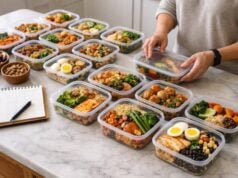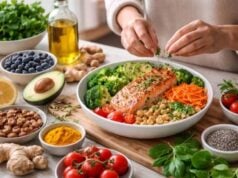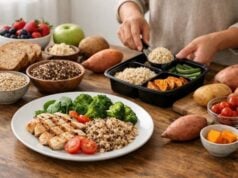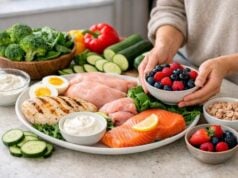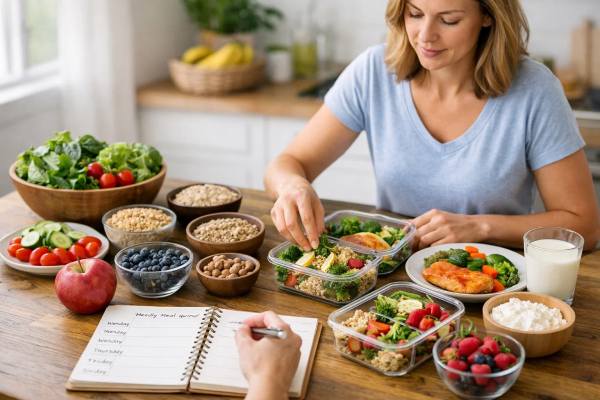
The DASH diet for weight loss works well because it pushes people toward foods that are filling, nutrient-dense, and easier to control in a calorie deficit. It was originally designed to help lower blood pressure, but its emphasis on vegetables, fruit, beans, whole grains, lean protein, and lower-fat dairy also makes it a practical fat-loss approach for many adults.
What makes DASH especially useful is that it does not rely on extreme rules. You do not have to cut out carbs, fear fruit, or live on shakes. This article explains how the DASH diet supports weight loss, which foods matter most, how to avoid common mistakes, and how to use a simple 7-day meal framework that feels realistic enough to repeat.
Table of Contents
- What the DASH diet actually is
- Why DASH can help with weight loss
- Best foods to eat on DASH
- Foods to limit if fat loss is the goal
- How to make DASH work in a calorie deficit
- 7-day DASH meal idea framework
- Who should modify this approach
What the DASH diet actually is
DASH stands for Dietary Approaches to Stop Hypertension. At its core, it is a food pattern built around whole and minimally processed foods, with an emphasis on lower sodium intake, more produce, more fiber, and better overall diet quality.
That means the DASH diet usually centers meals around:
- vegetables
- fruit
- whole grains
- beans, lentils, peas, nuts, and seeds
- fish, poultry, and other lean proteins
- low-fat or fat-free dairy
- modest amounts of added fats, sweets, and salty processed foods
A lot of people hear “DASH” and assume it is only for blood pressure. That is too narrow. The same food pattern also tends to improve calorie quality. Meals become bulkier, more filling, and more nutritious, which often makes weight loss easier without the feeling of being on a strict diet.
DASH also differs from many trendy diets because it is not built around dramatic exclusions. It is not keto. It is not “clean eating” in the social media sense. It is not a no-carb plan. It is a structured, sensible pattern that helps people eat more of the foods that support health and less of the foods that make it easy to overconsume calories.
For fat loss, that is a big advantage. People usually do better when the diet feels normal enough to keep going after the first two weeks. In that sense, DASH often works for the same reason many sustainable eating patterns work: it reduces friction.
It is also flexible. A DASH-style week can be omnivorous, mostly plant-based, pescatarian, or built around simple family meals. If you already like Mediterranean-style eating, there is a lot of overlap with Mediterranean diet meal ideas, especially in the shared focus on produce, legumes, and minimally processed foods.
The most useful way to understand DASH for weight loss is this: it is a heart-healthy eating pattern that also happens to make calorie control easier when portions are matched to your needs. It does not magically cause fat loss on its own, but it gives you a much better food environment for creating a calorie deficit without feeling like every meal is a fight.
Why DASH can help with weight loss
The DASH diet can support weight loss for a simple reason: it changes the kinds of foods filling your plate. When meals are built from vegetables, fruit, beans, potatoes, whole grains, lean proteins, and lower-fat dairy, you usually get more volume, more fiber, and better satiety for the calories.
That helps in four main ways.
1. It raises food quality without forcing extremes
Many people can follow a structured plan for a week. Fewer can stay on something highly restrictive for months. DASH works because it asks for better food choices, not food fear. You can still eat grains. You can still eat dairy. You can still eat meals that look normal.
2. It tends to increase fullness
DASH meals naturally push you toward foods that digest more slowly and take up more room on the plate. A lunch of chicken, brown rice, vegetables, and fruit is usually more filling than a lunch of chips, a pastry, and a sweet coffee, even if the calories are similar.
That overlap with high-volume, low-calorie foods is one reason DASH can feel easier than a diet that simply says “eat less.”
3. It often reduces hidden calorie intake
A lot of calories come from foods that do not feel substantial: sugary drinks, restaurant sauces, refined snack foods, baked goods, and convenience meals that are high in sodium and fat. DASH tends to crowd those out. That alone can create a meaningful calorie gap.
4. It supports overall health while dieting
Crash diets can produce quick scale drops, but they often leave people hungry, low-energy, and nutritionally underpowered. DASH is different. It is easier to meet needs for potassium, calcium, magnesium, fiber, and other nutrients while still losing weight.
That matters because the goal is not just to get lighter. It is to lose fat in a way that still feels healthy and sustainable.
DASH is not automatically a weight-loss diet, though. You can absolutely overeat “healthy” foods. Nuts, oils, granola, large grain portions, and restaurant-style salads can all push calories up fast. So the better way to think about it is this: DASH gives you a smarter default eating pattern, and weight loss happens when that pattern is paired with appropriate portions.
This is why DASH works best when combined with the same fundamentals that make any good fat-loss plan work, including a reasonable deficit and meals built around the kinds of foods covered in what to eat in a calorie deficit.
Best foods to eat on DASH
The best DASH foods for weight loss are the ones that give you the most nutrition and fullness for the fewest calories. In other words, not every “allowed” food deserves the same priority.
Here are the food groups that usually give the biggest payoff.
Vegetables
Vegetables are the backbone of a useful DASH plan. They add volume, fiber, water, and nutrients with relatively few calories. A meal that includes roasted vegetables, salad, soup, or sautéed greens is usually easier to keep within budget than a meal built mostly around refined starches and fats.
Good staples include:
- leafy greens
- broccoli
- cauliflower
- carrots
- peppers
- zucchini
- green beans
- tomatoes
- cucumbers
- mushrooms
If you need more practical choices, the same logic shows up in the best vegetables for weight loss.
Fruit
Fruit often gets unfairly cut when people start trying to lose fat. On DASH, it belongs. Whole fruit can satisfy a sweet tooth while adding fiber and water that juice and desserts usually lack. Apples, berries, oranges, pears, and melon are especially easy to fit into a calorie deficit.
Beans, lentils, and peas
This is one of the most useful DASH features. Legumes help bridge the gap between satiety and calorie control because they provide fiber plus some protein. They also make meals feel more substantial.
Whole grains and higher-fiber starches
Brown rice, oats, quinoa, barley, whole-grain bread, and potatoes can all fit well on DASH. The trick is to choose portions that support energy rather than letting starch dominate the plate. For many people, smart carbohydrate choices make the diet more sustainable, not less.
Lean protein and lower-fat dairy
DASH is not a high-protein diet by definition, but weight loss usually gets easier when meals include enough protein. Chicken, turkey, fish, eggs, Greek yogurt, cottage cheese, tofu, and beans all help.
This is where a DASH approach becomes more effective when you combine it with the logic behind a high-protein plate for weight loss. The general DASH pattern stays the same, but meals get more satisfying and muscle retention tends to improve during dieting.
Nuts, seeds, and healthy fats
These belong on DASH, but in measured amounts. They improve meal quality and satisfaction, yet calories rise quickly if portions drift. A tablespoon of seeds on yogurt or a small handful of nuts as part of a meal is very different from repeated unmeasured snacking.
The best DASH foods are not just healthy on paper. They are the ones that help you stay full, consistent, and in control of calories day after day.
Foods to limit if fat loss is the goal
DASH is often described by what to eat more of, but if weight loss is the goal, it also helps to be clear about what deserves less space.
You do not need to ban these foods forever. You do need to recognize that they make a calorie deficit harder.
Salty, ultra-processed convenience foods
Frozen pizzas, packaged snack foods, fast food combos, deli-heavy lunches, and instant noodle meals often combine high sodium, low satiety, and easy overconsumption. They also make scale fluctuations worse because sodium and carbohydrate-heavy meals can temporarily increase water retention.
Sweets and sweet drinks
DASH already limits sweets, and for fat loss that is a smart move. Soda, sweet teas, dessert coffees, pastries, cookies, candy, and “healthy” snack bars can burn through calories fast without keeping you full.
If sugar cravings are the main issue, a softer transition using sweet tooth swaps for weight loss can be more realistic than pretending cravings will disappear overnight.
Large portions of refined grains
Bagels, white bread, crackers, bakery muffins, and oversized cereal portions are not automatically off-limits, but they are easy to overeat and often displace more filling foods. DASH works better when grains are purposeful, not automatic.
Heavy sauces, dressings, and restaurant extras
One of the easiest ways to turn a DASH meal into a calorie bomb is to pour oil, creamy dressing, cheese, and sweet sauces over an otherwise healthy base. A salad can be a fat-loss meal or a disguised restaurant indulgence depending on what lands on top.
Mindless healthy foods
This is worth calling out because it trips up a lot of people. Trail mix, nut butter, granola, dried fruit, smoothie add-ins, and artisan whole-grain crackers can all fit DASH. They can also quietly erase your deficit when eaten casually.
For most people, the simplest rule is this: if a food is easy to overeat and does not keep you very full, it should not be a daily staple during fat loss. That is true whether the food comes from a vending machine or a health-food store.
This is one reason it helps to review which foods make a calorie deficit harder instead of assuming all healthy-sounding foods behave the same way.
How to make DASH work in a calorie deficit
The DASH diet becomes a weight-loss diet when you pair its food pattern with portions that fit your energy needs. That does not mean you must track every gram, but you do need some structure.
A practical way to do that is to build most meals around four pieces:
- a lean protein source
- a large produce portion
- a moderate high-fiber starch or legume
- a controlled amount of fat
That might look like grilled chicken, roasted vegetables, brown rice, and olive oil. Or Greek yogurt, berries, oats, and chopped walnuts. Or lentil soup with salad and fruit.
Here are the most useful ways to make DASH work for fat loss.
Keep protein intentional
One weak spot of many “healthy diets” is that protein ends up too low. Then hunger rises, snacking increases, and muscle retention gets worse. Add protein on purpose at breakfast, lunch, and dinner rather than assuming it will take care of itself.
Use grains and fats carefully
DASH includes both, but they are the easiest categories to overshoot. It is easy to pour too much cereal, scoop too much rice, drizzle too much oil, or free-pour nuts into a snack bowl.
Let vegetables and fruit do more work
If the plate looks small, increase produce before increasing calorie-dense extras. This is where DASH becomes much easier than diets that leave people staring at tiny portions.
Plan your defaults
The best version of DASH is not a collection of good intentions. It is a repeatable grocery list and a few easy meals you can fall back on. That is why many people benefit from a simple weight loss grocery list and a short list of breakfasts, lunches, and dinners they know how to make without thinking.
A good DASH calorie-deficit formula is:
- Fill half the plate with vegetables or fruit.
- Add a palm-sized portion of protein.
- Add a fist-sized portion of whole grains, potatoes, or legumes.
- Keep fats moderate and measured.
- Repeat with boring consistency on busy days.
That is not flashy, but it is effective. DASH tends to work best when it is treated like a practical eating pattern, not a purity test.
7-day DASH meal idea framework
A full week of meals does not need to be complicated to work. The goal is not novelty at every meal. The goal is to build seven days that feel balanced, filling, and repeatable.
| Day | Breakfast | Lunch | Dinner | Snack idea |
|---|---|---|---|---|
| Day 1 | Oatmeal with berries, chia seeds, and Greek yogurt | Turkey and veggie wrap with fruit | Baked salmon, roasted broccoli, and brown rice | Apple with a small handful of almonds |
| Day 2 | Eggs, spinach, and whole-grain toast | Lentil soup with side salad | Chicken stir-fry with vegetables and quinoa | Low-fat cottage cheese with cucumber |
| Day 3 | Greek yogurt bowl with oats and berries | Chickpea salad with tomatoes, cucumbers, and feta | Lean beef, green beans, and roasted potatoes | Orange and pumpkin seeds |
| Day 4 | Smoothie with yogurt, spinach, berries, and oats | Chicken and brown rice bowl with mixed vegetables | Turkey chili with beans and a side salad | Carrots with hummus |
| Day 5 | Cottage cheese, pear, and walnuts | Tuna salad over greens with whole-grain crackers | Shrimp, quinoa, and roasted zucchini | Banana with plain yogurt |
| Day 6 | Vegetable omelet with fruit | Black bean bowl with salsa, lettuce, and avocado | Roast chicken, sweet potato, and green beans | Berries and a small portion of nuts |
| Day 7 | Overnight oats with berries and flax | Leftover chicken grain bowl | White fish, barley, and a large mixed salad | Apple slices with peanut butter |
This framework is intentionally simple. It reuses ingredients, keeps sodium more manageable than a takeout-heavy week, and makes room for enough protein to support satiety.
A few practical notes make it work better:
- Keep breakfasts repeatable instead of reinventing them daily.
- Use leftovers for at least two lunches.
- Prep vegetables, grains, and one or two proteins ahead of time.
- Measure oils, nuts, and dressings rather than guessing.
- Adjust starch portions up or down based on your calorie needs and activity.
If you want a more structured version, there is a natural overlap with a 7-day DASH meal plan for weight loss. The difference here is that the focus is on the framework and food logic rather than rigid prescriptions.
One final insight: the best DASH week is usually the least dramatic one. Familiar meals, planned snacks, and fewer restaurant decisions tend to beat “perfect” healthy intentions every time.
Who should modify this approach
DASH is broadly appropriate for many adults, but it still needs adjustment in some situations.
You may need more individualized guidance if:
- you take medication for blood pressure, diabetes, or fluid balance
- you have kidney disease or another condition that affects potassium, sodium, or protein needs
- you are an endurance athlete with high calorie demands
- you are pregnant or breastfeeding
- you have a history of disordered eating or rigid food rules
- you are on a GLP-1 medication and struggle with low appetite or nausea
Older adults may also need to pay extra attention to protein and overall intake. A heart-healthy eating pattern is still useful, but under-eating is not. Someone in their 60s or 70s trying to lose weight often benefits from the same DASH food pattern with more deliberate protein distribution and a less aggressive deficit.
People who love highly structured tracking can absolutely combine DASH with calorie or macro tracking. Others do better with a plate method and portion awareness. Both can work. The key is choosing the version that improves consistency rather than making healthy eating feel overly complicated.
It is also worth remembering that DASH is not your only option. Some people do better with a higher-protein variation, a Mediterranean-style pattern, or a more explicitly high-fiber setup. The best plan is the one you can do for long enough to get the result. If DASH makes meals feel more normal and easier to repeat, that is a strong sign it fits.
For many people, that is the real strength of the DASH diet for weight loss. It does not ask for obsession. It asks for better defaults, better portions, and better consistency.
References
- DASH Eating Plan 2026 (Guideline)
- A Week With the DASH Eating Plan 2019 (Practical Guide)
- Dietary Guidelines for Americans, 2025-2030 2026 (Guideline)
- The effects of the Dietary Approaches to Stop Hypertension (DASH) diet on metabolic risk factors in patients with chronic disease: A systematic review and meta-analysis of randomized controlled trials 2021 (Systematic Review)
- 2021 Dietary Guidance to Improve Cardiovascular Health: A Scientific Statement From the American Heart Association 2021 (Position Statement)
Disclaimer
This article is for general educational purposes only and is not a substitute for medical or nutrition advice tailored to your health history. If you have high blood pressure, kidney disease, diabetes, take prescription medications, or need a therapeutic diet, talk with a qualified clinician before making major changes to sodium intake, calories, or meal patterns.
If this article helped, share it on Facebook, X, or your preferred platform so someone else can use these DASH diet ideas to build a healthier weight-loss week.