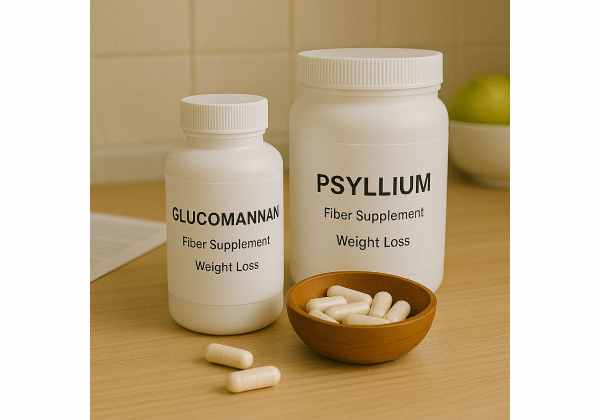
Fiber supplements can help with weight loss, but not all fibers behave the same way. Glucomannan and psyllium are both soluble fibers that absorb water and increase fullness, yet they differ in evidence quality, dosing, side effects, and day-to-day practicality. If the goal is to choose the better option for appetite control and sustainable fat loss, the answer is usually psyllium for most people, with glucomannan as a more specialized alternative.
That does not mean psyllium is magical or that glucomannan is useless. It means the better choice is usually the one you can take consistently, tolerate well, and fit into a plan that already creates a calorie deficit. The most useful comparison is not “which burns more fat,” but which one is more likely to help you eat less comfortably and safely over time.
Table of Contents
- Which one is better for weight loss
- How glucomannan and psyllium work
- What the research really shows
- Appetite, fullness and digestive tolerance
- Dose, timing and safe use
- Who should be cautious
- How to choose between them
Which one is better for weight loss
For most adults trying to lose weight, psyllium is the better first choice. It has a stronger practical case, a broader record of use, and benefits that go beyond appetite alone. It can support fullness, improve stool consistency, and sometimes help with cholesterol and blood sugar markers. Glucomannan can also help some people feel fuller, but its weight-loss evidence is more mixed, and its administration requires more caution because it swells aggressively when exposed to water.
That distinction matters. A supplement is only helpful if you can use it consistently without turning meals into an uncomfortable routine. Many people tolerate psyllium reasonably well once they start low and increase gradually. Glucomannan can be workable too, but it is the one more likely to raise questions about fluid intake, swallowing safety, and whether the specific product form is appropriate.
| Feature | Glucomannan | Psyllium |
|---|---|---|
| Main source | Konjac root | Plantago ovata husk |
| Main mechanism | Absorbs water and expands, increasing fullness | Forms a viscous gel that slows digestion and increases fullness |
| Weight-loss evidence | Mixed and modest | Modest, but generally more favorable in practical use |
| Other benefits | May help bowel regularity and some metabolic markers | Often helpful for regularity, LDL cholesterol, and glycemic control |
| Main safety concern | Choking or obstruction risk if taken improperly | Can also cause choking if taken without enough fluid, but usually easier to use correctly |
| Best fit | People who want a pre-meal fullness supplement and can follow directions carefully | People who want the more dependable all-around option |
The most important point is that neither supplement causes meaningful weight loss on its own. The effect is usually indirect. You feel fuller, portions come down a bit, and a calorie deficit becomes easier to maintain. If your diet is still highly calorie-dense, grazing is frequent, or liquid calories are high, fiber supplements are unlikely to overcome that.
This is why supplement comparisons should always be grounded in the basics. A fiber supplement can support the mechanics of eating in a calorie deficit, but it does not replace them. It also should not distract from high-impact habits like building meals around protein, whole foods, and a sensible eating structure.
So if you want the short answer embedded inside the full answer, it is this: psyllium is usually the smarter starting point, while glucomannan is worth considering only if you specifically want a pre-meal fiber strategy and you can take it exactly as directed.
How glucomannan and psyllium work
Both supplements are soluble fibers, but they behave differently in the digestive tract. That difference helps explain why they are often discussed together but do not feel the same in use.
Glucomannan is a highly absorbent fiber from konjac. Its main appeal is its ability to swell with water, which can increase stomach distension and help create a sense of fullness before or during a meal. That is why many protocols place it before meals rather than at random times of day. The theory is simple: if you feel full sooner, eating less may be easier.
Psyllium works more like a gel-forming viscosity fiber. When mixed with fluid, it becomes thick and gel-like. In the gut, that gel slows gastric emptying and nutrient absorption, which can soften post-meal hunger swings and improve satiety. It may also make meals feel more substantial without adding many calories. Unlike some rapidly fermented fibers, psyllium is often described as a more mechanically useful fiber for fullness because it stays gel-forming rather than fermenting away quickly.
Why that matters for appetite
Weight loss is easier when hunger becomes quieter and meals become more satisfying. Both fibers can help on that front, but psyllium usually feels more versatile. It can be used before meals, with meals, or as part of a routine built around regularity and appetite control. Glucomannan is more purpose-built for the “take this before eating so I feel fuller” strategy.
This is also where real-life diet quality matters. Fiber supplements work best when they reinforce a diet that is already built around foods with staying power. If the rest of your day is low in fiber and protein, then a supplement has to do more work than it realistically can. That is why many people get better results when they pair a supplement with the same ideas used in daily fiber targets and food swaps rather than treating the powder or capsule as the main intervention.
Why they do not work equally for everyone
Response varies because fullness is influenced by more than stomach volume. Meal speed, food texture, stress, sleep, and habitual portion sizes all matter. Some people notice less snacking and smaller meals within a few days. Others mostly notice gas, bloating, or the inconvenience of mixing another drink.
There is also a behavioral issue that supplement labels never mention: when people believe they are taking an appetite-control product, they sometimes compensate later. They “save” calories at lunch, then loosen up at night. That can erase the whole benefit.
So while both fibers work through fullness and meal control, psyllium generally fits more naturally into a broader eating pattern. Glucomannan is more of a targeted tool that depends heavily on timing, water, and correct use.
What the research really shows
The research on fiber supplements and weight loss is encouraging enough to be interesting, but not strong enough to justify big promises. The best way to interpret the evidence is to focus on pattern rather than hype.
Psyllium has a more convincing overall case for routine use, especially when the goal is to support appetite control over several months. Some analyses report reductions in body weight, BMI, and waist circumference when psyllium is taken before meals for long enough and at adequate doses. Other analyses are less impressive or inconsistent. Even in the better studies, the effect is usually modest. That is normal for a fiber supplement.
Glucomannan also has mixed findings. Some reviews and trials suggest small weight-loss benefits, particularly when it is used before meals and within an energy-restricted diet. Other trials show little or no significant effect. The combined message is not that glucomannan never works. It is that the result is less dependable than many marketing claims imply.
What “modest effect” means in practice
A modest effect can still be useful. If a supplement helps you stop eating when you are satisfied instead of overfull, that is meaningful. If it reduces evening grazing or makes smaller meals feel easier, it can help create a steady downward trend. But it is not the same as a medication that directly changes appetite signaling at a much stronger level.
This is one reason to be skeptical of labels that imply fat loss will be obvious or rapid. Fiber supplements do not “target belly fat,” “block calories” in any major way, or rescue a diet that is otherwise poorly structured. They are more like friction reducers. They may make a good plan easier to follow.
That is also why it helps to read marketing language with the same caution you would use when learning how to spot weak weight-loss claims. The phrase “clinically studied” can sound impressive even when the average effect is small and the study conditions do not match ordinary use.
Why psyllium usually comes out ahead
The better argument for psyllium is not that every meta-analysis agrees perfectly. It is that psyllium has a broader pattern of helpfulness. Beyond weight-related outcomes, it is often used for regularity, LDL reduction, and glycemic support. That makes it easier to justify as an everyday supplement even if the scale effect is not dramatic.
Glucomannan is narrower. If it helps, it usually helps by making pre-meal fullness stronger. That can be valuable, but it gives you fewer reasons to keep using it if the appetite benefit is underwhelming.
So the research does not say psyllium is a miracle and glucomannan is ineffective. It says both can help a little, but psyllium is more likely to earn its place in a long-term routine.
Appetite, fullness and digestive tolerance
A fiber supplement only helps with weight loss if the fullness is useful and the side effects are manageable. That sounds obvious, but it is where many people make the wrong choice.
The ideal response is simple: meals feel more filling, snacking becomes less frequent, and digestion remains comfortable. The less ideal response is also common: bloating, excess gas, stomach pressure, constipation from not drinking enough, or an unpleasant heavy feeling that makes you stop taking the product after a week.
Psyllium usually performs better here because its side effects are easier to predict and manage. Start too high, and it can cause bloating or cramping. Start low and increase gradually, and many people do fine. It can also improve stool quality, which is helpful during weight loss because changes in food intake sometimes worsen constipation.
Glucomannan can produce strong fullness, but that is not always a smooth kind of fullness. Some people experience a dense, uncomfortable pressure rather than pleasant satiety. Others tolerate it well. The problem is that you often do not know which group you are in until you try it.
What useful fullness feels like
Helpful fullness tends to show up as:
- smaller portions feeling normal
- less urgency to snack between meals
- an easier time stopping at “enough”
- fewer hunger swings after carb-heavy meals
Unhelpful fullness tends to show up as:
- nausea or pressure
- bloating that makes meals unpleasant
- reflux or upper abdominal discomfort
- avoiding the supplement because it feels like a chore
This is where the supplement should complement food structure, not replace it. A daily routine built around high-volume, lower-calorie foods often produces the same behavioral benefit with less risk of overdoing supplemental fiber. The supplement works best when it is reinforcing good meal design rather than compensating for a pattern of sparse, low-satiety meals.
Digestive tolerance is a deciding factor
People often compare fibers as if the main question were chemistry. It is not. The main question is: which one can you live with? A supplement with slightly better theoretical effects is useless if it causes enough discomfort to become inconsistent.
If you already have IBS-like symptoms, chronic bloating, or a history of supplements upsetting your stomach, psyllium is usually the safer first experiment. It still needs a gradual start, but it is generally easier to titrate. Glucomannan is more demanding. Used correctly, it may be fine. Used carelessly, it is more likely to produce a bad experience.
That is why “tolerance” belongs in the title of any honest comparison. For weight loss, the better fiber is not just the one that can suppress appetite. It is the one you can keep taking long enough for smaller meal decisions to compound.
Dose, timing and safe use
The most common mistake with fiber supplements is starting too high. The second most common is not drinking enough fluid. Both mistakes increase the odds of bloating, cramping, and poor adherence. With glucomannan, they can create a more serious swallowing or obstruction problem.
A sensible starting strategy is to treat both fibers as dose-sensitive tools.
Typical use patterns
Glucomannan is commonly used around 1 gram before each main meal, often totaling about 3 grams per day. It is usually taken 15 to 60 minutes before meals with a generous amount of water. The reason for the timing is straightforward: it needs time and fluid to expand before the meal.
Psyllium is often used in the range of about 5 to 10 grams per day, sometimes split before meals and sometimes divided into one or two servings depending on the product and the goal. For weight management, many people prefer smaller split doses taken before meals rather than one large daily serving.
How to start without making yourself miserable
A practical progression looks like this:
- Begin with the lowest effective serving on the label, not the maximum.
- Use one daily serving for several days before increasing.
- Take it with plenty of fluid every time.
- Keep your meal pattern steady so you can judge the effect.
- Increase only if fullness is helpful and side effects are mild.
This is also the point where label quality matters. Some products clearly state the exact amount of active fiber per serving, while others hide the useful information behind vague blend language or scoop sizes that are easy to misread. It is worth knowing how to read supplement labels before buying either one.
Medication spacing matters
Because fiber can affect how quickly some medications move through or are absorbed from the gut, many clinicians and product directions recommend separating fiber supplements from medications by a couple of hours. This is especially sensible if you take thyroid medication, diabetes medication, or several daily prescriptions.
Powder is usually easier than tablets
For many people, powder mixed into water is easier to use safely than large tablets or capsules. That is especially true for glucomannan, where the ability to swell is central to both its benefit and its risk. The more a fiber depends on water to work properly, the less forgiving it is when taken casually.
Product quality is another overlooked point. A supplement that clumps badly, tastes unpleasant, or lacks clear directions is harder to stick with. When possible, choose products with transparent labeling and evidence of third-party testing. That will not prove weight-loss effectiveness, but it does reduce the chance of paying for a poorly made product.
Who should be cautious
Neither glucomannan nor psyllium is appropriate for everyone. Most healthy adults can experiment with fiber supplements safely if they start low, use enough liquid, and follow the label, but there are situations where more caution is warranted.
The most important red flag is difficulty swallowing. If you have dysphagia, a history of food sticking, esophageal narrowing, or any condition that makes swallowing unreliable, fiber products that swell with water deserve extra caution. Glucomannan is the bigger concern here, but psyllium can also be dangerous if taken without adequate fluid.
Other situations that call for more careful thinking include:
- frequent unexplained abdominal pain
- bowel obstruction history
- severe constipation with alarm symptoms
- significant reflux or upper GI discomfort
- multiple daily medications that require reliable absorption timing
- diabetes treated with medication, especially if meal size changes affect glucose control
- pregnancy or breastfeeding, if you want individualized guidance rather than trial and error
This does not mean the supplements are unsafe for all of these people. It means the margin for self-experimentation is smaller.
When side effects are a reason to stop
Stop and get advice if you develop:
- chest pain after taking the product
- trouble swallowing
- vomiting after a dose
- severe abdominal pain
- new breathing difficulty
- symptoms of obstruction rather than simple bloating
More routine side effects, like mild gas or fullness during the first several days, are common and often settle when the dose is reduced. But sharp discomfort, swallowing symptoms, or ongoing constipation despite fluid intake should not be ignored.
When it makes sense to ask a clinician first
If you already have obesity-related health issues, or if you are considering multiple supplements at once, it is often smarter to talk with a clinician before buying anything. That is especially true when the real issue might be medication effects, insulin resistance, or another medical barrier rather than simple hunger. In that situation, guidance on when to talk to a doctor before trying to lose weight becomes more relevant than a supplement comparison.
One more caution is practical rather than medical: do not stack fiber supplements with several other appetite-control products at the same time. If you add psyllium, glucomannan, caffeine, and some “fat burner” together, you will not know what is helping and what is causing problems. Start with one variable, not four.
How to choose between them
The best choice depends less on marketing and more on your actual friction points with eating.
Choose psyllium first if:
- you want the more practical everyday option
- you also care about regularity or cholesterol support
- you want something easier to titrate slowly
- you tend to do better with powders than pre-meal capsules
- you want a supplement that can support satiety without feeling extreme
Choose glucomannan first if:
- your main problem is overeating at meals
- you want a pre-meal fullness strategy specifically
- you are comfortable following precise water and timing directions
- you do not have swallowing issues
- you understand that the expected effect is modest, not dramatic
For many people, the smartest sequence is not “which one forever,” but “which one first.” Starting with psyllium is usually the better experiment. If it improves fullness and digestion, there may be no reason to try glucomannan. If psyllium does not help enough and you still want a fiber-based pre-meal tool, glucomannan becomes a reasonable second option.
A simple trial framework
Give either supplement a fair test:
- Keep your calories, meal pattern, and activity fairly stable.
- Use the supplement for two to four weeks.
- Track hunger, snacking, bowel changes, and weekly weight trend.
- Continue only if the benefit is obvious enough to matter.
What counts as a win? Not a sudden drop in body weight over three days. A real win is feeling more in control of intake with minimal downside. It might show up as smaller portions, fewer snack impulses, or easier adherence to the kind of eating pattern described in adequate protein intake for weight loss. That kind of effect compounds. A supplement that merely makes you feel “something” is not necessarily doing anything useful.
The bottom line is clear. Both glucomannan and psyllium can support weight loss indirectly through fullness. Psyllium is usually the better all-around choice because it is easier to live with, brings broader digestive and metabolic benefits, and fits more naturally into a sustainable routine. Glucomannan can still be worthwhile, but it is the more careful, conditional, and less dependable option.
References
- Psyllium is a natural nonfermented gel-forming fiber that is effective for weight loss: A comprehensive review and meta-analysis 2023 (Review and Meta-Analysis)
- Dietary Supplements for Weight Management: A Narrative Review of Safety and Metabolic Health Benefits 2022 (Review)
- Dietary Supplements for Weight Loss 2022 (Official Fact Sheet)
- The effect of glucomannan on body weight in overweight or obese children and adults: a systematic review of randomized controlled trials 2015 (Systematic Review)
- Scientific Opinion on the substantiation of health claims related to konjac mannan (glucomannan) and reduction of body weight (ID 854, 1556), reduction of post-prandial glycaemic responses (ID 1559, 3725), maintenance of normal blood glucose concentrations (ID 3726), maintenance of normal (fasting) blood concentrations of triglycerides (ID 1557), maintenance of normal blood cholesterol concentrations (ID 3100) and maintenance of normal bowel function (ID 834, 1558) pursuant to Article 13(1) of Regulation (EC) No 1924/2006 2010 (Official Opinion)
Disclaimer
This article is for general educational purposes only. Fiber supplements can affect appetite, bowel habits, medication timing, and swallowing safety, and they are not a substitute for professional medical advice, diagnosis, or treatment. Get medical guidance if you have swallowing problems, significant digestive symptoms, or health conditions that affect weight management.
If this article was useful, please share it on Facebook, X, or any other platform where it might help someone make a better decision.