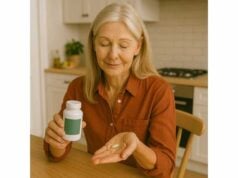
Fisetin is a plant flavonol found in small amounts in strawberries, apples, persimmons, onions, and cucumbers. Interest in fisetin has grown because lab and animal studies suggest it can act as a senolytic, meaning it helps remove certain senescent cells. These cells have stopped dividing but remain metabolically active, releasing inflammatory signals that can disturb nearby tissue.
For healthy aging, fisetin sits in a careful middle ground. It is not a proven anti-aging treatment, and no supplement protocol has been shown to extend human lifespan. At the same time, it is one of the more studied natural senolytic candidates, with ongoing human trials using short, high-dose “pulse” schedules rather than ordinary daily nutrition doses. A practical approach treats fisetin as investigational, respects its limits, and focuses on safety, monitoring, and realistic expectations.
Table of Contents
- What Fisetin Is and Why It Gets Attention
- How Senolytic Use May Work
- What the Evidence Shows So Far
- Dosing Models: Food, Daily Supplements, and Pulses
- Safety, Side Effects, and Drug Interactions
- How to Monitor Results Without Fooling Yourself
- A Practical Verdict on Fisetin for Healthy Aging
What Fisetin Is and Why It Gets Attention
Fisetin is a flavonol, a type of polyphenol made by plants. Polyphenols often help plants handle stress from light, microbes, and environmental injury. In the human diet, they appear in colorful plant foods and contribute to the broader benefits of fruit- and vegetable-rich eating patterns.
Fisetin is not unique because it exists in food. Many flavonoids do. Fisetin stands out because preclinical studies have shown activity against senescent cells in several models. In that context, researchers group it with senotherapeutic compounds, a broad term for agents that target cellular senescence. Senotherapeutics include senolytics, which aim to remove senescent cells, and senomorphics, which aim to reduce the harmful inflammatory signals those cells release.
Senescent cells are not simply “bad cells.” They help with wound healing, tissue remodeling, embryonic development, and tumor suppression. The problem appears when senescent cells accumulate or remain active for too long. Their inflammatory chemical mix, often called the senescence-associated secretory phenotype, can include cytokines, growth factors, enzymes that remodel tissue, and clotting-related signals. Over time, this can contribute to low-grade inflammation, tissue stiffness, impaired regeneration, and metabolic stress.
For a fuller background on this biology, cellular senescence basics are worth understanding before thinking about fisetin as a supplement. The concept is more nuanced than “kill zombie cells.” Some senescent cells protect the body in the right setting, while others become harmful when they persist.
Fisetin also has non-senolytic actions. It has been studied for antioxidant signaling, inflammation, vascular biology, glucose metabolism, brain-related pathways, and mitochondrial stress responses. These mechanisms overlap, which makes fisetin interesting but also difficult to interpret. When a person takes fisetin and notices a change in pain, energy, or inflammation, that does not prove senescent-cell clearance caused the change.
How Senolytic Use May Work
A senolytic strategy aims to exploit a weakness in senescent cells. These cells resist death by activating pro-survival pathways. A senolytic compound nudges those cells toward apoptosis, the body’s orderly cell-death process. The intended result is not constant suppression of inflammation, but a short intervention that removes a subset of troublesome cells and then stops.
That is why senolytic research often uses intermittent dosing. The idea is closer to a pulse than a daily tonic. In animal studies and several human trial designs, fisetin is given for a small number of days, followed by a long off period. This “hit-and-run” model differs from daily supplement use, where a compound is taken every morning for general support.
Senolytic does not mean general antioxidant
Fisetin is often marketed as an antioxidant, but that label can mislead. The body uses oxidative signals for exercise adaptation, immune defense, and cellular repair. Blunting those signals all the time is not always helpful. A senolytic schedule is usually designed around timing, tissue response, and recovery rather than constant antioxidant pressure.
This distinction matters because healthy aging is not a race to suppress every stress signal. Many useful longevity habits, including strength training, aerobic conditioning, sauna, and fasting-like patterns, work partly through hormesis: a manageable stress followed by adaptation. Pairing aggressive supplementation with every hormetic stressor can make interpretation harder and may work against the signal a person wants from training. The same caution applies to other senotherapeutic strategies, including senolytics for healthy aging that remain under clinical investigation.
Fisetin may not reach every tissue equally
Fisetin has poor water solubility and limited oral bioavailability. In plain language, the body does not absorb and distribute it as predictably as many drugs. Food, formulation, gut metabolism, liver metabolism, and supplement quality can change exposure.
This matters for two reasons. First, a capsule dose does not tell you exactly how much active compound reaches relevant tissues. Second, enhanced-absorption formulas may not behave like plain fisetin powder. A formulation that raises blood levels might increase both potential activity and side-effect risk. More absorption is not automatically better when the optimal human dose is unknown.
What the Evidence Shows So Far
Fisetin has promising preclinical evidence and early human research activity, but it does not yet have the level of proof needed to call it an established healthy-aging therapy. The strongest evidence comes from cell studies and animal studies. Human trials are still working through basic questions: dose, safety, target engagement, biomarkers, and whether physical function improves compared with placebo.
| Evidence area | What it suggests | What it does not prove |
|---|---|---|
| Cell studies | Fisetin can affect senescence pathways and survival signals in certain cell types. | That the same effect occurs safely across human tissues. |
| Animal studies | Intermittent fisetin can reduce senescence markers and improve some measures of healthspan in old mice. | That humans will live longer or age more slowly with supplements. |
| Human trial designs | Researchers are testing fisetin in older adults, frailty-related settings, vascular function, osteoarthritis, multimorbidity, and cancer survivorship. | That over-the-counter self-use has proven benefits. |
| Commercial supplement use | Fisetin is widely available and often tolerated in ordinary supplement doses. | That product labels, dosing protocols, or marketing claims are clinically validated. |
The animal data explain why the field is interested. In older mice, fisetin has been associated with reduced senescence markers, better tissue function, and improved physical measures. More recent animal work has looked at skeletal muscle, frailty-related function, and vascular aging. These studies support further research, but mice are not small humans. Dose translation, metabolism, disease background, sex differences, and lifespan biology all limit direct application.
Human studies are more cautious. Several trials use around 20 mg/kg/day for two or three consecutive days, sometimes repeated in cycles. This is far above what a person gets from food. For a 70 kg adult, 20 mg/kg equals 1,400 mg per day. Some trials repeat this for several days or cycles, but trial participants are screened, monitored, and compared with placebo. That setting is very different from buying a bottle and copying a dose from the internet.
A useful standard is to separate biomarkers from outcomes. A biomarker may move in a favorable direction without producing a real-world benefit. For longevity, outcomes such as fewer fractures, better walking speed, preserved independence, lower cardiovascular events, or improved survival matter more than a single inflammatory marker. This distinction is central to biomarkers versus real-world benefits in longevity research.
The human evidence is not yet settled
At present, fisetin should be viewed as an investigational senolytic candidate. It is not an approved treatment for aging, frailty, osteoarthritis, dementia prevention, cardiovascular rejuvenation, or cancer-related functional decline. Early trial designs are scientifically important because they test whether the preclinical promise translates into measurable human benefit.
People sometimes treat “natural” and “safe” as the same word. That is a mistake. Fisetin may have a friendlier image than prescription senolytics such as dasatinib, but high-dose senolytic use still creates biological pressure. Removing senescent cells in the wrong person, at the wrong time, or during tissue repair may carry risks that are not yet fully mapped.
Dosing Models: Food, Daily Supplements, and Pulses
Fisetin dosing discussions often mix three very different approaches: dietary intake, ordinary supplement use, and high-dose pulse protocols. Keeping them separate prevents most confusion.
Food-level fisetin
Dietary fisetin comes mainly from plant foods. Strawberries are often named as a rich source, but even a generous serving provides far less fisetin than senolytic-style trials use. Eating strawberries, apples, onions, and other polyphenol-rich foods supports healthy dietary patterns, but it is not a senolytic protocol.
Food-level intake is still valuable. Polyphenol-rich eating patterns often come packaged with fiber, potassium, vitamin C, carotenoids, and other compounds that support metabolic and vascular health. For most people, a diet rich in berries, colorful produce, legumes, olive oil, nuts, tea, herbs, and cocoa is a better first step than isolated high-dose fisetin. A broader polyphenol-rich food pattern also avoids placing too much hope on one molecule.
Daily supplement use
Many fisetin supplements provide 100–500 mg per serving. Some people use these daily for general antioxidant or anti-inflammatory support. This is not the same as the high-dose intermittent schedules used in senolytic research.
Daily use has two problems. First, the senolytic rationale is weaker because the research model often uses pulses. Second, long-term daily safety data at supplement doses remain limited, especially in older adults with multiple medications. A person taking daily fisetin for months may be running a different experiment from the one being tested in clinical trials.
Pulse-style protocols
Pulse-style fisetin protocols are modeled after senolytic research. They usually involve a higher dose for two or three consecutive days, followed by a long break. Some trials use repeated cycles. A simplified version looks like this:
| Use model | Typical pattern | Practical interpretation |
|---|---|---|
| Dietary intake | Food sources such as strawberries, apples, persimmons, onions, and cucumbers | Best viewed as part of a healthy eating pattern, not a senolytic intervention. |
| Low-dose daily supplement | Often 100–500 mg/day depending on product | Marketed for general support, but not proven to clear senescent cells in humans. |
| High-dose pulse | Research often uses about 20 mg/kg/day for 2–3 days | Closest to senolytic trial logic, but best treated as investigational and clinician-supervised. |
Copying a trial dose without trial safeguards is not a careful longevity practice. Trials exclude many higher-risk participants, review medications, track adverse events, and use defined endpoints. Self-use rarely does that.
A more conservative framework starts with the reason for using fisetin. “I want to age better” is too vague. A better reason would be a measurable problem, such as declining gait speed, reduced grip strength, high inflammatory markers after medical evaluation, or a specific research trial eligibility profile. Even then, fisetin should not displace exercise, protein adequacy, sleep, blood pressure control, glucose control, dental health, vaccinations, or medication review.
Safety, Side Effects, and Drug Interactions
Fisetin’s safety profile in humans is not fully defined for high-dose senolytic use. Ordinary dietary exposure is not the concern. The concern is concentrated supplemental dosing, especially in older adults who take several medications or have chronic disease.
Reported or plausible side effects include digestive upset, nausea, loose stool, headache, fatigue, rash, and changes in how a person feels during high-dose days. Serious risks are not well quantified because large, long-term human trials are lacking.
The most important safety issue is not one dramatic known toxicity. It is uncertainty combined with polypharmacy. Fisetin may affect drug-metabolizing enzymes and cell-signaling pathways. It also overlaps with inflammation, platelet activity, glucose handling, and immune function in ways that matter more at high doses.
Groups that should be especially cautious
High-dose fisetin is a poor fit without medical supervision for people who are pregnant or breastfeeding, trying to conceive, undergoing chemotherapy or radiation, recovering from surgery, healing a wound, managing active cancer, taking immune-suppressing medication, living with significant liver or kidney disease, or taking anticoagulant or antiplatelet drugs.
Caution also applies to people with diabetes medications, frequent hypoglycemia, complex cardiovascular medication schedules, bleeding disorders, upcoming dental surgery, autoimmune disease, transplant history, or unexplained weight loss and fatigue. These situations deserve clinician review before adding any senolytic-style supplement.
Medication review matters
A clinician or pharmacist should review fisetin use when a person takes prescription drugs. Special attention belongs to:
- Blood thinners and antiplatelet drugs, including warfarin, direct oral anticoagulants, aspirin, and clopidogrel.
- Nonsteroidal anti-inflammatory drugs when used frequently.
- Diabetes medications that can lower glucose.
- Blood pressure medications if the person is prone to dizziness or dehydration.
- Cancer therapies, immune therapies, or hormone-sensitive cancer regimens.
- Drugs with narrow safety margins, where small changes in metabolism matter.
- Multiple supplements with overlapping effects, such as high-dose quercetin, curcumin, resveratrol, green tea extract, garlic extract, nattokinase, or ginkgo.
Fisetin is often compared with quercetin as a senotherapeutic flavonoid, but stacking several polyphenols at high doses is not automatically smarter. Combining compounds can increase uncertainty, especially when absorption enhancers such as piperine are added.
Timing around stress and repair
Senescent cells participate in tissue repair. That does not mean fisetin blocks healing in every case, but it supports caution around surgery, acute injury, infection, and heavy training blocks. A person should not schedule a high-dose senolytic pulse during a week of illness, poor sleep, dehydration, unusually hard exercise, or medical procedures.
A safer self-experimentation mindset uses one change at a time, avoids stacking stressors, and includes clear stopping rules. The same principles apply across longevity interventions, and safe self-experimentation is more important than chasing a perfect supplement stack.
How to Monitor Results Without Fooling Yourself
Fisetin is easy to overinterpret because the expected benefits are broad: less inflammation, better mobility, improved energy, healthier aging. Broad claims invite confirmation bias. A person takes a supplement, feels better for a week, and assigns credit to the supplement without considering sleep, training, pain fluctuation, weather, stress, diet, or placebo response.
Good monitoring starts before the first dose. Choose a small number of measures that reflect real function and safety. Do not rely on “biological age” reports or a single inflammatory marker as proof.
Useful baseline checks
For anyone considering high-dose fisetin under supervision, baseline health context matters. Commonly useful checks include a complete blood count, liver enzymes, kidney function, fasting glucose, A1c, fasting insulin when appropriate, lipids, and hs-CRP. People with cardiometabolic risk may need a deeper look at blood pressure, waist circumference, ApoB, triglycerides, and glucose patterns.
Inflammation testing needs care because hs-CRP rises after infections, injuries, dental inflammation, hard training, and poor sleep. Testing during a calm baseline period gives a cleaner signal. A broader guide to inflammation markers for healthy aging can help put hs-CRP and related markers in context.
Metabolic markers also matter. Fisetin should not distract from insulin resistance, fatty liver risk, or excess visceral fat, which have clearer links to healthspan. People tracking glucose and insulin can use A1c, fasting glucose, and fasting insulin as part of a more grounded longevity plan.
Functional measures beat vague impressions
Healthy aging is physical and practical. Better function means climbing stairs more easily, walking faster, carrying groceries, rising from a chair, recovering from exercise, or staying independent. These outcomes are easier to understand than obscure molecular claims.
Good tracking options include:
- Grip strength using a hand dynamometer.
- Usual gait speed over a measured distance.
- Five-times sit-to-stand.
- Six-minute walk distance if space and safety allow.
- Resting blood pressure and resting heart rate.
- Pain scores for a defined joint or body area.
- Sleep quality, fatigue, and training recovery notes.
- Infection frequency and wound-healing issues.
Functional tests should be repeated under similar conditions. Do not compare a rested Saturday morning test with a rushed evening test after poor sleep. Simple tests such as grip, gait speed, and sit-to-stand are covered well in functional longevity testing and often reveal more than a complex supplement log.
Use stopping rules
A fisetin experiment without stopping rules can drift into open-ended use. Stopping rules protect the person from sunk-cost thinking.
Reasonable stop signs include rash, unusual bruising, prolonged digestive upset, dizziness, low glucose symptoms, new palpitations, worsening fatigue, abnormal labs, surgery, acute infection, new medication changes, or no measurable benefit after a defined trial window. “No measurable benefit” is a valid reason to stop. A supplement does not earn a permanent place simply because it sounds promising.
A Practical Verdict on Fisetin for Healthy Aging
Fisetin is promising enough to study and uncertain enough to treat with restraint. The preclinical senolytic data are stronger than the human outcome data. That makes fisetin a research-stage tool, not a foundation of healthy aging.
A practical ranking looks like this:
- Build the basics first: strength training, aerobic fitness, protein adequacy, sleep, blood pressure control, glucose control, dental care, social connection, and smoking avoidance.
- Use food-level polyphenols freely through berries, colorful plants, olive oil, tea, herbs, legumes, and cocoa.
- Treat daily fisetin supplements as optional and unproven, not as a required longevity habit.
- Reserve high-dose pulse-style fisetin for clinical trials or clinician-supervised use with medication review and monitoring.
- Stop when risks, side effects, abnormal labs, or lack of measurable benefit outweigh the reason for use.
The people most interested in fisetin often care deeply about longevity and want to act early. That motivation is useful when it goes toward training, nutrition, sleep, and risk-factor control. It becomes less useful when it jumps ahead of evidence. Fisetin should not become a substitute for proven work.
For a healthy adult already doing the basics well, the most defensible fisetin strategy is conservative: eat fisetin-containing foods, follow the human trial results as they develop, avoid aggressive stacks, and discuss high-dose use with a clinician who understands medications and aging biology. For an older adult with frailty, multimorbidity, cancer survivorship concerns, or inflammatory disease, clinical trial participation is a better route than unsupervised experimentation.
Fisetin may eventually earn a clearer role in senolytic medicine. That role will need evidence on who benefits, which dose works, how often to repeat it, which biomarkers show target engagement, and which risks appear after repeated cycles. Until then, the most practical guide is simple: respect the biology, measure real outcomes, avoid overclaiming, and do not let a promising supplement outrank the fundamentals that already protect healthspan.
References
- Fisetin is a senotherapeutic that extends health and lifespan 2018 (Preclinical Study)
- Fisetin as a senotherapeutic agent: Evidence and perspectives for age-related diseases 2024 (Review)
- Impact of senolytic treatment on immunity, aging, and disease 2023 (Review)
- Intermittent Supplementation With Fisetin Improves Physical Function and Decreases Cellular Senescence in Skeletal Muscle With Aging 2025 (Preclinical Study)
- A phase II randomized placebo-controlled study of fisetin to improve physical function in breast cancer survivors: the TROFFi study rationale and trial design 2026 (Trial Design)
- Pilot Trial of Fisetin in Healthy Volunteers and Older Patients With Multimorbidity 2026 (Clinical Trial Registry)
Disclaimer
This article is educational and does not replace guidance from a qualified healthcare professional. Fisetin is not an approved treatment for aging or age-related disease, and high-dose senolytic use should be discussed with a clinician, especially for people with medical conditions, upcoming procedures, or prescription medications.