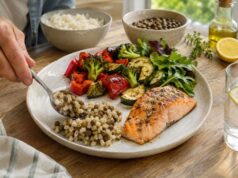
If your LDL cholesterol is high, the foods that deserve the most attention are not always obvious junk foods. Some products marketed as “natural,” “keto,” “plant-based,” “high protein,” or “heart healthy” can still deliver large amounts of saturated fat, refined carbohydrate, or calories while providing little soluble fiber. The goal is not to create a long forbidden-food list. It is to recognize patterns that raise LDL or make it harder to lower: replacing carbohydrates with butter and coconut oil, choosing processed plant foods over beans and whole grains, drinking calorie-heavy smoothies, or assuming all dairy, granola, and snack bars are automatically heart-friendly. For most people, LDL responds best when saturated fats are replaced with unsaturated fats and when soluble fiber, minimally processed plant foods, and overall diet quality increase. The biggest mistake is focusing on a food’s health halo instead of what it actually contributes to your daily pattern.
Table of Contents
- What Actually Raises LDL Cholesterol
- “Healthy” Foods That Can Backfire
- Fats That Deserve a Closer Look
- Better Swaps for High Cholesterol
- Fiber and Food Patterns That Help
- Foods You Do Not Automatically Need to Avoid
- When Diet Is Not Enough
What Actually Raises LDL Cholesterol
LDL cholesterol rises for many reasons, including genetics, age, thyroid disease, diabetes, kidney disease, body weight, medications, and diet. Food matters, but it is only one part of the picture.
The dietary factor with the clearest effect on LDL is saturated fat. Saturated fats are found in butter, fatty meats, processed meats, full-fat dairy, coconut oil, palm oil, and many baked or packaged foods. Replacing saturated fat with polyunsaturated and monounsaturated fats generally lowers LDL. Replacing it with refined carbohydrate is less helpful because triglycerides and blood sugar can worsen.
Dietary cholesterol—found in eggs, shellfish, and animal foods—can also raise blood cholesterol in some people, but the response varies. For most adults, saturated fat and the overall food pattern are bigger levers than chasing every milligram of dietary cholesterol.
Soluble fiber works in the opposite direction. It binds bile acids in the gut and helps the body remove cholesterol. Oats, barley, beans, lentils, psyllium, apples, citrus, and some other plant foods are useful sources. If you are trying to lower LDL through food, increasing soluble fiber while replacing saturated fat is more effective than simply eating “low cholesterol” foods.
If you are not sure which number matters, LDL, HDL, and triglycerides each tell a different part of the story.
“Healthy” Foods That Can Backfire
A health claim on the front of a package is not a guarantee that the food supports lower LDL. These are common examples where the marketing and the lipid effect can diverge.
Coconut oil and coconut-based products
Coconut oil is often marketed as a natural or wellness-friendly fat, but it is rich in saturated fat. Compared with unsaturated plant oils, it does not offer the same LDL-lowering advantage and may raise LDL in many people.
Coconut milk, coconut cream, coconut yogurt, and coconut-based desserts can also be high in saturated fat. A small amount used for flavor is different from making coconut fat your main cooking fat every day.
A better everyday choice is olive, canola, avocado, soybean, or another liquid plant oil rich in unsaturated fat. For the larger comparison, replacing saturated fat with unsaturated fat is the key principle.
Keto snacks made with butter, cream, or coconut oil
“Keto” tells you the carbohydrate content, not whether a food is heart healthy. Keto cookies, fat bombs, protein bars, and packaged snacks can be extremely high in saturated fat. Some people see LDL and ApoB rise substantially on very-low-carbohydrate diets built around butter, cheese, cream, fatty meat, and coconut oil.
If you prefer a lower-carbohydrate pattern, emphasize fish, olive oil, avocado, nuts, seeds, tofu, vegetables, and minimally processed proteins rather than simply adding animal fat.
Granola, granola bars, and “whole-grain” snacks
Granola can contain oats and nuts but still be loaded with added sugar, coconut oil, palm oil, or large calorie portions. A small labeled serving may be one-third to one-half cup, while a cereal bowl can hold two or three times that amount.
Choose plain oats, low-sugar muesli, or a granola with modest added sugar and little saturated fat. Add your own nuts and fruit so you control the portion.
Plant-based burgers and vegan convenience foods
Plant-based eating can lower cardiovascular risk when it emphasizes beans, lentils, vegetables, whole grains, nuts, seeds, and unsaturated oils. But “vegan” does not automatically mean low in saturated fat or minimally processed.
Some plant-based burgers, cheeses, creamers, and desserts rely on coconut oil or palm oil. Others are high in sodium and low in fiber. Check the Nutrition Facts panel rather than assuming the plant-based label is enough.
Smoothies and acai bowls
A smoothie made with fruit, yogurt, nuts, and seeds can be nutritious. But restaurant smoothies and acai bowls can contain juice, sweetened yogurt, honey, syrups, granola, nut butter, and oversized fruit portions. The result may be 600–1,000 calories and a large sugar load.
That does not directly raise LDL the way saturated fat can, but excess calories can promote weight gain, insulin resistance, and higher triglycerides, which worsen the overall cardiovascular risk profile.
Full-fat dairy with a “protein” halo
Greek yogurt, cheese, cottage cheese, and milk provide protein and important nutrients, but full-fat versions can contribute significant saturated fat. The effect depends on the food matrix and the rest of the diet, so dairy is not a simple “good” or “bad” category.
If LDL is high, lower-fat or fat-free dairy is often an easy swap that preserves protein while reducing saturated fat. Cheese can still fit in smaller portions, but it should not be the main protein source at several meals every day.
Fats That Deserve a Closer Look
The simplest rule is not “eat low fat.” It is “choose the right fats.”
Butter, ghee, coconut oil, palm oil, fatty cuts of meat, sausage, bacon, and high-fat dairy are concentrated sources of saturated fat. Replacing these with olive oil, nuts, seeds, avocado, and fish generally improves LDL.
The replacement matters because nutrients do not disappear; they get swapped. If you remove butter from toast and replace it with olive oil or nut butter, that is usually favorable. If you remove butter and replace the calories with refined crackers and sugar, the LDL effect may improve somewhat while triglycerides, hunger, and blood sugar worsen.
Processed meat deserves special attention because it combines saturated fat, sodium, preservatives, and often a high calorie density. Fresh lean poultry, fish, legumes, tofu, and minimally processed meat are better default choices.
Coconut oil is especially easy to overvalue because it can raise HDL as well as LDL. A higher HDL number does not cancel a higher LDL or ApoB burden. Cardiovascular risk is driven in large part by the number of atherogenic particles that can enter artery walls, so focusing only on whether HDL rose can be misleading.
If you want a deeper explanation of particle-related risk, ApoB testing can help clarify how many atherogenic particles are circulating.
Better Swaps for High Cholesterol
You do not need a perfect diet. Repeated substitutions at breakfast, lunch, dinner, and snacks can shift LDL meaningfully over time.
| Instead of | Try | Why it helps |
|---|---|---|
| Butter or coconut oil | Olive, canola, or avocado oil | Replaces saturated fat with unsaturated fat |
| Bacon or sausage breakfast | Oats, fruit, nuts, or eggs with vegetables | Reduces processed meat and can increase fiber |
| Cheese-heavy sandwich | Hummus, beans, tuna, or fresh poultry with vegetables | Lowers saturated fat while keeping protein |
| Keto snack bar | Fruit with nuts or plain yogurt | Reduces processed saturated fat and improves food quality |
| Sweet granola | Plain oats or low-sugar muesli | Adds soluble fiber with less added sugar |
| Fatty red meat several times weekly | Fish, beans, lentils, tofu, or lean poultry | Reduces saturated fat and can add fiber or omega-3 fats |
Look for changes that you barely notice. Switching cooking oil, buying a lower-saturated-fat yogurt, using beans in half of a meat-based dish, or adding oats at breakfast can be easier to sustain than a total diet overhaul.
A common trap is replacing one problematic food with another health-branded version that is nutritionally similar. For example, swapping butter for coconut oil or a sugar-heavy granola bar for a “natural” date bar may not change the underlying issue. Compare saturated fat, added sugar, fiber, and serving size instead of relying on ingredient buzzwords.
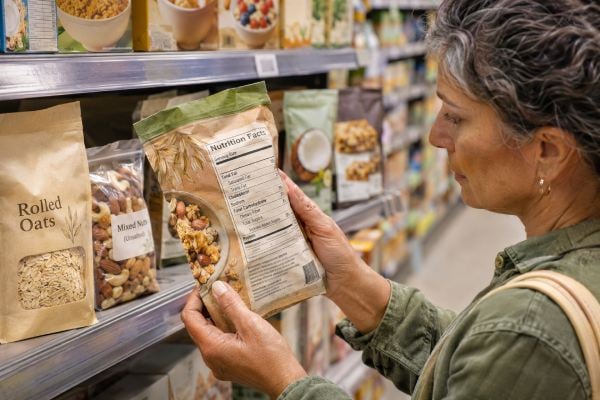
Use the label to spot the real problem
When LDL is your main target, start with saturated fat. Compare similar foods per serving and also consider the portion you actually eat. A product with 3 g of saturated fat per serving looks modest until you realize your usual portion is three servings. For a 2,000-calorie diet, keeping saturated fat below about 10% of calories means staying under roughly 22 g per day, and some people aiming for stronger LDL lowering may be advised to go lower.
Next check fiber. A “whole grain” product with 1 g of fiber per serving may not add much, while oats, barley, beans, and high-fiber breads can contribute several grams. Added sugar matters because products that replace fat with sugar may improve one number on the label while doing little for overall metabolic health.
Ingredient order gives another clue. If butter, coconut oil, palm oil, cream, or cheese appears near the top, the product may be more saturated-fat-heavy than its front label suggests. If sugar, syrups, or refined flour dominate, it may not be a useful replacement either.
You do not need to memorize ideal numbers for every food. Compare products within the same category. If two yogurts have similar protein but one has half the saturated fat and less added sugar, that is an easy win. If two snack bars have similar calories but one contains nuts, seeds, and more fiber while the other is mostly coconut oil and syrup, the difference is meaningful.
For more examples, foods that lower LDL through fiber and better fats can help build a grocery list.
Fiber and Food Patterns That Help
Soluble fiber is one of the most reliable food-based tools for lowering LDL. It forms a gel-like material in the gut and helps increase cholesterol excretion through bile acids.
Useful sources include:
- oats and oat bran;
- barley;
- beans, lentils, chickpeas, and peas;
- psyllium husk;
- apples, pears, citrus, and berries;
- okra, eggplant, and other fiber-rich vegetables.
Psyllium has particularly strong evidence. It can lower LDL when taken consistently, but it must be mixed with adequate fluid and may interfere with the absorption of some medications if taken at the same time. If you use it as a supplement rather than a food ingredient, check timing with your pharmacist or clinician. More details are available in using psyllium to lower LDL cholesterol.
Plant sterols and stanols can also reduce intestinal cholesterol absorption. They are added to some fortified spreads, yogurts, and beverages and are available as supplements. They are not a substitute for a good diet, but they can provide an additional LDL reduction in some people.
The strongest overall patterns resemble Mediterranean, DASH, pescetarian, and well-planned vegetarian diets. They share more similarities than differences: vegetables, fruit, legumes, whole grains, nuts, seeds, fish or other lean proteins, liquid plant oils, and fewer ultra-processed foods.
This pattern matters more than whether you occasionally eat one food that is high in cholesterol or saturated fat. A single cheeseburger does not determine your LDL. What you repeat most days does.
A simple way to increase soluble fiber without redesigning your diet is to add one deliberate source at two meals each day. Breakfast might include oats or psyllium; lunch might include beans or lentils; dinner might include barley, chickpeas, or a vegetable-and-bean side. Increase fiber gradually and drink enough fluid so your digestive system has time to adjust.
Also pay attention to what fiber-rich foods replace. Adding oatmeal on top of a breakfast that still includes sausage, buttered toast, and a large pastry is not the same as using oatmeal to replace one or more of those foods. The most effective cholesterol-lowering pattern combines addition and substitution: more soluble fiber and unsaturated fat, with less saturated fat and fewer highly processed foods across the entire week consistently overall.
Foods You Do Not Automatically Need to Avoid
High cholesterol advice often becomes unnecessarily restrictive. Several foods can fit depending on portion, frequency, and your individual response.
Eggs
Eggs contain dietary cholesterol, but they are relatively low in saturated fat compared with bacon, sausage, butter, and many cheese-heavy breakfasts. Some people are stronger cholesterol responders than others. If your LDL is high, especially if it rose after increasing egg intake, discuss an appropriate amount with your clinician or dietitian rather than assuming unlimited eggs or zero eggs is the only answer.
Shrimp and shellfish
Shellfish can be high in dietary cholesterol but low in saturated fat. Preparation matters: grilled shrimp with vegetables is different from deep-fried shrimp served with creamy sauce.
Nuts and avocado
These foods are calorie-dense, but their fats are mostly unsaturated. Appropriate portions can support a heart-healthy diet. The main concern is portion size if you are trying to lose weight, not that their fat content is inherently harmful.
Whole soy foods
Tofu, tempeh, edamame, and unsweetened soy milk are generally useful replacements for higher-saturated-fat animal foods. The concern is more with highly processed plant-based foods that use coconut oil or palm oil.
Dark chocolate
Dark chocolate can contain beneficial cocoa compounds, but it is still calorie-dense and often contains saturated fat and sugar. A small portion can fit; a large bar every night is a different dietary pattern.
The best way to judge a food is by what it replaces, how much you eat, and what your lab results do over time.
When Diet Is Not Enough
Diet can improve LDL, but genetics can outweigh even excellent eating habits. Familial hypercholesterolemia and other inherited lipid disorders can cause very high LDL from a young age. In those cases, medication is often necessary to reduce cardiovascular risk.
Talk with a clinician if your LDL is very high, if you have a strong family history of early heart attack or stroke, or if lifestyle changes do not produce enough improvement. Depending on your risk, treatment may include statins, ezetimibe, bempedoic acid, PCSK9-targeting therapy, or other options.
It is also worth checking for secondary causes such as hypothyroidism, kidney disease, uncontrolled diabetes, and certain medications. If you are making major diet changes, repeating a lipid panel after an appropriate interval lets you see whether the plan is actually working.
Do not judge success by whether a diet sounds virtuous. Judge it by whether it lowers LDL or ApoB, improves blood pressure and blood sugar, supports a healthy weight, and is sustainable. A minimally processed diet rich in soluble fiber and unsaturated fats usually does more for cholesterol than any single “superfood.”
References
- 2021 Dietary Guidance to Improve Cardiovascular Health: A Scientific Statement From the American Heart Association 2021 (Position Statement)
- Popular Dietary Patterns: Alignment With American Heart Association 2021 Dietary Guidance: A Scientific Statement From the American Heart Association 2023 (Position Statement)
- Dietary management of dyslipidemia and the impact of dietary patterns on lipid disorders 2022 (Review)
- Variation of LDL cholesterol in response to the replacement of saturated with unsaturated fatty acids: a nonrandomized, sequential dietary intervention; the Reading, Imperial, Surrey, Saturated fat Cholesterol Intervention (“RISSCI”-1) study 2024 (Clinical Trial)
- Plantago consumption significantly reduces total cholesterol and low-density lipoprotein cholesterol in adults: A systematic review and meta-analysis 2024 (Systematic Review)
- The effects of coconut oil on the cardiometabolic profile: a systematic review and meta-analysis of randomized clinical trials 2022 (Systematic Review)
Disclaimer
This article is for general educational purposes and does not replace personalized medical care. Very high LDL, suspected familial hypercholesterolemia, or known cardiovascular disease often requires medication in addition to diet. Do not stop prescribed cholesterol treatment based on food changes without discussing it with your clinician.