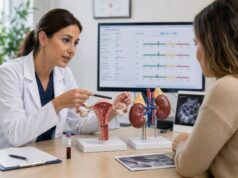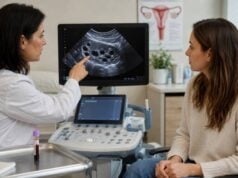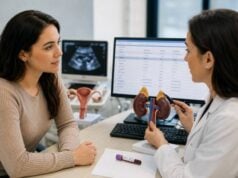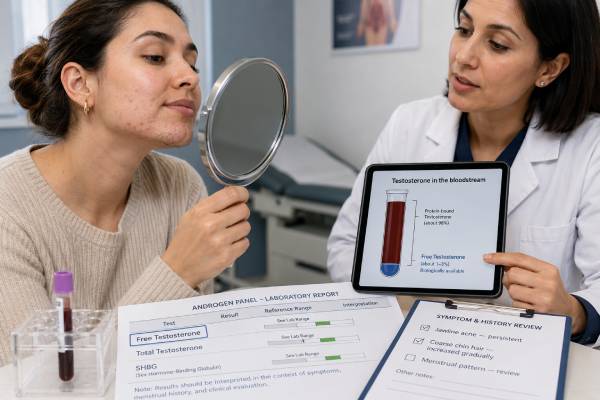
A free testosterone test estimates the small portion of testosterone that is not tightly bound to sex hormone-binding globulin, or SHBG. This fraction is more available to enter tissues and may reveal biochemical androgen excess when total testosterone appears normal. In women, testing is most useful when acne, coarse facial or body hair, irregular periods, scalp hair thinning, infertility, or virilization suggests excess androgen activity. Polycystic ovary syndrome is the most common cause, but thyroid disease, low SHBG, medicines, nonclassic congenital adrenal hyperplasia, ovarian hyperthecosis, and rare ovarian or adrenal tumors can also affect the result. Measurement quality is critical because female testosterone concentrations are low. Direct free-testosterone immunoassays are often inaccurate; calculated free testosterone based on high-quality total testosterone, SHBG, and albumin or measurement by equilibrium dialysis is more reliable. A high result does not diagnose PCOS by itself, and a low result does not establish a recognized “testosterone deficiency syndrome” in women. Symptoms, menstrual history, medication use, related hormones, and the speed of change guide interpretation.
- Free testosterone reflects the unbound fraction: it can be elevated when SHBG is low even if total testosterone is within range.
- Use a high-quality method: calculated free testosterone or equilibrium dialysis is preferred over many direct assays.
- PCOS is the most common cause of mild to moderate elevation: rapid virilization requires evaluation for a more serious source.
- Morning testing is often preferred: hormonal contraception can make androgen results difficult to interpret.
- There is no universal female normal range: age, assay, cycle, menopause, and laboratory-specific intervals all matter.
Table of Contents
- What Free Testosterone Measures
- Why the Test Is Ordered in Women
- Testing Methods and Preparation
- Normal Ranges and Result Interpretation
- Causes of High Free Testosterone
- Low Free Testosterone in Women
- Follow-Up Tests, Treatment, and Red Flags
What Free Testosterone Measures
Women naturally produce testosterone in the ovaries and adrenal glands and through conversion of other androgens in peripheral tissues. The total amount circulating in blood includes several fractions:
- testosterone tightly bound to SHBG;
- testosterone loosely bound to albumin;
- a small unbound, or free, fraction.
Only a small percentage is free at any moment. Free and albumin-bound testosterone are sometimes grouped as bioavailable testosterone because they can reach tissues more readily than the SHBG-bound fraction.
SHBG is made mainly by the liver. When SHBG falls, the free fraction can rise even if total testosterone does not change. Insulin resistance, obesity, hypothyroidism, androgen exposure, and some medications can lower SHBG. Estrogen-containing contraceptives, pregnancy, hyperthyroidism, and some liver conditions can raise it. This is why total testosterone alone can miss androgen excess in a woman with low SHBG, while a high SHBG can make total testosterone appear less informative about tissue exposure.
Free testosterone is not the same as total testosterone
Total testosterone measures all circulating fractions. It is often the first androgen test because high-quality mass-spectrometry assays are available and guideline thresholds are commonly based on total concentration. Free testosterone adds value when symptoms and total testosterone do not match or when SHBG is likely to be abnormal.
The result does not measure androgen sensitivity inside the skin or hair follicle. Some women develop hirsutism or female pattern hair loss with values inside the laboratory range because local conversion to dihydrotestosterone, receptor sensitivity, genetics, and ethnicity affect the tissue response. Conversely, a mildly high laboratory result may cause few visible symptoms.
Free testosterone also differs from the free androgen index, which is a calculation based on total testosterone and SHBG. The index can help identify biochemical hyperandrogenism, but its accuracy decreases in some settings, especially when SHBG is very low. A calculated free testosterone equation that includes albumin may better model binding, provided the input assays are reliable.
Why the Test Is Ordered in Women
Free testosterone is ordered when the history or examination suggests androgen excess. It is not usually needed for every case of mild acne or occasional unwanted hair.
Common reasons include:
- coarse, dark hair on the chin, upper lip, chest, abdomen, back, or thighs;
- persistent or severe acne, especially with irregular periods;
- widening of the scalp part or androgen-pattern hair thinning;
- infrequent, absent, or unpredictable periods;
- difficulty ovulating or becoming pregnant;
- signs of insulin resistance, including acanthosis nigricans;
- unexpectedly high total testosterone or low SHBG;
- suspected PCOS;
- rapid progression or virilization;
- monitoring a known androgen-producing condition or selected therapy.
Acne and excess hair growth
Androgens increase sebaceous-gland activity and can worsen oily skin and acne. They also convert fine vellus hairs into coarse terminal hairs in androgen-sensitive areas. Hirsutism is different from generalized hair growth, which can result from genetics, medication, or other nonandrogen causes.
A high free testosterone supports biochemical hyperandrogenism but does not identify the cause. Many women with acne have normal androgen levels, and some with hirsutism have normal tests, a condition often called idiopathic hirsutism after other causes are excluded.
PCOS evaluation
Current PCOS guidance recommends total and free testosterone for biochemical assessment. PCOS can be diagnosed when appropriate combinations of ovulatory dysfunction, clinical or biochemical hyperandrogenism, and polycystic ovarian morphology or validated AMH criteria are present after excluding other disorders. In adults, two accepted features may be sufficient; an ovarian ultrasound is not always needed when irregular cycles and clear hyperandrogenism already coexist.
Free testosterone is only one part of this process. Pregnancy, thyroid disease, high prolactin, nonclassic congenital adrenal hyperplasia, and other causes may need exclusion. The hirsutism hormone panel may add DHEA-S and androstenedione when testosterone is normal or an adrenal contribution is suspected.
Virilization requires faster assessment
Virilization means stronger androgen effects such as a deepening voice, clitoral enlargement, rapid muscle gain, breast tissue reduction, severe temporal hair recession, or abrupt loss of periods. Rapid onset over months, particularly later in life, is less typical of PCOS and raises concern for an ovarian or adrenal tumor or ovarian hyperthecosis. Testing and imaging should not be delayed by attempts to treat the cosmetic symptom first.
Testing Methods and Preparation
Female androgen testing is technically demanding. A result is only as useful as the method used to obtain it.
Preferred methods
Equilibrium dialysis physically separates free testosterone from protein-bound hormone and is considered a strong reference approach when performed by an experienced laboratory. It is not available everywhere and may take longer.
Calculated free testosterone uses measured total testosterone, SHBG, and albumin in a validated binding equation. It performs well when total testosterone is measured by liquid chromatography–tandem mass spectrometry, or LC-MS/MS, and SHBG is accurate.
Direct analog free-testosterone immunoassays are widely available but often lack sensitivity and accuracy at female concentrations. A result that conflicts with the clinical picture should be confirmed using a better method rather than accepted at face value.
Total testosterone by LC-MS/MS is preferred to many routine immunoassays because it has better specificity at low concentrations. The report should state the method or the laboratory can provide it.
When to collect the sample
Guidelines commonly recommend morning collection after an overnight fast for a thorough androgen-excess evaluation, although fasting itself has less effect than assay quality and medication status. Testosterone has daily variation, with higher levels often found earlier in the day, especially in younger women.
When cycles are regular, early follicular-phase testing is often preferred. A random sample is acceptable when periods are absent or very irregular, but the clinician should record the context.
Hormonal contraception changes ovarian androgen production and raises SHBG, making biochemical assessment unreliable. When it is safe and the result will change management, a clinician may arrange testing after hormonal contraception has been stopped for at least three months. This should never be done without a contraception and symptom-management plan.
Information to report
Tell the ordering clinician about:
- cycle dates and pregnancy possibility;
- birth control, menopausal hormone therapy, fertility drugs, and ovarian suppression;
- spironolactone, finasteride, glucocorticoids, antiseizure medicines, and opioids;
- testosterone, DHEA, anabolic steroids, or “hormone support” supplements used by the patient or household contacts;
- major weight change, intense exercise, or illness;
- thyroid, liver, kidney, ovarian, adrenal, or pituitary disease;
- the speed at which acne, hair growth, hair loss, or voice changes developed.
Topical testosterone used by a partner can transfer through skin contact. Contamination from a testosterone gel near the blood-draw site can also produce a falsely high result.
Normal Ranges and Result Interpretation
There is no universal free testosterone range for women. Results may be reported in pg/mL, ng/dL, pmol/L, or as a calculated value. Reference intervals differ by assay, calculation, age, menstrual status, and laboratory population. The number must be compared with the interval printed on the same report.
Premenopausal values are usually higher than postmenopausal values, but the ranges overlap. Concentrations can vary across the cycle and decline with age. A laboratory may provide separate intervals for adults, postmenopausal women, or children.
High, borderline, and normal results
A result above the upper reference limit supports biochemical hyperandrogenism if the method is reliable. A borderline result may need repetition because stress, timing, assay imprecision, or an abnormal SHBG can influence the calculation.
A normal result does not completely exclude androgen-related symptoms. Clinical hirsutism can satisfy the hyperandrogenism feature of PCOS even when biochemical tests are normal, after other causes are considered. Acne alone is a weaker indicator because it is common without androgen excess.
The relationship among total testosterone, SHBG, and free testosterone often clarifies the result:
| Total testosterone | SHBG | Free testosterone | Possible interpretation |
|---|---|---|---|
| Normal | Low | High | Increased free fraction, often with insulin resistance, obesity, hypothyroidism, or androgen effect |
| High | Normal | High | Increased androgen production or exposure |
| High | High | Normal | Total level may reflect greater binding, including estrogen exposure |
| Normal | Normal | Normal | Does not rule out follicle sensitivity or idiopathic hirsutism |
| Low | High | Low | Can occur with estrogen-containing contraception or low androgen production |
No result should be labeled “optimal” from a nonvalidated online chart. Female free-testosterone assays are not standardized well enough for one universal target, and symptom severity does not always track closely with the concentration.
When a result is markedly high
Severe biochemical elevation, especially total testosterone several times the upper limit or around 5 nmol/L and above in a high-quality assay, deserves urgent evaluation for a non-PCOS cause. The exact trigger for imaging depends on the laboratory, guideline, age, symptoms, and repeat result. Free testosterone may be very high because SHBG is extremely low, so total testosterone and SHBG must be reviewed rather than using a single free value to locate the source.
Causes of High Free Testosterone
PCOS is the most common cause of androgen excess in reproductive-age women. The elevation is often mild to moderate and develops gradually. Irregular ovulation, acne, hirsutism, scalp thinning, insulin resistance, and infertility can occur in different combinations.
Low SHBG and metabolic factors
Insulin suppresses liver production of SHBG. Insulin resistance can therefore increase free testosterone even without a major rise in total testosterone. Obesity, type 2 diabetes, metabolic syndrome, and hypothyroidism can contribute. This relationship is one reason a PCOS evaluation often includes blood pressure, lipid testing, and glucose assessment in addition to reproductive hormones.
Lifestyle treatment in PCOS is aimed at overall health, cycle function, and metabolic risk, not at chasing a specific testosterone number. Even modest weight reduction can improve ovulation and androgen measures in some people with higher weight, but PCOS occurs across all body sizes.
Ovarian causes
The ovaries may produce excess testosterone in PCOS, ovarian hyperthecosis, or a rare androgen-secreting tumor. Hyperthecosis is more common after menopause and may cause substantial testosterone elevation, virilization, insulin resistance, and enlarged or sometimes normal-appearing ovaries.
Ovarian tumors often cause faster progression and higher concentrations than typical PCOS, but no single threshold perfectly separates them. Pelvic imaging follows biochemical confirmation and clinical assessment.
Adrenal and other endocrine causes
Nonclassic congenital adrenal hyperplasia, usually due to 21-hydroxylase deficiency, can resemble PCOS. An early-morning 17-hydroxyprogesterone screens for it. DHEA-S helps assess adrenal androgen production. Cushing syndrome is considered when androgen symptoms occur with characteristic bruising, muscle weakness, wide purple stretch marks, or other cortisol-related features.
Rare adrenal tumors can produce testosterone directly or through other androgens. Severe DHEA-S elevation makes an adrenal source more likely, but imaging should follow a coherent hormone pattern.
Medicines and exposure
Testosterone therapy, DHEA supplements, anabolic steroids, danazol, valproate, and some compounded products can raise androgens or worsen symptoms. Transfer from another person’s gel and laboratory contamination are preventable explanations. Supplements may contain undeclared hormones, so a complete product list is important.
Low Free Testosterone in Women
Low free testosterone can occur with aging, menopause, loss of ovarian function, adrenal insufficiency, hypothalamic-pituitary suppression, chronic illness, estrogen-containing contraception, glucocorticoids, or antiandrogen treatment. High SHBG can lower the free fraction even when total testosterone is not low.
The clinical meaning is less clear than it is for high testosterone. Professional groups do not recognize a general female “androgen deficiency syndrome” diagnosed from one blood value. Fatigue, low mood, reduced sexual desire, poor concentration, and loss of muscle have many causes and correlate inconsistently with testosterone concentrations.
A low result obtained while taking combined birth control or spironolactone may reflect the intended treatment effect. It should not be “corrected” with DHEA or testosterone simply to move the number into another range.
Testosterone therapy has a limited evidence-based role for carefully assessed hypoactive sexual desire disorder in some postmenopausal women under specialist care. It is not standard treatment for low energy, infertility, weight loss, general well-being, or hair growth. Doses used for women are much lower than male formulations, and monitoring is required to avoid acne, hirsutism, scalp hair loss, voice change, and other adverse effects.
In premenopausal women with low free testosterone and absent periods, the more useful evaluation usually focuses on estradiol, FSH, LH, prolactin, TSH, nutrition, exercise, and pituitary function. In suspected adrenal insufficiency, cortisol-based testing is more relevant than treating the testosterone value.
Follow-Up Tests, Treatment, and Red Flags
An unexpected free testosterone result should be confirmed before major decisions. The repeat should use a morning sample, a high-quality total-testosterone assay, SHBG, and a validated free-testosterone method. Medication and supplement effects should be addressed first.
Depending on the presentation, follow-up may include:
- total testosterone by LC-MS/MS;
- SHBG and albumin;
- DHEA-S and androstenedione;
- 17-hydroxyprogesterone;
- prolactin, TSH, and a pregnancy test;
- LH, FSH, and estradiol when periods are absent;
- glucose testing, an oral glucose tolerance test, lipids, and blood pressure for PCOS risk;
- pelvic ultrasound;
- adrenal imaging when the biochemical pattern supports it;
- cortisol testing when Cushing syndrome is suspected.
Treatment targets the cause and the patient’s priorities. Combined hormonal contraception can regulate bleeding and reduce free androgen activity by suppressing ovarian production and increasing SHBG. Spironolactone or another antiandrogen may reduce hirsutism or acne when pregnancy is prevented and safety monitoring is appropriate. Metformin is used mainly for metabolic features and selected cycle or fertility goals in PCOS, not as a cosmetic testosterone-lowering drug.
Hair removal, laser treatment, electrolysis, topical acne care, and minoxidil can address symptoms while endocrine treatment takes effect. Coarse hair changes slowly because existing follicles need months to cycle; hormonal treatment often requires at least six months before visible improvement.
Seek prompt endocrine assessment for rapidly progressing hirsutism, deepening voice, clitoral enlargement, sudden severe scalp recession, new muscle changes, or a markedly elevated repeat testosterone. Severe headache, vision changes, or acute pelvic pain also needs timely care. A mild stable elevation without virilization can usually be evaluated systematically rather than as an emergency.
Reviewing the laboratory report before accepting the result
The words “free testosterone” do not identify one standardized test. The report may show equilibrium dialysis, ultrafiltration, a calculated value, a free androgen index, or a direct analog immunoassay. These methods are not interchangeable, especially at the low concentrations typical in women. Check the method, units, sex- and age-appropriate interval, total testosterone assay, SHBG, albumin if used in the calculation, and whether hormonal medication was documented. A flag generated from an unsuitable reference range can be more misleading than the number itself.
A repeat sample is appropriate when the result is surprising, mildly elevated, or inconsistent with the clinical picture. Morning collection can reduce variation in premenopausal women, and the same high-quality laboratory makes comparison easier. Supplements containing DHEA, testosterone, “hormone support” blends, or high-dose biotin should be disclosed. Prescribed hormones should not be stopped without guidance.
Two SHBG patterns that change interpretation
Consider two women with the same total testosterone. One has low SHBG related to insulin resistance, hypothyroidism, obesity, or androgen exposure; her calculated free testosterone may be elevated and biologically relevant. The other uses an estrogen-containing contraceptive that raises SHBG; her free testosterone may be low even though the total value is similar. Neither pattern can be understood from total testosterone alone.
SHBG itself is not a diagnosis. Low SHBG should prompt attention to metabolic and thyroid context, while high SHBG may reflect estrogen exposure, pregnancy, liver conditions, or thyroid excess. Treating a calculated free testosterone number without addressing the reason SHBG changed can miss the real problem. Interpretation should connect the assay, binding proteins, symptoms, menstrual pattern, and pace of change before imaging or antiandrogen therapy is considered.
Clinical severity should guide urgency. Slowly progressive acne or facial hair with stable cycles can usually be evaluated through planned repeat testing. Rapid virilization, however, changes the threshold for action even if the first value is only moderately elevated, because assay error can underestimate or overestimate the true concentration. A specialist may repeat total and free testosterone promptly, assess DHEA-S and androstenedione, and choose pelvic or adrenal imaging from the confirmed pattern. The pace of change is therefore part of the laboratory interpretation, not a separate detail.
Pregnancy plans also affect the next step. Antiandrogens are avoided when pregnancy is possible, and testosterone results obtained during pregnancy require pregnancy-specific interpretation. A person trying to conceive may need ovulation-focused PCOS care instead of symptom-suppressing contraception. Discussing the goal before treatment prevents a technically lower androgen result from working against the patient’s reproductive priorities.
References
- Society for Endocrinology Clinical Practice Guideline for the Evaluation of Androgen Excess in Women 2025 (Guideline)
- Evaluating the diagnostic accuracy of androgen measurement in polycystic ovary syndrome: a systematic review and diagnostic meta-analysis to inform evidence-based guidelines 2025 (Systematic Review)
- International evidence-based guideline for the assessment and management of polycystic ovary syndrome 2023 – Summary 2023 (Guideline)
- Current Guidelines for Diagnosing PCOS 2023 (Review)
- Approach to androgen excess in women: Clinical and biochemical insights 2022 (Review)
- Practical Approach to Hyperandrogenism in Women 2021 (Review)
Disclaimer
This article is educational and does not replace diagnosis by a qualified clinician. Free testosterone results require a reliable method and interpretation with total testosterone, SHBG, symptoms, medicines, age, and menstrual history. Rapid virilization or a markedly elevated confirmed result requires prompt medical evaluation.