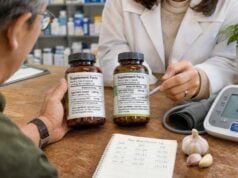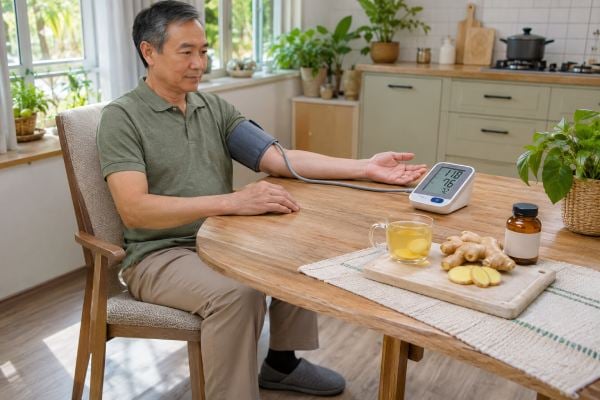
Ginger may lower blood pressure modestly, but the evidence is still too limited to use it as a substitute for hypertension treatment. A 2026 systematic review of randomized trials found average reductions of about 5 mmHg in systolic pressure and 2 mmHg in diastolic pressure, with potentially larger effects in people who started with elevated blood pressure and in studies using at least 2,000 mg of ginger per day. However, the certainty of the evidence was rated low because studies were short and results varied. Ginger used as a food or tea is generally well tolerated, while concentrated supplements deserve more caution. They can cause heartburn, stomach discomfort, or diarrhea and may interact with medications, particularly anticoagulants such as warfarin. If you already take blood pressure medicine, diabetes treatment, or blood thinners, discuss regular high-dose ginger use with a clinician or pharmacist. Think of ginger as an optional adjunct, not a natural replacement for proven therapy.
Table of Contents
- What the Evidence Says
- How Ginger Might Lower Blood Pressure
- Ginger Food, Tea, and Supplements Are Not the Same
- Doses Studied for Blood Pressure
- Side Effects and Medication Interactions
- Who Should Avoid or Limit Ginger Supplements
- How to Use Ginger Safely in a Blood Pressure Plan
What the Evidence Says
The current evidence suggests that ginger supplementation can lower blood pressure by a small amount on average, but confidence in the exact effect is limited.
A 2026 systematic review and dose-response meta-analysis included 12 unique randomized controlled trials. Across the studies, ginger lowered systolic blood pressure by about 5 mmHg and diastolic pressure by about 2 mmHg compared with control treatments. Subgroup analyses suggested stronger effects in participants who started with elevated blood pressure and in trials using doses of at least 2,000 mg/day.
Those numbers sound meaningful, but they need context. The studies were heterogeneous: they differed in participant health, ginger formulation, dose, duration, and blood pressure methods. Many trials were short. The authors rated the certainty of the evidence as low, mainly because results were inconsistent across studies.
Earlier reviews reached a similar conclusion: ginger looked promising, but the evidence was not strong enough for definitive clinical dosing recommendations. A 2022 review of ginger and cardiovascular risk factors also described mixed findings across blood pressure, lipids, and inflammatory markers.
That makes ginger different from standard antihypertensive medications, which have large trials showing not only blood pressure lowering but also reductions in events such as stroke and heart failure. Ginger trials mostly measure the blood pressure number itself. They do not establish that ginger prevents cardiovascular events.
It is also important not to interpret the average reduction as a promise. An average change of 5 mmHg can reflect a mix of people who responded more, people who barely changed, and people whose pressure did not improve. Blood pressure itself is noisy: sleep, stress, pain, caffeine, exercise, cuff position, and the time of day can move a single reading. That is why a supplement should be judged by a series of properly taken home readings rather than by one unusually good number after a dose.
The strongest signal in the newer analysis came from people with elevated baseline pressure. That makes biological sense because someone starting at 150/90 has more room to improve than someone already near 115/70. It also means that a person with normal blood pressure should not take ginger simply to make a normal number even lower. The goal of prevention is healthy, stable pressure—not the lowest possible reading.
If you are looking for non-drug ways to improve your numbers, evidence-based habits that support lower blood pressure should form the foundation, with supplements considered optional.
How Ginger Might Lower Blood Pressure
Ginger contains bioactive compounds including gingerols and shogaols. Laboratory and animal research suggests these compounds may affect pathways involved in vascular tone, inflammation, and calcium signaling.
Proposed mechanisms include:
- promoting blood-vessel relaxation;
- influencing calcium channels in vascular smooth muscle;
- supporting nitric oxide signaling;
- reducing oxidative stress and inflammatory signaling;
- affecting enzymes involved in blood pressure regulation.
These mechanisms are plausible, but mechanism is not the same as clinical proof. A compound can relax blood vessels in a laboratory model without producing a reliable, safe, long-term blood pressure effect in real patients.
Ginger may also influence blood sugar and lipid markers in some studies. That could be useful in people with metabolic syndrome, but the evidence is inconsistent and should not be used to justify treating several conditions with one herb.
The most useful interpretation is therefore practical: ginger may have mild vasodilatory and metabolic effects that translate into a modest blood pressure change for some people. Whether you personally respond cannot be predicted from the mechanism alone.
Ginger Food, Tea, and Supplements Are Not the Same
Fresh ginger in a stir-fry, ginger tea, and a 2,000 mg supplement do not deliver the same dose or chemical profile.
Fresh or cooked ginger
Fresh ginger is a flavorful food ingredient. It can support heart-healthy eating indirectly by adding flavor without sodium, butter, or heavy sauces. Use it in vegetable dishes, fish, soups, bean dishes, marinades, and whole-grain meals.
Cooking changes some ginger compounds, but you do not need to optimize every preparation step for blood pressure. The overall meal matters more.
Ginger tea
Tea made from sliced fresh ginger or a tea bag usually provides a much smaller and less standardized dose than supplements used in clinical trials. It may be soothing and can replace sweetened beverages, which is helpful for cardiometabolic health, but it should not be expected to deliver a trial-level antihypertensive effect.
Be careful with bottled “ginger drinks.” Some contain more sugar than ginger and may not be a heart-healthy choice despite the name. Check the ingredients and added-sugar line rather than assuming that a drink is beneficial because ginger appears on the front label. Unsweetened ginger tea, sparkling water with fresh ginger, or water infused with ginger and citrus can give you the flavor without turning the beverage into a major source of sugar.
Culinary ginger can also be useful for a different reason: it helps food taste vivid when you are cutting back on salty sauces. A mixture of ginger, garlic, scallion, citrus, vinegar, herbs, and chili can replace part of the flavor normally supplied by soy sauce, bottled marinades, or salty seasoning packets. That indirect sodium reduction is likely to matter more for blood pressure than the tiny amount of ginger in a single meal.
Ginger supplements
Capsules, powders, and extracts can provide gram-level doses used in trials. They also increase the chance of gastrointestinal side effects and medication interactions. Products vary in gingerol and shogaol content, extraction method, and purity, so total milligrams are not a perfect measure of biological activity.
This difference is important when interpreting research. A study using 2 g/day of standardized ginger powder does not prove that a cup of ginger tea will lower blood pressure by the same amount.
Doses Studied for Blood Pressure
Clinical studies have used a range of ginger doses, often in the gram-per-day range. The 2026 meta-analysis found stronger blood pressure reductions in the subgroup of trials using 2,000 mg/day or more, but that does not establish 2,000 mg as a universal recommended dose.
An older meta-analysis found significant reductions mainly in studies using at least 3 g/day, but it included only six trials and showed substantial variability. The newer analysis includes more data, yet the certainty remains low.
Several cautions matter before translating these findings into a supplement routine:
- Dose is not standardized across products. Powder, extract, and concentrated formulations differ.
- Most trials are short. A dose tolerated for 8 weeks has not automatically been proven safe or effective for years.
- Participants differ. Effects may be larger in people with hypertension than in people with normal pressure.
- Background treatment differs. Some participants take medications; others do not.
- Higher dose is not automatically better. Side effects and interactions may rise as intake increases.
If you are considering a supplement specifically for blood pressure, do not choose the highest-dose bottle by default. Ask whether the product resembles the formulation used in research and whether it is compatible with your medication list.
A clinician may also prefer you focus first on changes with stronger evidence, such as reducing sodium. How much sodium affects blood pressure is usually more clinically important than finding an ideal ginger dose.
Side Effects and Medication Interactions
Ginger is commonly eaten as food and has been used safely in many supplement studies, but concentrated amounts can cause side effects.
The most common are:
- heartburn;
- abdominal discomfort;
- diarrhea;
- mouth or throat irritation;
- nausea in some people.
People with reflux may find that large amounts make symptoms worse. Taking ginger with food may improve tolerance for some users, but persistent symptoms are a reason to stop rather than “push through.”
Anticoagulants and bleeding risk
The most important interaction concern is anticoagulation. A 2025 evidence review of food and herbal interactions with oral anticoagulants concluded that ginger may potentiate warfarin effects, although the overall evidence base for many herb-drug interactions remains limited.
If you take warfarin, do not begin a high-dose ginger supplement without discussing it with the clinician managing your anticoagulation. A change in supplement intake could affect bleeding risk or INR control.
For direct oral anticoagulants such as apixaban, rivaroxaban, dabigatran, or edoxaban, high-quality interaction evidence is more limited. That uncertainty is a reason for caution, not proof of safety.
Watch for unexplained bruising, repeated nosebleeds, bleeding gums, blood in urine, black or tarry stools, vomiting blood, or bleeding that is difficult to stop. These symptoms need medical attention rather than an experiment with lowering the ginger dose. If you use warfarin and your intake of ginger supplements changes substantially, the clinician managing your INR may want to know because consistency matters for anticoagulation management.
Also discuss ginger supplements if you take aspirin, clopidogrel, or other medicines that affect bleeding. Before surgery, dental surgery, endoscopy, or another invasive procedure, tell the clinical team about every supplement you use. Do not decide on your own when to stop an anticoagulant or antiplatelet medication; those decisions balance bleeding risk against the danger of a clot.
Blood pressure medicines
If ginger lowers blood pressure and you are already taking antihypertensive drugs, the effects could add together. Most people will not develop severe hypotension from culinary ginger, but concentrated supplements warrant monitoring.
Symptoms of blood pressure that is too low can include dizziness, lightheadedness on standing, weakness, blurred vision, or fainting.
Diabetes medicines
Ginger may affect glucose markers. If you take insulin or medicines that can cause hypoglycemia, regular high-dose supplementation should be discussed with your diabetes clinician.
Do not assume an herb is interaction-free because it is sold without a prescription. Supplements can change pharmacologic effects even when the interaction is not fully characterized.
Who Should Avoid or Limit Ginger Supplements
Culinary ginger is appropriate for most people, but high-dose supplements are not a good self-treatment choice for everyone.
Talk with a clinician or pharmacist before using concentrated ginger if you:
- take warfarin or another anticoagulant;
- take aspirin, clopidogrel, or another antiplatelet drug;
- have a bleeding disorder;
- are preparing for surgery or an invasive procedure;
- take several antihypertensive medicines and sometimes have low blood pressure;
- use insulin or glucose-lowering medicine and are prone to low blood sugar;
- have severe reflux or gastrointestinal sensitivity;
- are pregnant or breastfeeding and plan to use supplement-level doses;
- take multiple herbs or supplements with possible cardiovascular effects.
Pregnancy deserves specific nuance. Ginger is commonly studied for nausea and may be appropriate in some pregnant people, but blood pressure problems in pregnancy—including gestational hypertension and preeclampsia—require obstetric care. Do not use a ginger supplement as a substitute for evaluation of high blood pressure during pregnancy.
Likewise, very high blood pressure is not a supplement problem. If readings are around 180/120 mmHg or higher, especially with chest pain, shortness of breath, severe headache, confusion, weakness, numbness, or vision changes, seek urgent medical assessment.
How to Use Ginger Safely in a Blood Pressure Plan
For most people, the lowest-risk approach is to use ginger as a food first. Fresh ginger can help build flavorful meals with less sodium and fewer processed sauces. That can support blood pressure even if the ginger itself has only a small direct effect.
If you want to test a supplement, use a structured approach:
- Confirm your baseline. Take home blood pressure readings for several days using a validated upper-arm cuff.
- Review your medication list. Include anticoagulants, antiplatelet drugs, diabetes medications, and all other supplements.
- Choose one product. Avoid multi-ingredient blends so you can tell what you are actually testing.
- Do not exceed research-like doses automatically. More is not guaranteed to work better.
- Track averages, not single readings. Blood pressure varies naturally from day to day.
- Stop for troublesome side effects. Heartburn, diarrhea, dizziness, or bleeding symptoms are not something to ignore.
- Review the result with your clinician. Do not independently lower or stop prescription medication.
A useful self-test should last long enough to smooth out normal day-to-day variation. For many people, that means measuring at consistent times for several weeks rather than taking ginger for two days and deciding it “works.” Sit quietly before measuring, use the correct cuff size, keep the arm supported at heart level, and record readings instead of relying on memory. If your clinician has given you a specific home-monitoring protocol, follow that instead.
Product quality deserves attention too. Choose a single-ingredient product from a manufacturer that provides clear dosing and quality information. Third-party testing can reduce—but not eliminate—the risk of contamination or inaccurate labeling. Avoid proprietary blends that hide the amount of ginger behind a combined milligram total. If the label does not make it possible to know what you are taking, it is a poor choice for a structured trial.
Keep the bigger priorities in view. A DASH-style diet, less sodium, regular exercise, healthy sleep, limited alcohol, weight management when appropriate, and prescribed medication have a stronger role in hypertension care.
You can also use ginger strategically in meals: combine grated ginger with garlic, lime, vinegar, chili, and a small amount of sesame or olive oil for a lower-sodium dressing; add it to lentils or vegetable soups; or brew unsweetened tea in place of soda.
The bottom line is that ginger is promising but not definitive. A modest blood pressure effect is plausible, and the latest trial synthesis supports that possibility, but the evidence is still low-certainty. Use ginger for flavor and enjoyment freely if you tolerate it. Treat concentrated supplements with the same respect you would give any biologically active product.
If your home readings remain above the target you and your clinician have set, do not keep increasing ginger while delaying treatment. Hypertension often needs more than one lever: sodium reduction, activity, weight management when appropriate, sleep and sleep-apnea care, limited alcohol, and medication when indicated. A supplement is useful only if it fits safely into that larger plan.
Likewise, if your readings improve while you are taking ginger, keep measuring rather than assuming the change is permanent. Blood pressure can fall because of weight loss, warmer weather, medication changes, better sleep, or improved measurement technique. Reviewing the pattern with a clinician helps separate a real treatment effect from normal variation and prevents unnecessary medication changes.
References
- Ginger Supplementation and Blood Pressure in Adults: A GRADE-Based Systematic Review and Dose-Response Meta-Analysis of Randomized Controlled Trials 2026 (Systematic Review)
- Ginger (Zingiber Officinale) Supplementation and Biomarkers of Cardiovascular Disease – A Systematic Review 2025 (Systematic Review)
- The efficacy of Zingiber officinale on dyslipidaemia, blood pressure, and inflammation as cardiovascular risk factors: A systematic review 2022 (Systematic Review)
- Pharmacokinetic and Pharmacodynamic Interactions between Food or Herbal Products and Oral Anticoagulants: Evidence Review, Practical Recommendations, and Knowledge Gaps 2025 (Review)
- Ginger: Usefulness and Safety | NCCIH 2025 (Official Fact Sheet)
- 2024 ESC Guidelines for the management of elevated blood pressure and hypertension 2024 (Guideline)
Disclaimer
This article is for general education and does not replace medical advice. Ginger supplements may interact with anticoagulants, antiplatelet medicines, blood pressure drugs, diabetes treatments, and other medications. Do not use ginger to replace prescribed hypertension treatment or to delay urgent evaluation of severely elevated blood pressure.