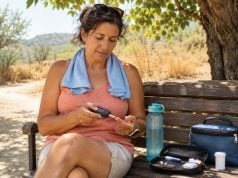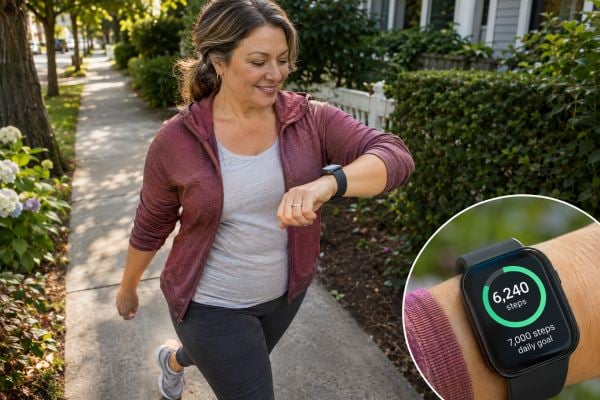
If you want to walk more for your blood sugar, start with the number of steps you already take on a typical day. Someone who averages 3,000 can work toward 3,500 or 4,000 and build from there. A daily average around 7,000 is a reasonable longer-term goal for many adults who can reach it comfortably. And if your main concern is how high your blood sugar goes after dinner, a 10-minute walk soon after eating gives you a specific place to start.
Walking helps because your working muscles pull glucose, or sugar, out of your blood for energy. You can get that effect during a single walk, while changes in longer-term measures such as A1C take weeks to months to assess. The best target depends on what you want to improve, how active you are now, and whether you take a medicine that can cause low blood sugar. Your daily total, the timing of your walks, and the pace you can comfortably maintain each tell you something different.
Table of Contents
- How many steps a day should you aim for?
- How many steps should you take after a meal?
- How pace and sitting breaks affect blood sugar
- How to build a walking routine from your current step count
- How to tell whether walking is helping your blood sugar
- How to walk safely if you have diabetes
How many steps a day should you aim for?
Start by adding about 500 to 1,000 steps to your usual daily average if that feels manageable. A smaller increase, even one extra trip down the hallway, can make sense if you have pain, limited mobility, or a very low starting count. Once the extra movement fits into your day, you can decide whether to add more.
For many adults, around 7,000 steps a day is a reasonable longer-term goal. A 2025 review pooled four observational studies that looked at step counts and new cases of type 2 diabetes. Compared with 2,000 steps a day, 7,000 was linked to a 14% lower relative risk of developing type 2 diabetes. That figure describes a difference between groups over time. It leaves room for other factors, such as differences in baseline health, and it cannot tell you how much your own glucose or risk will change if you add steps.
If you already average 5,000 steps, 6,000 may be a sensible next milestone. If you already get 7,000 or more, you might get more practical value from moving some of those steps to after a meal or adding regular brisk walks than from trying to hit a higher total. Ten thousand steps is optional. Diabetes guidelines for most adults emphasize weekly activity time and regular movement throughout the day.
| Current daily average | Possible first goal | One way to try it |
|---|---|---|
| 2,000 steps | About 2,500 steps | Add a short, easy walk on most days. |
| 3,500 steps | About 4,000–4,500 steps | Take a short walk after lunch or dinner. |
| 5,500 steps | About 6,000–6,500 steps | Add a second short walk or extend a route you already use. |
| 7,000 steps or more | Keep a comfortable average | Focus on meal timing, brisk walking minutes, or breaking up long periods of sitting. |
A step goal can support a plan for managing prediabetes by giving you a concrete habit to build. If you already have type 2 diabetes, judge the routine by how well it fits your treatment plan and what happens to the readings you and your care team are following. The research on who develops diabetes answers a different question from how much walking will change your A1C.
How many steps should you take after a meal?
Try walking for 10 minutes soon after finishing one meal. If your natural pace is 80 to 100 steps per minute, that works out to roughly 800 to 1,000 steps. Use the time as your target if you walk slowly or your device counts inconsistently. A five-minute walk is a reasonable place to begin if 10 minutes feels like too much. The goal is a comfortable walk you can repeat.
After a meal, carbohydrates are broken down into glucose and enter your bloodstream. As you walk, your leg muscles contract and can take up more of that glucose. This is one reason an after-meal walk can help with post-meal blood sugar rises even if you finish the day with the same step count you usually get.
In a small trial, 41 adults with type 2 diabetes tried two routines. In one, they were asked to walk for 30 minutes a day at a time of their choosing. In the other, they were asked to walk for 10 minutes after each of their three main meals. Each routine lasted two weeks. With the after-meal routine, the rise in glucose measured across the three hours after eating was 12% smaller overall and 22% smaller after dinner. These percentages describe the size of the rise over several hours, so they give you a sense of what changed without predicting your peak reading.
A separate review of eight small trials found that exercise after eating generally reduced the glucose rise more than exercising before the meal or staying inactive. The trials varied in timing and activity, and their design limits how precisely we can say when to start. In everyday terms, try going out soon after you finish eating, within about 30 minutes if that fits your schedule and you feel comfortable. If you prefer to wait until you feel less full, walk when you can. A walk earlier or later in the day still contributes to your weekly activity.
Choose the meal that makes the most sense for you. If dinner gives you the biggest rise, try dinner first. If the only walk you can count on is at lunch, use lunch. You can take the first few minutes at an easy pace and keep it there if that feels good. The simplest version of walking after meals might be a loop around your building, the grocery store, or your home. If you already walk the dog in the evening, moving that walk to just after dinner may be easier than adding another trip.
How pace and sitting breaks affect blood sugar
Use an easy pace after meals and build brisk minutes as you can
An easy walk gets your muscles working. A brisk walk also helps you build toward the weekly aerobic activity goal. At a moderate pace, you should be able to talk in full sentences, though singing would be difficult. That effort might come from walking on flat ground for one person and a slight hill for another. Use your breathing and how you feel to judge the effort.
The American Diabetes Association recommends that most adults with type 1 or type 2 diabetes work toward at least 150 minutes of moderate-to-vigorous aerobic activity a week, spread over at least three days, with no more than two consecutive days without activity. A simple example is 30 minutes of brisk walking on five days. Shorter walks can help you build up to that amount. The guidelines also recommend strength exercises two or three times a week on nonconsecutive days. If you like cycling, swimming, or strength training, count that work in your activity plan even when your step counter barely moves.
Two people can each log 6,000 steps and have quite different days. One might spend most of the day seated and take a brisk walk after work. The other might move lightly at regular intervals and take a short walk after lunch. The first gets a longer stretch of aerobic activity. The second uses movement to break up sitting and catch part of the after-lunch rise. If both fit your day, you can do both.
Break up long stretches of sitting
For people with diabetes, the American Diabetes Association recommends breaking up prolonged sitting at least every 30 minutes. A few minutes of easy movement is a practical way to do it. Walk to refill your water, take a lap around the office, or pace during part of a phone call. Research on sitting breaks shows that brief activity can reduce the blood sugar rise on the day you do it. The long-term impact of any one break schedule is harder to pin down.
If a half-hour reminder goes off in the middle of a meeting or a long drive, move at the next reasonable opportunity. At home, the end of a TV episode, a trip to the kitchen, or a call to a friend can be an easy cue. A handful of these short activity breaks can add movement across the day, even during weeks when it is hard to fit in a longer walk.
How to build a walking routine from your current step count
Track a normal week first. Use the same phone, watch, or pedometer and carry or wear it in the same way each day. Include both workdays and days off. Add the seven totals and divide by seven, or use your device’s weekly average. If your phone spends half the day on a desk, it will miss some of your walking. A day when you forgot your tracker is worth marking as incomplete before you set a goal.
Next, pick a time and route you can repeat. For example, if your daily average is 3,200 steps and your usual 10-minute route adds about 800, doing it five times a week adds about 570 steps a day to the weekly average, assuming the rest of your movement stays the same. That puts you near 3,800 without requiring the same total every day. If you prefer a time goal, write down the five walks and skip the arithmetic.
Give the routine a week or two before deciding whether to increase it. If it feels comfortable and fits your schedule, add five minutes to one walk, take it on another day, or add a second short walk. Change one thing at a time so you can tell how your feet, joints, energy, and glucose respond. If a longer route leaves your knees sore the next morning or makes you dread going out, the shorter route may work better for now.
A desk worker might begin with a 10-minute lunch walk and two-minute hallway breaks between calls. Someone who already spends a shift on their feet might keep the same step average and use an easy after-dinner walk to address a pattern of higher evening readings. If it is dark when you get home, try a well-lit indoor route or attach your walk to a daytime meal. The best time on paper matters less if you regularly have to skip it.
Use the weekly average to spot changes without getting stuck on a single day. A busy Tuesday with 2,000 steps and a relaxed Saturday with 6,000 can both fit into a plan. If low days always happen during your busiest shifts, try adding a short walk to a break you already take. If your goal leaves you pacing the house late at night just to make the watch happy, lower it to a number that fits your week.
If walking is difficult, track minutes of an activity you can do comfortably, such as seated movement, stationary cycling, or water exercise if appropriate for you. Some trackers also miss steps when you use a walker or keep your hands on a cart. Timing a familiar route may give you a steadier measure of progress in those situations.
How to tell whether walking is helping your blood sugar
First decide what you want to see change. A smaller rise after lunch, more stable glucose during an active workday, and a lower A1C are different outcomes. Your step count tells you how much you moved. Your readings, if you already monitor glucose, can help you see whether the routine is affecting the pattern you care about.
Compare similar meals over several days
If you already use a meter or a continuous glucose monitor, also called a CGM, compare a few similar meals with and without a short walk. Keep the meal size and medication routine as similar as practical. With a meter, follow the timing in your care plan, for example comparing a reading before eating with one about two hours after the first bite. With a CGM, look at the rise and fall across the next few hours. Record when you started walking and how long you went.
A single lower result can reflect the walk, a smaller serving, or a lower starting glucose. Sleep, stress, illness, and medication timing can also shift the result. If several similar lunches tend to produce a smaller rise on walking days, you have a better reason to keep that habit. If a CGM reading seems out of step with how you feel, follow your device instructions and care plan for checking with a fingerstick. CGM readings can lag when glucose is changing quickly.
If you do not already check glucose, you can use the walks you complete, your weekly minutes, and your usual lab follow-up to track progress. A routine that becomes easier to maintain is worth noting even before the next lab visit.
Give A1C time to reflect the routine
A1C reflects average blood sugar over roughly three months. An after-dinner walk can affect today’s readings, while your next A1C will reflect glucose during the rest of the day as well. If you have diabetes and recently changed your treatment plan or are above your individual goal, your care team may check A1C again in about three months.
Research on tracker-based activity programs shows why it helps to set realistic expectations. A 2024 review of trials in adults with type 2 diabetes found that participants in wearable-based programs took about 1,600 more steps per day on average than comparison groups, with no clear average improvement in A1C. The programs and participants varied. If your A1C stays the same despite regular walks, bring your after-meal or fasting patterns to your next visit. Those details can help guide a discussion about whether your activity plan, meals, or treatment needs adjusting.
How to walk safely if you have diabetes
If you use insulin or a sulfonylurea such as glipizide or glimepiride, walking can cause low blood sugar, also called hypoglycemia. The risk depends on your starting glucose, whether it is falling, how recently you took medicine or ate, and the length and effort of the walk. A new walk soon after a mealtime insulin dose may affect you differently from the same walk before dinner. Lows can also occur several hours after activity, so pay attention when you add a longer walk or move your usual walk to the evening.
Ask your diabetes care team what glucose range to start in, when to check before and after a walk, and what to do if your glucose is falling. Carry fast-acting carbohydrates such as glucose tablets. If you feel shaky, sweaty, weak, or confused, stop walking and check if you can. If your glucose is below 70 mg/dL, treat the low promptly according to your care plan. Repeated lows are a reason to ask your care team to review the timing of your activity and medication. If you take metformin alone, activity-related lows are much less common.
If you have type 1 diabetes or have been advised to check ketones, follow your high-glucose and ketone plan before exercising. Avoid exercise when glucose is high and ketones are elevated. If you have high glucose with vomiting, abdominal pain, or rapid, deep breathing, seek emergency care. Keep your plan accessible so you can refer to it before heading out.
Foot care also matters when you increase your steps. If you have reduced sensation in your feet, wear well-fitting shoes and check your feet daily for blisters, redness, and injuries you may have missed. If you find an open sore or have a foot injury, contact your care team and ask about activity that keeps weight off the affected foot while it heals. If new chest pressure, fainting, or severe shortness of breath occurs during a walk, stop and seek emergency care.
For your next walk, choose a route that feels manageable and a time you can repeat. If your biggest glucose rise tends to follow dinner, start with a short walk then. If you spend much of the day sitting, add a few brief movement breaks. Use your weekly average to decide whether more steps fit, and use your usual glucose checks or lab follow-up to see what the routine is doing for you.
References
- Daily steps and health outcomes in adults: a systematic review and dose-response meta-analysis 2025 (Systematic Review)
- 5. Facilitating Positive Health Behaviors and Well-being to Improve Health Outcomes: Standards of Care in Diabetes—2026 2026 (Guideline)
- Management of Type 2 Diabetes, 2026. A Consensus Report by the American Diabetes Association (ADA) and the European Association for the Study of Diabetes (EASD) 2026 (Consensus Report)
- After Dinner Rest a While, After Supper Walk a Mile? A Systematic Review with Meta-analysis on the Acute Postprandial Glycemic Response to Exercise Before and After Meal Ingestion in Healthy Subjects and Patients with Impaired Glucose Tolerance 2023 (Systematic Review)
- Advice to walk after meals is more effective for lowering postprandial glycaemia in type 2 diabetes mellitus than advice that does not specify timing: a randomised crossover study 2016 (RCT)
- Effectiveness of wearable technology‐based physical activity interventions for adults with type 2 diabetes mellitus: A systematic review and meta‐regression 2024 (Systematic Review)
Disclaimer
This article provides general health information. If you use medication that can cause low blood sugar or have diabetes-related foot problems, ask your care team how to adapt your walking routine and monitor your glucose safely.