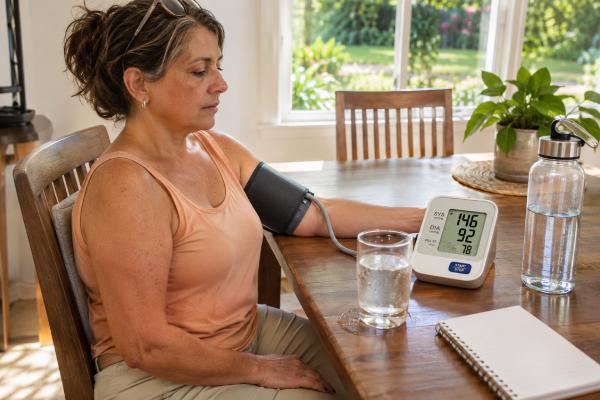
Yes, dehydration can sometimes be linked with a higher blood pressure reading, but the relationship is not simple. Losing body water reduces circulating blood volume, which can lower blood pressure and cause dizziness, especially when you stand. At the same time, your body activates systems that conserve water and maintain circulation, including the sympathetic nervous system, vasopressin, and the renin-angiotensin-aldosterone system. Those responses can tighten blood vessels and, in some situations, temporarily raise blood pressure. Even drinking water quickly can raise pressure for a short time in people with certain autonomic disorders. This is why one high reading on a hot day does not prove that dehydration caused hypertension—and drinking extra water is not a standard treatment for chronic high blood pressure. The practical goal is normal hydration, accurate blood pressure measurement, and attention to the situation around an unusual reading. If you have heart failure, kidney disease, or a prescribed fluid limit, hydration advice must be individualized rather than based on a generic water target.
Table of Contents
- Understand How Dehydration Changes Blood Pressure
- Recognize Dehydration Without Guessing From BP Alone
- Recheck a High Reading the Right Way
- Rehydrate Safely Without Overdoing Sodium
- Know Who Needs a Different Hydration Plan
- Prevent Heat- and Exercise-Related Dehydration
- Know When Blood Pressure Needs Urgent Care
Understand How Dehydration Changes Blood Pressure
Dehydration means your body has lost more water than it has taken in. That can happen through heavy sweating, fever, vomiting, diarrhea, increased urination, inadequate drinking, or a combination of these factors. Blood pressure can move in either direction because the body is trying to defend blood flow to the brain and other organs while fluid volume is changing.
The first effect of meaningful fluid loss is often lower circulating volume. With less blood returning to the heart, stroke volume—the amount of blood pumped with each beat—can fall. Your heart may beat faster, and you may feel lightheaded when you stand. This is one reason dehydration can contribute to low or orthostatic blood pressure.
At the same time, your body does not passively accept the volume loss. It activates several compensatory systems:
- The sympathetic nervous system can increase heart rate and tighten blood vessels.
- Vasopressin helps the kidneys conserve water and can influence vascular tone.
- The renin-angiotensin-aldosterone system promotes sodium and water retention and supports blood pressure.
- Thirst increases so you replace lost fluid.
These responses help preserve circulation, but they also explain why dehydration does not always produce a low cuff reading. Research on fluid regulation describes a “fluid loss-triggered” blood pressure response in which water conservation and vascular mechanisms can increase pressure under some conditions.
There is another wrinkle: water itself can briefly raise blood pressure. A systematic review of the “osmopressor response” found that rapidly drinking about 350–500 mL of water substantially increased blood pressure in people with orthostatic hypotension and produced much smaller increases in healthy participants. That does not mean water causes chronic hypertension. It shows that fluid intake can have an immediate nervous-system and circulation effect that depends on the person and the situation.
The best conclusion is not “dehydration raises blood pressure” or “dehydration lowers blood pressure.” It is that dehydration disturbs normal blood-volume control, and your measured pressure reflects both fluid loss and the body’s compensation. The direction can also change over time: early compensation may maintain or raise pressure, while more severe volume loss can eventually overwhelm those defenses and cause hypotension. That is one reason symptoms, fluid-loss history, and repeated resting measurements matter more than a single cuff value.
Recognize Dehydration Without Guessing From BP Alone
Blood pressure is a poor stand-alone dehydration test. A normal reading does not prove that you are well hydrated, and a high reading does not prove that you are dehydrated.
Common clues to mild or moderate dehydration include:
- Thirst or a dry mouth.
- Darker urine or urinating less often than usual.
- Headache.
- Fatigue or reduced exercise tolerance.
- Lightheadedness, especially when standing.
- Faster heart rate during activity that normally feels easier.
- Recent heavy sweating, fever, vomiting, diarrhea, or poor fluid intake.
Urine color can be a rough clue, but it is not a precise hydration meter. Vitamins, medications, foods, kidney function, and the time of day can change urine color. Likewise, thirst can become less reliable in some older adults.
A useful question is whether there is a credible reason for fluid loss. If you spent hours outdoors in heat, sweated heavily, barely drank, and then developed thirst and dizziness, dehydration is plausible. If you have had normal fluid intake and no unusual losses, a high blood pressure reading deserves evaluation on its own merits rather than being blamed on hydration.
Also look for factors that can raise blood pressure at the same time as dehydration. Heat exposure may be accompanied by caffeine, energy drinks, pain, poor sleep, stress, or nonsteroidal anti-inflammatory drugs. A hard workout can leave you mildly dehydrated while temporarily altering heart rate and circulation. Illness can affect blood pressure through fever, pain, inflammation, and medications as well as fluid loss.
If you frequently feel dizzy when standing, particularly while taking blood pressure medicine or a diuretic, tell your clinician. The issue may be medication timing, low blood volume, autonomic dysfunction, anemia, or another cause. An article on low blood pressure symptoms and causes can help distinguish common patterns, but recurrent symptoms still deserve medical review.
Recheck a High Reading the Right Way
When a blood pressure reading is unexpectedly high, improve the measurement before trying to fix the number. Poor technique can raise a reading enough to create unnecessary concern.
Use a validated upper-arm cuff that fits correctly. Sit quietly for at least five minutes with your back supported, both feet flat on the floor, and your arm supported at heart level. Keep the cuff on bare skin. Do not talk during the measurement. If possible, avoid caffeine, smoking, and exercise for 30 minutes beforehand and empty your bladder first.
Take two readings about one minute apart and record both. If you have been measuring repeatedly because the first number worried you, stop after a reasonable repeat rather than checking every few minutes. Anxiety itself can keep the reading elevated.
For a reliable home trend, measure under similar conditions at similar times. Detailed home blood pressure technique matters more than finding the “perfect” moment to measure.
If you suspect mild dehydration and you are otherwise well, drink a normal amount of fluid and give your body time to recover. Do not expect the blood pressure number to move in a predictable direction immediately. Because water ingestion itself can briefly increase blood pressure in some people, measuring five minutes after quickly drinking a large glass may not tell you whether dehydration was the cause.
Instead, compare readings after you have returned to your usual hydration, temperature, activity level, and medication routine. A pattern of elevated home blood pressure across several days is more important than one reading during heat exposure or illness.
If repeated readings are consistently at or above 130/80 mm Hg, discuss them with a healthcare professional. Current U.S. guidance classifies 130–139 systolic or 80–89 diastolic as stage 1 hypertension, although treatment decisions depend on overall cardiovascular risk and health history. If you already have hypertension, follow the monitoring and contact plan your clinician gave you.
Do not stop blood pressure medication because you think dehydration is “making the number weird.” Some medicines may need temporary adjustment during significant vomiting, diarrhea, or acute illness, but that decision should come from a clinician who knows your medications and kidney function.
Rehydrate Safely Without Overdoing Sodium
For ordinary mild dehydration from a warm day or routine activity, plain water and normal meals are often enough. You do not automatically need an electrolyte drink.
If fluid losses are larger—such as prolonged heavy sweating, repeated vomiting, or diarrhea—you lose electrolytes as well as water. In those situations, a properly formulated oral rehydration solution can be useful because glucose and sodium help the intestine absorb fluid. Sports drinks and electrolyte powders vary widely, however. Some contain substantial sodium or sugar, while others contain very little of the electrolytes needed for true medical rehydration.
For someone with high blood pressure, the label matters. A high-sodium drink consumed several times a day can work against a lower-sodium eating pattern. Check sodium per serving and the actual number of servings in the container. A guide to hidden sodium in electrolyte powders can help if you use these products regularly.
Potassium also deserves caution. Potassium-rich foods are useful in many heart-healthy diets, but concentrated potassium supplements or electrolyte products may be unsafe for people with kidney disease or those taking medications that raise potassium. More is not always better.
Avoid trying to “flush out” high blood pressure by forcing large amounts of water. Randomized-trial evidence on deliberately increasing daily water intake is limited and does not establish extra water as a treatment for hypertension. Excessive water intake can also dilute blood sodium, especially when large amounts are consumed rapidly or the kidneys cannot excrete water normally.
A practical hydration approach is to:
- Drink regularly according to thirst and expected fluid loss.
- Increase fluid during heat, fever, and prolonged activity as needed.
- Use meals and ordinary foods to replace electrolytes after modest sweating.
- Consider oral rehydration products for substantial gastrointestinal or sweat losses.
- Avoid turning electrolyte drinks into an everyday source of unnecessary sodium.
- Follow individualized fluid limits if you have been prescribed one.
There is no universal “eight glasses” rule that fits every adult. Body size, climate, activity, diet, pregnancy, medications, and medical conditions all change fluid needs, and foods contribute meaningful water too.
Know Who Needs a Different Hydration Plan
Generic advice to “drink more water” can be wrong for people with certain cardiovascular or kidney conditions.
Heart failure: Some people with heart failure retain sodium and water and may be given a fluid restriction. Drinking large amounts to chase a blood pressure reading can worsen swelling or shortness of breath. Follow the fluid and sodium plan from your heart-failure team.
Chronic kidney disease: The kidneys regulate water, sodium, and potassium. Advanced kidney disease can make both dehydration and fluid overload more dangerous. Potassium-containing drinks may also be inappropriate for some patients.
Diuretic use: Diuretics increase urine output and are commonly used for hypertension, heart failure, and edema. They can contribute to volume depletion, but skipping or changing a dose on your own can create other problems. If heat, vomiting, or diarrhea makes you unable to maintain normal intake, ask your clinician or pharmacist what to do with your medications.
Older age: Older adults may have a weaker thirst response, reduced kidney reserve, and more medications that affect blood pressure or fluid balance. Sudden confusion, falls, weakness, or dizziness during hot weather should not be dismissed as “just dehydration.”
Autonomic disorders and orthostatic hypotension: Water can have a useful short-term pressor effect in some people with orthostatic hypotension. But that is a specific treatment strategy, not evidence that everyone with high blood pressure should drink more. People with postural symptoms often need individualized advice about fluids, salt, compression, and medications.
Pregnancy: Blood pressure thresholds and urgent warning signs differ during pregnancy and the postpartum period. Severe headache, visual changes, upper abdominal pain, shortness of breath, or significant swelling with high blood pressure needs prompt obstetric evaluation.
If you have a fluid restriction, recurrent low sodium, kidney failure, advanced heart failure, or take medicines that strongly affect potassium, ask for a specific daily fluid plan rather than following broad internet targets.
Prevent Heat- and Exercise-Related Dehydration
Heat and exercise are common situations in which hydration and blood pressure get tangled together. During exercise, blood vessels in working muscles and skin dilate, sweating removes water and sodium, and heart rate rises to maintain cardiac output. After exercise, pressure may remain lower for hours in some people. If you become dehydrated at the same time, standing dizziness can be more noticeable.
Prevention works better than trying to correct a large fluid deficit afterward. Start long or hot exercise sessions normally hydrated. Bring fluid when access will be limited. During prolonged activity, drink enough to avoid excessive thirst and large body-mass losses, but do not force fluid far beyond thirst simply because you are sweating.
For short, easy exercise in moderate weather, water is usually sufficient. Longer sessions, very hot conditions, or heavy sweating can justify electrolytes and carbohydrate depending on the duration and intensity. People with hypertension should still account for sodium from sports products in their overall intake.
After activity, replace losses gradually. A normal meal supplies sodium, potassium, carbohydrate, and protein without requiring a specialty drink. If you weigh yourself for sports purposes, a large acute drop after exercise is mostly fluid, not fat.
Blood pressure measurement immediately after a workout is not comparable with a rested morning reading. If you are tracking hypertension, use your usual resting protocol rather than taking a post-exercise number and assuming it represents your baseline. A beginner-friendly walking plan for heart health can make activity more consistent while reducing the temptation to alternate between inactivity and overly hard sessions.
Hot weather adds another risk: heat illness. Confusion, fainting, inability to keep fluids down, severe weakness, very hot skin, or worsening symptoms despite cooling can require urgent medical care. Do not focus on the blood pressure cuff while someone may have heat stroke.
Know When Blood Pressure Needs Urgent Care
Hydration should never be used to explain away a potentially dangerous blood pressure reading.
If you are not pregnant and your blood pressure is higher than 180/120 mm Hg, wait at least one minute and measure again using proper technique. If the second reading remains that high and you have chest pain, shortness of breath, back pain, numbness, weakness, a change in vision, difficulty speaking, or another new concerning symptom, call emergency services. That combination can indicate a hypertensive emergency with acute organ damage. Do not drink water and wait to see whether the number improves.
If the repeat reading is still above 180/120 mm Hg but you have no concerning symptoms, contact your healthcare professional promptly. Current guidance generally treats severe hypertension without acute organ-damage symptoms differently from hypertensive emergency, but it still needs timely evaluation and treatment. The distinction is explained in more detail in high blood pressure symptoms and silent hypertension.
Seek urgent care for dehydration itself if you cannot keep fluids down, have fainting or severe confusion, produce very little urine, develop severe weakness, or have signs of shock. Significant fluid loss from vomiting or diarrhea can also disturb sodium and potassium, which may affect heart rhythm as well as blood pressure.
For less dramatic situations, focus on the trend. If your pressure repeatedly runs higher than usual after you have returned to normal hydration and recovered from illness or heat, do not keep attributing it to dehydration. Persistent high blood pressure is common, often causes no symptoms, and is worth treating because long-term exposure—not just occasional spikes—drives cardiovascular risk.
The most useful rule is simple: hydrate appropriately, measure correctly, and treat persistent or severe blood pressure as its own medical issue.
References
- Revisiting blood pressure and body fluid status. 2023 (Review)
- Hemodynamic Effects of the Osmopressor Response: A Systematic Review and Meta-Analysis 2023 (Systematic Review)
- Outcomes in Randomized Clinical Trials Testing Changes in Daily Water Intake: A Systematic Review 2024 (Systematic Review)
- Fluid and water balance: a scoping review for the Nordic Nutrition Recommendations 2023. 2023 (Review)
- Long-term health outcomes associated with hydration status. 2024 (Review)
- 2025 AHA/ACC/AANP/AAPA/ABC/ACCP/ACPM/AGS/AMA/ASPC/NMA/PCNA/SGIM Guideline for the Prevention, Detection, Evaluation and Management of High Blood Pressure in Adults: A Report of the American College of Cardiology/American Heart Association Joint Committee on Clinical Practice Guidelines 2025 (Guideline)
Disclaimer
This article is for general education and does not replace medical advice. Fluid needs can differ substantially with heart failure, kidney disease, pregnancy, medications, heat illness, and other conditions. Seek emergency care for very high blood pressure with concerning symptoms or for signs of severe dehydration.