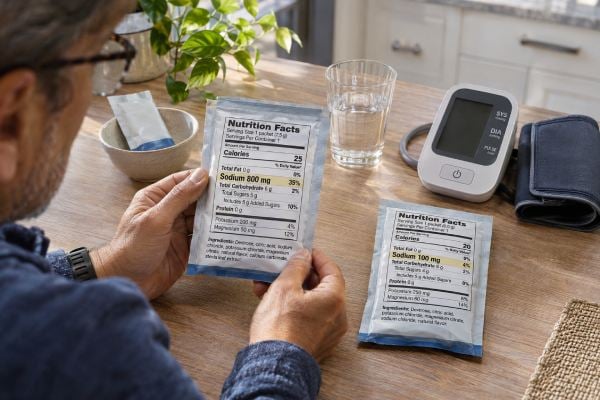
Electrolyte powders can hide a surprisingly large sodium dose in a product that looks like a wellness supplement. Some packets contain only 50–150 mg of sodium, while others deliver 500–1,000 mg or more per serving. That can be useful after prolonged exercise, heavy sweating, or significant fluid loss, but it can be counterproductive if you have high blood pressure and use the powder for routine desk-day hydration. The label deserves a closer look than the front-of-package claims. Sodium from citrate, chloride, bicarbonate, and other salts still counts toward your daily sodium intake. Potassium may support healthy blood pressure, but high-potassium formulas can be risky for people with kidney disease or those taking ACE inhibitors, ARBs, spironolactone, and other medicines that reduce potassium excretion. A smarter pick is not simply the powder with the most minerals. It is the one that matches your actual losses, keeps sodium appropriate for your blood-pressure goals, avoids unnecessary stimulants and sugar, and fits your medical conditions and medications.
Table of Contents
- Why Electrolyte Powders Can Raise Blood Pressure
- Where the Hidden Sodium Comes From
- How Much Sodium Is Reasonable?
- Potassium, Magnesium, and Other Minerals
- Who Needs Extra Caution
- How to Pick a Smarter Electrolyte Powder
- When an Electrolyte Powder Is Worth Using
Why Electrolyte Powders Can Raise Blood Pressure
Sodium is the main reason an electrolyte powder can affect blood pressure. It is also one of the main reasons the powder may work well for rehydration after large sweat losses. The same ingredient can be useful or unnecessary depending on the situation.
Sodium helps retain fluid in the circulation and supports nerve and muscle function. During prolonged exercise in heat, a person may lose a substantial amount of both water and sodium through sweat. Replacing some of that sodium can improve fluid retention and help prevent the consequences of under-replacement.
Outside that context, chronic high sodium intake tends to raise blood pressure. The 2025 U.S. high-blood-pressure guideline recommends sodium reduction as part of prevention and treatment. It identifies a goal below 2,300 mg per day and an ideal limit near 1,500 mg per day for greater blood-pressure reduction when feasible.
A single high-sodium packet can therefore take a large bite out of a day’s target. A powder with 800 mg of sodium provides more than half of a 1,500 mg target before breakfast, lunch, dinner, sauces, bread, cheese, restaurant food, or snacks are counted.
The effect is not identical in everyone. Some people are more salt-sensitive than others, and the blood-pressure response is usually larger in people who already have hypertension. But even if one serving does not cause a dramatic same-day spike, routinely adding sodium without a need can make long-term control harder.
For a broader view of dietary sodium, how sodium affects high blood pressure explains why total daily intake matters more than one food or drink.
Where the Hidden Sodium Comes From
Electrolyte powders often contain sodium in forms that do not look like “salt” at first glance. You may see ingredients such as:
- Sodium chloride
- Sodium citrate
- Sodium bicarbonate
- Sodium phosphate or disodium phosphate
- Sodium alginate or other sodium-containing additives
You do not need to calculate the sodium from each ingredient. The Nutrition Facts panel should list total sodium per serving, and that is the number to use.
The bigger trap is serving size. A box may advertise “only 300 mg sodium,” but the directions may call for two packets during exercise. Another powder may list one scoop as a serving while the scoop itself is easy to overfill. Some products are designed for 16 oz of water, others for 24 or 32 oz. If you make a stronger mixture because you prefer the taste, you are also increasing sodium concentration.
There is another form of hidden intake: frequency. One 400 mg packet may fit easily into a day. Three packets total 1,200 mg, which can become a problem for someone also eating a typical sodium-rich diet.
Flavored powders can also make people drink more sodium simply because they are pleasant to sip. A bottle kept at a desk all day may feel like “water,” even though it contains the sodium equivalent of a salty meal.
Be cautious with terms such as “rapid hydration,” “performance,” “recovery,” “mineral balance,” or “clean electrolytes.” None of those phrases tells you whether the sodium dose is appropriate for your blood pressure.
Powders also differ from ready-to-drink beverages because you control concentration. That flexibility can be helpful, but it creates more room for dosing errors. Mixing one packet into half the recommended water does not change the amount of sodium you swallow; it doubles the sodium concentration of the drink. Using two scoops because the flavor seems weak doubles every listed electrolyte.
Concentration matters for comfort as well as blood pressure. Very concentrated drinks can taste salty or overly sweet and may cause stomach upset during exercise. For endurance use, the goal is not simply to create the strongest possible mixture. It is to deliver enough fluid, carbohydrate when needed, and sodium at a concentration the gut tolerates.
Another practical issue is “stacking” products. Pre-workout powder may contain sodium and caffeine, an electrolyte packet adds more sodium and potassium, and a recovery shake may add another dose. Supplements are often evaluated one label at a time, but the body receives the total. Writing down all powders, capsules, drinks, and fortified foods used in a typical day can reveal a much larger electrolyte intake than expected.
How Much Sodium Is Reasonable?
The best sodium amount depends on why you are using the powder. There is no universally superior concentration.
| Powder sodium per serving | Best fit | Blood-pressure perspective |
|---|---|---|
| 0–150 mg | Casual hydration, light activity | Low sodium burden for most people |
| 150–350 mg | Moderate exercise or people wanting some electrolyte replacement | Usually manageable if the rest of the diet is lower in sodium |
| 350–600 mg | Longer exercise, heavier sweating | Meaningful sodium dose; use for a reason rather than habit |
| 600–1,000+ mg | High sweat losses, endurance events, specific rehydration needs | Large share of a hypertension-friendly daily target |
These ranges are a practical label-reading guide, not a medical dosing standard. Sweat sodium losses vary dramatically. Some athletes are very salty sweaters, while others lose much less sodium per liter of sweat. Heat, exercise duration, acclimatization, clothing, body size, and sweat rate all matter.
For light workouts, water and meals are usually enough. If you exercise for 45 minutes in an air-conditioned gym, there is little reason to automatically replace 1,000 mg of sodium afterward.
If you are training for endurance events and routinely finish with salt crust on clothing, lose several pounds of body mass during sessions, or struggle with repeated long workouts in heat, your needs may be different. A sports dietitian can help estimate fluid and sodium replacement rather than relying on a one-size-fits-all packet.
If your main goal is to lower blood pressure, the safer default is the lowest sodium dose that meets a real need. A practical low-sodium diet can help you see how beverage sodium fits into the rest of the day.
A simple label calculation can prevent mistakes. If one packet contains 700 mg of sodium and you use two packets in a large bottle, that bottle provides 1,400 mg. If you are aiming for 2,300 mg for the day, the drink alone uses about 61% of that limit; if you are aiming for 1,500 mg, it uses about 93%. The math is more useful than whether the brand calls the product “balanced” or “high performance.”
Also check whether the package reports sodium per scoop or per prepared serving. Some tubs suggest multiple scoops for endurance use. If you routinely use half a scoop, calculate half the listed sodium; if you use a heaping scoop, the actual dose will be less precise.
Blood pressure is affected by the total pattern over time. One high-sodium packet after a long summer run is different from 700 mg every morning plus restaurant meals, deli meat, sauces, and packaged snacks. When sodium intake is consistently high, the kidneys must excrete a larger sodium load day after day, and salt-sensitive people can retain more fluid and experience higher pressure.
Potassium, Magnesium, and Other Minerals
Electrolyte powders frequently market potassium and magnesium as reasons the product supports heart health. These minerals are important, but concentrated supplements are not automatically better than food.
Potassium
Potassium can help lower blood pressure by supporting sodium excretion and normal blood-vessel function. Randomized evidence shows larger blood-pressure reductions in many people with hypertension than in people with normal blood pressure.
For most adults, a food pattern rich in vegetables, fruits, legumes, dairy, and potatoes is the preferred way to increase potassium. These foods also provide fiber and other nutrients. See potassium and blood pressure for food-based strategies.
The safety issue is kidney function. If the kidneys cannot excrete potassium efficiently, blood potassium can rise to dangerous levels. Medicines such as ACE inhibitors, ARBs, spironolactone, eplerenone, amiloride, and triamterene can also increase potassium. A powder with several hundred milligrams per serving may be harmless for one person and inappropriate for another.
Magnesium
Magnesium is involved in muscle and nerve function and has been studied for blood-pressure effects. Some meta-analyses suggest modest reductions in systolic pressure with supplementation, but the effect is much smaller and less predictable than standard blood-pressure treatment.
High supplemental magnesium can cause diarrhea and abdominal cramping. People with significant kidney impairment can also accumulate magnesium. The amount in most electrolyte powders is modest, but stacking multiple supplements can change the total.
Calcium and other minerals
Some formulas add calcium, phosphorus, or trace minerals. These are rarely the main reason an electrolyte powder is needed. A product with a longer mineral list is not necessarily a better hydration product.
Who Needs Extra Caution
Some people should not choose electrolyte powders based only on flavor, reviews, or sports marketing.
People with hypertension
If blood pressure is not controlled, a daily high-sodium powder can work against treatment. Review the packet’s sodium alongside food intake and home blood-pressure readings.
People with chronic kidney disease
Kidney disease changes the safety profile of both sodium and potassium. Extra sodium can worsen fluid retention and hypertension; extra potassium can lead to hyperkalemia. A nephrologist or dietitian may give individualized limits.
People with heart failure or edema
Many people with heart failure are asked to manage sodium carefully. A high-sodium electrolyte powder can add both fluid and sodium at once. Do not assume it is needed because you feel thirsty or tired.
People taking blood-pressure medication
ACE inhibitors, ARBs, mineralocorticoid receptor antagonists, and potassium-sparing diuretics can raise potassium. Other diuretics may increase potassium loss. The safe product depends on the specific medication and your laboratory results.
People with a history of abnormal electrolytes
If you have previously had high or low sodium, potassium, or magnesium, avoid self-treating with large electrolyte doses without understanding why the abnormality occurred.
People who are pregnant or have complex medical conditions
Pregnancy, adrenal disease, endocrine disorders, eating disorders, and gastrointestinal illnesses can change fluid and electrolyte needs. A generic powder may not be the right solution.
How to Pick a Smarter Electrolyte Powder
Choose by numbers, not branding.
Start with sodium. If you want a flavored drink for ordinary hydration and have high blood pressure, look for a lower-sodium product. If you need sweat replacement after long exercise, a higher-sodium option may be appropriate.
Then review potassium. Moderate amounts are usually fine in people with normal kidney function. If you have kidney disease or take potassium-raising medication, confirm the product with a clinician or pharmacist.
Next, look at the rest of the label:
- Added sugar: useful during prolonged endurance exercise, but unnecessary for sitting, commuting, or short workouts.
- Caffeine: can acutely raise blood pressure in susceptible people. Some “energy hydration” powders contain enough caffeine to matter.
- Stimulant blends: guarana, yerba mate, green-tea extracts, and similar ingredients may add caffeine even when the front label emphasizes electrolytes.
- Serving instructions: know whether the nutrition facts apply to one scoop, one packet, or multiple servings.
- Third-party testing: useful for athletes who need reassurance about product purity, although it does not make the sodium dose more appropriate.
- Flavor intensity: if you need two packets to make the drink taste strong enough, evaluate the nutrition facts for two packets.
Do not pay extra simply because a product contains dozens of vitamins. Hydration depends mainly on fluid, sodium when needed, and appropriate carbohydrate in certain exercise or illness settings.
If caffeine is included, compare the dose with guidance in caffeine and blood pressure, especially if you already notice pressure spikes or palpitations.
You can also make the decision easier by separating flavor from electrolyte replacement. If you mainly want water to taste better, choose a low-sodium flavor packet, dilute a small amount of juice in water, add citrus or herbs, or use unsweetened sparkling water. A high-sodium sports formula is not necessary just because plain water feels boring.
When you do need more sodium, use the high-sodium product intentionally around the period of heavy sweating rather than carrying it through the entire day. This creates a better match between intake and loss and makes it easier to keep the rest of the day’s sodium under control.
For people with hypertension, that timing distinction can be more practical than trying to find one “perfect” powder for every situation. A low-sodium routine option and a separate higher-sodium endurance option may make more sense than using the endurance formula all the time.
When an Electrolyte Powder Is Worth Using
An electrolyte powder earns its place when it solves a real hydration problem more conveniently than food and water alone.
It can be useful during prolonged endurance exercise, long outdoor work in heat, repeated practices, or recovery from substantial sweat loss. Powder packets are lightweight, easy to carry, and allow you to mix a concentration that matches your water bottle.
For mild daily thirst, however, the powder is usually optional. Water hydrates effectively, and ordinary meals provide sodium, potassium, magnesium, and other minerals. If you enjoy flavored water, a low-sodium powder can be a reasonable choice, but it should be treated as a beverage preference rather than a medical necessity.
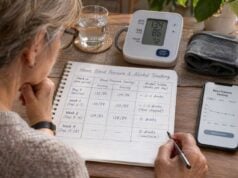
If you want to know whether a particular powder affects your blood pressure, use home measurements. Take readings under consistent conditions for several days, and avoid checking immediately after exercise, caffeine, a hot shower, or a stressful event. A consistent home blood-pressure schedule provides a better trend than isolated readings.
The simplest rule is: match the electrolyte dose to your losses, not to the strength of the marketing. A high-sodium powder can be exactly right for a long, sweaty endurance session and exactly wrong as an all-day drink for a sedentary person with hypertension. A lower-sodium option is often the smarter routine pick, while potassium-rich foods remain a safer default for improving dietary potassium in most people.
References
- 2025 AHA/ACC/AANP/AAPA/ABC/ACCP/ACPM/AGS/AMA/ASPC/NMA/PCNA/SGIM Guideline for the Prevention, Detection, Evaluation, and Management of High Blood Pressure in Adults: A Report of the American College of Cardiology/American Heart Association Joint Committee on Clinical Practice Guidelines 2025 (Guideline)
- Effect of changes in potassium intake on blood pressure: a dose-response meta-analysis of randomized clinical trials (2000-2024) 2025 (Meta-Analysis)
- Compositional Aspects of Beverages Designed to Promote Hydration Before, During, and After Exercise: Concepts Revisited 2023 (Review)
- Post-Exercise Rehydration in Athletes: Effects of Sodium and Carbohydrate in Commercial Hydration Beverages 2023 (RCT)
- Effect of salt reduction interventions in lowering blood pressure: A comprehensive systematic review and meta-analysis of controlled clinical trials 2022 (Systematic Review)
- Magnesium and Potassium Supplementation for Systolic Blood Pressure Reduction in the General Normotensive Population: A Systematic Review and Subgroup Meta-Analysis for Optimal Dosage and Treatment Length 2024 (Systematic Review)
Disclaimer
This article provides general education and is not a substitute for medical advice. If you have chronic kidney disease, heart failure, uncontrolled hypertension, abnormal potassium levels, or take medicines that affect potassium, ask your clinician or pharmacist before regularly using high-sodium or high-potassium electrolyte powders.