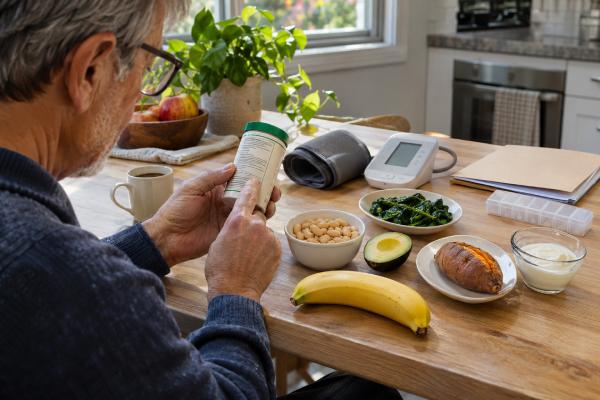
Potassium can help lower blood pressure, especially in people with hypertension, high sodium intake, or a diet low in potassium-rich foods. It works partly by helping the kidneys excrete more sodium and by supporting normal blood-vessel relaxation. Current blood-pressure guidance favors getting potassium primarily from foods such as vegetables, fruit, beans, lentils, potatoes, dairy, soy foods, nuts, and fish rather than relying on supplements.
More is not always better. Healthy kidneys usually handle a high-potassium diet well, but chronic kidney disease, heart failure, adrenal disorders, and several common medications can cause potassium to build up in the blood. That can become dangerous because potassium helps control the heart’s electrical activity. The safest approach is food-first for people with normal kidney function, individualized advice for anyone at risk of hyperkalemia, and no high-dose supplementation without a clear medical reason. Potassium works best as part of a lower-sodium, high-quality eating pattern rather than as a single nutrient used to “cancel out” salty foods.
Table of Contents
- How Potassium Affects Blood Pressure
- How Much Potassium Can Lower Blood Pressure
- Best Food Sources of Potassium
- How Much Potassium Do You Need?
- Potassium Supplements and Salt Substitutes
- Kidney Disease, Medications, and Hyperkalemia
- How to Use Potassium Safely for Blood Pressure
How Potassium Affects Blood Pressure
Potassium is an essential mineral and electrolyte. Most of it lives inside cells, where it helps maintain fluid balance, nerve transmission, muscle contraction, and the electrical gradients that allow the heart and other muscles to work normally.
Its relationship with sodium is especially important for blood pressure. Sodium tends to hold water in the extracellular space and can raise blood pressure when intake is high, particularly in salt-sensitive people. Potassium supports the kidneys in excreting sodium and also influences smooth muscle in blood-vessel walls. Higher potassium intake can therefore reduce vascular resistance and circulating volume in ways that favor lower pressure.
This is why the sodium-to-potassium balance matters. A diet built around highly processed foods often delivers a lot of sodium and relatively little potassium. A diet rich in vegetables, fruit, legumes, potatoes, dairy, nuts, and minimally processed protein usually does the opposite.
Potassium does not literally neutralize sodium molecule for molecule. Eating a banana after a salty takeout meal does not erase the sodium load. The more effective strategy is to reduce excess sodium while increasing potassium-rich foods at the same time. For many people, those two changes happen naturally when packaged and restaurant foods are replaced with home-prepared whole foods.
A DASH eating pattern is the best-known example. It raises potassium, magnesium, calcium, and fiber while lowering many common sources of sodium and saturated fat. Its blood-pressure benefit cannot be credited to potassium alone, but potassium is one important part of the pattern.
How Much Potassium Can Lower Blood Pressure
Randomized trials consistently show that increasing potassium can reduce blood pressure, with the largest benefit in people who already have hypertension. A 2025 dose-response meta-analysis found that higher potassium exposure was associated with a much larger reduction in systolic and diastolic pressure among participants with hypertension than among those with normal pressure.
The 2025 U.S. high-blood-pressure guideline estimates that enhanced potassium intake can lower systolic pressure by several millimeters of mercury on average. The exact response depends on baseline blood pressure, sodium intake, kidney function, medication use, and how much potassium the person was eating before the change. Age, overall diet quality, and adherence to the change can influence the result as well.
A reduction of even 4 to 6 mmHg can be clinically meaningful, but averages are not promises. Some people will see a larger change, some a smaller one, and others little measurable difference. If someone already eats a high-potassium diet and has normal blood pressure, adding more potassium may do very little.
The relationship is also not “the more, the lower.” Older and newer dose-response analyses suggest that the benefit can flatten at higher intakes, and very high supplemental doses are not appropriate as a do-it-yourself strategy. This is especially important for people taking antihypertensive medication.
Potassium should therefore be viewed as a supportive blood-pressure tool, not a standalone treatment. If your blood pressure remains elevated despite dietary changes, you still need a full evaluation. Weight, sleep apnea, alcohol, physical inactivity, kidney disease, endocrine conditions, stress, and genetics can all contribute. A potassium-rich diet can improve one important lever, but it cannot diagnose the reason blood pressure is high or substitute for treatment when your overall cardiovascular risk calls for medication.
If you are tracking the effect of a diet change, use a consistent home routine rather than judging from occasional readings. Accurate home blood-pressure measurement is essential because poor cuff fit, talking, recent caffeine, exercise, or a full bladder can shift the number more than a modest nutrition intervention.
Best Food Sources of Potassium
Potassium is widely distributed in foods, so you do not need a special supplement to build a high-potassium diet. Bananas are useful, but they are only one option.
Strong sources include:
- Lentils, beans, and soybeans
- Potatoes and sweet potatoes
- Winter squash
- Leafy greens
- Tomatoes and tomato products without excess sodium
- Bananas, oranges, melon, kiwi, and dried fruits
- Avocados
- Milk and yogurt
- Salmon and other fish
- Nuts and seeds
Some practical examples from U.S. nutrient data are about 730 mg in 1 cup of cooked lentils, about 610 mg in a medium baked potato, about 420 mg in a medium banana, around 365 mg in a cup of low-fat milk, and roughly 325 mg in 3 ounces of cooked salmon. Portions and food varieties change the exact number.
For blood pressure, the whole food package matters. Beans deliver potassium plus fiber and plant protein. Potatoes provide potassium, vitamin C, and filling carbohydrate. Yogurt contributes calcium and protein. Vegetables add fiber and phytochemicals. These combinations are more useful than chasing milligrams from powders.
Preparation can either preserve or undermine the advantage. A plain baked potato is very different from heavily salted fries. Beans are excellent, but canned beans packed in salty liquid should be rinsed or replaced with no-salt-added versions when possible. Tomato sauce can be potassium-rich but also very high in sodium depending on the brand.
This is why potassium-rich foods for blood pressure should be chosen with sodium and portion size in mind, not ranked by potassium alone.
Build potassium across the day
Instead of trying to eat one huge high-potassium serving, distribute sources through meals. Oatmeal with milk and fruit at breakfast, lentils or beans at lunch, yogurt as a snack, and a potato or squash with vegetables at dinner can create a substantial total without any supplement.
A food-first pattern also helps lower sodium because it displaces packaged foods. That replacement effect may be just as important as the potassium itself.
Potassium-rich does not automatically mean blood-pressure friendly
A food can contain plenty of potassium and still be a poor choice for someone trying to lower blood pressure. Canned soups, instant meals, restaurant dishes, and some sports or electrolyte products may contain substantial potassium while also delivering a very large sodium load. The potassium does not make the sodium disappear.
When buying packaged foods, compare the whole label. A bean soup with 700 mg of potassium but 1,200 mg of sodium per serving may be less useful than a lower-sodium bean dish with slightly less potassium. The same principle applies to tomato sauces, frozen meals, and prepared potatoes.
Processing also matters because manufacturers can add potassium salts as preservatives or sodium replacements. Those additives may raise the potassium number on the label without making the food nutritionally equivalent to vegetables, beans, or fruit. For most people with healthy kidneys this is not inherently harmful, but it reinforces the point that potassium should be evaluated in the context of the entire food.
For an uncomplicated blood-pressure strategy, prioritize foods that are naturally potassium-rich and relatively low in sodium: plain potatoes, unsalted beans, lentils, fresh or frozen vegetables, fruit, yogurt, milk, unsalted nuts, and minimally processed fish. Season with herbs, citrus, vinegar, garlic, spices, or a small measured amount of salt rather than relying on heavily salted sauces and seasoning packets.
How Much Potassium Do You Need?
U.S. Adequate Intake values for healthy adults are 3,400 mg per day for men and 2,600 mg per day for women. These values are designed for nutritional adequacy, not as blood-pressure treatment targets.
The 2025 American blood-pressure guideline discusses 3,500 to 5,000 mg per day as a useful dietary potassium range for adults with elevated or high blood pressure when it is safe to do so. The emphasis is on a potassium-rich diet rather than high-dose self-supplementation.
You do not need to count every milligram. A better method is to look at the pattern:
- Are vegetables or fruit present at most meals?
- Do beans or lentils appear several times per week?
- Do you eat potatoes, squash, or other potassium-rich starchy vegetables?
- Do dairy or fortified alternatives fit your diet?
- Are most snacks whole foods rather than salty packaged products?
If the answer is mostly yes, potassium intake is likely much stronger than in a diet dominated by refined grains, processed meats, snack foods, and restaurant meals.
It is also important to distinguish dietary intake from blood potassium. You can have a normal serum potassium level while eating less potassium than recommended because the body tightly regulates the amount in the bloodstream. Conversely, a high serum potassium level does not necessarily mean someone simply “ate too many bananas.” Kidney function, medications, acidosis, insulin deficiency, and cell injury can all affect blood potassium.
If a routine blood test shows potassium outside the normal range, do not try to fix it by making a dramatic diet change on your own. A falsely elevated result can occur from blood-sample problems, while a true abnormal result may reflect medication, kidney function, dehydration, or another medical issue. Rechecking the value and identifying the cause is more important than immediately banning or adding specific foods.
For that reason, a serum potassium test is a safety marker, not a direct measurement of how much potassium your diet contains.
Potassium Supplements and Salt Substitutes
Most people trying to improve blood pressure do not need an over-the-counter potassium supplement. Many common supplements provide only around 99 mg per serving, which is small compared with the thousands of milligrams found in a full day of food.
Prescription potassium is different. It can provide much larger amounts and is commonly used when blood potassium is low because of certain diuretics, gastrointestinal losses, or other medical causes. Those doses should be guided by laboratory testing.
Potassium chloride salt substitutes occupy a middle ground. They replace some or all sodium chloride with potassium chloride, so they can lower sodium intake while raising potassium. Large trials and recent guideline reviews support blood-pressure benefits in appropriate adults.
The safety issue is concentration. Depending on the product, a teaspoon of potassium-based salt substitute can deliver hundreds to thousands of milligrams of potassium. That is very different from sprinkling herbs on food or eating an orange.
If you have normal kidney function and do not take potassium-raising medication, a partial potassium salt substitute may be reasonable. If you have chronic kidney disease or use medicines that reduce potassium excretion, it can be dangerous without clinician guidance. Potassium chloride salt-substitute safety deserves separate attention because the risk depends on your kidneys and medication list.
Electrolyte powders also need label scrutiny. Some contain little potassium; others contain substantial potassium plus sodium. They are not automatically helpful for blood pressure just because the word “electrolyte” appears on the package.
Kidney Disease, Medications, and Hyperkalemia
The biggest safety concern is hyperkalemia, meaning blood potassium is too high. Severe hyperkalemia can interfere with the electrical conduction system of the heart and trigger dangerous arrhythmias.
Healthy kidneys usually excrete extra potassium efficiently. Chronic kidney disease can reduce that ability, especially in more advanced stages or during acute illness. The 2024 KDIGO kidney guideline recommends an individualized approach rather than automatically placing every person with CKD on a highly restrictive potassium diet.
Medication is another major factor. Drugs that can raise potassium include:
- ACE inhibitors such as lisinopril
- ARBs such as losartan
- Mineralocorticoid receptor antagonists such as spironolactone and eplerenone
- Other potassium-sparing diuretics such as amiloride
- Some medicines used in kidney or heart conditions that affect potassium handling
Loop and thiazide diuretics can have the opposite effect and lower potassium. That is why “I take a blood-pressure medicine” is not enough information to decide whether you should increase or restrict potassium.
Hyperkalemia may cause weakness, tingling, palpitations, or paralysis, but it can also be symptom-free until the level is dangerously high. Do not use symptoms to decide whether your potassium is safe. Laboratory testing is what matters.
If you have CKD, heart failure, adrenal insufficiency, a history of hyperkalemia, or take several potassium-raising medicines, ask your clinician or renal dietitian before deliberately increasing potassium or using a salt substitute. A general high-potassium food list may not apply to you.
Modern kidney nutrition also recognizes that not all potassium sources behave identically. Potassium additives and concentrated salt substitutes may be more problematic than modest portions of fiber-rich plant foods in some people. The goal is individualized risk management, not unnecessary elimination of every fruit and vegetable.
How to Use Potassium Safely for Blood Pressure
For an adult with normal kidney function and no medication restriction, the safest strategy is simple: raise potassium by improving the overall diet.
- Add produce to each meal. Use fruit at breakfast, vegetables at lunch and dinner, and choose a variety rather than relying only on bananas.
- Eat legumes regularly. Lentils, chickpeas, and beans are among the most efficient potassium-plus-fiber foods.
- Keep potatoes in the diet if you enjoy them. Bake, roast, microwave, or boil them and avoid turning them into a sodium-heavy side dish.
- Choose lower-sodium packaged foods. Potassium works better when sodium falls too. Sodium and high blood pressure remain central to the same problem.
- Do not add a supplement just because your blood pressure is high. Food is the preferred route unless a clinician identifies a specific need.
- Check kidney and medication safety before using potassium salt. This is especially important with CKD, ACE inhibitors, ARBs, spironolactone, or previous hyperkalemia.
- Measure the outcome. If blood-pressure improvement is the goal, track average home readings over several weeks rather than relying on how you feel.
Potassium is useful because it is part of a larger shift toward minimally processed, nutrient-dense food. When it comes from vegetables, fruit, legumes, potatoes, dairy, nuts, and fish, it arrives with fiber, protein, calcium, magnesium, and other nutrients that also support cardiovascular health.
That is the main takeaway: for most people with hypertension and healthy kidneys, eating more potassium-rich whole foods is a sensible blood-pressure strategy. For people with impaired potassium handling, the same advice can be unsafe. The right amount is determined not only by the nutrient target, but also by kidney function, medicines, and blood-test results.
References
- 2025 AHA/ACC/AANP/AAPA/ABC/ACCP/ACPM/AGS/AMA/ASPC/NMA/PCNA/SGIM Guideline for the Prevention, Detection, Evaluation and Management of High Blood Pressure in Adults: A Report of the American College of Cardiology/American Heart Association Joint Committee on Clinical Practice Guidelines 2025 (Guideline)
- Effect of changes in potassium intake on blood pressure: a dose-response meta-analysis of randomized clinical trials (2000-2024) 2025 (Meta-Analysis)
- Magnesium and Potassium Supplementation for Systolic Blood Pressure Reduction in the General Normotensive Population: A Systematic Review and Subgroup Meta-Analysis for Optimal Dosage and Treatment Length 2024 (Systematic Review)
- KDIGO 2024 Clinical Practice Guideline for the Evaluation and Management of Chronic Kidney Disease 2024 (Guideline)
- Potassium – Health Professional Fact Sheet 2022 (Official Fact Sheet)
Disclaimer
This article provides general education and is not a substitute for personalized medical advice. If you have kidney disease, heart failure, a history of abnormal blood potassium, or take medicines that affect potassium levels, consult your healthcare professional before increasing potassium substantially, taking supplements, or using potassium-based salt substitutes.