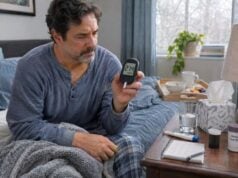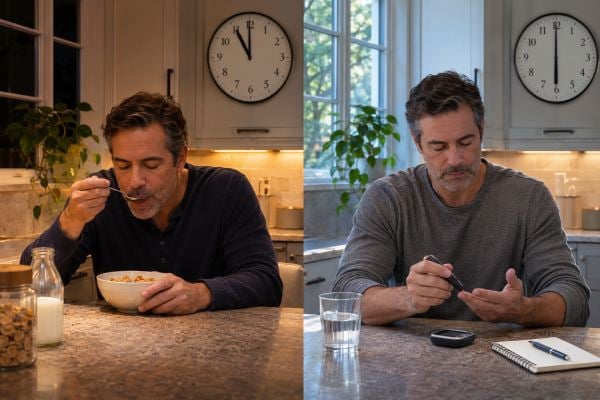
A bowl of cereal at 11 p.m. can change what your 6 a.m. glucose reading means. Seven hours have passed since you ate, which is shorter than the eight hours required for a fasting blood test. On another night, you might finish dinner early, go to bed with glucose in your usual range, and still wake up higher than expected. The two mornings can look alike on a meter even though your glucose followed a different path overnight.
When you’re trying to figure out whether a late snack matters, start with when you finished eating, what you ate, and when your glucose began to rise. A rise soon after food points toward one explanation; a rise that starts shortly before you wake points toward another. Bedtime snacks also serve different purposes. Eating because dinner left you hungry calls for a different decision than eating to prevent a low on insulin. A few comparable nights can help you see which pattern you’re dealing with.
Table of Contents
- Why a late snack can change morning glucose
- What research says about bedtime snacks
- How to read your overnight glucose pattern
- How to compare morning readings at home
- What to change if you often eat late
- When medication or overnight lows change the advice
- When to get a lab test or seek care
Why a late snack can change morning glucose
Your morning reading is the endpoint of a process that begins hours earlier. As food digests, glucose from it enters your bloodstream. Insulin helps your cells take up glucose and also signals your liver to release less of its own supply. Between meals, the liver keeps releasing glucose to keep you fueled. By the time you wake, your reading can reflect both the previous evening’s food and how well your body regulated glucose through the night.
A late snack shortens the time since your last calories
Suppose you check at 7 a.m. each day. If you finished eating at 8 p.m., 11 hours have passed. If you finished at midnight, only seven hours have passed. Both checks tell you what your glucose was when you woke up, but only the first meets the time requirement for a fasting check. For a scheduled fasting plasma glucose test, follow the lab’s instructions and have only plain water during the fast.
Count from when you finish the last food or drink with calories. Milk in tea counts, as do a sweetened nightcap and a few bites taken while packing tomorrow’s lunch. If you ate late the night before a scheduled fasting test, tell the lab when you last ate so staff can decide whether to proceed. If you treat low blood sugar overnight, record what you took and when. Treating the low takes priority over completing a fast.
Portion, meal composition, and your body clock matter
A large snack with cereal, milk, and a banana delivers more carbohydrate than a small handful of nuts. A sweet drink can raise glucose quickly, while a larger mixed meal containing fat and carbohydrate can produce a rise that lasts several hours. If you ate dinner late and snacked soon afterward, the two responses can overlap. A rise you see after the snack may have started with dinner.
Your internal body clock also influences how you handle glucose over the day. Eating close to your usual bedtime can change the response to a meal. The short-term effect is generally easier to see in the hours after eating than in a single reading the next morning. A late meal may raise glucose during the first part of the night, followed by a return to your usual range before you wake. That’s one reason to look at meal timing and blood sugar alongside portion size and snack ingredients.
What research says about bedtime snacks
If your goal is to lower high fasting glucose, research gives little support for adding a bedtime snack as a routine fix. A systematic review of 16 studies in people with type 2 diabetes or prediabetes found no consistent benefit for glucose control, especially in studies that compared a snack with skipping it. Portions, ingredients, and study lengths varied, and insulin users were sparsely represented. The evidence is better suited to judging a general bedtime-snack habit than to guiding an individual plan for preventing overnight lows.
The comparison matters. In one small study covered by the review, researchers tested an egg snack, a yogurt snack, and an evening without a bedtime snack. Neither snack improved fasting or overnight glucose compared with going without. A lower-carbohydrate snack can make sense when you’re hungry and choosing between two foods. That decision differs from adding food specifically to lower tomorrow’s reading.
In a study of adults with type 2 diabetes in the hospital, snacking between 9 p.m. and midnight without mealtime insulin was associated with a next-morning glucose reading about 35 mg/dL higher after accounting for bedtime glucose. The researchers analyzed snacking after the fact, and patients had the added influences of hospitalization and insulin treatment. The size of the difference applies to that setting and can’t predict what a snack will do at home.
Studies of late dinners answer a related question. In a small crossover trial, 13 healthy young women ate dinner either one hour or five hours before their usual bedtime. Dinner closer to bedtime disrupted sleep, and the researchers found no meaningful difference in how participants handled a glucose drink the following morning. A whole dinner, a small snack, and a morning glucose drink test each tell you something different. Overnight glucose can change even when a morning measure shows little difference.
Overall, there’s no established clock time after which everyone should stop eating. If you regularly eat near bedtime and wake above your usual range, moving an optional snack earlier is a reasonable change to compare with your usual routine, provided your medication or care plan allows it.
How to read your overnight glucose pattern
A morning glucose reading gives you the endpoint. A bedtime reading or a graph from a continuous glucose monitor, often called a CGM, can show when the change began. Look first for a rise after eating, a level that stayed high, a rise toward dawn, or evidence of a low. The patterns can overlap, especially after a large dinner, a snack, and a short night of sleep.
| What you see | What to look at next |
|---|---|
| Glucose rises after the snack and stays higher into the night. | Check the portion, total carbohydrate, and whether dinner was still affecting your glucose. |
| Glucose is already high before the snack. | Look at dinner, any earlier rise, illness, and how your diabetes medications were taken that evening. |
| Glucose is steady for much of the night, then rises before you wake. | Consider the dawn phenomenon and, if you use insulin, ask your care team about overnight coverage. |
| A low appears overnight and glucose is higher by morning. | Check whether the low was real and record what you took to treat it. Share recurring lows with your care team. |
| Glucose rises after you get up, before breakfast. | Compare readings taken at a consistent point after waking and before your morning routine starts. |
A rise near dawn can happen without a snack
The dawn phenomenon is an early-morning rise in glucose seen in people with diabetes, often between about 4 a.m. and 8 a.m. Hormones released toward morning can reduce the effect of insulin and contribute to more glucose entering the bloodstream from the liver. If your graph is fairly steady through the first part of the night and rises before breakfast, especially on evenings when you had no snack, the dawn phenomenon is one possibility.
If glucose was high at bedtime and remained high, the rise likely started earlier. A large dinner, illness, or insufficient overnight insulin coverage may help explain that pattern. You can also see both an evening rise and another increase around dawn. A clinician may suggest reviewing several nights of CGM data or taking a few overnight finger-stick readings if the cause is unclear.
An overnight low needs a closer look
A high morning number alone gives you little information about whether glucose dropped overnight. If a sensor trace shows a sudden, narrow dip while you were asleep, pressure from lying on the sensor can cause a falsely low reading. If a low alert wakes you and the number seems inconsistent with how you feel or with the rest of the graph, check with a finger-stick meter when possible and follow your device instructions and low-glucose plan.
Take symptoms and low alerts seriously, especially if you use insulin. Learning how to recognize compression lows and other CGM reading problems can make overnight graphs easier to interpret.
How to compare morning readings at home
If you already check glucose and can safely adjust an optional snack, compare a few similar evenings. For example, if you usually eat yogurt at 10:30 p.m., try the same portion at 8:30 p.m. on a few otherwise typical nights. That comparison helps you see what changes when you shift the timing alone. Moving it earlier and switching to nuts on the same night changes both the timing and the food, so you won’t know which mattered more.
- Start with your usual routine. Record a few ordinary evenings, including when you finished dinner, what you snacked on, and when you finished the snack. Include caloric drinks and note your bedtime and wake time.
- Make one change for several comparable evenings. Move the same snack earlier, or compare your usual snack with an evening without it if skipping is safe for you. Keep dinner and your wake time roughly similar. If you’re sick, traveling, working a different shift, or doing unusual exercise, mark those nights in your notes.
- Check at a consistent time. If your care plan calls for a waking check, take it before breakfast, coffee, or exercise. For a finger-stick, wash and dry your hands first. Use the same meter so changes in measurement method don’t complicate the comparison.
- Review the pattern across the nights. Look at the time since your last calories and, if available, your bedtime reading or CGM trace. Mark readings taken less than eight hours after calories as waking readings. If the numbers overlap or only one night is different, you have limited evidence that the snack timing mattered.
Record the amount of food in a way you can repeat. “Cereal” could mean a measured serving or a large bowl refilled once. “Yogurt” could mean plain Greek yogurt or a larger sweetened cup with granola. Household measures or a package serving are usually enough for this comparison. You can also note unusually short sleep, evening alcohol, or exercise. Each can affect how you interpret a reading.
Say your weekday glucose tends to be higher after a midnight snack, and your wake-up check is at 6:30 a.m. Moving the same snack to 9 p.m. makes the interval nine and a half hours instead of six and a half. If readings are lower after the move, the longer interval is part of what changed. If you use a CGM and the post-snack rise is similar in size but ends earlier, the graph gives you a plausible explanation for the lower waking numbers.
There’s no need to interrupt your sleep to collect extra readings on your own. If you repeatedly wake high or suspect overnight lows, a clinician can help you decide whether more monitoring would be useful. Your regular readings and a short record of when you ate can be enough to start that conversation.
What to change if you often eat late
If you eat late because you’re hungry, look at when and how much you ate earlier. A 5 p.m. dinner and a midnight bedtime leave seven hours in between. A planned snack earlier in the evening may fit that schedule. You could also make dinner more satisfying with a source of protein and a fiber-rich food you enjoy, such as beans, vegetables, or whole grains. The adjustment should leave you comfortably fed and fit your diabetes meal plan if you have one.
If you want to keep your evening dessert, try having the same portion with dinner or soon afterward. That gives you a practical way to change timing while keeping the food familiar. If dinner itself happens just before bed, consider eating part of it earlier when your schedule allows. For example, you could have part of a packed meal during a work break and finish the rest at home. For shift workers, record meals in relation to your sleep and wake times so you can compare similar shifts.
When you want a snack before bed, choose a portion that matches your hunger. Plain Greek yogurt with berries, an apple with peanut butter, or a few whole-grain crackers with cheese are examples of snacks that combine carbohydrate with protein or fat. A small handful of nuts or an egg usually contains less carbohydrate than a bowl of cereal. These options can help you make a deliberate choice, though how much you eat and how your glucose responds still matter.
Check drinks as well. A flavored latte, sweetened tea, or hot chocolate can add carbohydrate that’s easy to overlook when you remember only what you ate. Alcohol can affect overnight glucose in more than one direction. A sweet mixer can raise it early, while alcohol can increase the chance of a later low, especially in people taking insulin or other medications that can cause lows.
Having a bedtime snack occasionally is compatible with managing glucose. If an earlier snack consistently fits your hunger and gives you readings closer to your usual range, that’s a useful result. If the timing change makes little difference, share the pattern at your next visit if morning readings remain above your goal.
When medication or overnight lows change the advice
If you use insulin, a sulfonylurea such as glipizide or glimepiride, or another medicine that can cause hypoglycemia, ask your diabetes care team before dropping or moving a snack that’s part of your treatment plan. Medication action, a meal you ate less of than expected, unusually strenuous exercise, and alcohol can all affect overnight risk. Your care team may want to review your medication timing, CGM alerts, or what to do after late activity.
A planned snack to prevent a low serves a different purpose from treating a low that’s already happening. If you have diabetes, a glucose reading below 70 mg/dL calls for prompt treatment according to your plan. For most adults who can swallow safely, a common approach is to take 15 grams of fast-acting carbohydrate, such as glucose tablets, and recheck after 15 minutes. If glucose is still below 70 mg/dL, repeat the treatment. Some people, including those who use automated insulin delivery, may have different instructions. Foods high in fat, such as chocolate or nuts, work too slowly for initial treatment.
If someone is unable to swallow safely, has a seizure, or is unconscious, call emergency services and give glucagon if available and you know how to use it. Keep food and drink out of their mouth. Tell your care team promptly about repeated overnight lows or any episode that required someone else’s help. A record of the low, the treatment, and the time can also explain why the morning number was higher.
During pregnancy, follow the testing schedule and glucose targets given by your prenatal team. If you have gestational diabetes and morning readings remain above your goal, ask that team how to handle evening food and fasting checks. The standard adult diagnostic ranges and general bedtime snack advice may not apply to your care plan.
When to get a lab test or seek care
An occasional higher reading after a late evening of eating gives you limited information. If morning readings keep coming back high after at least eight hours without calories, arrange a routine appointment and bring your log. If you already have diabetes, report a pattern above your personal target, especially if it persists on evenings when you finish eating earlier. Your clinician can review recent changes in medication, illness, sleep, or eating patterns and decide whether you need more testing or a treatment adjustment.
For nonpregnant adults, a laboratory fasting plasma glucose below 100 mg/dL is in the normal range. 100–125 mg/dL is in the prediabetes range, and 126 mg/dL or higher is in the diabetes range. A home meter or CGM can flag a pattern worth discussing. Diagnosis uses clinical tests, and a result in the diabetes range usually needs confirmation unless there’s clear evidence of high blood sugar. Your clinician may also order an A1C test, which gives a longer view of glucose over roughly the past two to three months and can be done without fasting.
If you have diabetes, your day-to-day treatment target serves a different purpose from a diagnostic cutoff. A common goal before meals for many nonpregnant adults with diabetes is 80–130 mg/dL, with adjustments for individual needs and the risk of lows. Use the target agreed on with your care team when deciding whether your morning pattern needs attention.
Seek prompt medical advice if high readings come with unusual thirst, frequent urination, or unexplained weight loss. Seek emergency care for vomiting with high glucose or ketones, trouble breathing, fruity-smelling breath, or confusion. If you use insulin and have a sick-day or ketone-testing plan, follow it. These signs need attention even if there’s an obvious reason you ate late the night before.
References
- Systematic literature review: should a bedtime snack be used to treat hyperglycemia in type 2 diabetes? 2022 (Systematic Review)
- Impact of Meal Insulin Bolus Timing and Bedtime Snacking on Continuous Glucose Monitoring-Derived Glycemic Metrics in Hospitalized Inpatients 2025
- Effects of later dinner timing on subsequent metabolic function and nocturnal sleep in healthy young women 2026 (RCT)
- 2. Diagnosis and Classification of Diabetes: Standards of Care in Diabetes-2026 2026 (Guideline)
- 6. Glycemic Goals, Hypoglycemia, and Hyperglycemic Crises: Standards of Care in Diabetes-2026 2026 (Guideline)
- The dawn phenomenon: What can you do? 2026
Disclaimer
This article provides general information about overnight glucose and home readings. If you take medication that can cause low blood sugar, have recurrent overnight lows, or are pregnant, ask your care team before changing your snack timing or fasting routine. Follow your prescribed plan for treating low blood sugar.