A low-glycemic diet is less about forbidden foods than about which carbohydrates you reach for most often and how much of them land on your plate. A bowl of lentil soup, for example, usually raises blood sugar more gradually than a meal built around white bread. The bread can still fit. You might have a slice alongside the soup, where it makes up a smaller share of the meal.
This way of eating can be useful if you have type 2 diabetes and certain breakfasts or lunches regularly send your blood sugar above your target. It can also give you a starting point if you have prediabetes and want more fiber without abandoning familiar foods. Some changes start with what you already buy: rolled oats can take the place of sweetened cereal, and beans can replace part of the rice in a bowl. Portion size, preparation, and the rest of the plate all shape how your blood sugar responds.
Table of Contents
- What a Low-Glycemic Diet Means
- What to Eat More Often
- What to Limit and What Can Still Fit
- How to Build Low-Glycemic Meals
- Who Benefits and What the Research Shows
- How to Get Started and Check Your Progress
What a Low-Glycemic Diet Means
The glycemic index (GI) ranks carbohydrate-containing foods by how much they raise blood sugar over about two hours in a standard test. Researchers compare equal amounts of digestible carbohydrate from the test food and a reference food, usually pure glucose. On the glucose scale, a GI of 55 or less is low, 56–69 is medium, and 70 or more is high.
Those numbers describe foods under test conditions. A GI of 70 does not mean your glucose will rise by 70 mg/dL. The score also says little about the food’s usual serving size. Foods with very little carbohydrate, such as plain fish, eggs, and oil, generally have no meaningful GI rating.
Why serving size matters
Glycemic load (GL) takes the amount of digestible carbohydrate in your serving into account. Multiply the food’s GI by the grams of digestible carbohydrate in the portion, then divide by 100. A food with a GI of 50 and 20 g of digestible carbohydrate per serving has a GL of 10. Eat two servings, and the estimated load doubles to 20, even though the GI stays at 50.
That difference matters in practice. You can have a modest blood sugar effect from a small serving of a higher-GI food and a larger effect from a generous serving of a lower-GI food. Watermelon, for example, can have a relatively high GI, while a modest serving contains relatively little carbohydrate. If you want to use the numbers when comparing portions, it helps to understand how glycemic index and glycemic load answer different questions.
Why the same food can behave differently
Variety, ripeness, processing, and cooking method can all change a food’s GI. A chart entry for one rice variety may tell you little about another. Grinding grain into fine flour breaks down its structure, so a loaf made from finely milled whole-wheat flour can still have a substantial blood sugar effect. The grain’s fiber and nutrients still matter, even when its GI is similar to that of another bread.
Mixed meals add another layer. Protein, fat, and fiber eaten alongside a carbohydrate can change the timing and size of the rise. A meal high in fat can delay the rise for several hours, which is especially relevant if you use mealtime insulin. Think of GI as a starting point for choosing a carbohydrate. Your portion, the complete meal, and your own glucose pattern give you more information about what works for you.
What to Eat More Often
Start with foods that bring fiber and other nutrients to meals you already enjoy. Beans, lentils, and chickpeas are especially practical because they supply both carbohydrate and protein. Many have a low GI, and canned versions are ready to use. Choose low-sodium or no-salt-added beans when available, or drain and rinse regular canned beans. Add chickpeas to a chopped salad, black beans to tacos, or lentils to a soup you already make.
Choose grains with more of their original structure. Barley, oat groats, steel-cut oats, and rolled oats are options to try in place of refined grains or some instant cereals. A coarse grain or a loaf with visible intact kernels is a reasonable starting point, though scores vary by product. For breakfast, cook plain oats and add berries, plain yogurt, or chopped nuts. When shopping for bread, look for the word “whole” in the ingredient list and compare fiber and total carbohydrate per slice, especially if slice sizes differ.
Keep whole fruit in the rotation. Apples, pears, oranges, and berries are practical choices. A whole orange gives you fiber and takes longer to eat than a glass of juice takes to drink. Dried fruit can fit too, but its smaller volume makes it easy to eat several servings at once. Pour some into a bowl or add a measured amount to oatmeal if you want to see how it fits your meal.
Use nonstarchy vegetables to round out the plate. Broccoli, cabbage, mushrooms, greens, tomatoes, peppers, and green beans add fiber and variety with relatively little carbohydrate. Frozen vegetables work well for quick meals, and pre-shredded cabbage or bagged greens can make lunch easier. Corn, peas, and potatoes are more substantial sources of starch, so count them as part of the meal’s carbohydrate portion when that matters for your goals.
Add protein and unsaturated fats. Plain yogurt, eggs, tofu, fish, or chicken can make a meal more satisfying. Nuts, seeds, avocado, and olive oil can add flavor and texture. If you like yogurt, compare plain and flavored versions at the same serving size. Plain dairy yogurt still contains lactose, its naturally occurring milk sugar, and you can add fruit for sweetness.
Increasing food sources of fiber is one way to improve the overall quality of your diet while trying lower-GI choices. The World Health Organization recommends that adults get at least 25 g of naturally occurring fiber per day from food. Increase gradually if you currently eat much less. Start with one food you tolerate well, such as oatmeal at breakfast or a few spoonfuls of beans at lunch. Different types and sources of fiber can suit different meals and digestive needs.
What to Limit and What Can Still Fit
Start with sugary drinks if you have them often. Regular soda, sweet tea, sports drinks, and sweetened coffee can supply a substantial amount of carbohydrate in one sitting. Large glasses of juice can do the same. Water, sparkling water, or unsweetened tea are everyday alternatives. If you usually order sweet coffee, a smaller size or fewer pumps of syrup gives you a way to change the drink without giving it up.
Next, look at meals where refined starch makes up most of the plate. A large bowl of puffed cereal, a big serving of sticky white rice, or a plate of instant mashed potatoes may raise glucose quickly, depending on the product and serving. Try serving some of the starch alongside beans, vegetables, and a protein, or swap part of it for barley or lentils. A smaller portion of a starch you enjoy can be easier to keep up than a whole new menu.
| If you often have | Try | What changes |
|---|---|---|
| Sweetened cereal with juice | Plain rolled oats with berries and yogurt | More fiber and less liquid sugar |
| A rice bowl filled mostly with rice | Some rice, black beans, peppers, and chicken or tofu | More fiber and protein, with less rice |
| A bakery muffin for breakfast | Whole-grain toast, an egg, and an orange | A more filling mix of protein, fiber, and carbohydrate |
| A large glass of juice with lunch | A piece of whole fruit and water | Fiber from the fruit and a smaller amount of easily consumed carbohydrate |
Rice, pasta, bread, potatoes, and sweets
Rice varies widely by type. If it’s a staple in your household, start with a smaller scoop and serve it with dal, vegetables, fish, or tofu. Brown rice offers more fiber than white rice, but the blood sugar effect of white and brown rice can overlap depending on the variety and serving. With pasta, a moderate serving cooked until just firm can fit well with tomato sauce, vegetables, and white beans. Bread can fit in a sandwich with a filling, or as a side to a meal with soup or salad.
For potatoes, pay attention to the preparation and the rest of the plate. A small boiled potato served with fish and green beans is a different meal from a large mound of instant mash. You can keep potatoes in the rotation and use the same portion check you would use for rice or bread.
Dessert can fit in a portion you enjoy. A cookie or some chocolate can have a lower GI than you might expect because fat can slow the early rise in glucose. Its GI tells you little about added sugar, saturated fat, or how much you’ll typically eat. Similarly, a “low GI” claim on a package still leaves you with the usual label questions. Check the listed serving size, total carbohydrate, fiber, and added sugar, then compare those figures with the portion you actually put in your bowl.
How to Build Low-Glycemic Meals
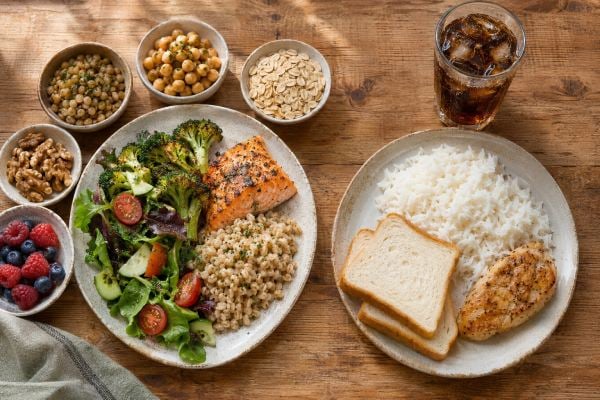
For a plated lunch or dinner, a simple guide is to fill half the plate with nonstarchy vegetables, one quarter with protein, and one quarter with a carbohydrate food. Try salmon, roasted broccoli, and barley, or tofu, sautéed greens, and rice. The proportions work with mixed dishes too. For chili, use beans and tomatoes generously, add peppers or a side salad, and decide how much cornbread or rice you want with it.
Beans count toward the carbohydrate in a meal and supply protein too. If dinner includes both beans and rice, consider the amount of both when you portion your plate or count carbs. Likewise, fruit, milk, and yogurt contain carbohydrate even when you serve them on the side. If you take mealtime insulin, continue using the carb-counting method your diabetes team has taught you.
A day of meals you can adapt
- Breakfast. Have plain rolled oats with raspberries, Greek yogurt, and walnuts. If you prefer a savory breakfast, try eggs with sautéed spinach and a slice of whole-grain toast.
- Lunch. Make a bowl with chickpeas, cucumber, tomatoes, greens, and a lemon and olive oil dressing. Add tuna or tofu if you’d like more protein, and serve with fruit or a small piece of whole-grain pita according to your appetite and carb needs.
- Dinner. Serve tofu or chicken with broccoli and peppers. Add a portion of barley, or keep your usual rice and replace some of it with edamame. For a different flavor, make black bean tacos with cabbage, salsa, and avocado.
- Snack, if you want one. Pair an apple with unsweetened peanut butter, have plain yogurt with berries, or dip vegetables in hummus. Choose an amount that suits your hunger and the timing of your next meal.
Adding protein or fat can change the glucose response, but a large serving of starch still supplies a large amount of carbohydrate. If your usual lunch sends you above your target, try changing one thing first. Keep your sandwich filling and replace the juice with water, or keep the juice serving the same and replace the chips with vegetables and hummus. That gives you a better chance of seeing which change mattered.
For restaurant meals, notice how many starches come with the order. If your meal includes tortillas, rice, and beans, you might keep the tortillas and beans and order a smaller side of rice. When cooking at home, keeping one or two staples ready makes these choices easier. A can of chickpeas can turn leftover vegetables into lunch, and cooked barley can go into a soup, grain bowl, or side salad.
Who Benefits and What the Research Shows
People with type 2 diabetes
This is the group with the clearest evidence of a benefit. Across trials, lower-GI or lower-GL eating patterns have produced modest improvements in A1C, a measure that reflects average blood sugar over roughly three months. In a pooled analysis of randomized trials, the average difference compared with higher-GI or higher-GL diets was about 0.3 percentage points. Most participants had type 2 diabetes. For scale, a change from 7.8% to 7.5% is a drop of 0.3 percentage points. Individual responses varied, and some studies found little difference.
The approach may be easiest to apply when there’s a specific meal you want to change. If breakfast is regularly followed by an above-target reading, you can adjust the drink, portion, or starch and compare the results. The research looks at overall eating patterns. It gives you limited guidance about what one swap will do to your A1C, especially if your medication, activity, or weight also changes.
People with prediabetes or looking to lose weight
If you have prediabetes, lower-GI swaps can help you put more beans, whole grains, vegetables, and fruit on the table. Evidence for the independent effect of lowering GI on preventing type 2 diabetes is less direct. Regular physical activity, a sustainable eating pattern, and weight management when appropriate remain important parts of a prevention plan.
For weight loss, a Cochrane review found that low-GI or low-GL diets may make little to no difference in body weight compared with higher-GI diets or other diets. A meal built around beans and vegetables may help you feel satisfied, which can make your preferred eating pattern easier to stick with. The GI score alone gives you little information about whether your overall intake will support weight loss.
People who need an individualized plan
If you have type 1 diabetes or take insulin or a sulfonylurea such as glipizide, check with your diabetes team before making major changes to carbohydrate portions or meal timing. A meal with fewer carbs than usual can increase the risk of low blood sugar if your medication plan stays the same. A slower-digesting meal can also shift when glucose rises, which matters when you take mealtime insulin. Keep your prescribed treatment for low blood sugar handy. Fast-acting glucose has a specific role in treating a low.
During pregnancy, especially with gestational diabetes, food choices need to fit pregnancy-specific glucose targets and nutrition needs. A diabetes clinician or registered dietitian can help you distribute carbohydrates across meals and snacks. Individual guidance can also help if you have kidney disease, a condition that slows stomach emptying, or a history of disordered eating. Some high-fiber foods or strict food rules may be a poor fit in those situations.
If you have normal blood sugar and no diagnosed glucose condition, you can get the nutritional benefits of these foods without tracking GI. Blood sugar normally rises after eating. There’s no established benefit to trying to flatten every rise in otherwise healthy people.
How to Get Started and Check Your Progress
Pick one meal you eat several times a week. If breakfast is usually sweet cereal and juice, start by replacing the juice with whole fruit and water. If dinner usually includes a large serving of rice, measure your usual scoop once so you know what you’re starting with, then try a smaller scoop with beans and vegetables. Eat enough to feel satisfied. If you’re hungry soon after the new meal, an extra serving of vegetables, some protein, or a larger portion of a fiber-rich carbohydrate may make it work better for you.
If glucose checks are part of your diabetes plan, compare readings on a few similar days. Record the portion, what else you ate, and unusual factors such as illness or a long walk. Check at the times your care team recommends. For many nonpregnant adults with diabetes, a common post-meal target is below 180 mg/dL one to two hours after the start of the meal. Your target may differ. Start the clock with your first bite so the timing is consistent.
If you already use a glucose monitor, look for repeated patterns. A single high reading could reflect a different pre-meal level, a larger portion, stress, or less movement than usual. If an early reading looks better after a high-fat meal, glucose may still rise later. Share recurring highs or lows with your care team, especially if you take medication that can cause low blood sugar. Home readings can guide a discussion about meals and care. A clinician uses appropriate lab tests to diagnose diabetes or prediabetes.
Give the changes enough time to judge whether they fit your routine. A meal reading can show what happened that day, while A1C reflects a longer period. If your clinician plans to recheck A1C after a change, about three months gives the test time to reflect the new pattern. In the meantime, pay attention to whether meals satisfy you, how your digestion responds to more fiber, and whether the ingredients fit your budget. A breakfast you can make on a busy morning or a dinner the whole household enjoys is a change you can repeat.
References
- 5. Facilitating Positive Health Behaviors and Well-being to Improve Health Outcomes: Standards of Care in Diabetes—2026 2026 (Guideline)
- 6. Glycemic Goals, Hypoglycemia, and Hyperglycemic Crises: Standards of Care in Diabetes—2026 2026 (Guideline)
- The role of low glycemic index and load diets in medical nutrition therapy for type 2 diabetes: an update 2024 (Review)
- Low glycaemic index or low glycaemic load diets for people with overweight or obesity 2023 (Systematic Review)
- Carbohydrate intake for adults and children: WHO guideline 2023 (Guideline)
Disclaimer
This article provides general nutrition information. If you use insulin or another medication that can cause low blood sugar, consult your diabetes care team before making major changes to your carbohydrate intake. Ask for individualized guidance if you are pregnant, have kidney disease, or have a prescribed meal plan.