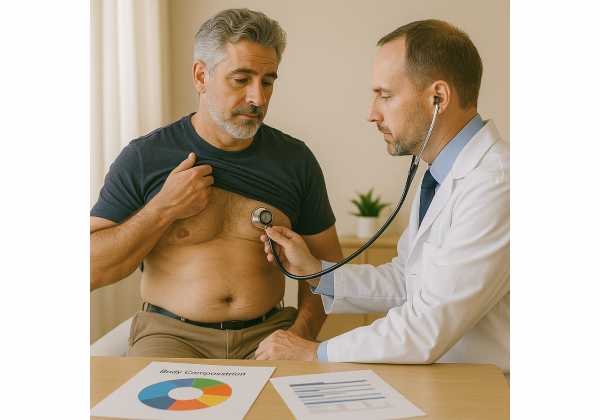
Andropause describes the age-related decline in testosterone that becomes clinically important when symptoms and low measured testosterone appear together. It is not a male version of menopause. Testosterone usually falls gradually, and metabolic health strongly shapes how much that decline affects energy, strength, waist size, sexual function, mood, sleep, and long-term disease risk.
Muscle, visceral fat, and insulin sit at the center of the problem. Loss of muscle lowers glucose disposal and resting metabolic demand. Visceral fat promotes inflammation, insulin resistance, and lower testosterone signaling. High insulin and excess abdominal fat then push the system further toward fatigue, low libido, weaker training response, fatty liver, higher triglycerides, and rising blood pressure.
The most useful approach starts with measuring the right things, rebuilding muscle, shrinking waist size, improving insulin sensitivity, and treating true testosterone deficiency when it is confirmed.
Table of Contents
- What Andropause Really Means
- Muscle Is the Metabolic Anchor
- Visceral Fat Lowers Testosterone and Raises Risk
- Insulin Resistance and Low Testosterone Feed Each Other
- Testing That Separates Aging from Treatable Problems
- The Lifestyle Plan That Changes the Hormone Environment
- Testosterone Therapy: Where It Fits and Where It Does Not
- Tracking Progress Without Chasing Perfect Numbers
What Andropause Really Means
Andropause means age-related testosterone decline with symptoms that affect daily life. The more precise medical term is late-onset hypogonadism, or testosterone deficiency in an adult man. A diagnosis requires two things at the same time: relevant symptoms and consistently low morning testosterone on reliable blood testing.
Testosterone supports sexual desire, erectile function, red blood cell production, bone density, muscle protein synthesis, mood, motivation, and fat distribution. It also interacts with insulin signaling and inflammation. A lower number on a lab report alone does not prove disease. A man with borderline testosterone, good strength, a stable waist, normal libido, and strong recovery from exercise needs a different conversation than a man with low testosterone, rising visceral fat, declining strength, poor sleep, and type 2 diabetes.
The decline is usually gradual. Total testosterone often drops about 1% per year after early to mid-adulthood, while free testosterone often falls faster because sex hormone-binding globulin, or SHBG, tends to rise with age. Free testosterone is the fraction more available to tissues. SHBG changes explain why two men with the same total testosterone number can feel different.
Symptoms that deserve attention include:
- Loss of morning erections or sexual desire
- Reduced muscle strength or training response
- Increased abdominal fat despite similar habits
- Persistent fatigue not explained by sleep loss or overwork
- Low mood, irritability, or reduced drive
- Lower bone density or low-trauma fracture
- Anemia without another clear cause
Several common problems mimic or worsen testosterone deficiency. Sleep apnea, heavy alcohol intake, opioid use, glucocorticoid medication, obesity, uncontrolled diabetes, under-eating, overtraining, depression, thyroid disease, and chronic inflammatory illness can all suppress the hormonal axis. In many men, the system is not permanently broken. It is downregulated by metabolic stress.
This distinction matters because muscle gain, fat loss, sleep repair, and insulin improvement can raise testosterone signaling and improve symptoms even before any hormone treatment enters the discussion. Men who want a broader metabolic baseline can pair hormone testing with A1c, fasting glucose, and fasting insulin to see whether the hormonal picture fits a larger insulin-resistance pattern.
Muscle Is the Metabolic Anchor
Muscle is the largest glucose-storage tissue in the body. After meals, healthy muscle pulls glucose from the blood and stores it as glycogen. Active muscle also improves insulin sensitivity for hours after training. When muscle mass and strength decline, the same meal creates a larger glucose and insulin demand.
This is why andropause becomes a metabolic issue, not only a hormone issue. Lower testosterone reduces the signal for muscle protein synthesis. Aging also brings anabolic resistance, meaning muscle responds less strongly to the same protein serving or training stimulus. Inactive men often lose strength faster than they lose weight, so the bathroom scale hides the problem. A man can stay the same weight while losing muscle and gaining visceral fat.
Strength training directly attacks this pattern. It gives muscle a reason to stay. It also improves glucose disposal even when weight loss is modest. A practical plan does not require bodybuilding routines. It requires progressive tension, enough protein, and recovery.
A strong weekly structure includes:
- Two to four resistance-training sessions per week
- Six to ten hard working sets per major movement pattern each week
- Reps mostly in the 5–12 range, with some higher-rep accessory work
- Effort near 1–3 reps in reserve on most working sets
- Progression through more reps, more load, better control, or more range of motion
- At least one full rest or light recovery day each week
The core patterns are squat, hinge, push, pull, carry, and brace. Examples include leg press or squat, Romanian deadlift or hip hinge, rows, chest press, pulldowns, farmer carries, and anti-rotation core work. Joint-friendly choices matter more than exercise purity. A man with knee arthritis can still train hard with box squats, sled pushes, step-ups, hip hinges, and machines.
Protein supports the training signal. Most midlife and older men aiming to build or preserve muscle do well with about 1.6–2.2 g protein per kg of target body weight per day, spread across three or four meals. A per-meal dose of 30–45 g high-quality protein often works better than saving most protein for dinner. Men who struggle to gain strength should review protein distribution for aging muscle before blaming hormones alone.
Muscle quality matters too. Strong muscle contains better capillary supply, healthier mitochondria, and more efficient glucose transporters. Resistance training builds the machinery; aerobic training improves the engine. Together, they raise metabolic flexibility—the ability to switch between fat and carbohydrate use as conditions change.
| Muscle change | Metabolic effect | Useful action |
|---|---|---|
| Lower muscle mass | Less glucose storage after meals | Progressive resistance training 2–4 days weekly |
| Lower strength | Lower daily energy output and mobility reserve | Train squat, hinge, push, pull, carry, and core patterns |
| Anabolic resistance | Weaker response to small protein servings | Use 30–45 g protein per meal with leucine-rich foods |
| Poor recovery | Higher cortisol, worse sleep, lower training consistency | Use deload weeks, sleep repair, and planned rest |
A useful rule is simple: treat strength as a lab value you create with behavior. If grip strength, leg strength, and walking power improve, insulin sensitivity usually moves in the right direction.
Visceral Fat Lowers Testosterone and Raises Risk
Visceral fat is the deep abdominal fat stored around organs. It is more metabolically active than subcutaneous fat under the skin. A growing waist signals higher risk even when body mass index looks acceptable.
Visceral fat disrupts testosterone in several ways. Fat tissue contains aromatase, an enzyme that converts testosterone into estradiol. Men need some estradiol for bone, libido, and vascular health, but excess abdominal fat can shift the hormonal environment. Visceral fat also releases inflammatory signals that interfere with insulin signaling and the hypothalamic-pituitary-testicular axis. In plain language, abdominal fat sends stress signals that tell the brain and testes to reduce reproductive hormone output.
The relationship runs both ways. Low testosterone favors fat gain, especially around the abdomen. Less muscle lowers energy expenditure. Lower energy and mood reduce training consistency. Sleep worsens. Insulin rises. The waist expands further.
Waist measures give better daily feedback than weight alone. Useful cutoffs include:
- Waist circumference above 40 inches, or 102 cm, in men as a common metabolic risk marker
- Waist-to-height ratio above 0.5 as a simple signal that abdominal fat is too high for height
- A rising waist despite stable weight as a warning sign for body recomposition in the wrong direction
A man who is 178 cm tall should generally aim for a waist below about 89 cm using the waist-to-height rule. This target is not about appearance. It is a proxy for lower visceral fat burden and better insulin sensitivity. For a more precise home method, waist-to-height ratio and waist circumference offer a simple way to track progress without expensive equipment.
Visceral fat also links to fatty liver. When liver fat rises, fasting insulin often rises before fasting glucose becomes abnormal. Triglycerides climb, HDL often falls, and ALT or GGT can drift upward. This pattern is common in men who say their weight “suddenly changed” in their 40s or 50s. The change usually reflects years of small shifts: less lifting, more sitting, poorer sleep, more alcohol, lower protein, and gradually rising insulin.
The most reliable way to reduce visceral fat is not extreme dieting. It is a sustained energy deficit with high protein, resistance training, enough steps, and sleep repair. A 5–10% loss of body weight can produce meaningful improvement in liver fat, fasting insulin, waist size, blood pressure, and testosterone levels in men with obesity-related secondary hypogonadism. Larger waist reductions often bring larger hormonal improvements.
Insulin Resistance and Low Testosterone Feed Each Other
Insulin resistance means the body needs more insulin to move glucose into tissues and control blood sugar. Early on, glucose can look normal because the pancreas compensates by producing more insulin. That compensation comes at a cost. High insulin favors fat storage, suppresses fat release between meals, increases hunger in some men, raises triglyceride production, and worsens blood pressure through kidney and nervous-system effects.
Low testosterone and insulin resistance reinforce each other. Men with insulin resistance often carry more visceral fat, show lower SHBG, and have lower measured total testosterone. Low testosterone then worsens muscle loss, fat gain, and fatigue. The cycle is especially strong in men with metabolic syndrome, type 2 diabetes, sleep apnea, and fatty liver.
This explains why fasting glucose alone misses many men in the early stage. A fasting glucose of 92 mg/dL can sit beside a fasting insulin of 18 µIU/mL, high triglycerides, low HDL, and a growing waist. That is not a clean metabolic picture. It is compensation.
Signs that insulin resistance is part of the andropause picture include:
- Waist gain out of proportion to total weight gain
- Sleepiness after high-carbohydrate meals
- High triglycerides or low HDL cholesterol
- Blood pressure rising in midlife
- Fatty liver markers or ultrasound findings
- Skin tags or darkened skin folds
- Fasting insulin above the optimal range used by many metabolic clinicians
- Elevated glucose after meals despite normal A1c
Men who want a deeper view than fasting labs often use HOMA-IR, OGTT, and mixed-meal testing to identify whether the main issue is fasting insulin, post-meal glucose handling, or both. Continuous glucose monitors add useful short-term feedback for meals, sleep, stress, and exercise timing, but glucose is only one side of the insulin story.
The fastest lifestyle lever is movement after meals. A 10–20 minute walk after lunch and dinner lowers post-meal glucose by sending glucose into working muscle through insulin-independent pathways. This does not replace training, but it gives men a low-friction habit that works immediately. For many men with desk jobs, post-meal walking and NEAT create more metabolic improvement than one heroic workout followed by ten sedentary hours.
Carbohydrate quality and timing also matter. Men with insulin resistance often respond well to placing most starch around activity, choosing beans, lentils, oats, potatoes, fruit, and intact grains over refined flour and sugar, and keeping dinner earlier and lighter when fasting glucose runs high. Very low-carb dieting can lower glucose quickly, but it should not come at the cost of inadequate fiber, poor training output, constipation, or unsustainable food rules.
Testing That Separates Aging from Treatable Problems
Good testing prevents two mistakes: dismissing real testosterone deficiency as “just aging,” and treating a normal adaptive response as a hormone-drug problem.
Testosterone should be measured in the morning, usually before 10 a.m., and repeated on a separate day when low. Acute illness, poor sleep, heavy alcohol intake, severe calorie restriction, and intense training the day before can distort results. Men using biotin supplements should ask the lab or clinician whether they need to pause biotin before hormone testing because it can interfere with some immunoassays.
A useful starting panel includes:
- Total testosterone, repeated if low
- Free testosterone, especially when SHBG is abnormal
- SHBG and albumin
- LH and FSH to distinguish primary testicular from secondary hormonal patterns
- Prolactin when secondary hypogonadism is suspected
- Estradiol when symptoms or obesity suggest excess aromatization
- CBC to check hemoglobin and hematocrit
- PSA when age-appropriate before testosterone therapy
- A1c, fasting glucose, fasting insulin, lipids, ALT, AST, GGT, and creatinine
- TSH and free T4 when fatigue, weight change, or cold intolerance are present
LH and FSH help identify where the signal is failing. High LH and FSH with low testosterone suggest the testes are not responding well. Low or normal LH and FSH with low testosterone suggest secondary hypogonadism, where the brain signal is reduced. Obesity, sleep apnea, under-eating, opioids, illness, and some medications often create this secondary pattern.
Do not interpret testosterone without SHBG. Obesity and insulin resistance often lower SHBG, which lowers total testosterone even when free testosterone is less affected. Aging, liver disease, some thyroid patterns, and certain medications can raise SHBG, making total testosterone look acceptable while free testosterone is low.
Body composition testing adds context. DEXA can show lean mass, fat mass, and regional fat distribution. Bioelectrical impedance is less precise but useful when measured under consistent conditions. Tape measurements remain highly practical. Men who want a clearer comparison of methods can use DEXA, BIA, and tape measurements to choose a tracking approach.
| Question | Useful tests | Why it matters |
|---|---|---|
| Is testosterone truly low? | Two morning total testosterone tests, free testosterone, SHBG | Confirms whether symptoms match repeated biochemical deficiency |
| Where is the hormone signal reduced? | LH, FSH, prolactin | Separates primary testicular patterns from secondary suppression |
| Is insulin resistance driving the pattern? | A1c, fasting glucose, fasting insulin, triglycerides, HDL | Finds metabolic stress before diabetes is obvious |
| Is visceral fat affecting liver health? | ALT, AST, GGT, FIB-4, ultrasound when indicated | Connects waist gain to fatty liver risk |
| Is therapy safe to consider? | CBC, PSA, blood pressure, sleep apnea screening | Identifies risks that need treatment or monitoring |
Testing should lead to action. A man with low testosterone, a 110 cm waist, fasting insulin of 22 µIU/mL, triglycerides of 220 mg/dL, and snoring needs a metabolic and sleep plan as much as a hormone discussion.
The Lifestyle Plan That Changes the Hormone Environment
The best non-drug plan for andropause targets the signals that control muscle, visceral fat, insulin, sleep, and inflammation. It does not rely on one perfect diet or one exercise style. It builds repeatable pressure in the right direction.
Train for strength first
Resistance training is the foundation because it preserves the tissue that handles glucose and supports healthy aging. Start with two full-body sessions weekly if training has been inconsistent. Add a third or fourth session only when recovery, joints, and schedule support it.
A simple two-day template:
- Day 1: squat or leg press, row, chest press, Romanian deadlift, carry, core
- Day 2: deadlift variation or hip thrust, pulldown, split squat, overhead press, hamstring curl, core
Each session should include five to eight exercises and last 45–75 minutes. Most sets should feel challenging but controlled. Painful reps are not productive. Men returning after years away should spend the first 6–8 weeks rebuilding technique and tissue tolerance before chasing heavy loads.
Men focused on insulin sensitivity can pair strength work with strength training’s metabolic effects to understand why muscle contraction improves glucose handling beyond calorie burn.
Add Zone 2 and small glucose “sinks”
Zone 2 aerobic training means steady work that allows conversation in short sentences. It improves mitochondrial function, fat oxidation, and cardiovascular capacity. A practical dose is 120–180 minutes weekly, split across three to five sessions. Brisk walking uphill, cycling, rowing, swimming, and incline treadmill work all count.
Short movement snacks help on busy days. Ten bodyweight squats, a five-minute stair walk, or a brisk walk after meals creates repeated glucose disposal. These small bouts matter because insulin resistance is strongly affected by total sedentary time.
Eat for muscle gain and waist loss
Nutrition should create enough energy control to reduce visceral fat without starving muscle. Crash diets lower training quality, worsen sleep, and often reduce testosterone. A better target is slow fat loss: about 0.5–1.0% of body weight per week for men with significant fat to lose, and slower for leaner men.
Build most meals around:
- 30–45 g protein
- High-fiber plants such as vegetables, beans, lentils, berries, or oats
- A controlled starch portion matched to activity and glucose response
- Healthy fats from olive oil, nuts, seeds, avocado, eggs, dairy, or fish
- Minimal liquid calories and fewer ultra-processed snack foods
Alcohol deserves special attention. Regular evening alcohol worsens sleep quality, increases calories, raises triglycerides in susceptible men, and makes fat loss harder. Men with low testosterone symptoms often improve energy and morning erections after reducing alcohol to a few drinks weekly or stopping for a month.
Repair sleep and breathing
Sleep controls testosterone rhythm, appetite, glucose regulation, and recovery. Men with snoring, witnessed pauses in breathing, morning headaches, high blood pressure, reflux, or daytime sleepiness should screen for sleep apnea. Untreated sleep apnea can lower testosterone and make testosterone therapy riskier by worsening red blood cell elevation and cardiovascular strain.
Aim for a consistent sleep window, morning light, a cooler bedroom, and reduced late-night food and alcohol. Men whose symptoms overlap with hormone changes and poor sleep can benefit from reviewing andropause and sleep patterns rather than treating fatigue as a testosterone problem alone.
Testosterone Therapy: Where It Fits and Where It Does Not
Testosterone therapy fits best when symptoms are meaningful, morning testosterone is repeatedly low, reversible causes have been addressed, and a clinician confirms that benefits outweigh risks. It should not be used as a shortcut for normal aging, poor sleep, lack of training, or excess visceral fat without a proper evaluation.
Potential benefits in truly hypogonadal men include improved sexual desire, erectile function in some men, mood, anemia, bone density, lean mass, and waist measures. Metabolic improvements often look strongest when testosterone therapy is combined with resistance training, fat loss, and better insulin control. Hormone therapy cannot replace those basics because it does not teach muscle to contract, does not remove ultra-processed calories, and does not fix sleep apnea by itself.
Common formulations include gels, injections, patches, pellets, and oral testosterone undecanoate in some regions. Each has tradeoffs. Gels offer steady levels but require care to avoid skin transfer to partners or children. Injections are effective but can create peaks and troughs if dosing is too infrequent. Pellets last longer but require a procedure. The best choice depends on monitoring, cost, preference, fertility plans, and side effects.
Important cautions include:
- Testosterone therapy suppresses sperm production and can impair fertility.
- Hematocrit can rise, increasing the need for dose adjustment or treatment pause.
- Acne, oily skin, breast tenderness, fluid retention, and mood changes can occur.
- Prostate symptoms need baseline review and follow-up.
- Untreated severe sleep apnea should be addressed before therapy.
- Men with recent major cardiovascular events need individualized specialist input.
The cardiovascular safety picture has become more reassuring for appropriately diagnosed men under medical monitoring, especially after large randomized data in men with hypogonadism and elevated cardiovascular risk. That does not mean testosterone is risk-free or appropriate for men with normal levels. It means careful diagnosis, correct indication, and follow-up matter.
Monitoring usually includes symptoms, testosterone level timing matched to formulation, CBC, PSA when appropriate, blood pressure, lipids, and side-effect review. Men should also track waist, strength, sleep, and glucose markers. A higher testosterone number with a larger waist and worse blood pressure is not success.
Avoid non-prescribed testosterone, “testosterone boosters,” and underground anabolic steroids. Many over-the-counter boosters have weak evidence, hidden ingredients, or stimulant effects. Anabolic steroid use can shut down natural testosterone production, damage fertility, worsen lipids, raise blood pressure, and create mood and dependency problems.
Tracking Progress Without Chasing Perfect Numbers
Progress in andropause should be judged by function, waist, metabolic markers, and symptoms together. A single testosterone number never tells the whole story.
Useful 12-week targets include:
- Waist down by 2–6 cm if visceral fat is elevated
- Strength up in two to four major lifts
- Daily steps consistently above the previous baseline
- Post-meal walking after at least one meal most days
- Sleep duration and regularity improved
- Fasting insulin, triglycerides, or glucose trending down
- Libido, morning energy, or training drive improving
Retesting every few weeks creates noise. For lifestyle changes, 8–12 weeks is a better interval for labs, with waist and training logs reviewed weekly. For testosterone therapy, clinicians often check earlier based on formulation and safety monitoring needs.
Do not chase very low body fat. Men need enough energy availability for thyroid function, sleep, training, and reproductive hormones. A lean but underfed man with poor sleep, low libido, and flat workouts can suppress testosterone through stress physiology. Metabolic longevity favors a strong waist-to-height ratio, good blood pressure, healthy lipids, stable glucose, and enough muscle—not the lowest possible scale weight.
A practical dashboard can include:
| Metric | How often | Direction to look for |
|---|---|---|
| Waist circumference | Weekly | Down if elevated, stable if already lean |
| Strength log | Each session | More reps, load, control, or work capacity |
| Morning energy and libido | Weekly note | More stable, less dependent on caffeine |
| Fasting insulin and glucose | Every 8–12 weeks during change | Lower insulin demand with stable glucose |
| Triglycerides and HDL | Every 3–6 months | Lower triglycerides, improved ratio |
| Blood pressure | Several days per month | Closer to healthy home averages |
Men with metabolic syndrome should track waist, blood pressure, triglycerides, HDL, and glucose together because those markers often improve as a cluster. A structured metabolic syndrome action plan gives clearer priorities when several numbers are abnormal at once.
The best outcome is not simply “higher testosterone.” It is a stronger, leaner, more insulin-sensitive body with better sleep, better sexual health, better training capacity, and lower cardiometabolic risk. Testosterone belongs inside that bigger picture.
References
- Testosterone Therapy in Men With Hypogonadism: An Endocrine Society Clinical Practice Guideline 2018 (Guideline)
- Testosterone Deficiency Guideline 2024 (Guideline)
- Adult- and late-onset male hypogonadism: the clinical practice guidelines of the Italian Society of Andrology and Sexual Medicine (SIAMS) and the Italian Society of Endocrinology (SIE) 2022 (Guideline)
- Cardiovascular Safety of Testosterone-Replacement Therapy 2023 (RCT)
- Effects of Testosterone Replacement Therapy on Metabolic Syndrome Components: A Systematic Review and Meta-Analysis 2024 (Systematic Review)
- Management of male obesity-related secondary hypogonadism 2024 (Review)
Disclaimer
This article is educational and does not replace care from a qualified clinician. Men with symptoms of testosterone deficiency, diabetes, heart disease, prostate concerns, infertility goals, sleep apnea, or abnormal blood counts should seek individualized medical advice before starting treatment or making major changes.