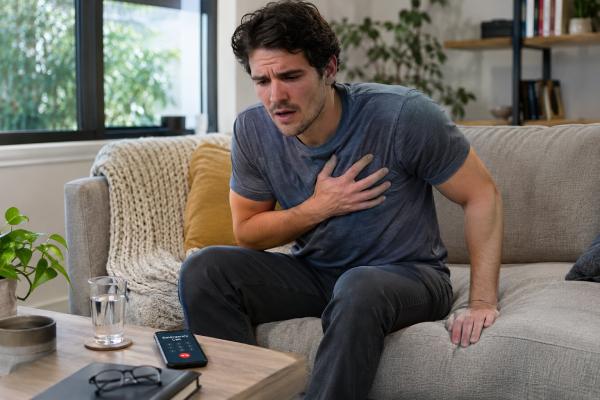
Myocarditis is inflammation and injury of the heart muscle. It can cause chest pain, shortness of breath, unusual fatigue, palpitations, fainting, or signs of heart failure, but the severity varies widely. Some people have mild disease that improves with rest and monitoring; others develop dangerous heart rhythms, a weak heart pump, or cardiogenic shock. Because myocarditis can look like a heart attack, pericarditis, a viral illness, anxiety, or another heart problem, symptoms alone cannot confirm it. New or unexplained chest pain—especially with shortness of breath, fainting, sweating, a fast or irregular heartbeat, or worsening symptoms—needs prompt medical assessment. Diagnosis commonly involves an electrocardiogram, blood tests including troponin, an echocardiogram, and often cardiac magnetic resonance imaging. Treatment depends on the cause and severity, and people with suspected or confirmed myocarditis should avoid strenuous exercise until a clinician determines that the inflammation and cardiac risk have resolved.
Table of Contents
- What Myocarditis Can Feel Like
- Chest Pain, Shortness of Breath, and Other Symptoms
- When Myocarditis Symptoms Are an Emergency
- What Causes Myocarditis
- How Myocarditis Is Diagnosed
- Treatment, Recovery, and Exercise
- Prognosis, Follow-Up, and Questions to Ask
What Myocarditis Can Feel Like
Myocarditis does not have one signature symptom. The inflammation can affect how the heart muscle contracts, irritate the heart’s electrical system, or occur together with inflammation of the sac around the heart, called the pericardium. That creates several different clinical patterns.
The classic presentations are:
- Chest pain, sometimes similar to a heart attack or pericarditis.
- Heart-failure symptoms, such as shortness of breath, reduced exercise tolerance, swelling, or needing extra pillows to breathe comfortably at night.
- Electrical symptoms, including palpitations, an unusually fast heartbeat, fainting, or dangerous ventricular arrhythmias.
Symptoms may begin during an infection or days to weeks afterward. A person might remember fever, sore throat, cough, diarrhea, or another viral-type illness before the cardiac symptoms appear, but that history is not always present.
In a 2023 review of acute myocarditis, chest pain was the most common adult presentation, while shortness of breath and fainting occurred less often. Those percentages should not be used as a self-diagnosis tool; they mainly show why myocarditis can easily be mistaken for more common causes of chest discomfort.
A useful rule is to take new chest pain plus new breathlessness or palpitations seriously, particularly when the symptoms are not explained by a known benign problem. The broader guide to common causes of chest pain explains why reflux, muscle strain, anxiety, coronary disease, and inflammation can overlap in how they feel.
Chest Pain, Shortness of Breath, and Other Symptoms
Chest pain
Myocarditis-related chest pain can feel sharp, pressure-like, squeezing, aching, or burning. When the pericardium is also inflamed, pain may be sharper, worsen with a deep breath or lying flat, and improve when sitting up or leaning forward. But these patterns are not reliable enough to distinguish myocarditis from a heart attack at home.
A key point is that myocarditis can produce elevated troponin and electrocardiogram changes, just as a heart attack can. Clinicians must rule out blocked coronary arteries when the presentation fits. If pain is new, severe, persistent, triggered by exertion, or accompanied by sweating, nausea, breathlessness, or fainting, seek urgent care rather than waiting to see whether it passes. The article on when chest pain needs the emergency room covers those red flags in more detail.
Shortness of breath
Breathlessness can occur if inflammation weakens the left ventricle and pressure backs up toward the lungs. It may start as getting unusually winded on stairs or during ordinary walking. More serious signs include breathlessness at rest, waking up gasping, needing to sleep propped upright, or rapidly worsening exercise tolerance.
Shortness of breath is common in many illnesses, so context matters. A respiratory infection, asthma, anemia, blood clot, anxiety, pneumonia, and heart failure can all cause it. Myocarditis becomes more concerning when breathlessness appears with chest pain, a new fast or irregular heartbeat, elevated troponin, fainting, or evidence of impaired heart function.
Palpitations and rhythm changes
Inflamed or scarred heart tissue can disrupt electrical signals. Some people notice pounding, fluttering, skipped beats, or a heart rate that feels disproportionately fast. Brief benign palpitations are common in the general population, but myocarditis can also cause ventricular arrhythmias or conduction block.
Palpitations deserve prompt evaluation when they are sustained or occur with chest pain, fainting, near-fainting, severe dizziness, or shortness of breath. A smartwatch rhythm strip may capture useful information, but it cannot rule myocarditis in or out.
Fatigue and reduced exercise tolerance
Fatigue may be profound and out of proportion to the preceding illness. Someone who normally exercises comfortably may suddenly struggle with routine activity. This is easy to dismiss after a viral infection, but worsening fatigue plus cardiopulmonary symptoms is more concerning than tiredness alone.
Swelling and heart-failure symptoms
If the heart cannot pump effectively, fluid can collect in the legs, abdomen, or lungs. Watch for new ankle swelling, rapid weight gain over several days, abdominal fullness, persistent cough, or breathlessness when lying down. These features need medical assessment, particularly if they are new.
When Myocarditis Symptoms Are an Emergency
You cannot safely distinguish myocarditis from a heart attack or another dangerous condition based on symptoms alone. Call emergency services or seek emergency care for severe or persistent chest pain, major breathing difficulty, fainting, new neurologic symptoms, or signs of shock.
Emergency warning signs include:
- chest pressure, squeezing, heaviness, or severe pain that lasts more than a few minutes or keeps returning;
- shortness of breath at rest or rapidly worsening breathing;
- fainting or near-fainting, especially during exertion;
- a sustained very fast or irregular heartbeat with dizziness, chest pain, or weakness;
- blue or gray lips, confusion, severe weakness, or cold/clammy skin;
- new swelling with severe breathlessness;
- symptoms after a recent infection that are clearly getting worse rather than gradually improving.
Do not drive yourself if you are seriously unwell. Emergency teams can monitor heart rhythm and begin treatment en route.
There is also a middle category: symptoms that may not require an ambulance but should not wait weeks for a routine appointment. Examples include repeated unexplained chest discomfort, new exercise intolerance, persistent palpitations, or breathlessness after a viral illness. Same-day or urgent assessment may be appropriate depending on severity and risk factors.
Young age does not make serious cardiac disease impossible. Myocarditis can occur in otherwise healthy people. Conversely, most chest pain in younger adults is not myocarditis. The purpose of urgent assessment is to identify the smaller group with heart injury while not guessing from age or appearance.
Myocarditis, pericarditis, and heart attack can overlap
These conditions are different, but the first symptoms can be similar enough that home symptom-checking is unreliable. Myocarditis affects the heart muscle. Pericarditis affects the surrounding sac. Myopericarditis or perimyocarditis describes overlap. A heart attack usually results from suddenly reduced blood flow through a coronary artery.
| Condition | Typical clues | Why testing is needed |
|---|---|---|
| Myocarditis | Chest pain, breathlessness, palpitations, fatigue; sometimes after infection | Can raise troponin and change the ECG; CMR may show inflammation |
| Pericarditis | Often sharp pain that worsens lying flat or breathing deeply and may improve leaning forward | ECG changes and inflammation can overlap with myocarditis; an effusion may be present |
| Heart attack | Pressure, heaviness, squeezing, exertional pain, sweating, nausea, or breathlessness; patterns vary | Troponin can also be elevated, so coronary imaging may be needed to identify an obstructed artery |
Pulmonary embolism, aortic disease, pneumonia, and other emergencies can also mimic these symptoms. That is why a new episode of significant chest pain should be approached as a diagnostic problem rather than labeled “inflammation” based on a recent viral illness. Even if previous episodes were benign, a new episode deserves its own assessment when the pattern changes.
What Causes Myocarditis
Myocarditis is an inflammatory response in the heart muscle, and several triggers can produce it. In many individual cases, a single cause is never proven.
Infections
Viruses are among the best-known causes. Influenza, SARS-CoV-2, enteroviruses, adenoviruses, parvovirus B19, herpesviruses, and other infections have been associated with myocarditis. Bacterial, fungal, and parasitic causes are less common in many regions but can occur depending on exposure and immune status.
The heart injury may come from direct infection, the immune response, or both. A positive respiratory viral test does not automatically prove that the virus caused myocarditis, which is one reason extensive viral blood testing is not routinely useful in every patient.
Autoimmune and inflammatory diseases
Systemic lupus erythematosus, sarcoidosis, eosinophilic disorders, and other immune-mediated diseases can involve the myocardium. These cases matter because some specific forms may benefit from immunosuppressive treatment, unlike routine empiric steroid use for every suspected viral case.
Medications and toxins
Certain drugs can trigger hypersensitivity or immune-mediated myocarditis. Immune checkpoint inhibitors used in cancer therapy are a particularly important modern cause because myocarditis can be severe and may require urgent immunosuppression. Other drug reactions and toxins are possible as well.
Vaccination-associated myocarditis
Myocarditis has been reported rarely after some vaccinations, including mRNA COVID-19 vaccines, most often in adolescent and young adult males after certain doses. When it occurs in that setting, the clinical course is often favorable, but chest pain or cardiopulmonary symptoms still warrant evaluation. The risk discussion should also account for the fact that infections themselves, including COVID-19, can cause myocarditis and other cardiovascular complications.
Genetic susceptibility
Current guidance increasingly recognizes that genetic cardiomyopathy can overlap with inflammatory presentations. In selected patients—especially those with recurrent myocarditis, a family history of cardiomyopathy or sudden death, or persistent ventricular dysfunction—clinicians may consider genetic counseling and testing.
How Myocarditis Is Diagnosed
There is no single simple blood test that confirms myocarditis in every case. Diagnosis combines the clinical story, evidence of heart injury, imaging, and sometimes heart-muscle biopsy.
Initial testing
Common first tests include:
- Electrocardiogram (ECG): may show ST-T changes, conduction abnormalities, or arrhythmias, but a normal ECG does not completely exclude myocarditis.
- High-sensitivity cardiac troponin: elevation indicates heart-muscle injury. It supports concern but is not specific to myocarditis.
- Blood count and inflammatory markers: may help assess infection or inflammation.
- Natriuretic peptides such as BNP or NT-proBNP: can be useful when heart failure is suspected.
- Echocardiogram: shows pumping function, chamber size, wall motion, valve function, and fluid around the heart.
A normal troponin or echocardiogram lowers concern in some contexts but does not universally exclude myocarditis. Interpretation depends on timing, symptoms, and pretest probability.
Cardiac magnetic resonance imaging
Cardiac MRI, often called CMR, has become central to noninvasive diagnosis. It can identify patterns of myocardial edema, inflammation, necrosis, and scar. Modern diagnostic criteria combine different tissue signals rather than relying on one image alone.
CMR also helps estimate prognosis because the location and extent of late gadolinium enhancement—an imaging marker of injured or scarred tissue—can carry risk information. It is not always immediately available, and unstable patients may need other decisions before MRI.
Coronary evaluation
When chest pain, ECG findings, age, or risk factors raise concern for a heart attack, clinicians may use coronary CT angiography or invasive coronary angiography to determine whether a blocked coronary artery is causing the injury. This distinction is essential because treatment differs greatly.
Endomyocardial biopsy
A biopsy uses a catheter to remove tiny samples of heart muscle. It is not required for every uncomplicated case. It becomes more important in severe, rapidly progressive, or unusual presentations where identifying a specific type—such as giant-cell, eosinophilic, immune checkpoint inhibitor-associated, or certain infection-related myocarditis—could change urgent treatment.
The 2024 ACC pathway and 2025 ESC guidelines both emphasize risk-based use of advanced imaging and biopsy rather than a one-size-fits-all approach.
Treatment, Recovery, and Exercise
Treatment depends on how sick the person is and what caused the myocarditis. There is no universal “myocarditis pill.”
People with mild, stable disease may need observation, activity restriction, treatment of symptoms, and follow-up testing. If myocarditis causes reduced ejection fraction or heart failure, clinicians generally use evidence-based heart-failure therapies as tolerated. Arrhythmias may require monitoring, medication, temporary pacing, or other rhythm management.
Severe fulminant myocarditis can cause cardiogenic shock. These patients need intensive care and may require intravenous medicines, mechanical circulatory support, or transfer to a center with advanced heart-failure and transplant capability. Specific inflammatory forms may require corticosteroids or other immunosuppressive therapy after the cause is established or strongly suspected.
Exercise should stop during active myocarditis
Strenuous exercise can increase arrhythmia risk when the myocardium is inflamed. Do not “test yourself” with a hard workout because symptoms have improved for a few days. Return to exercise should be guided by a clinician and typically includes reassessment of symptoms, ventricular function, rhythm, and sometimes biomarkers and repeat CMR.
Historically, sports guidance often used fixed restrictions of several months. More recent recommendations increasingly individualize the timeline according to disease severity, recovery, imaging, and rhythm testing. The practical message is unchanged: do not resume strenuous training or competitive sport until objective recovery has been documented and you have been cleared.
When exercise is eventually resumed, it should usually be gradual. The article on target heart rate and exercise zones can be useful later, but generic heart-rate targets should not override myocarditis-specific medical clearance.
Prognosis, Follow-Up, and Questions to Ask
Many people with uncomplicated acute myocarditis recover normal or near-normal heart function. Prognosis is worse when the initial presentation includes cardiogenic shock, sustained ventricular arrhythmias, major conduction disease, severely reduced ventricular function, or persistent scar and inflammation.
Recovery is not always the same as “symptoms are gone.” A person may feel better before troponin, rhythm findings, ventricular function, or MRI abnormalities have fully resolved. That is why follow-up matters even when day-to-day energy returns.
The opposite is also true: lingering fatigue does not necessarily mean active myocarditis is still present. Deconditioning after illness, sleep disruption, anemia, autonomic symptoms, medication effects, and anxiety can all slow recovery. Clinicians use the full picture—symptoms plus objective testing—to decide whether inflammation is ongoing and whether activity can safely increase. Keeping a short symptom log can help: note chest pain, palpitations, breathlessness, fainting, daily activity, and whether symptoms are improving, stable, or worsening. Avoid repeatedly checking pulse or smartwatch data when you feel well unless your care team has asked you to monitor it, because isolated readings can create confusion without changing management.
Depending on the case, follow-up may include:
- repeat ECG and blood tests;
- echocardiography to reassess ejection fraction;
- ambulatory rhythm monitoring for palpitations or arrhythmia risk;
- repeat cardiac MRI in selected patients;
- exercise testing before return to strenuous activity;
- genetic evaluation when family history or recurrent disease raises suspicion.
Useful questions for the cardiology team include: What evidence confirms myocarditis in my case? Is my heart’s pumping function normal? Did I have an arrhythmia? Do I need repeat CMR? What activities are safe now? Which symptoms should send me back to the emergency department? When can I return to work, driving, lifting, or sport?
If you were given heart-failure or rhythm medicines, do not stop them merely because you feel recovered. Some therapies need to continue while the heart heals or longer, depending on ventricular function and recurrence risk.
Myocarditis is a diagnosis where context and severity matter enormously. Mild chest discomfort after an illness and fulminant shock are on the same disease spectrum but require very different care. The safest approach is to take new cardiopulmonary symptoms seriously, confirm the diagnosis with appropriate testing, avoid strenuous exercise during active inflammation, and complete the follow-up plan even if symptoms fade quickly.
References
- 2025 ESC Guidelines for the management of myocarditis and pericarditis 2025 (Guideline)
- 2024 ACC Expert Consensus Decision Pathway on Strategies and Criteria for the Diagnosis and Management of Myocarditis: A Report of the American College of Cardiology Solution Set Oversight Committee 2025 (Expert Consensus)
- Diagnosis and treatment of myocarditis and inflammatory cardiomyopathy. Consensus document of the SEC-Working Group on Myocarditis 2024 (Consensus Statement)
- Diagnosis and Treatment of Acute Myocarditis: A Review 2023 (Review)
- Acute myocarditis: an overview of pathogenesis, diagnosis and management 2024 (Review)
- Exercise After Acute Myocarditis: When and How to Return to Sports 2024 (Review)
Disclaimer
This article is for general education and cannot determine whether chest pain or shortness of breath is myocarditis. New, severe, persistent, or worsening chest pain, breathing difficulty, fainting, or serious palpitations can signal a medical emergency and should be evaluated urgently. If myocarditis is suspected or confirmed, follow your treating clinician’s instructions about medication, activity restriction, and return to exercise.