NAD+ is a vitamin-B3-derived coenzyme that helps cells turn food into energy, repair damage, regulate stress responses, and keep metabolism running. Interest in NAD+ has grown because levels often fall with age, inflammation, poor sleep, excess alcohol, metabolic disease, and tissue stress. That does not mean every adult needs an NAD+ booster, and it does not mean higher NAD+ automatically equals longer life.
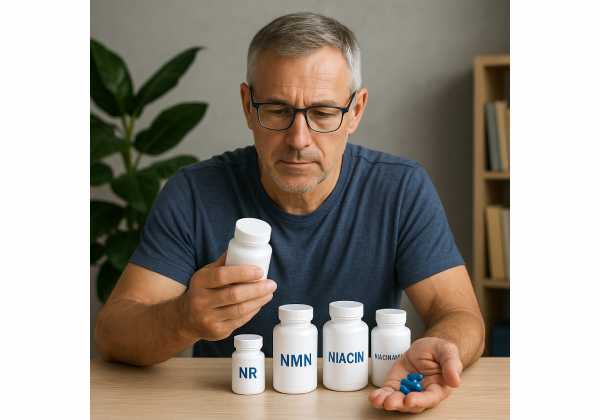
The main supplement options are nicotinamide riboside (NR), nicotinamide mononucleotide (NMN), niacin, and niacinamide. They all connect to NAD+ metabolism, but they differ in absorption, side effects, dose ranges, evidence, and regulatory status. Human studies show that NR and NMN raise NAD-related metabolites in blood, while clear improvements in strength, cognition, glucose control, or lifespan remain unproven. The safest approach is to understand the form, match it to a realistic goal, and avoid treating NAD+ supplements as a substitute for sleep, training, nutrition, and medical care.
Table of Contents
- What NAD+ Does in the Body
- Why NAD+ Declines With Age
- NR, NMN, Niacin, and Niacinamide Compared
- What Human Studies Show So Far
- Safety, Side Effects, and Cautions
- Dosing, Product Quality, and Testing
- How to Support NAD+ Without Supplements
- A Practical Decision Guide
What NAD+ Does in the Body
NAD+ stands for nicotinamide adenine dinucleotide. The “plus” sign refers to its oxidized form, which accepts electrons during energy production. Cells also use NADH, the reduced form, which donates electrons. This back-and-forth movement helps convert carbohydrates, fats, and protein into ATP, the cell’s usable energy currency.
NAD+ also works outside basic energy metabolism. Several enzyme families consume NAD+ while doing jobs tied to aging biology. PARP enzymes use NAD+ during DNA repair. Sirtuins use NAD+ to regulate gene expression, mitochondrial function, inflammation, stress resistance, and metabolic adaptation. CD38, an immune and signaling enzyme, also consumes NAD+ and tends to become more active with age and inflammation.
That makes NAD+ more than a “cellular energy” molecule. It sits at the intersection of metabolism, repair, immune signaling, and stress response. A helpful way to think about NAD+ is as a working pool that cells continually make, use, recycle, and break down. A supplement does not pour energy into the body like fuel into a car. It provides raw material for a network that the body controls by tissue, time of day, health status, and need.
NAD+ biology also overlaps with familiar longevity pathways. Exercise, fasting, circadian rhythm, mitochondrial turnover, AMPK, mTOR, inflammation, and DNA repair all intersect with NAD+ metabolism. For a broader non-supplement view, the cellular side of NAD+ fits naturally with cellular energy and NAD in healthy aging. The supplement question sits on top of that foundation, not in place of it.
Why NAD+ Declines With Age
NAD+ decline is not one single event. It reflects several pressures that accumulate over time. Some tissues show lower NAD+ with age, while others change less. Blood levels do not perfectly represent muscle, brain, liver, or immune-cell NAD+, which is one reason supplement studies are difficult to interpret.
Aging increases the demand for repair. More DNA damage, oxidative stress, inflammation, and metabolic strain increase NAD+ use. At the same time, the body’s recycling systems become less efficient in some tissues. The salvage pathway, which recycles nicotinamide back into NAD+, relies on enzymes such as NAMPT. When this pathway slows or cannot keep up with demand, the available NAD+ pool shrinks.
Inflammation adds another layer. CD38 activity rises in many inflammatory and age-related states. Since CD38 consumes NAD+, chronic immune activation drains the same pool that mitochondria and repair enzymes need. This helps explain why NAD+ decline is linked not only to age, but also to obesity, insulin resistance, poor sleep, infections, and chronic inflammatory conditions.
Several everyday factors also affect NAD+ balance:
- Alcohol metabolism uses NAD+ and shifts the NAD+/NADH balance.
- Poor sleep disrupts circadian control of metabolism and repair.
- Sedentary living weakens mitochondrial turnover and insulin sensitivity.
- Overnutrition and fatty liver strain energy metabolism.
- Chronic stress and illness increase cellular repair demands.
These pressures point to an important conclusion: NAD+ supplements are most plausible as one support tool, not a full strategy. A person with poor sleep, high alcohol intake, low fitness, and insulin resistance is asking supplements to push against strong drains. Testing and correcting metabolic strain often matter more than choosing between NR and NMN. Markers such as fasting glucose, fasting insulin, and A1c give practical context, especially when NAD+ products are being used for “energy” or metabolic health claims; see A1c, fasting glucose, and fasting insulin for a more complete testing framework.
NR, NMN, Niacin, and Niacinamide Compared
All four forms connect to vitamin B3 metabolism, but they do not behave the same way. The differences matter because side effects, cost, legal status, and evidence vary by form.
| Form | Also called | Main pathway | Common supplement range | Main tradeoff |
|---|---|---|---|---|
| NR | Nicotinamide riboside | Converts through NRK enzymes toward NMN and NAD+ | 250–1,000 mg/day | Good human NAD+ data, limited outcome data |
| NMN | Nicotinamide mononucleotide | Closely upstream of NAD+; oral handling varies by tissue and gut metabolism | 250–900 mg/day in many trials; higher doses studied short term | Promising biomarker data, long-term outcomes uncertain |
| Niacin | Nicotinic acid | Preiss-Handler pathway | 14–16 mg NE/day as RDA; 500–3,000 mg/day only as drug-like therapy | Raises NAD+ and affects lipids, but flushing and liver risks increase with dose |
| Niacinamide | Nicotinamide | Salvage pathway | Often 100–500 mg/day in supplements | No flushing, but high intakes still raise safety concerns |
NR is a newer vitamin B3 form with human trials showing reliable increases in blood NAD+ or NAD-related metabolites. It does not cause niacin flushing. Many commercial products use patented NR salts, which adds cost but also creates more standardized study material than many generic supplement categories.
NMN is one chemical step closer to NAD+ than NR, but “closer” does not automatically mean stronger. Oral NMN faces digestion, transport, conversion, and tissue-specific metabolism. Some NMN becomes nicotinamide before reaching circulation. Human studies still show increases in blood NAD-related markers, but this does not prove that every target tissue receives more functional NAD+ activity.
Niacin is the classic vitamin B3 form. At nutritional doses, it prevents deficiency and supports normal NAD+ production. At drug-like doses, nicotinic acid changes blood lipids, especially triglycerides and HDL cholesterol. Modern cardiovascular prevention has moved away from high-dose niacin for most people because outcome trials did not show enough benefit when added to statin therapy, while side effects increased. Lipid decisions belong in a full risk framework that includes ApoB and non-HDL cholesterol, not HDL raising alone; see ApoB and non-HDL cholesterol markers for that context.
Niacinamide is the non-flushing form. It supports NAD+ through the salvage pathway and appears in many multivitamins and skin-health products. It does not produce the same flushing as nicotinic acid and does not have the same lipid-lowering effect. High-dose niacinamide is not automatically harmless; nausea and liver toxicity become concerns at gram-level intakes.
What Human Studies Show So Far
Human evidence supports one claim with reasonable confidence: NR and NMN raise blood NAD+ or NAD-related metabolites over weeks to months. The stronger longevity claims remain ahead of the evidence.
NR research
NR trials in adults have used a range of doses, often 250–1,000 mg/day. Studies show increased blood NAD+ metabolites and generally good short-term tolerability. Trials in older adults, people with mild cognitive impairment, obesity, metabolic risk, and other groups have not yet shown consistent improvements in cognition, insulin sensitivity, muscle performance, vascular function, or body composition.
That does not make NR useless. It means the most proven effect is biochemical. A blood marker changes. Clear health outcomes require larger, longer, better-targeted trials. A person with a specific NAD+-related disorder, mitochondrial disease context, or research-protocol setting differs from a healthy adult taking NR for “anti-aging.”
NMN research
NMN trials also show blood NAD-related increases. Several studies tested 250–900 mg/day, while some short-term studies went higher. In a dose-ranging trial in healthy middle-aged adults, NMN increased blood NAD concentrations and appeared well tolerated over the study period. Other studies explored walking speed, sleep quality, insulin sensitivity, aerobic capacity, and metabolic markers.
The results are mixed. Some trials report small improvements in selected performance or metabolic measures. Meta-analyses of glucose and lipid outcomes do not show strong benefits for fasting glucose, fasting insulin, A1c, HOMA-IR, or lipid profile in generally healthy adults over short durations. A 2025 review of NR and NMN for muscle mass and function also found insufficient support for preserving muscle in adults over 60.
The gap between animal and human findings is large. In mice, NAD+ precursor studies often use controlled genetics, controlled diets, high relative doses, and disease models. Human aging is messier. People differ in baseline NAD+ status, inflammation, sleep, microbiome, body composition, medications, diet, and fitness. A supplement that helps a mouse tissue under lab stress does not automatically improve an adult’s grip strength, memory, or lifespan.
What “raises NAD+” does and does not prove
Raising a biomarker is useful only when the change connects to a meaningful outcome. Blood NAD+ increases do not guarantee better mitochondrial function in muscle, better DNA repair in brain cells, or lower disease risk. The body regulates NAD+ by tissue. More precursor also produces more downstream metabolites that require methylation and urinary excretion.
This is why NAD+ boosters belong in the same evidence category as many emerging longevity supplements: biologically plausible, measurable in short-term studies, promising in some subgroups, but not proven as broad anti-aging therapy. Anyone running a personal trial should define an outcome before starting. Better training recovery, less afternoon fatigue, improved sleep quality, or a lab marker trend is more useful than a vague hope of “cellular rejuvenation.” A structured approach to personal trials is covered in safe self-experimentation for longevity.
Safety, Side Effects, and Cautions
Short-term NR and NMN studies generally report good tolerability. Common complaints, when they occur, include nausea, stomach upset, headache, flushing-like warmth, sleep changes, or fatigue. The more serious safety uncertainties involve dose, duration, underlying disease, cancer biology, methylation burden, liver function, glucose control, and product quality.
NAD+ helps normal cells repair and adapt. That same repair-and-growth context raises caution in people with active cancer or recent cancer treatment. NAD+ biology intersects with DNA repair, immune activity, inflammation, and tumor metabolism. No strong human evidence shows that standard NR or NMN doses cause cancer. At the same time, long-term high-dose use in people with current or recent cancer lacks enough safety data. Oncology teams should guide decisions in that setting.
Niacin has clearer dose-related risks. Nicotinic acid flushing often starts around 30–50 mg in sensitive people and becomes common at higher intakes. Flushing feels like warmth, redness, itching, tingling, or burning, usually on the face, neck, chest, and arms. It is not usually dangerous, but it is uncomfortable and sometimes comes with dizziness or low blood pressure.
High-dose nicotinic acid, especially 1,000–3,000 mg/day, shifts into drug territory. Risks include liver enzyme elevation, hepatitis, insulin resistance, higher glucose, gout flares from uric acid changes, stomach irritation, ulcers, abnormal heart rhythm in susceptible people, and vision problems. Extended-release niacin carries special liver-safety concerns. High-dose niacin should not be used casually for NAD+ support.
Niacinamide avoids flushing, but gram-level dosing still raises concern. At very high intakes, niacinamide has been linked with nausea, vomiting, and liver toxicity. Because niacinamide and other NAD+ precursors feed into methylated waste products, high total intake also increases demand on methylation and excretion pathways. This is one reason stacking several NAD+ products together is a poor idea.
People who need extra caution include those with:
- Active cancer, recent cancer treatment, or unexplained weight loss.
- Liver disease, fatty liver with elevated enzymes, or heavy alcohol intake.
- Chronic kidney disease.
- Gout or high uric acid.
- Diabetes, prediabetes, or unexplained glucose changes.
- Pregnancy or breastfeeding.
- Bipolar disorder or a history of supplement-triggered agitation or insomnia.
- Multiple medications, especially glucose-lowering, blood-pressure, lipid, chemotherapy, or immunosuppressive drugs.
Intravenous NAD+ deserves separate caution. Oral supplements and compounded IV products are not the same risk category. Sterile injectable products require strict sourcing and compounding controls. FDA has warned about food-grade NAD+ being used in sterile compounding and has received adverse event reports after injectable NAD+ products. For general healthy-aging use, oral routes have a much better risk profile than IV clinics offering broad “detox,” “energy,” or “anti-aging” claims.
Dosing, Product Quality, and Testing
A conservative NAD+ supplement trial starts with one product, one dose, one reason, and a planned stop date. The dose used in a study is not a personal requirement. Many adults start lower than the label’s suggested full dose to check tolerability.
Common trial ranges include:
- NR: 250–300 mg/day as a cautious starting range; 500–1,000 mg/day appears in studies.
- NMN: 250 mg/day as a cautious starting range; 500–900 mg/day appears in several commercial and study settings.
- Niacin: nutritional intake near the RDA is usually enough for deficiency prevention; high-dose use belongs under medical supervision.
- Niacinamide: 100–500 mg/day appears in many supplements; avoid stacking high-dose products.
Timing varies. Morning dosing works better for people who notice sleep disruption. Taking the product with food often reduces stomach upset. Splitting the dose sometimes improves tolerability, although it complicates routines.
Product quality matters because NAD+ precursors are expensive and vulnerable to marketing hype. Choose brands that provide third-party testing, lot-specific certificates of analysis, clear ingredient form, dose per serving, contaminant testing, and stability information. Avoid products that hide doses in proprietary blends or combine NAD+ precursors with stimulants, hormones, aggressive senolytic stacks, or large niacin doses.
Regulatory status also matters. NMN has had an unusually complicated path in the United States, with FDA communications and legal interpretations changing over time. The practical point for consumers is simple: confirm current status, choose reputable sellers, and avoid assuming that marketplace availability equals regulatory clarity or medical approval.
Testing should match the reason for use. Most people do not need specialty NAD+ blood testing. Direct NAD+ tests vary by sample handling, lab method, and interpretation, and they do not reliably show tissue-specific benefit. Basic health markers often provide more value:
- A1c, fasting glucose, and fasting insulin for metabolic context.
- ALT, AST, GGT, and bilirubin for liver safety.
- Creatinine and eGFR for kidney context.
- Uric acid if using niacin or prone to gout.
- ApoB, non-HDL cholesterol, and triglycerides if using niacin for lipid reasons.
- Blood pressure and resting heart rate if the product affects energy, sleep, or flushing.
A reasonable personal trial runs 8–12 weeks. Track one or two outcomes, not twenty. Examples include sleep quality, training recovery, afternoon energy, perceived exertion during workouts, or a specific lab marker. Stop sooner for insomnia, rash, abdominal pain, unusual fatigue, palpitations, gout symptoms, persistent nausea, dark urine, jaundice, or unexplained glucose changes.
How to Support NAD+ Without Supplements
The strongest NAD+ strategy starts with lowering unnecessary drain and improving cellular demand signals. This sounds less exciting than a capsule, but it affects the same pathways more broadly.
Exercise is the most dependable non-supplement signal. Aerobic training increases mitochondrial turnover and improves the muscles’ ability to use fuel. Resistance training supports muscle mass, glucose disposal, and metabolic resilience. Both forms interact with AMPK, sirtuins, mitochondrial biogenesis, and inflammation. NAD+ biology is one part of that adaptation. For the build-and-repair rhythm behind training and recovery, mTOR and AMPK for longevity gives useful background.
Sleep protects NAD+ metabolism through circadian rhythm, hormone regulation, immune balance, and repair timing. NAD+ levels follow daily patterns in several tissues. Chronic short sleep weakens glucose control, increases inflammation, and raises the need for repair. Morning light, consistent wake time, evening darkness, and earlier alcohol cutoffs support the same system that supplement ads often claim to target.
Food patterns matter through protein adequacy, micronutrients, liver health, and metabolic load. Vitamin B3 comes from poultry, fish, beef, peanuts, legumes, grains, and fortified foods. The body also converts some tryptophan from protein into niacin equivalents. Severe deficiency is uncommon in well-nourished adults, but low-quality diets, alcohol misuse, malabsorption, and some medical conditions increase risk.
Alcohol is a direct NAD+ stressor. Alcohol metabolism shifts the NAD+/NADH ratio and burdens the liver. Cutting heavy drinking often does more for NAD+ balance than adding a precursor. The same is true for improving fatty liver, insulin resistance, and chronic inflammation.
Heat, cold, and fasting-like signals also intersect with NAD+ pathways, but dose matters. Too many stressors stacked together backfire. A hard interval session, sauna, calorie restriction, poor sleep, and a new NAD+ product in the same week create confusion and increase side-effect risk. Build one lever at a time and leave enough recovery for adaptation.
A Practical Decision Guide
NAD+ supplements make the most sense when the goal is modest, measurable, and paired with strong basics. They make the least sense when used to compensate for poor sleep, excessive alcohol, low activity, or untreated metabolic disease.
Consider NR when you want the most familiar commercial NAD+ precursor with multiple human studies and no niacin flushing. NR is expensive, and outcome benefits remain uncertain, so it fits best as a time-limited trial rather than an indefinite habit.
Consider NMN when you prefer the precursor that sits closer to NAD+ in the pathway and accept its regulatory complexity and mixed outcome data. Choose brands carefully, avoid very high doses, and treat claims about muscle, glucose, sleep, or longevity as unproven unless your own tracking shows a clear benefit.
Consider niacin only when the purpose is clear. Nutritional niacin prevents deficiency. High-dose nicotinic acid is a drug-like lipid therapy with real side effects and medical monitoring needs. It is not a casual NAD+ booster.
Consider niacinamide when you want a non-flushing vitamin B3 form and have a reason to use it at modest doses. Avoid gram-level dosing without professional supervision, especially with liver disease, heavy alcohol intake, or multiple supplements.
Skip NAD+ boosters for now if you are pregnant, breastfeeding, undergoing cancer treatment, dealing with unexplained symptoms, or struggling with unstable liver, kidney, glucose, or gout issues. In those cases, medical evaluation comes first. Also skip them if the product budget would crowd out higher-return basics such as protein intake, strength training, sleep treatment, blood pressure control, or evidence-based medications.
A simple trial framework works well:
- Pick one form.
- Start with a low-to-moderate dose.
- Take it in the morning for 8–12 weeks.
- Track one main outcome.
- Check relevant labs if using higher doses or if you have metabolic, liver, kidney, lipid, or gout concerns.
- Stop if benefits are unclear.
NAD+ is real biology. The hype around it is also real. NR, NMN, niacin, and niacinamide all feed the same broad nutrient network, but they are not interchangeable shortcuts to longevity. The best use is careful, modest, and grounded in measurable health priorities.
References
- The therapeutic perspective of NAD+ precursors in age-related diseases 2024 (Review)
- A randomized placebo-controlled trial of nicotinamide riboside in older adults with mild cognitive impairment 2024 (RCT)
- The efficacy and safety of β-nicotinamide mononucleotide (NMN) supplementation in healthy middle-aged adults: a randomized, multicenter, double-blind, placebo-controlled, parallel-group, dose-dependent clinical trial 2023 (RCT)
- Effects of Nicotinamide Mononucleotide on Glucose and Lipid Metabolism in Adults: A Systematic Review and Meta-analysis of Randomised Controlled Trials 2025 (Systematic Review)
- Niacin – Health Professional Fact Sheet 2021 (Official Fact Sheet)
- FDA reminds compounders to use ingredients suitable for sterile compounding 2024 (Official Safety Communication)
Disclaimer
This article is educational and does not replace care from a qualified healthcare professional. NAD+ precursors, high-dose niacin, and injectable NAD+ products carry different risks, especially for people with cancer, liver disease, kidney disease, gout, diabetes, pregnancy, or multiple medications. Discuss supplement plans and lab monitoring with a clinician who knows your health history.