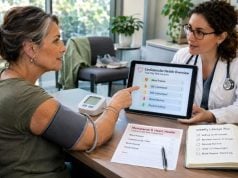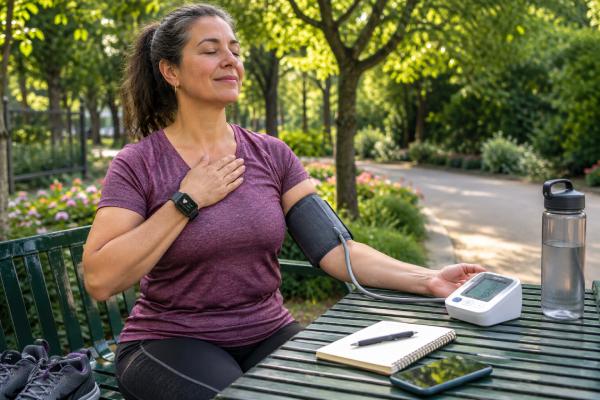
Spending time in parks, forests, gardens, or other green spaces may help lower stress and support healthier blood pressure, but the effect is usually modest and varies from person to person. Research consistently finds that people with greater access to green space tend to have slightly lower blood pressure and lower rates of hypertension. Experimental studies also suggest that time in natural settings can reduce systolic blood pressure and improve stress-related measures in the short term. Still, nature exposure is not a replacement for prescribed blood-pressure medicine, home monitoring, exercise, sleep, or a heart-healthy diet. Part of the benefit may come from what green spaces make easier: walking, cooling down, escaping traffic noise, breathing cleaner air, and mentally disengaging from daily stress. You do not need a wilderness trip to test the idea. A nearby park, tree-lined route, garden, waterfront, or quiet outdoor space can be useful if you visit it regularly and safely.
Table of Contents
- What Research Shows About Nature and Blood Pressure
- How Nature May Lower Stress and Support BP
- How Much Time Outside Might Help
- The Best Ways to Use Nature for Heart Health
- How to Measure Whether It Helps Your Blood Pressure
- Limits, Risks, and Common Mistakes
- A Simple Weekly Nature and Blood Pressure Plan
What Research Shows About Nature and Blood Pressure
The overall pattern is encouraging: greener environments are associated with slightly lower blood pressure, and nature-based interventions can reduce systolic pressure in some studies. The size of the effect is not large enough to treat hypertension on its own, but it may contribute to a healthier cardiovascular environment.
A 2022 systematic review and meta-analysis pooled 38 articles with about 5.2 million participants. Greater neighborhood greenness, measured with satellite-based vegetation indexes, was associated with systolic blood pressure roughly 0.8 mmHg lower and diastolic pressure about 0.3 mmHg lower in one commonly studied exposure range. Greater green space was also associated with 1% to 9% lower odds of hypertension, depending on how greenness was measured.
A 2024 publication that pooled 27 studies found a similar direction of effect. For each 10% increase in vegetation measured within several hundred meters of home, systolic blood pressure was about 1.3 to 1.4 mmHg lower in pooled analyses, and the odds of hypertension were lower. A 2024 review of 118 studies on green space and cardiometabolic risk also found greater access to green space associated with lower odds of hypertension.
Those numbers need context. Most neighborhood studies are observational. People who live near parks may differ from people who do not in income, housing, walkability, air pollution, noise, access to healthcare, and many other factors. Researchers adjust for some of these differences, but they cannot remove all confounding.
Experimental evidence is smaller but useful. A 2024 overview that graded existing meta-analyses found moderate-quality evidence that green-space interventions can lower systolic blood pressure. The same review emphasized that many other claimed health effects had lower-quality evidence. That is a good summary of the field: nature exposure looks beneficial, but claims should remain proportional to the data.
At a population level, even a small average blood-pressure shift may matter. For an individual with readings of 155/95 mmHg, however, a park visit is not an adequate treatment plan. Persistent hypertension still needs proper assessment and evidence-based care.
How Nature May Lower Stress and Support BP
Nature probably does not lower blood pressure through one single pathway. It changes several parts of daily life at once, and those effects may reinforce each other.
Less stress-system activation
Stress activates the sympathetic nervous system and can temporarily raise heart rate and blood pressure. A calming environment may reduce vigilance, rumination, and mental overload, allowing sympathetic activity to fall and parasympathetic activity to recover. Some nature-intervention studies report lower perceived stress, cortisol, or heart-rate measures, although results are not uniform.
This mechanism is plausible even if the blood-pressure effect is temporary. Repeated periods of lower stress may make it easier to sleep, recover, and maintain healthier routines. If stress is a major trigger for your readings, broader stress-reduction strategies for blood pressure can complement outdoor time.
More physical activity
Green spaces make movement more pleasant for many people. A 25-minute walk through a park combines nature exposure with aerobic activity, and walking itself can improve blood pressure. This creates a practical challenge for research because the benefits of scenery and exercise are hard to separate—but for everyday health, they do not need to be separated.
Regular walking also supports weight management, insulin sensitivity, sleep, and mood. If you are currently inactive, a comfortable walking plan for heart health may produce more benefit than focusing on nature exposure alone.
Less noise, heat, and air pollution
Trees and well-designed green spaces can reduce heat exposure, buffer some urban noise, and in certain settings reduce exposure to traffic-related pollution. These environmental factors can influence cardiovascular stress. The effect depends heavily on the specific location; a narrow green strip beside heavy traffic is different from a large park away from major roads.
Better social connection and recovery
Parks and outdoor spaces can support social contact, recreation, and a sense of separation from work or household demands. Those changes may indirectly improve cardiovascular health by reducing isolation and making healthy routines easier to sustain.
You may also hear claims that forest chemicals called phytoncides directly lower blood pressure. These compounds are scientifically interesting, but the human cardiovascular evidence is not strong enough to make them the main explanation. The more established benefits come from the overall environmental and behavioral experience.
How Much Time Outside Might Help
There is no clinically established “dose” of nature exposure for hypertension. Research uses different settings, durations, and interventions, so it is not possible to say that a specific number of minutes will lower blood pressure by a predictable amount.
For practical use, consistency matters more than chasing a precise threshold. A reasonable starting routine is 10 to 30 minutes outdoors on most days, especially if you can pair it with easy walking or another activity you enjoy. This is a behavior target, not a medical prescription. Someone who is deconditioned, recovering from illness, or sensitive to heat may start with five or ten minutes. Someone who already walks daily may benefit from moving part of that walk to a greener, quieter route.
Longer sessions are fine when they fit your life. A weekend hike, gardening session, or hour in a park can offer more activity and mental recovery, but there is no evidence that you need long “forest bathing” sessions to receive any benefit.
The type of nature also does not need to be perfect. Useful options include:
- an urban park or public garden;
- a tree-lined neighborhood route;
- a quiet waterfront or greenway;
- a backyard, balcony with plants, or community garden;
- a shaded campus or courtyard;
- a forest, trail, or larger natural area when accessible.
The best setting is one you can reach regularly without adding stress. Driving an hour through traffic to achieve an idealized nature experience may be less useful than walking ten minutes to a nearby park several times a week.
Time of day can matter for comfort and adherence. Morning outdoor light may also support circadian rhythm and sleep, while an after-work walk can help create a boundary between work stress and evening recovery. If heat is intense, choose cooler hours. If pollen is a problem, adjust timing and location according to local conditions.
Do not interpret the routine as a replacement for activity guidelines. Sitting on a bench in a park may help stress, while brisk walking adds a separate exercise benefit. Both can be worthwhile, but they address different parts of cardiovascular health.
The Best Ways to Use Nature for Heart Health
The most useful approach is to combine nature exposure with habits that already improve cardiovascular risk. This turns outdoor time into a repeatable part of your care rather than another wellness task.
Take a low-pressure walk
Walk at a pace that allows comfortable conversation. If you are trying to build fitness, increase duration or pace gradually rather than turning every outing into a hard workout. A calm 20-minute walk can serve both stress reduction and aerobic activity.
Use the first few minutes to downshift
Put the phone away if it is safe to do so. Notice the temperature, sounds, light, and surroundings. Slow breathing can help, but there is no need for a formal meditation session. The goal is to reduce cognitive load rather than perform relaxation perfectly.
Garden or do light outdoor work
Gardening provides movement, sunlight, and contact with a natural setting. Moderate tasks can count toward physical activity. People with cardiovascular disease should still respect lifting or exertion limits given by their clinician, especially in hot weather.
Meet someone outside
Social connection can make a routine easier to maintain. A short park walk with a friend may be more sustainable than an ambitious solo plan. It can also reduce the tendency to cancel outdoor time when work becomes busy.
Create small nature breaks
If long outings are unrealistic, use two or three short breaks. Ten minutes outside after lunch and ten minutes after work may be easier than finding a continuous 30-minute block. For some people, a brief walk after meals also supports glucose control; see walking after meals for that specific strategy.
The main goal is repeatability. Cardiovascular risk changes through habits repeated over months and years, not one exceptional weekend outdoors. Choose an outdoor routine that you can continue in different seasons and on ordinary workdays.
How to Measure Whether It Helps Your Blood Pressure
If you have hypertension or borderline readings, home monitoring can show whether your overall plan is working. It is harder to prove that nature alone caused a change, but careful measurement can prevent misleading conclusions.
Use a validated automatic upper-arm cuff that fits correctly. For routine home monitoring, sit quietly for about five minutes, keep your back supported and feet flat, support the arm at heart level, and avoid talking during the measurement. Follow your clinician’s schedule; many people are asked to take two readings about one minute apart in the morning and evening for several days.
Do not compare a rushed reading taken immediately after climbing stairs with a relaxed reading taken after sitting in a park and conclude that nature lowered blood pressure dramatically. The conditions are too different. Exercise can also temporarily change blood pressure, so measuring immediately after a brisk walk does not provide a clean resting comparison.
If you want to run a simple personal experiment, keep conditions similar:
- Choose several days when you can measure at roughly the same time.
- Sit quietly for five minutes before the baseline reading.
- Spend 15 to 30 minutes in a calm outdoor setting, with gentle rather than strenuous activity.
- Allow enough time to return to a true resting state before measuring again.
- Record stress level, sleep, caffeine, exercise, and medication timing so obvious confounders are visible.
Treat the result as personal observation, not proof. Day-to-day blood pressure naturally varies. A useful trend comes from repeated averaged readings, not one striking change.
If home averages remain high, do not keep extending outdoor time while delaying care. Persistent hypertension increases the risk of stroke, heart disease, kidney disease, and other complications. A clinician can help determine whether lifestyle changes, medication, or both are needed. Learn more about tracking blood pressure and other heart numbers consistently.
Limits, Risks, and Common Mistakes
Nature exposure is low risk for most people, but “outside” is not automatically healthy in every condition. Heat, cold, smoke, pollution, allergens, insects, uneven terrain, and unsafe neighborhoods can outweigh the benefit of a particular outing.
In hot weather, choose shade, cooler times of day, and appropriate hydration. People taking diuretics or medicines that affect heat tolerance should be especially cautious. In cold weather, sudden strenuous exertion can put extra demand on the cardiovascular system, particularly in people with known heart disease.
Air quality matters too. A green space beside wildfire smoke or heavy traffic may not be the right place for exercise. People with asthma, lung disease, or cardiovascular disease should adjust outdoor activity when air pollution is high.
Other common mistakes include:
- Stopping blood-pressure medicine because outdoor time seems to help. Lifestyle improvement may eventually change medication needs, but dose changes should be based on repeated readings and clinician guidance.
- Chasing an instant before-and-after number. Blood pressure changes minute to minute. Focus on longer-term averages.
- Turning relaxation into another performance target. You do not need a perfect forest, specific breathing count, or precise number of trees.
- Ignoring access barriers. A safe courtyard or shaded block can be more practical than a distant nature reserve.
- Overdoing exercise. If you are new to activity, the cardiovascular benefit comes from gradual consistency, not exhaustion.
- Assuming all green-space research proves causation. Much of the evidence is observational and can be influenced by neighborhood and socioeconomic factors.
Seek medical care for very high readings accompanied by chest pain, severe shortness of breath, neurologic symptoms, confusion, or other signs of a hypertensive emergency. Nature exposure belongs in prevention and daily self-care, not emergency treatment.
A Simple Weekly Nature and Blood Pressure Plan
A useful plan should be easy enough to repeat and flexible enough to survive busy days. Start with the amount of outdoor time you can realistically sustain.
Monday through Friday: Aim for 15 to 25 minutes in a green or quiet outdoor setting on at least three days. Walk gently if able. On workdays, a lunch break or after-work route is often easiest.
One weekend day: Spend 30 to 60 minutes outside doing something enjoyable—walking, gardening, sitting near water, visiting a park, or an easy hike. The activity does not have to be vigorous.
During stressful days: Use a 5- to 10-minute outdoor break rather than skipping the habit entirely. A short reset can still interrupt prolonged sitting and mental strain.
For blood-pressure tracking: If your clinician wants home measurements, follow the same schedule whether or not you went outside that day. Consistency makes trends easier to interpret.
After three or four weeks, ask what changed. Are you walking more? Sleeping better? Feeling less tense after work? Are home blood-pressure averages improving? A meaningful benefit may show up in several ways rather than as a dramatic pressure drop after each outing.
If the routine is helping, build on it gradually. Add another day, extend a walk by five or ten minutes, or choose a route with more trees and less traffic. If it is not helping because the location feels unsafe, crowded, inaccessible, or stressful, change the setting rather than forcing the concept.
Nature exposure is best viewed as a supportive cardiovascular habit. The evidence suggests that greener environments and nature-based activities can contribute to lower stress and modestly better blood pressure, but the effect is only one part of a complete plan. Combine it with appropriate medical treatment, regular movement, good sleep, nutritious food, and reliable home measurements. That combination gives a quiet walk in the park its most useful role: not a cure, but a practical way to make heart-healthy living easier to repeat.
References
- Credibility of the evidence on green space and human health: an overview of meta-analyses using evidence grading approaches 2024 (Review)
- Association of greenspace with hypertension in adult: a systematic review and meta-analysis of epidemiological studies. 2024 (Systematic Review)
- Association of greenspaces exposure with cardiometabolic risk factors: a systematic review and meta-analysis 2024 (Systematic Review)
- Association between greenspace and blood pressure: A systematic review and meta-analysis 2022 (Systematic Review)
- Built environment and the evolution of cardiometabolic risk factors: a systematic review and meta-analysis of longitudinal studies 2025 (Systematic Review)
Disclaimer
This article is for general education and does not replace medical evaluation or treatment for high blood pressure. Do not stop or reduce prescribed blood-pressure medicine because outdoor time improves a few readings. Seek urgent medical care for severely elevated blood pressure accompanied by chest pain, severe shortness of breath, new neurologic symptoms, confusion, or other concerning symptoms.