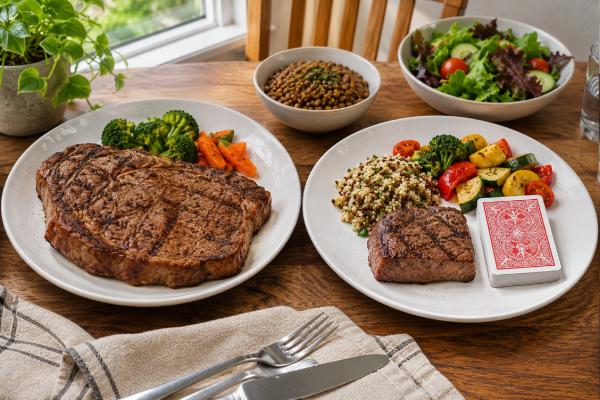
Red meat does not need to be completely eliminated for heart health, but eating it every day—especially in large portions or processed forms—is harder to fit into a cardiovascular-friendly diet. The strongest concern is not one occasional steak. It is a repeated pattern in which beef, pork, or lamb displaces beans, fish, nuts, whole grains, and other foods that bring fiber and unsaturated fats. Processed red meat such as bacon, sausage, salami, hot dogs, and many deli meats deserves even more caution because it often adds substantial sodium and preservatives.
There is no universally agreed red-meat cutoff at which risk suddenly rises. Observational research generally finds higher cardiovascular risk as intake increases, while randomized trials of lean unprocessed beef show smaller effects on standard risk markers. A practical approach is to treat red meat as one protein option rather than the default protein at most meals. For many people, moving from daily red meat to a few modest servings per week—and replacing the rest with plant proteins or fish—is a meaningful, realistic step.
Table of Contents
- What Counts as Red Meat?
- What the Evidence Says About Red Meat and Heart Risk
- How Much Red Meat Is Too Much?
- Why Processed Red Meat Is a Different Problem
- How to Choose Red Meat More Carefully
- What to Eat Instead
- A Practical Weekly Red-Meat Plan
What Counts as Red Meat?
Red meat generally includes mammalian muscle meat such as:
- beef and veal;
- pork;
- lamb and mutton;
- goat;
- venison and other game meats.
Pork is red meat nutritionally even though older marketing called it “the other white meat.” The classification is based largely on myoglobin content and animal type, not how pale the cooked meat looks.
It is also important to separate unprocessed red meat from processed red meat.
Unprocessed red meat includes fresh or frozen cuts such as sirloin, tenderloin, pork loin, lamb chops, or plain ground beef with no curing or preservation beyond basic preparation.
Processed red meat includes products transformed through curing, salting, smoking, fermentation, or added preservatives. Examples include bacon, sausage, hot dogs, salami, pepperoni, jerky, corned beef, and many deli meats.
These categories are often combined in casual discussions, but their heart-health profiles are not identical. Processed meat tends to contain much more sodium and may have a stronger association with cardiovascular disease.
Cooking also changes the final meal. A small lean steak with vegetables and beans is different from a large cheeseburger with bacon, fries, and a sugary drink. When research or dietary advice uses the term “red meat,” the rest of the eating pattern still matters.
What the Evidence Says About Red Meat and Heart Risk
The evidence is more nuanced than “red meat causes heart disease” or “red meat is harmless.” Different study types answer different questions.
Large observational studies generally find that people who eat more red meat—particularly processed red meat—have higher rates of cardiovascular disease and type 2 diabetes. A 2023 systematic review and meta-analysis involving millions of participants reported higher cardiovascular risk with increasing intake of both unprocessed and processed red meat, with a stronger association for processed meat.
Observational evidence cannot prove that red meat alone causes the difference. People who eat more red meat may also differ in smoking, exercise, body weight, vegetable intake, socioeconomic factors, or other behaviors. Good studies adjust for many of these factors, but residual confounding remains possible.
Randomized controlled feeding trials offer a different perspective. They can compare diets with more versus less red meat while controlling other foods, but they are usually shorter and measure risk factors such as LDL cholesterol rather than heart attacks decades later.
A 2024 meta-analysis of randomized trials focused on minimally processed beef found little effect on most standard cardiovascular risk factors and only a small average increase in LDL cholesterol, which became less certain in sensitivity analysis. A 2025 network meta-analysis also found that the effect of red meat depends heavily on what replaces it.
That replacement issue is central. Replacing fatty beef with lentils, nuts, or fish changes saturated fat, fiber, and unsaturated fat in a favorable direction. Replacing lean beef with refined white bread or sugary cereal may not.
So the most useful conclusion is not that every gram of red meat has a fixed risk. It is that higher habitual intake appears less favorable than patterns emphasizing plant proteins, fish, and minimally processed foods, especially when the red meat is fatty or processed.
If LDL cholesterol is your main concern, understanding saturated versus unsaturated fat helps explain why the cut of meat and replacement food matter.
What about iron, carnitine, and TMAO?
Red meat is rich in heme iron and carnitine, and both have been studied as possible contributors to cardiovascular risk. Heme iron can participate in oxidative reactions, while gut bacteria can metabolize carnitine into compounds that eventually form trimethylamine N-oxide, or TMAO. Higher blood TMAO levels have been associated with cardiovascular risk in observational research.
These mechanisms are biologically interesting, but they do not justify judging a single steak by its TMAO potential. TMAO levels are influenced by kidney function, gut microbiota, overall diet, and other foods. Fish can also raise TMAO despite being consistently included in heart-healthy dietary guidance. The strongest practical evidence therefore still comes from whole-diet patterns and replacement studies rather than trying to avoid one molecule.
Red meat can also be a concentrated source of iron, zinc, vitamin B12, and protein. People who reduce it substantially should simply replace those nutrients thoughtfully. Beans, lentils, fortified foods, seafood, poultry, eggs, dairy, and supplements when medically indicated can cover most needs. People with iron-deficiency anemia should not restrict iron-rich foods aggressively without guidance, but red meat is not the only way to correct iron deficiency.
How Much Red Meat Is Too Much?
There is no single evidence-based number that separates “safe” from “unsafe” red meat for everyone. Risk appears to rise along a continuum, and major heart-health guidance usually focuses on limiting red and processed meat while prioritizing plant proteins, fish, seafood, and lean unprocessed choices rather than setting a universal weekly red-meat allowance.
Observational meta-analyses often report risk per 100 g/day of unprocessed red meat or per 50 g/day of processed meat. One 2023 analysis found an approximately 11% higher cardiovascular disease risk per 100 g/day increment of unprocessed red meat and a larger increase per 50 g/day of processed red meat. These are population associations, not a calculator for your personal risk.
A practical way to interpret them is to focus on frequency and portion size.
For someone eating 6 to 10 ounces of red meat every day, intake is high enough that reducing it is likely worthwhile. For someone eating a 3- to 4-ounce portion once or twice a week within a Mediterranean-style diet, red meat is a much smaller nutritional issue.
A reasonable practical target for many people is:
- keep cooked portions around 3 to 4 ounces when red meat is served;
- avoid making red meat the default protein every day;
- aim for several red-meat-free days each week;
- use beans, lentils, soy, fish, nuts, seeds, poultry, or low-fat dairy more often;
- treat processed red meat as an occasional food rather than a routine choice.
This is not a formal medical prescription. People with very high LDL, familial hypercholesterolemia, established cardiovascular disease, or diabetes may benefit from a more plant-forward pattern. Highly active people with higher calorie needs can still meet protein and iron requirements without making red meat the center of the diet.
If you currently eat red meat daily, reducing to two or three meals per week is a meaningful first step. If you already eat it only a few times per month, focusing on fiber, sodium, exercise, smoking, sleep, and overall diet may have greater impact.
Why Processed Red Meat Is a Different Problem
Processed red meat deserves separate attention because processing changes the nutritional package.
Bacon, sausage, hot dogs, salami, pepperoni, jerky, and cured deli meats are often much higher in sodium than fresh meat. High sodium intake can raise blood pressure and make hypertension more difficult to control.
Many processed meats are also high in saturated fat. In addition, curing can introduce nitrites or nitrates, and smoking or high-temperature cooking can create other compounds that may contribute to oxidative stress or vascular effects. Research has not identified one single ingredient that explains all observed risk, so it is more accurate to judge the whole processed-meat category than to blame one preservative.
The epidemiologic signal is also generally stronger for processed meat than for unprocessed red meat. That is why a person who wants to reduce cardiovascular risk should usually cut back on bacon, sausage, deli meat, and similar foods before worrying about an occasional lean steak.
For a detailed breakdown of which foods count, see processed meat and heart risk.
“Uncured” does not necessarily solve the problem. Some products use celery powder or other nitrate-rich ingredients instead of conventional curing salts. They can still be salty and still count as processed foods in practice.
Likewise, “turkey bacon” or “chicken sausage” may contain less saturated fat than pork versions, but they can remain high in sodium and highly processed. Switching animal species does not automatically make a processed meat heart-healthy.
How to Choose Red Meat More Carefully
If you eat red meat, choose versions that minimize saturated fat and keep portions reasonable.
Lean beef cuts often include words such as round, loin, or sirloin. Examples include top round, eye of round, sirloin, and tenderloin. For ground beef, choose lean or extra-lean options and compare the fat percentage.
For pork, tenderloin and loin chops are typically leaner than ribs, belly, or many shoulder preparations. With lamb, trim visible fat and use smaller portions because many cuts are relatively rich.
Cooking method matters less than the cut and total diet, but it still helps to avoid turning a lean cut into a high-saturated-fat meal. Better methods include:
- grilling;
- roasting;
- broiling;
- baking;
- stewing with vegetables;
- pan-searing with a small amount of unsaturated oil.
Trim visible fat and drain rendered fat when possible.
Avoid routinely adding butter-heavy sauces, large amounts of cheese, bacon, or creamy sides. These additions can contribute more saturated fat and sodium than the meat itself.
Portion size is another quiet problem. Restaurant steaks of 12 to 16 ounces can equal three or four practical servings. You do not have to finish the entire portion because it was served as one entrée.
A simple plate strategy is to make vegetables and whole grains or legumes the majority of the plate and use meat as the smaller protein component. This automatically reduces the red-meat dose without requiring calorie counting.
If you are shopping for heart health generally, reading nutrition labels is particularly useful for ground meat blends, marinated products, frozen meat dishes, and processed meats where sodium and saturated fat can vary widely.
What to Eat Instead
The benefit of eating less red meat depends on the replacement.
Beans and lentils
Legumes are one of the strongest swaps because they provide protein plus fiber, potassium, magnesium, and very little saturated fat. They work in chili, tacos, soups, curries, pasta sauce, and grain bowls.
A practical transition is to replace half the ground beef in chili or pasta sauce with lentils or beans. That reduces meat without changing the meal completely. For more ideas, see beans and lentils for heart health.
Fish and seafood
Fish provides protein with less saturated fat than many red-meat cuts. Oily fish such as salmon, sardines, trout, and mackerel also provide omega-3 fatty acids.
Replacing two red-meat dinners each week with fish is a simple way to improve the fat profile of the diet. Choose baked, grilled, or roasted fish more often than deep-fried versions. See fatty fish for heart health for specific choices.
Soy foods
Tofu, tempeh, edamame, and soy milk provide high-quality plant protein. Soy protein has a modest LDL-lowering effect in controlled studies and works well as a direct meat replacement in stir-fries, curries, bowls, and sandwiches.
Nuts and seeds
Nuts and seeds provide protein, fiber, and unsaturated fats. They are not a direct steak substitute at dinner, but they can replace meat calories across the day by making breakfasts and snacks more satisfying.
Poultry and low-fat dairy
Skinless poultry and lower-fat dairy can also be useful options, especially for people who do not want a mostly plant-based diet. Keep poultry unprocessed when possible, since deli turkey and chicken sausage can still be high in sodium.
The goal is not to find one perfect substitute. Variety makes the pattern easier to maintain and spreads nutrients across different foods.
A Practical Weekly Red-Meat Plan
If you currently eat red meat most days, changing the whole week at once can feel restrictive. A better approach is to redesign a few recurring meals.
Here is one example:
| Day | Main protein | Example meal |
|---|---|---|
| Monday | Beans | Black bean chili with vegetables |
| Tuesday | Fish | Salmon, barley, and roasted vegetables |
| Wednesday | Lean beef | 3–4 oz sirloin with a large salad and whole grain |
| Thursday | Tofu | Tofu and vegetable stir-fry |
| Friday | Poultry | Roasted chicken with beans and greens |
| Saturday | Fish or legumes | Tuna and white-bean salad |
| Sunday | Lean red meat, optional | Small portion of pork tenderloin with vegetables |
That pattern includes red meat twice without making it the nutritional center of the week. It also naturally increases fiber and unsaturated fat.
If you prefer a formal eating pattern, the Mediterranean diet for heart health is a useful template because it emphasizes vegetables, legumes, whole grains, nuts, olive oil, and fish while using red meat less often.
You can also use a “half-swap” strategy. Mix mushrooms or lentils into ground beef, use half the normal meat in tacos and double the beans, or serve a smaller steak over a large grain-and-vegetable salad. Reducing intake does not require replacing every meal with tofu overnight.
Pay attention to what improves in the process. A red-meat reduction that also lowers saturated fat, raises fiber, reduces sodium, and increases plants is much more meaningful than simply switching from beef to highly processed refined foods.
If LDL cholesterol is high, recheck it after several weeks to a few months of consistent dietary change, especially if you are also increasing soluble fiber and losing excess weight. If LDL remains very high, diet may not be enough, particularly when genetics are involved.
Red meat is best viewed as a choice with a dose, not as a poison or a health food. Small portions of lean, unprocessed red meat can fit into a heart-healthy pattern. The pattern becomes less favorable as portions grow, frequency rises, fatty cuts dominate, or processed meats become routine. For most people, the highest-value change is to move red meat away from the center of the plate and make beans, fish, soy, nuts, vegetables, and whole grains show up more often.
A practical way to keep portions honest is to decide the amount before cooking or ordering. Restaurant steaks and mixed dishes can easily contain two or three standard portions, which makes frequency harder to judge. At home, use red meat as one component of the meal rather than the entire entrée: pair a modest serving with vegetables, whole grains, or legumes, and avoid automatically adding processed meat or high-saturated-fat sides. Over a week, this approach lowers the total red-meat dose without requiring rigid rules and makes room for protein sources with stronger cardiovascular advantages.
References
- Red meat consumption, cardiovascular diseases, and diabetes: a systematic review and meta-analysis 2023 (Systematic Review)
- Effect of red meat consumption on cardiovascular risk factors: A systematic review and Bayesian network meta-analysis of randomized controlled trials 2025 (Systematic Review)
- Beef Consumption and Cardiovascular Disease Risk Factors: A Systematic Review and Meta-analysis of Randomized Controlled Trials 2024 (Systematic Review)
- Red and processed meat intakes and cardiovascular disease and type 2 diabetes mellitus: An umbrella systematic review and assessment of causal relations using Bradford Hill’s criteria 2024 (Systematic Review)
- Picking Healthy Proteins 2024
Disclaimer
This article provides general nutrition education and is not a substitute for individualized medical care. If you have established cardiovascular disease, familial hypercholesterolemia, very high LDL cholesterol, chronic kidney disease, diabetes, or another condition requiring a specific diet, ask your healthcare professional or registered dietitian how red meat should fit into your plan.