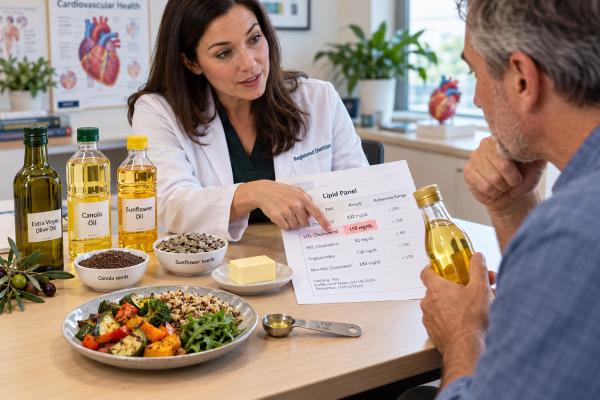
Seed oils have become one of nutrition’s most polarizing topics. Canola, soybean, corn, sunflower, safflower, and grapeseed oils are often grouped together and blamed for inflammation, oxidized cholesterol, or heart disease because many contain the omega-6 fat linoleic acid. At the same time, major cardiovascular guidelines recommend replacing saturated fats with unsaturated fats, including many liquid plant oils. The apparent contradiction is easier to understand once you separate the oil itself from the foods it often appears in. A spoonful of canola oil used to cook vegetables is not nutritionally equivalent to a deep-fried snack made with refined flour, excess sodium, and repeatedly heated oil. For heart health, the most useful questions are what fat the oil replaces, how much you use, how it is heated, and what the rest of your diet looks like. This article explains the omega-6 debate, what research shows about LDL cholesterol and inflammation, and how to use seed oils practically without turning one ingredient into the whole story.
Table of Contents
- What Counts as a Seed Oil?
- Does Omega-6 Linoleic Acid Cause Inflammation?
- How Seed Oils Affect LDL Cholesterol and Heart Risk
- Seed Oils Are Not the Same as Ultra-Processed Foods
- Cooking, Heat, Oxidation, and Reusing Oil
- How to Choose an Oil for Everyday Cooking
- A Practical Heart-Healthy Approach
What Counts as a Seed Oil?
“Seed oil” is a broad kitchen label, not a medical category. It usually refers to oils extracted from seeds or seed-like plant materials, including canola, soybean, corn, sunflower, safflower, cottonseed, rice bran, and grapeseed oils. These oils do not all have the same fatty-acid profile. Some are especially rich in polyunsaturated fat, while others contain more monounsaturated fat. High-oleic sunflower and safflower oils, for example, are formulated to contain more monounsaturated oleic acid and less linoleic acid than conventional versions.
The common nutritional feature is that most seed oils are relatively low in saturated fat compared with butter, ghee, coconut oil, palm oil, and many animal fats. They are usually rich in unsaturated fats. Canola oil contains mostly monounsaturated fat and also provides alpha-linolenic acid, a plant omega-3 fat. Soybean oil contains both linoleic acid and a smaller amount of alpha-linolenic acid. Corn, conventional sunflower, and conventional safflower oils are higher in linoleic acid, an essential omega-6 fatty acid that the body cannot make on its own.
Most supermarket seed oils are refined. Refining removes gums, pigments, free fatty acids, odors, and other compounds that could make the oil unstable or strongly flavored. The process may include pressing or solvent extraction followed by refining steps. The fact that an oil is refined does not by itself make it harmful. Refining changes flavor, micronutrients, and heat stability, but cardiovascular effects depend more on the resulting fatty-acid pattern, total diet, cooking conditions, and what food the oil replaces.
That replacement question matters. Swapping butter for a liquid oil changes the balance from more saturated fat toward more unsaturated fat. Adding several tablespoons of oil to an already calorie-dense diet is a different intervention. Oils are energy-dense at roughly 120 calories per tablespoon, so portion size still matters even when the fat type is favorable.
If you want the broader context, saturated versus unsaturated fat for heart risk explains why the replacement nutrient is central to interpreting dietary-fat research.
Does Omega-6 Linoleic Acid Cause Inflammation?
The most common argument against seed oils is that linoleic acid, an omega-6 fat, can be converted into arachidonic acid, which can serve as a building block for signaling molecules involved in inflammation. That biochemical pathway is real, but the conclusion that eating normal amounts of linoleic acid therefore causes chronic systemic inflammation does not follow automatically.
Human metabolism regulates these pathways. Increasing dietary linoleic acid does not produce a simple one-for-one rise in arachidonic acid throughout the body. Clinical feeding studies and broader reviews generally have not shown that higher linoleic acid intake consistently raises common inflammatory markers in healthy adults. A recent randomized crossover study in adults with overweight or obesity compared foods providing soybean oil with foods providing palm oil. After four weeks, soybean oil did not increase the measured inflammatory markers or oxidized LDL.
Large observational studies also do not show the pattern you would expect if omega-6 intake were a major driver of cardiovascular inflammation. Higher circulating linoleic acid has generally been associated with lower, not higher, rates of coronary disease or stroke. These studies cannot prove that linoleic acid itself prevents events, because blood fatty-acid levels also reflect dietary and metabolic differences. Still, the direction of the evidence does not support the claim that ordinary omega-6 intake is broadly toxic to the cardiovascular system.
The omega-6-to-omega-3 ratio is another source of confusion. A very high ratio can reflect a diet low in omega-3-rich foods, but reducing healthy omega-6 foods is not the only—or usually the best—way to improve that balance. A more useful strategy is to eat adequate omega-3 sources such as fish, walnuts, flax, chia, or foods containing alpha-linolenic acid. For more detail on marine fats, see EPA versus DHA and heart benefits.
None of this means every source of omega-6 fat is equally healthy. A meal of vegetables sautéed in soybean oil and a bag of fried snack food can both contain linoleic acid, yet differ dramatically in sodium, fiber, calories, refined starch, food structure, and cooking history. The total food matters more than the presence of one fatty acid.
How Seed Oils Affect LDL Cholesterol and Heart Risk
For cardiovascular risk, one of the strongest arguments for liquid plant oils is what happens when they replace fats rich in saturated fatty acids. Saturated fat tends to raise LDL cholesterol by reducing the liver’s clearance of LDL particles from the bloodstream. Polyunsaturated and monounsaturated fats generally have a more favorable effect when substituted for saturated fat.
That means replacing butter, coconut oil, palm oil, or fatty animal drippings with canola, soybean, corn, sunflower, safflower, olive, or similar unsaturated oils can lower LDL cholesterol. The size of the change depends on the starting diet, genetics, weight change, and the exact replacement. If a person simply adds oil without reducing another calorie source, the lipid effect may be smaller and weight gain could offset benefits.
LDL cholesterol is not the only relevant measurement. The number of cholesterol-carrying atherogenic particles, often reflected by apolipoprotein B, also matters because these particles can enter the artery wall and contribute to plaque. Diets that reduce saturated fat and improve LDL-related measures can therefore fit into a broader strategy for lowering atherosclerotic risk. If you are tracking both types of markers, saturated fat and ApoB particle number explains the connection in more detail.
Cardiovascular outcome evidence is more complex than a single cholesterol test. Long-term diet studies are difficult because people change many foods at once, and trials rarely assign one cooking oil for enough years to measure heart attacks directly. Still, the combined evidence from lipid biology, randomized dietary trials, cohort studies, and guideline reviews supports replacing saturated fat with unsaturated fat rather than replacing it with refined carbohydrates.
Recent cohort and biomarker analyses have found that higher circulating linoleic acid is associated with lower cardiovascular risk, particularly for coronary heart disease and stroke. These are associations, not proof of cause and effect. They do, however, argue against the idea that linoleic acid exposure is inherently harmful.
The practical message is not that seed oils are medication or that more is always better. It is that a reasonable amount of unsaturated oil can be a heart-supportive replacement for saturated fat. Your overall LDL response should be judged with actual blood testing rather than assumptions based on internet claims.
Seed Oils Are Not the Same as Ultra-Processed Foods
Many people encounter seed oils mainly in chips, commercial baked goods, fast-food fries, frozen snacks, sauces, and packaged desserts. Those foods are often associated with poorer cardiometabolic outcomes, which can make the oil seem like the obvious culprit. But ultra-processed foods differ from home-cooked meals in many ways at the same time.
They may be high in sodium, refined starch, added sugar, calories, and highly palatable combinations that encourage overeating. They may be low in fiber, potassium, and intact plant foods. Some are fried repeatedly at high temperatures. Portion sizes can be large, and the foods can displace fruits, vegetables, legumes, whole grains, nuts, and other nutrient-dense choices. It is therefore difficult to attribute their health effects to seed oil alone.
This distinction is important when interpreting personal experience. If someone cuts out “seed oils” and simultaneously stops eating restaurant fried food, packaged pastries, chips, and takeout, their diet may improve substantially. Blood pressure, weight, triglycerides, or glucose may improve because of lower calories, sodium, and refined carbohydrates, even if avoiding linoleic acid was not the key mechanism.
Conversely, a diet can be high in saturated fat and low in seed oils while still being unfavorable for LDL cholesterol. Replacing commercial snacks with minimally processed foods is helpful, but replacing liquid oils with large amounts of butter or tallow can increase saturated-fat intake. The AHA’s current dietary guidance emphasizes both choices: favor unsaturated fats over saturated fats and favor minimally processed foods over ultra-processed foods.
If reducing packaged food is your goal, focus on the whole pattern rather than scanning ingredient lists for one oil. The evidence on ultra-processed foods and heart disease risk is more useful when viewed through total diet quality, not a single ingredient blacklist.
Cooking, Heat, Oxidation, and Reusing Oil
Unsaturated fats can oxidize when exposed to heat, oxygen, and light. Polyunsaturated fats are more chemically vulnerable than saturated fats because they contain more double bonds. This fact is sometimes used to argue that seed oils should never be heated. In real kitchens, however, oxidation depends on temperature, cooking time, how often the oil is reused, its antioxidant content, and the oil’s exact fatty-acid profile.
Normal home cooking is different from repeatedly heating the same oil in a commercial deep fryer for long periods. Brief sautéing, roasting, or baking with an appropriate cooking oil does not reproduce the same exposure. Problems become more likely when oil is overheated until it smokes heavily, held hot for long periods, or cooled and reheated again and again. Repeated high-temperature frying can generate oxidation products and can alter the oil’s trans-fatty-acid profile.
A few practical habits reduce unnecessary degradation:
- Use an oil suited to the cooking temperature and avoid deliberately heating it far past its smoke point.
- Do not keep heating oil until it smokes, darkens, foams, or develops a sharp rancid odor.
- Avoid repeatedly reusing deep-frying oil at home.
- Store oils tightly closed, away from prolonged heat and direct light.
- Buy amounts you can use while the oil still smells and tastes fresh.
Smoke point is useful but not a perfect ranking system. An oil’s oxidative stability also depends on fatty-acid composition and natural antioxidants. High-oleic oils tend to be more heat-stable because they contain more monounsaturated fat and less polyunsaturated fat. Refined oils often have higher smoke points than unrefined versions because impurities have been removed.
The goal is not to make cooking chemically perfect. It is to avoid the extreme conditions most likely to damage fats while still preparing nutritious food in a practical way.
How to Choose an Oil for Everyday Cooking
There is no single best cooking oil for every meal. Choosing based on flavor, cooking temperature, cost, and the fat you are replacing is more useful than dividing oils into “clean” and “toxic” categories.
Canola oil is a versatile option with relatively little saturated fat, substantial monounsaturated fat, and some plant omega-3 alpha-linolenic acid. It works for sautéing, roasting, baking, and dressings when you want a neutral flavor.
Soybean oil is rich in polyunsaturated fat, especially linoleic acid, and also contains some alpha-linolenic acid. It is common in commercial foods but can also be used as an ordinary home cooking oil. Its presence in a packaged food does not tell you whether that food is healthy overall.
Corn, sunflower, and safflower oils are typically higher in omega-6 linoleic acid. They can still fit a heart-healthy diet. High-oleic sunflower or safflower oils contain more monounsaturated fat and can be useful for higher-heat cooking.
Peanut oil is relatively rich in monounsaturated fat and has a flavor that works well in stir-fries and other higher-heat dishes. Grapeseed oil is neutral and relatively high in polyunsaturated fat. As with other oils, repeated deep-frying is a separate issue from normal home use.
Extra-virgin olive oil is not a seed oil, but it is a useful comparison. It is rich in monounsaturated fat and polyphenols and has strong evidence within Mediterranean-style eating patterns. You do not need to choose between olive oil and every seed oil. Many kitchens can use extra-virgin olive oil for dressings and moderate-heat cooking, with canola or another neutral oil when flavor or cost makes more sense. See extra-virgin olive oil health benefits for a deeper comparison.
For all oils, the biggest cardiovascular advantage often comes from what they replace. Using a tablespoon of unsaturated oil instead of a tablespoon of butter is different from pouring extra oil over an already calorie-dense meal.
A Practical Heart-Healthy Approach
You do not need to fear seed oils, and you do not need to consume them deliberately to be healthy. A sensible approach is to choose mostly unsaturated fats, use reasonable portions, and build meals around minimally processed foods.
Start with the main fat swaps in your routine. If you cook vegetables or eggs in butter every day, try canola, olive, soybean, or another liquid unsaturated oil for some meals. If you often eat fried fast food, reducing the frequency matters more than finding a restaurant that uses a different frying fat. If you already use small amounts of seed oil in a diet rich in vegetables, beans, whole grains, fish, nuts, and fruit, there is little evidence that removing the oil itself will improve heart health.
Pay attention to your personal risk factors. Someone with high LDL cholesterol may benefit from being especially deliberate about replacing saturated fat. Someone working on weight loss may need to measure oils because even heart-favorable fats are calorie-dense. People with very high triglycerides may get more benefit from reducing excess calories, alcohol, refined carbohydrates, and added sugars than from debating the omega-6 content of one cooking oil.
A Mediterranean-style eating pattern is a useful model because it emphasizes vegetables, legumes, whole grains, nuts, fish, and unsaturated fats without requiring perfection. That overall pattern has far more evidence behind it than rigid rules about avoiding a single ingredient.
If your concern is cholesterol, check the result rather than guessing. Repeat a lipid panel after a sustained dietary change, usually on the timeline recommended by your clinician. If LDL cholesterol or ApoB remains high, dietary fat quality is only one part of management. Genetics, body weight, thyroid disease, diabetes, kidney disease, medications, and inherited lipid disorders can all influence results, and some people need medication in addition to lifestyle changes.
For day-to-day cooking, you can use a simple hierarchy instead of trying to rank every oil. First, minimize trans fats and avoid making deep-fried foods a routine part of the diet. Second, when replacing a solid fat high in saturated fat, choose a liquid oil rich in unsaturated fat that fits the cooking method and flavor. Third, use enough oil to make food enjoyable without assuming that more is better. Canola, soybean, sunflower, safflower, corn, peanut, and olive oils all have different fatty-acid profiles, but several can serve the same practical role of replacing butter, lard, or other saturated-fat-rich cooking fats.
Storage and heating still matter. Keep oils capped and away from prolonged heat and light, discard oil that smells rancid, and avoid repeatedly reusing frying oil until it is dark, thick, or smoking. This advice is compatible with the evidence supporting unsaturated fats; it does not require believing that seed oils are uniquely dangerous. At home, most people will gain more by improving the foods cooked in the oil—vegetables, beans, fish, whole grains, or minimally processed proteins—than by switching between two unsaturated oils with small differences in omega-6 content. The cardiovascular effect comes from the full substitution pattern, not from one ingredient viewed in isolation.
The bottom line is straightforward: current evidence does not support the claim that ordinary seed-oil intake is a major cause of cardiovascular disease through omega-6-driven inflammation. Replacing saturated fats with unsaturated oils can improve LDL-related risk markers, while repeated high-heat frying and ultra-processed foods deserve separate consideration. Use oils as ingredients, not health foods, and judge them by the meal and dietary pattern they help create.
References
– Top Things to Know: 2026 Dietary Guidance to Improve Cardiovascular Health 2026 (Guideline) – Dietary and circulating omega-6 fatty acids and their impact on cardiovascular disease, cancer risk, and mortality: a global meta-analysis of 150 cohorts and meta-regression. 2025 (Meta-analysis) – Association of circulating fatty acids with cardiovascular disease risk: analysis of individual-level data in three large prospective cohorts and updated meta-analysis 2025 (Cohort analysis and meta-analysis) – Foods Fortified with Soybean or Palm Oil Show No Effect on Inflammation or Oxidized Low-Density Lipoprotein in Adults with Overweight or Obesity: a Secondary Analysis of a Randomized Placebo-Controlled Crossover Trial 2026 (Randomized crossover trial) – The effects of industrial processing and home cooking practices on trans-fatty acid profiles of vegetable oils 2025 (Review)
Disclaimer
This article provides general education about dietary fats and cardiovascular health and is not a substitute for individualized medical or nutrition advice. If you have very high LDL cholesterol, familial hypercholesterolemia, diabetes, established cardiovascular disease, or another condition requiring a specific diet, discuss major dietary changes with your clinician or a registered dietitian. Seek medical care for symptoms such as chest pressure, severe shortness of breath, fainting, or other possible signs of an acute heart problem.