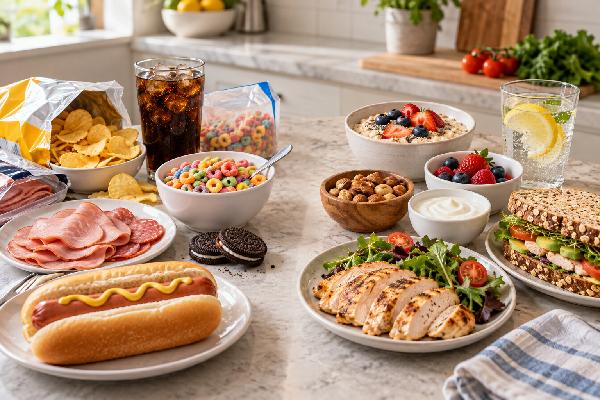
A diet high in ultra-processed foods is consistently associated with greater cardiovascular risk, but the most useful advice is not to panic about every packaged food. Ultra-processed food, or UPF, is a broad category that includes products as different as soda, processed meat, packaged bread, flavored yogurt, breakfast cereal, snack foods, and frozen meals. Their nutritional quality can vary widely.
For heart health, the biggest concerns are usually the patterns that come with heavy UPF intake: more sodium, added sugar, refined starch, excess calories, processed meat, and saturated fat, with less fiber and fewer minimally processed plant foods. Large prospective studies and meta-analyses link higher total UPF intake with higher risks of cardiovascular disease and coronary heart disease, although most evidence is observational and cannot prove that processing itself is the only cause. A practical goal is to reduce the UPFs that contribute the most to your diet while replacing them with convenient foods that improve fiber, fat quality, potassium, and overall nutrient density.
Table of Contents
- What “Ultra-Processed” Really Means
- What the Heart-Health Evidence Shows
- Which Ultra-Processed Foods to Limit First
- Why UPFs May Raise Heart Risk
- Better Alternatives That Stay Convenient
- How to Read Labels Without Overthinking
- A Realistic Plan to Eat Less UPF
What “Ultra-Processed” Really Means
Most research on ultra-processed food uses the NOVA classification. NOVA groups food by the nature and purpose of processing rather than by a simple nutrient score. Ultra-processed products are industrial formulations often made from refined ingredients, extracts, isolates, oils, sugars, starches, and additives designed to improve flavor, texture, shelf life, appearance, or convenience.
Typical examples include:
- sugar-sweetened soft drinks and many energy drinks;
- packaged cookies, cakes, candy, and pastries;
- chips and many savory snacks;
- processed meats such as hot dogs and some deli meats;
- frozen pizzas and many ready meals;
- instant noodles and soups;
- sweetened cereals;
- many fast-food products;
- some packaged breads, flavored yogurts, and snack bars.
The broad category creates an important limitation. A sugary soda, a high-fiber packaged bread, and a flavored yogurt can all fall under the UPF umbrella, but they do not have the same nutrient profile or likely cardiovascular effect.
That is why the question “Is this technically ultra-processed?” is often less useful than four other questions: How much sodium does it have? How much added sugar and saturated fat? How much fiber and protein? What food is it replacing?
A packaged food can still fit a heart-healthy diet. The goal is to make minimally processed, nutrient-dense foods the foundation and use packaged products selectively for convenience.
Processing is not automatically a problem
Many healthy foods are processed in ordinary ways. Frozen vegetables are washed, cut, and frozen. Canned beans are cooked and sealed. Plain yogurt is fermented. Oats are rolled or cut. Olive oil is extracted. These processes can make food safer, more convenient, or longer lasting without turning it into a nutritionally poor choice.
The concern rises when processing creates a product that is easy to overconsume and built mainly from refined starch, sugar, oils, salt, flavor systems, and additives while providing little fiber or intact food structure. Even then, the nutritional profile still matters. A high-fiber packaged cereal with little added sugar can be useful, while a minimally processed food cooked with large amounts of salt and saturated fat can still be a poor everyday choice.
This distinction keeps the advice practical. You do not need to bake your own bread, make yogurt from scratch, or avoid canned food to support heart health. You need to choose versions that help you eat more fiber-rich plants, better fats, and appropriate portions while keeping sodium and added sugar under control.
What the Heart-Health Evidence Shows
The overall research pattern is concerning. A 2024 analysis of three large U.S. cohorts, combined with a meta-analysis of prospective studies, found that people with the highest total UPF intake had higher risks of cardiovascular disease and coronary heart disease than those with the lowest intake. Across the meta-analysis, the highest intake category was associated with roughly 17% higher cardiovascular disease risk and 23% higher coronary heart disease risk.
Umbrella reviews covering many health outcomes also find associations between high UPF intake and cardiovascular disease, type 2 diabetes, obesity, and all-cause mortality. These conditions share pathways that can compound heart risk over time.
The evidence is strong enough to act on, but not simple enough for absolutes
Most UPF research is observational. Researchers estimate what people eat, follow them over time, and adjust for smoking, exercise, weight, income, and other factors. This can reveal consistent associations, but it cannot fully separate the effect of industrial processing from the effect of nutrients, calories, food choices, and lifestyle patterns that accompany high UPF intake.
Recent methodological reviews have also highlighted variation in how researchers classify foods and adjust statistical models. So it is reasonable to say that high UPF intake is a risk marker and likely contributor to unhealthy dietary patterns, while remaining cautious about claims that every additive or every processed product directly causes heart disease.
Different UPF groups may behave differently
One of the most useful findings from recent cohort research is that UPF subgroups do not all show the same association. Sugar- and artificially sweetened beverages and processed meats have shown stronger adverse associations, while some breads, cereals, and yogurt-type products have not consistently followed the same pattern.
That supports a priority approach rather than a purity approach: limit the categories with the clearest nutritional problems first.
Which Ultra-Processed Foods to Limit First
If you want the biggest heart-health return for the least effort, target the foods that combine frequent intake with poor nutritional quality.
1. Sugary drinks
Soda, sweet tea, energy drinks, fruit drinks, and sweetened coffee beverages can add large amounts of sugar without much fullness. Regular intake can promote weight gain, higher triglycerides, insulin resistance, and type 2 diabetes.
Water, sparkling water, unsweetened tea, or coffee with minimal added sugar are better defaults. If you currently drink several sugary beverages a day, changing this habit may be more important than eliminating occasional packaged foods.
For label awareness, review how much added sugar is too much and where it hides.
2. Processed meats
Hot dogs, bacon, sausages, salami, and many deli meats can be high in sodium and often contain substantial saturated fat. Processed meat intake is consistently associated with worse cardiometabolic outcomes in population studies.
Replace some servings with fish, beans, lentils, eggs, skinless poultry, tofu, or leftover home-cooked meat. If processed meat is a daily habit, understanding what counts as processed meat can help you make targeted substitutions.
3. Salty packaged meals and snacks
Frozen entrées, instant noodles, soups, chips, snack mixes, and many fast-food meals can pack hundreds or thousands of milligrams of sodium into a small amount of food. That matters because high sodium intake raises blood pressure in many people.
Choose lower-sodium versions, use smaller portions, add vegetables or beans, and compare labels within the same category rather than assuming all packaged foods are similar.
4. Desserts and refined snack foods
Cookies, cakes, candy, pastries, and many snack bars are easy to overeat because they combine refined carbohydrate, sugar, fat, and high energy density. They do not need to disappear completely, but treating them as occasional foods rather than everyday fuel can reduce calorie and sugar load.
5. Foods that crowd out better choices
Sometimes the problem is displacement rather than one harmful ingredient. A packaged pastry for breakfast may replace oats, fruit, nuts, or yogurt. Chips may replace fruit or nuts. A frozen pizza may replace vegetables, beans, and whole grains.
Ask what the food is preventing you from eating. That question often makes the better alternative obvious.
Why UPFs May Raise Heart Risk
No single mechanism explains the association. Several factors likely overlap.
Excess calories and weight gain
Many UPFs are soft, energy-dense, rapidly eaten, and highly palatable. Controlled feeding research has shown that people can consume more calories and gain weight on an ultra-processed diet even when the offered diets are matched for several nutrients. Weight gain then raises the risk of hypertension, diabetes, fatty liver disease, sleep apnea, and abnormal lipids.
Sodium and blood pressure
Packaged foods and restaurant-style products are major sodium sources. High blood pressure damages arteries and raises the risk of heart attack, stroke, heart failure, and kidney disease. If sodium is a major concern, learning where hidden sodium comes from can make label reading much more effective.
Added sugar, refined carbohydrate, and triglycerides
Large amounts of rapidly absorbed carbohydrate can increase blood glucose and insulin demand and contribute to elevated triglycerides. This is especially important in people with insulin resistance or diabetes.
Lower fiber and poorer fat quality
Heavy UPF diets can displace beans, vegetables, whole fruit, nuts, seeds, and whole grains. That lowers intake of fiber, potassium, magnesium, and unsaturated fats while potentially increasing saturated fat.
Fiber-rich diets support lower LDL cholesterol, better blood sugar regulation, and greater satiety. Whole grains are one practical way to add fiber and replace refined starches.
Processing features and additives may matter, but evidence is evolving
Researchers are studying emulsifiers, artificial sweeteners, flavor systems, altered food structure, packaging chemicals, and effects on the gut microbiome. These are plausible areas of concern, but human evidence is not strong enough to assign a specific fraction of cardiovascular risk to individual additives.
This is why it is more useful to act on established dietary features—sodium, added sugar, fiber, fat quality, calories, and food variety—than to fear every unfamiliar ingredient name.
Better Alternatives That Stay Convenient
A heart-healthy diet must work on busy days. Convenience can come from frozen, canned, prewashed, or pre-cooked foods without turning every meal into an ultra-processed combination.
| Common UPF-heavy choice | Better convenient alternative | Heart-health advantage |
|---|---|---|
| Sugary cereal | Plain oats with fruit and nuts | More fiber, less added sugar |
| Deli-meat sandwich | Leftover chicken, hummus, tuna, or bean filling | Often less sodium and processed meat |
| Frozen pizza | Whole-grain pita with tomatoes, vegetables, and modest cheese | More vegetables and portion control |
| Instant noodles | Plain noodles with frozen vegetables and egg or tofu | Lower sodium, more protein and produce |
| Chips | Unsalted nuts, fruit, vegetables, or air-popped popcorn | More fiber and nutrients |
| Sweetened yogurt dessert | Plain yogurt with berries and cinnamon | Less added sugar, keeps protein |
| Frozen dinner | Microwavable whole grain + frozen vegetables + beans or fish | More fiber and better control of sodium |
| Fast-food breakfast sandwich | Eggs, whole-grain toast, and fruit | Less sodium and more fiber |
Useful convenience foods that do not need much preparation
Keep a short list of “assembly foods” at home:
- frozen vegetables without salty sauces;
- canned beans, ideally no-salt-added or rinsed;
- canned tuna or salmon with reasonable sodium;
- plain oats;
- prewashed greens;
- frozen fruit;
- plain yogurt;
- unsalted nuts and seeds;
- eggs;
- whole-grain bread or wraps;
- microwavable plain brown rice, barley, or quinoa.
You can build a meal from two or three of these in less time than delivery often takes.
A Mediterranean-style eating pattern is a useful template because it naturally emphasizes vegetables, legumes, whole grains, fish, nuts, olive oil, and minimally processed foods without requiring a rigid “clean eating” rule.
How to Read Labels Without Overthinking
Start with the Nutrition Facts panel. Ingredient lists can add context, but the nutrient numbers usually tell you more about immediate heart-health priorities.
Check:
- Sodium: compare similar products and choose lower-sodium options when practical.
- Added sugars: especially in drinks, cereals, yogurt, sauces, and snack foods.
- Saturated fat: important when LDL cholesterol is elevated.
- Fiber: higher-fiber breads, cereals, and grain products are usually better choices.
- Serving size: multiply the numbers if you typically eat two or three servings.
- Calories: particularly for snacks that are easy to eat without feeling full.
For a step-by-step approach, see how to read a nutrition label for heart health.
Do not let marketing terms do the thinking for you
“Natural,” “organic,” “vegan,” “gluten-free,” “protein-packed,” and “keto” do not automatically mean heart healthy. A plant-based frozen meal can be extremely high in sodium. An organic cookie is still a cookie. A keto snack can contain large amounts of saturated fat.
Likewise, a packaged bread with several ingredients can still be a useful high-fiber choice. Judge the whole nutritional profile and how the food fits your diet.
A Realistic Plan to Eat Less UPF
You do not need to go from 70% ultra-processed food to zero in one week. A gradual plan is more sustainable and can still change your diet substantially.
Step 1: Find your top three repeat foods
For three days, note the ultra-processed foods you eat most often. Do not count every ingredient; look for patterns. Maybe it is soda at lunch, deli meat every weekday, and frozen dinners five nights a week.
Step 2: Replace one repeated item at a time
Choose a swap that is nearly as convenient. Replace soda with sparkling water. Replace two deli lunches with hummus or leftover chicken. Replace two frozen dinners with rice, frozen vegetables, and canned beans.
Step 3: Make the better option easier
Stock foods you can eat with minimal preparation. Cook extra protein or grains once and use them for several meals. Keep fruit visible. Freeze portions. Put lower-sodium options where you can reach them quickly.
Step 4: Keep some flexibility
A diet that includes occasional pizza, dessert, or packaged snacks can still be heart healthy if the overall pattern is strong. Rigid rules can turn normal eating into an all-or-nothing cycle. Frequency and portion matter.
Step 5: Track outcomes that matter
If you are making changes for heart health, follow blood pressure, body weight or waist circumference when relevant, LDL and non-HDL cholesterol, triglycerides, and blood sugar. The point is not to win a processing-label contest; it is to improve measurable risk factors and make healthy eating easier to sustain.
Reducing ultra-processed food works best when it means adding better food, not merely removing products. Eat more vegetables, fruit, beans, whole grains, nuts, seeds, fish, and unsaturated fats. Limit the UPFs that supply the most sodium, sugar, processed meat, and excess calories. That approach captures the most important heart-health benefits without treating every packaged food as equally harmful.
Restaurant food deserves the same practical attention even when it is not easy to classify by NOVA. A burger, fries, pizza, takeout noodle dish, or oversized sandwich may contain high levels of sodium, refined carbohydrate, saturated fat, and calories whether it came from a factory package or a restaurant kitchen. If eating out is frequent, use the same priorities: choose vegetables when available, pick grilled or baked proteins more often, ask for sauces and dressings on the side, avoid making sugary drinks automatic, and split very large portions. The heart does not care whether excess sodium came from a frozen box or a restaurant plate.
The strongest long-term goal is a food environment where the healthy choice is routine. Keep the easy staples at home, know two or three better takeout orders, and reserve highly processed treats for times you genuinely want them rather than letting them become the default. Small changes repeated daily can shift hundreds of meals over a year, which matters far more than making one week of eating perfectly unprocessed. When choosing between two convenient foods, favor the option that makes the overall pattern better—more fiber or plants, less sodium or added sugar—rather than judging the package only by whether it is technically ultra-processed.
References
- Effect of Ultra-Processed Foods Consumption on Human Health Outcomes: An Umbrella Review of Systematic Reviews and Meta-Analyses 2026 (Review)
- Ultra-processed food consumption and human health: an umbrella review of systematic reviews with meta-analyses 2025 (Review)
- Ultra-processed foods and cardiovascular disease: analysis of three large US prospective cohorts and a systematic review and meta-analysis of prospective cohort studies 2024 (Systematic Review)
- Ultra-processed foods and human health: An umbrella review and updated meta-analyses of observational evidence 2024 (Review)
- Ultra-Processed Foods and Human Health: A Systematic Review and Meta-Analysis of Prospective Cohort Studies. 2024 (Systematic Review)
Disclaimer
This article provides general nutrition information and is not a substitute for individualized medical care. If you have heart disease, diabetes, kidney disease, hypertension, or a medically prescribed diet, discuss major dietary changes with your healthcare professional or registered dietitian.