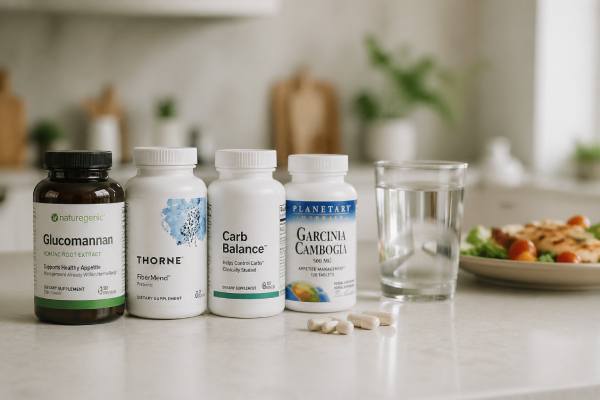
Stimulant-free appetite suppressants sound appealing for an obvious reason: many people want help with hunger without the jitteriness, sleep disruption, fast heart rate, or blood pressure concerns that can come with caffeine-heavy fat burners. The problem is that “stimulant-free” is mostly a marketing category, not a guarantee of safety or meaningful weight loss. Some ingredients can modestly improve fullness or reduce snacking, but many products overpromise, combine poorly studied compounds, or hide behind proprietary blends.
The most useful way to judge these supplements is not by whether they are labeled natural, herbal, or caffeine-free. It is by whether the ingredient has plausible appetite effects, decent human evidence, a manageable risk profile, and a realistic place in a calorie deficit. This article breaks down which stimulant-free ingredients are most worth considering, which are weaker or overhyped, the risks that matter most, how to shop more safely, and when a supplement is the wrong tool entirely.
Table of Contents
- What stimulant-free appetite suppressants can and cannot do
- Which ingredients have the best evidence
- Ingredients with weaker or riskier claims
- The main risks and drug interactions
- How to choose a safer product
- How to use them realistically
- When to skip supplements and seek medical help
What stimulant-free appetite suppressants can and cannot do
The first thing to understand is that most stimulant-free appetite suppressants do not “switch off hunger.” The better ones work in quieter ways. Some increase fullness by adding bulk in the stomach. Some may slow gastric emptying a bit. Some slightly reduce snacking or make it easier to feel satisfied with smaller meals. Those effects can matter, but they are usually modest.
That distinction matters because supplement marketing often blurs three very different goals:
- reducing appetite
- improving fullness after meals
- increasing weight loss directly
Those are not the same thing. A product can help with fullness and still produce very little weight loss if the rest of the day’s intake stays high. Likewise, a person can feel less hungry for a week on a supplement and still overeat highly palatable foods at night. Appetite is only one part of weight regulation.
This is why the strongest way to judge a stimulant-free product is not by testimonials, “clinically studied” buzzwords, or before-and-after photos. It is by asking a simpler question: does this ingredient make it easier to maintain a calorie deficit without causing more problems than it solves? In practice, that usually means the best options are fairly boring. They tend to be fiber-based, sometimes protein-adjacent, and usually less dramatic than the labels suggest.
Another useful reality check is that stimulant-free does not automatically mean low-risk. A product can be caffeine-free and still cause bloating, constipation, diarrhea, medication absorption problems, low blood sugar when paired with diabetes medication, serotonin-related concerns with certain botanicals, or contamination risks. Some “natural” weight-loss supplements have even been found to contain undeclared drug ingredients. That is one reason the broader discussion of over-the-counter appetite suppressants is often more important than the stimulant-free label alone.
A practical rule is this: if a stimulant-free product claims rapid fat loss, all-day appetite shutdown, or effortless weight loss without changes in eating, assume the marketing is stronger than the evidence. The ingredients most likely to help are usually the ones that support meal structure and satiety, not the ones that promise metabolic magic.
The people who tend to benefit most are not those looking for a dramatic chemical effect. They are usually people who already have a decent food plan and want a small edge against hunger, snacking, or portion creep. That is a much narrower and more realistic role than most supplement ads imply.
Which ingredients have the best evidence
Within the stimulant-free category, the best-supported ingredients are mostly soluble fibers. That does not make them powerful in the same way prescription anti-obesity medications can be powerful, but it does make them the most defensible place to start. The key reason is simple: they are mechanically plausible, reasonably well studied, and their benefits fit what users actually feel most often, which is improved fullness rather than dramatic fat burning.
| Ingredient | What it may help with | Main drawbacks | Practical verdict |
|---|---|---|---|
| Psyllium | Fullness, meal control, bowel regularity | Bloating, gas, constipation if fluids are low | One of the most sensible first options |
| Glucomannan | Satiety and pre-meal fullness | GI upset, swallowing risk if taken improperly, mixed weight data | Potentially useful, but needs more caution than many users realize |
| Inulin or mixed prebiotic fiber blends | Fullness support and gut-related benefits | Gas, bloating, variable response | Helpful for some people, usually less immediate than viscous fiber |
| Saffron extract | Snacking control in some users | Smaller evidence base, variable effect, product quality issues | Interesting but second-tier, not a core supplement |
| Multi-ingredient stimulant-free blends | Unclear because formulas vary | Harder to judge dose, quality, and interactions | Usually a worse choice than a simple single-ingredient product |
Soluble fiber is the first place to look
If someone wants the shortest honest answer to this topic, it is usually this: start with fiber before you start with herbs. Soluble fibers such as psyllium and glucomannan can increase fullness and help some people reduce intake at meals. That is not glamorous, but it is a real mechanism. They can also support bowel regularity, which matters because constipation, irregular eating, and low food volume often make dieting feel harder than it needs to.
Psyllium tends to be the easiest “starter” option because it is widely available, easy to understand, and usually used for both fullness and digestive support. Many people do best with it when they start with a low dose and gradually build up instead of taking a large amount on day one.
Glucomannan is often marketed more aggressively as an appetite suppressant. That is partly because it absorbs a large amount of water and can create a strong sense of fullness. The catch is that its actual weight-loss evidence has been mixed, and it demands more respect from a safety standpoint. It is not a casual dry-swallow capsule for people who rush through pills.
For a deeper look at how these compare in practice, fiber supplements for weight loss are generally a more evidence-based place to begin than exotic herbal blends.
Saffron is more promising than most botanicals, but still modest
Saffron extract has attracted attention because some trials suggest it may reduce snacking or improve certain appetite-related behaviors. That makes it more interesting than many trendy “natural appetite suppressant” ingredients. But it is still not a high-confidence weight-loss tool. The evidence is more limited than for fiber, effects are generally modest, and product quality can vary.
The most reasonable way to think about saffron is as a possible second-line add-on for someone whose main issue is frequent snacking rather than intense meal hunger. It is not the ingredient I would put ahead of soluble fiber, and it is not something I would expect to overcome poor meal structure, chronic stress eating, or ultra-processed food intake by itself. A fuller breakdown of saffron for weight loss can help if that is the ingredient you are considering specifically.
The “best” ingredient is often the least exciting one
That is the pattern people often resist. The best stimulant-free appetite suppressants are usually not the most exotic. They are the ones with straightforward physiology, relatively transparent dosing, and an effect size that matches reality. In most cases, that means a simple, boring product with one primary ingredient beats a flashy blend with ten botanicals and a dramatic label.
Ingredients with weaker or riskier claims
Once you move beyond soluble fiber and a few modestly interesting ingredients like saffron, the quality of evidence usually drops fast. This is where the supplement market gets crowded with compounds that sound scientific, use vague mechanisms, or borrow credibility from animal studies without showing much reliable benefit in real human dieting.
A few patterns are especially common.
Chromium and similar “blood sugar support” add-ons
Chromium picolinate is frequently included in stimulant-free appetite blends because it sounds metabolically helpful and is easy to market around cravings. In practice, it is rarely the reason a supplement works. Even when there are small metabolic effects in certain groups, that is very different from proving reliable appetite suppression in day-to-day weight loss.
This does not necessarily make chromium dangerous for everyone. It makes it a poor reason to choose a product unless there is a specific, well-supported use case and a clinician agrees it fits your situation.
Garcinia and other heavily marketed botanicals
Some stimulant-free products lean on Garcinia cambogia, hydroxycitric acid, or other plant extracts marketed as appetite blockers. The problem is not just that the benefits are inconsistent. It is that the safety discussion can get murkier when botanical blends are involved, especially if the full formula is not transparent or multiple actives are stacked together.
That is an important lesson in this category: an ingredient can be non-stimulant and still be a weak bet. Many of these products sit in the awkward zone where evidence is not strong enough to trust, but interaction and quality concerns are still real.
Ketones, enzyme blends, and “fat-burning without stimulants” formulas
These tend to appeal to people who want a metabolic shortcut without caffeine. The labels usually mention fat metabolism, carb blocking, thermogenesis, or cravings, but the actual appetite effect is often indirect, weak, or unconvincing. Some products combine several such ingredients in amounts that are too small to matter, then market the blend as though the combination itself were special.
The more a product leans on phrases like “targets fat storage,” “turns off hunger hormones,” or “supports weight loss from every angle,” the more skeptical you should become. Those are the kinds of claims that sound science-forward while avoiding a clear answer to the question that matters most: what ingredient, at what dose, meaningfully helps real people eat less?
Why weaker ingredients still sell well
They sell because hunger is emotional, not just biological. People want something fast, clean, and easy. A stimulant-free label feels gentler and more trustworthy. A natural label feels safer. A blend with many ingredients feels more advanced. But from a practical standpoint, those features can actually make a product harder to judge.
That is why the best approach is usually subtractive. Instead of asking which impressive blend to buy, ask which ingredient you could justify on its own. If the answer is not clear, the product is probably relying more on packaging than evidence.
The main risks and drug interactions
The biggest safety mistake in this space is assuming that stimulant-free means low-risk. In reality, the risk profile simply changes. You may avoid caffeine-related jitteriness, but you can still run into gastrointestinal problems, swallowing hazards, medication interactions, or quality-control failures.
Fiber-related side effects are common, even with “good” ingredients
The most evidence-based ingredient group in this category, soluble fiber, is also the group most likely to cause annoying day-to-day side effects if used badly. Common issues include:
- bloating
- gas
- abdominal cramping
- constipation if fluids are too low
- loose stools or urgency in some users
These problems are usually more about dose, timing, and fluid intake than about toxicity. But they still matter, because an appetite tool that leaves you uncomfortable is not a useful tool for very long.
Glucomannan deserves a separate warning. Because it absorbs water and expands, it can create a swallowing or blockage risk if taken without enough fluid or by people who already have trouble swallowing. That is one reason it should be used more carefully than casual marketing suggests.
Medication interactions are easy to miss
Some stimulant-free supplements can interfere with oral medication absorption, especially bulky fiber supplements taken too close to prescription drugs. Others may affect blood sugar or have additive effects with diabetes treatment. Botanical products can also create interaction risks that have nothing to do with stimulants at all.
This becomes more important if you take:
- diabetes medications
- thyroid medication
- anticoagulants
- antidepressants or other psychiatric medications
- seizure medication
- multiple daily oral prescriptions
If you already take regular medication, the question should not be “Is this natural?” The question should be “What happens if this changes drug absorption, blood sugar response, or liver metabolism?”
Contamination and label problems are real
Weight-loss supplements are one of the product categories where hidden ingredients remain a recurring concern. That matters even more for stimulant-free products because some buyers choose them specifically to avoid stimulant exposure or prescription-like effects. A label can say caffeine-free and still fail you in other ways if the product quality is poor, the formula is under-disclosed, or the product is adulterated.
That is why supplement quality matters as much as ingredient choice. If a formula relies on vague terms, secret blends, or dramatic promises, assume the overall risk is higher than the label makes it look.
Who should be especially cautious
Extra caution is warranted for people who are pregnant, breastfeeding, under 18, older and on multiple medications, living with an eating disorder, managing diabetes with medication, or dealing with liver, kidney, or major gastrointestinal conditions. In those groups, even a seemingly mild supplement can create more downside than upside.
How to choose a safer product
Most people spend too much time comparing claims and not enough time screening out bad products. A safer purchase process is usually more helpful than reading a hundred marketing pages.
Start with the label itself. A better product usually has a few traits in common:
- It names the exact ingredient clearly.
- It states the dose per serving clearly.
- It does not hide behind a large proprietary blend.
- It avoids dramatic claims like “no diet needed” or “melts fat fast.”
- It comes from a company that provides basic quality and testing information.
In practical terms, a single-ingredient psyllium or glucomannan product is easier to judge than a “stimulant-free appetite control matrix” with eight plant extracts, chromium, digestive enzymes, and a trademarked blend name.
This is also where it helps to review how to read supplement labels instead of assuming a polished package means careful manufacturing. If a product does not tell you what matters, that is usually your answer.
Third-party certification is another useful filter. It is not a guarantee that a supplement will work, but it does lower some uncertainty around identity, contamination, and basic quality. For anyone buying weight-loss supplements regularly, third-party testing is one of the few boring details that genuinely improves the odds of making a smarter choice.
A few practical red flags are worth taking seriously:
- proprietary blends with no meaningful dose transparency
- “doctor formulated” without real manufacturing detail
- claims focused on effortless fat loss rather than appetite or fullness
- products sold mainly through social media hype
- formulas that combine many exotic botanicals with little explanation
- labels that say stimulant-free but also include ingredients you do not recognize and cannot verify
The best shopping mindset is simple: favor transparency over novelty. If you cannot explain why a product should work, what the main active is, and what the main risk is, it is probably not a smart buy.
How to use them realistically
Even a decent stimulant-free appetite suppressant can be misused. The most common mistake is treating it like permission to wing the rest of the day. That usually backfires. Supplements work best when they solve a specific hunger problem, not when they are expected to replace meal planning.
A more realistic approach looks like this:
- choose one ingredient, not a stack
- define the exact problem you are trying to solve
- start with the lowest sensible dose
- increase only if tolerated
- keep a close eye on bowel habits, fullness, and meal timing
- stop if the product is not helping after a reasonable short trial
For example, if your biggest problem is overeating at lunch because breakfast was too light, a fiber supplement before dinner will not fix the real issue. If your main problem is evening snacking after low-protein meals, the better first move may be a more structured food plan using high-volume, low-calorie foods and more satisfying meals rather than another capsule.
That is an important point: appetite suppression is not just about taking less food away. It is also about making meals more filling. In many cases, people get more durable results by upgrading meal structure than by adding a supplement. Higher-protein meals, more food volume, enough fluids, and fewer liquid calories often do more for hunger than a trendy non-stimulant product. This is especially true if you already know you routinely undereat early in the day and then lose control later. A list of practical high-protein snacks is often more useful than another bottle from the supplement aisle.
If you do use a fiber-based supplement, take the instructions seriously. Start low. Use enough water. Leave enough time between the supplement and prescription medications. Do not assume “more” means “better.” Appetite aids fail surprisingly often because users start too aggressively, get bloated or constipated, and quit before giving a reasonable dose a fair trial.
A smart test period is usually short and honest. If an ingredient does not meaningfully improve fullness, snacking, or portion control within a couple of weeks, there is not much reason to keep forcing it. The goal is not to become a long-term collector of half-effective supplements. It is to find out whether one simple tool actually makes your calorie deficit easier to sustain.
When to skip supplements and seek medical help
There are times when a stimulant-free appetite suppressant is simply the wrong level of treatment. The most obvious example is when someone needs clinically meaningful weight loss because obesity-related health risks are already significant. In that situation, a mild supplement may waste time, money, and emotional bandwidth.
A supplement is usually not the right first move when:
- weight is rising despite a serious effort and structured eating
- binge eating, loss-of-control eating, or food obsession is a major issue
- you take multiple medications with interaction potential
- you have diabetes and blood sugar treatment is active
- you are pregnant, breastfeeding, or trying to conceive
- you have liver disease, kidney disease, swallowing problems, or major GI symptoms
- you need a level of appetite control that supplements are unlikely to provide
It is also worth stepping back if you find yourself rotating through one appetite product after another. That pattern often signals that the problem is no longer about ingredient choice. It may be about chronic dieting fatigue, nighttime overeating, medication-related hunger, depression, sleep loss, or a food environment that keeps overpowering small interventions.
For some people, a structured conversation about weight loss medications makes more sense than another round of over-the-counter experimentation. Prescription treatment is not right for everyone, but it is more evidence-based than most supplement strategies when the need is substantial. Likewise, if you are not sure whether your weight concerns deserve medical evaluation, it can help to review when to talk to a doctor before trying to lose weight rather than assuming supplements are always the safest starting point.
The best way to think about stimulant-free appetite suppressants is as optional tools, not central solutions. The better products may help with satiety and snacking. The weaker ones mostly create noise. When appetite problems are severe, persistent, or medically complicated, the right answer is usually better assessment, not a more creative supplement stack.
References
- Dietary Supplements for Weight Loss – Health Professional Fact Sheet 2022 (Government Fact Sheet)
- Weight Loss Supplements 2023 (Review)
- Dietary Supplements for Weight Loss and Drug Interactions 2024 (Review)
- The Impact of Glucomannan, Inulin, and Psyllium Supplementation (SolowaysTM) on Weight Loss in Adults with FTO, LEP, LEPR, and MC4R Polymorphisms: A Randomized, Double-Blind, Placebo-Controlled Trial 2024 (RCT)
- Effects of saffron (Crocus sativus L.) on anthropometric and cardiometabolic indices in overweight and obese patients: A systematic review and meta-analysis of randomized controlled trials 2022 (Systematic Review and Meta-analysis)
Disclaimer
This article is for general educational purposes only. Stimulant-free appetite suppressants can affect digestion, medication absorption, blood sugar, and supplement safety in ways that are not obvious from the label. It is not a substitute for medical advice, diagnosis, or treatment from your clinician or pharmacist.
If you found this article useful, please consider sharing it on Facebook, X, or your preferred platform.