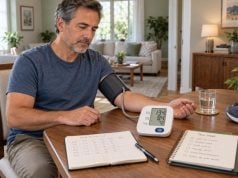
Stretching is useful for flexibility, comfortable movement, and staying active, and newer research suggests regular stretching may also improve arterial stiffness and blood pressure. But it is not a substitute for aerobic exercise, strength training, prescribed blood-pressure treatment, or other proven heart-disease prevention strategies. The cardiovascular evidence is promising but much smaller and less established than the evidence for walking, cycling, resistance training, and other forms of physical activity.
The practical takeaway is to use stretching as part of a complete routine. Static stretches can improve range of motion and may support vascular health when practiced regularly for weeks. Dynamic movement can help prepare the body for exercise. Stretching can also make exercise more comfortable for people who feel stiff or limited. What it cannot do is provide the same cardiorespiratory fitness stimulus as sustained aerobic activity or the same muscular benefits as resistance training. If your goal is heart health, stretching is a helpful addition—not the whole program.
Table of Contents
- What stretching does for the body
- Can stretching lower blood pressure?
- Stretching and arterial stiffness
- What stretching cannot replace
- Best way to add stretching to a heart-healthy routine
- When to stretch: before or after exercise?
- Stretching safety and special situations
What stretching does for the body
Stretching increases the range through which a joint and its surrounding muscles and connective tissues can move comfortably. With regular practice, it can improve flexibility, reduce feelings of stiffness, and make some daily movements easier.
The main types include:
- Static stretching: Move into a position that creates a mild stretch and hold it for a period of time.
- Dynamic stretching: Move joints through controlled ranges repeatedly, often in patterns that resemble the activity you are about to do.
- Active stretching: Use your own muscles to hold a limb in a position without outside assistance.
- Passive stretching: Use an external force, such as a strap, partner, gravity, or body position, to maintain the stretch.
For heart health, most research has focused on repeated static or passive stretching programs. Those studies are different from casually touching your toes for 30 seconds once a week.
The American Heart Association classifies flexibility work as one component of a balanced physical-activity routine, alongside endurance, strength, and balance. Its most established benefit is movement quality—not cardiovascular conditioning.
That distinction is useful because “exercise” is a broad word. A stretch can be physically active without raising heart rate enough to improve cardiorespiratory fitness. It can support the exercises that do.
Can stretching lower blood pressure?
Possibly. Recent research suggests regular stretching may reduce resting blood pressure, especially in people with elevated blood pressure or hypertension, but the evidence base is still small.
A 2026 systematic review examining different forms of stretching in people with prehypertension or hypertension found pooled reductions of roughly 6 to 7 mmHg systolic and about 5 mmHg diastolic in sensitivity analyses. Those numbers sound impressive, but the authors emphasized that only a small number of studies were available, methods differed, and risk of bias limited certainty.
That caution is important. A result from a handful of trials should not be interpreted the same way as decades of evidence supporting aerobic activity, weight management, sodium reduction, or antihypertensive medication.
Still, there are plausible mechanisms. Repeated stretching may affect blood-vessel tone, local blood flow, autonomic nervous-system activity, and the mechanical properties of arteries. Some protocols also include slow breathing and relaxation, which can influence short-term blood pressure.
If stretching is easy for you to perform and does not cause pain, it can be a reasonable add-on to a blood-pressure plan. It should not be used to delay evaluation or medication when your readings indicate treatment is needed.
For stronger evidence-based exercise options, the best exercises for high blood pressure compares aerobic, resistance, and other training approaches.
Do not judge the effect from one post-stretch reading
Blood pressure fluctuates from minute to minute. Sitting quietly during a stretching session can lower a reading simply because you have rested. To know whether a routine is changing your baseline, compare home averages taken under similar conditions over several weeks.
Use a validated upper-arm cuff, sit quietly before measuring, and avoid checking immediately after exercise. A sustained trend matters more than the lowest number you can produce after relaxation.
Stretching and arterial stiffness
Arterial stiffness refers to how resistant large arteries are to expanding with each heartbeat. Arteries naturally stiffen with age, and greater stiffness is associated with higher cardiovascular risk. Pulse wave velocity is one common research measure.
Stretching has attracted attention because repeated muscle-tendon lengthening may also influence the vessels running through those tissues. A 2026 systematic review and meta-analysis found that 4- to 12-week stretching programs produced a significant reduction in pulse wave velocity, while a single stretching session did not have a clear effect. Another 2026 meta-analysis comparing stretching with aerobic and resistance exercise also found that chronic exercise modalities can change arterial stiffness, though results vary by protocol and population.
This is interesting, but it does not prove that stretching prevents heart attacks or strokes. Arterial stiffness is an intermediate cardiovascular marker. Improving a marker is not the same as demonstrating fewer cardiovascular events over years.
A 2024 systematic review also found that people with poorer trunk flexibility tended to have greater arterial stiffness. That association could reflect shared factors such as age, fitness, activity level, or connective-tissue characteristics. It does not establish that becoming more flexible automatically makes arteries healthier.
For a fuller explanation of the marker itself, arterial stiffness and lifestyle covers what it means, how it is measured, and which habits have the strongest evidence.
Why the vascular effect is biologically plausible
During a stretch, blood vessels within the stretched muscle and connective tissue are mechanically deformed. When the stretch releases, local blood flow changes. Repeating this process may influence endothelial signaling and vascular smooth muscle over time.
Stretching may also affect autonomic balance. Slow, comfortable sessions often reduce muscle tension and encourage slower breathing, which can lower sympathetic activation. These effects are plausible contributors, but researchers have not established one single mechanism.
The dose is not settled either. Some recent analyses suggest greater effects when stretches are repeated multiple times and performed frequently, but the number of available trials is too small to define a precise cardiovascular prescription.
What stretching cannot replace
Stretching has limits, and those limits matter if your goal is preventing cardiovascular disease.
It does not replace aerobic exercise
Brisk walking, cycling, swimming, running, and other aerobic activities raise heart rate and breathing for sustained periods. Over time they improve cardiorespiratory fitness, exercise capacity, blood pressure, glucose regulation, and cardiovascular outcomes.
Static stretching generally does not create that training stimulus. You may feel looser afterward, but you have not accumulated the same amount of moderate-to-vigorous aerobic activity.
Adults are generally advised to get at least 150 minutes of moderate-intensity aerobic activity or 75 minutes of vigorous activity per week. Stretching is not counted as a minute-for-minute replacement for that target. If walking is your preferred form of cardio, walking for heart health explains how much and how fast to walk.
It does not replace strength training
Stretching may improve range of motion, but it does not provide the progressive load needed to build and preserve muscle effectively. Strength training supports glucose control, functional capacity, bone health, and cardiometabolic risk factors.
Most adults should also include muscle-strengthening activity on at least two days per week. A balanced routine can include both: strength to improve force production and stretching to maintain comfortable range of motion.
It is not a cholesterol treatment
There is not strong evidence that stretching alone meaningfully lowers LDL cholesterol or triglycerides. Any lipid improvement seen in a broader yoga or movement program may come from multiple components, including physical activity, body-weight change, diet, and metabolic effects.
If high LDL is the problem, focus on interventions with established effects: dietary fat quality, soluble fiber, weight management when appropriate, aerobic and resistance exercise, and medication when indicated.
It does not replace blood-pressure medication when medication is needed
Even if stretching lowers your pressure by several millimeters of mercury, that may not be enough to reach a safe target. Do not reduce or stop medication because a stretching program appears to help unless the prescribing clinician reviews your home readings and advises a change.
It has not been shown to prevent heart attacks by itself
The studies on stretching usually measure flexibility, blood pressure, heart rate, endothelial function, or arterial stiffness. They do not show that stretching alone reduces heart attacks, strokes, or cardiovascular death. Claims that it “cleans arteries,” “reverses plaque,” or provides the same benefit as cardio go beyond the evidence.
Best way to add stretching to a heart-healthy routine
Use stretching to support movement you already need for heart health. A short routine after walking or strength training is often the easiest place to put it because the muscles are already warm.
A simple full-body routine can include:
- Calf stretch
- Hamstring stretch
- Hip-flexor stretch
- Quadriceps stretch
- Chest stretch
- Upper-back or shoulder stretch
For static stretches, the American Heart Association suggests holding a stretch for about 10 to 30 seconds and repeating it several times, moving slowly and avoiding pain. You do not need to force the joint to its maximum range.
A practical routine might take 8 to 12 minutes:
- Walk easily for 3 to 5 minutes if you are stretching without another workout.
- Choose four to six major muscle groups.
- Move into each stretch until you feel mild tension, not pain.
- Hold for 20 to 30 seconds while breathing normally.
- Repeat each side two or three times as needed.
For heart health, combine that routine with the activities that carry the larger evidence base. A simple week could include brisk walking on most days, two full-body strength sessions, and stretching after three or four of those sessions.
If you enjoy yoga, it can blend flexibility with balance, light-to-moderate strength, breathing, and stress reduction. Yoga for blood pressure explains where it fits and which styles may be easier for beginners.
Stretching, mobility work, and yoga are not identical
These terms are often used as if they mean the same thing. Stretching mainly aims to increase or maintain the length and tolerance of muscles and connective tissues at the end of a range of motion. Mobility work is broader: it combines flexibility with control, strength, and movement through that range. Yoga can include stretching, but many poses also require balance, muscular endurance, coordination, and controlled breathing.
That difference matters when you build a routine. If tight calves limit your walking stride, a calf stretch may be enough. If you can reach a position passively but cannot control it during a squat or step-up, mobility drills and strength work may be more useful than simply holding a deeper stretch. If stress is a major barrier to activity, a gentle yoga session may add relaxation in a way a short flexibility routine does not.
For cardiovascular health, choose the format that helps you move regularly and safely. None of these labels changes the basic hierarchy of evidence: flexibility work can complement aerobic and resistance exercise, but it does not replace them.
Track function, not just how far you can stretch
A useful stretching program should make everyday movement easier. Every few weeks, ask practical questions: Can you walk with a comfortable stride? Can you reach overhead without compensating through your back? Can you get up from a chair, climb stairs, or perform strength exercises with better control? Those changes may matter more than touching your toes.
If you also hope stretching is helping blood pressure, keep that outcome separate from flexibility. Use a consistent home-monitoring routine and compare multi-day averages rather than judging success by how relaxed you feel immediately after a session. If readings remain above your treatment goal, discuss them with your healthcare professional instead of simply increasing stretching time.
Consistency matters more than extreme flexibility
You do not need to perform splits, touch your palms to the floor, or achieve a specific flexibility score for heart health. Range of motion is influenced by anatomy, joint shape, age, training history, and connective tissue.
The useful goal is enough mobility to perform daily tasks and other exercise comfortably. If improved ankle mobility helps you walk more, or hip and shoulder mobility make strength training easier, stretching is supporting heart health indirectly by helping you stay active.
When to stretch: before or after exercise?
Before a workout, a dynamic warm-up is usually more useful than long, relaxed static stretches. The purpose of a warm-up is to gradually raise heart rate, increase blood flow, and rehearse the movements you are about to perform.
Before brisk walking or running, start with easy walking and gradually increase pace. Before strength training, perform lighter versions of the planned exercises. Controlled leg swings, arm circles, or other dynamic movements can be included if they match your activity.
Long static stretches immediately before explosive or maximal performance can temporarily reduce strength or power in some situations, especially when held for prolonged periods. That matters more for sprinting, jumping, or heavy lifting than for ordinary health-focused exercise.
After exercise, static stretching is a convenient way to work on flexibility because tissues are warm. Stretching is not required to “flush out lactic acid,” and evidence that it prevents delayed-onset muscle soreness is limited. Do it because you want to maintain or improve range of motion, not because cooling down is impossible without it.
A proper cool-down can simply involve several minutes of easier movement so heart rate and blood pressure come down gradually.
Stretching safety and special situations
Stretching is generally low risk, but more is not always better. Mild pulling or tension is normal; sharp, stabbing, burning, or joint pain is a reason to stop.
Follow these basic rules:
- Warm up with easy movement if your muscles are cold.
- Move slowly into and out of the stretch.
- Do not bounce aggressively at the end range.
- Keep breathing normally rather than holding your breath.
- Avoid forcing an injured or recently operated joint.
- Use support for standing stretches if balance is uncertain.
People with joint replacements, severe osteoporosis, unstable joints, recent surgery, acute muscle or tendon injuries, or neurologic conditions may need modified stretches. A physical therapist can help identify safe ranges.
After a heart attack, stroke, or cardiac procedure, stretching can be part of rehabilitation, but the overall exercise plan should match medical status and recovery. Cardiac rehabilitation provides supervised progression of aerobic activity, strength, and other movement for eligible patients.
Stretching can also cause lightheadedness in some people when standing up quickly from floor positions. Change positions slowly, especially if you take blood-pressure medication or are prone to low blood pressure.
The best way to think about stretching is as a supportive cardiovascular habit. It can improve flexibility, may modestly help blood pressure and arterial stiffness, and can make other exercise easier to perform. But the strongest heart-health plan still depends on regular aerobic activity, muscle-strengthening exercise, good risk-factor control, a healthy eating pattern, sleep, and appropriate medical treatment.
References
- Effects of Different Types of Stretching on Hypertension: A Systematic Review with Exploratory Meta-Analysis. 2026 (Systematic Review)
- Musculoskeletal Stretching and Arterial Stiffness: Systematic Review and Meta-analysis of Acute and Longitudinal Interventions 2026 (Systematic Review)
- Acute and chronic arterial stiffness responses to stretching, aerobic, and resistance exercise: a systematic review and meta-analysis of randomized controlled trials 2026 (Systematic Review)
- Exploring the relationship between trunk flexibility and arterial stiffness measured by pulse wave velocity: A systematic review and meta-analysis 2024 (Systematic Review)
- Flexibility Exercise (Stretching) 2024 (Official Guidance)
- Stretching and Flexibility Exercises 2024 (Official Guidance)
Disclaimer
This article provides general educational information and is not a substitute for individualized medical or rehabilitation advice. If you have recent heart or vascular disease, uncontrolled blood pressure, a recent surgery, significant joint disease, or pain with stretching, ask a qualified healthcare professional about an appropriate activity plan. Do not replace prescribed cardiovascular treatment with stretching alone.