The best exercises for high blood pressure are regular aerobic activity, strength training, and selected isometric exercises performed safely and consistently. Walking, cycling, swimming, easy jogging, resistance training, wall sits, and handgrip work can all lower resting blood pressure over time. You do not need punishing workouts. For most adults, a strong starting goal is at least 150 minutes of moderate aerobic activity each week, spread across several days, plus strength training on two or more days. Research suggests that different training styles can reduce systolic blood pressure by several mmHg, with larger drops often seen in people who start with higher readings. The safest plan is progressive: begin at an intensity you can tolerate, avoid holding your breath during lifting, and build volume over weeks. Exercise complements—not replaces—prescribed blood-pressure treatment. If your pressure is very high, you have cardiovascular disease, or exercise causes chest pain, fainting, or unusual shortness of breath, get medical guidance before pushing harder.
Table of Contents
- How Exercise Lowers Blood Pressure
- Best Aerobic Exercises
- Strength Training for High Blood Pressure
- Isometric Exercise Options
- Weekly Exercise Goals
- Exercise Safety and Blood Pressure
- A Simple Beginner Workout Plan
How Exercise Lowers Blood Pressure
Exercise lowers blood pressure through both immediate and long-term effects. After a workout, blood vessels often remain more relaxed for hours, a response called post-exercise hypotension. With repeated training, the cardiovascular system becomes more efficient: blood vessels respond better, arterial stiffness can improve, the heart pumps more effectively, and the nervous system becomes less likely to keep blood vessels chronically constricted.
Regular activity also helps with several factors that travel with hypertension, including insulin resistance, excess body weight, poor sleep, low fitness, and stress. Those indirect benefits matter because blood pressure rarely exists in isolation.
Large analyses of randomized trials have found meaningful reductions from multiple exercise modes. In one 2023 network meta-analysis, average clinic blood-pressure reductions were roughly 4–6 mmHg systolic for aerobic, dynamic resistance, combined, and high-intensity interval training, while isometric training produced a larger average clinic reduction. These numbers are group averages, not guarantees. Your response depends on baseline blood pressure, medications, training dose, age, fitness, sleep, sodium intake, and how consistently you exercise.
A change of only a few mmHg can still be clinically meaningful when it is sustained. Exercise is therefore worth doing even if it does not eliminate the need for medication. For a closer look at expected timelines, see how much exercise can lower blood pressure.
Best Aerobic Exercises
Aerobic exercise is the most practical foundation because it is easy to scale, has a large evidence base, and can be performed on most days. The goal is sustained movement that raises breathing and heart rate without forcing you into an all-out effort.
Brisk walking
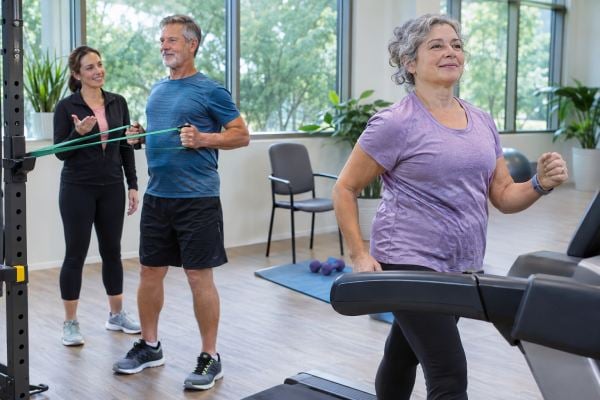
Walking is often the best place to start. It requires no equipment, is easy to divide into short sessions, and can be adjusted by pace, hills, and duration. A useful target is 20–30 minutes on most days, but three 10-minute walks can also be effective if a continuous session feels difficult.
Use the talk test: at moderate intensity, you should be breathing faster but still able to speak in full sentences. If you are very deconditioned, even a slower pace may be moderate for you. A guide to walking for heart health can help you progress pace and duration.
Cycling
Stationary or outdoor cycling is joint-friendly and easy to control. Start with 15–30 minutes at a comfortable resistance. If you use a stationary bike, avoid setting the resistance so high that you grind slowly and strain; a smoother cadence at moderate effort is usually more sustainable.
Swimming and water exercise
Swimming, water walking, and aqua aerobics reduce impact on the hips, knees, and feet. They can be especially helpful for people with arthritis or higher body weight. Because water changes circulation and body temperature, people with significant heart disease should ask their clinician about safe intensity before beginning vigorous pool workouts.
Easy jogging or elliptical training
If you already tolerate moderate exercise well, easy jogging or an elliptical trainer can raise fitness efficiently. You do not need to run to lower blood pressure, and harder is not automatically better. The best modality is the one you can perform regularly without injury or excessive fatigue.
High-intensity interval training
HIIT can lower blood pressure and improve fitness, but it is not the default starting point for someone with uncontrolled hypertension. Intervals should come after you have built a base of moderate activity and, when relevant, received medical clearance. A simple interval session might alternate 1 minute of harder work with 2–3 minutes of easy recovery rather than repeated all-out sprints.
Strength Training for High Blood Pressure
Strength training belongs in a blood-pressure plan because it improves muscular fitness, glucose control, function, and long-term cardiovascular health. Dynamic resistance training—lifting and lowering a weight through a range of motion—can also reduce resting blood pressure.
The main safety issue is not strength training itself but how it is performed. Very heavy lifting combined with breath-holding can cause large temporary blood-pressure spikes. For most people with hypertension, moderate loads, controlled breathing, and good technique are more appropriate.
A practical routine can include 6–10 exercises covering the major muscle groups:
- Squat to a chair or leg press.
- Step-ups or supported split squats.
- Row with a cable, band, or dumbbell.
- Chest press or incline push-up.
- Hip hinge or light deadlift pattern.
- Overhead press if comfortable and medically appropriate.
- Calf raises.
- Core exercises that allow normal breathing.
Start with 1–2 sets of 8–15 repetitions using a weight that feels challenging but does not force straining. Exhale during the harder part of the movement and inhale during the easier part. Leave a few repetitions “in reserve” rather than training to failure.
Two or three strength sessions per week is enough for most people. Allow at least a day of recovery between sessions for the same muscle groups. If you want a more specific exercise list, see strength exercises for high blood pressure.
Avoid the breath-holding trap
The Valsalva maneuver—closing the airway and straining against it—can sharply increase pressure during a lift. It often happens automatically when a weight is too heavy. If you cannot keep breathing normally, reduce the load or stop the set.
This does not mean every person with hypertension must avoid heavier resistance forever. People with controlled blood pressure and appropriate experience may progress further, but that progression should be deliberate, especially if there is known heart or vascular disease.
Isometric Exercise Options
Isometric exercise means generating muscle tension without repeatedly moving through a large range of motion. Wall sits, static leg extensions, planks, and handgrip contractions are common examples. Recent research has attracted attention because isometric training has produced sizable reductions in resting clinic blood pressure in some trials.
That does not mean you should replace walking or strength training with wall sits. Isometric evidence is promising, but many studies are smaller and more tightly controlled than everyday exercise programs. A balanced plan still benefits from aerobic activity and dynamic strength work.
Wall sits
A wall sit is easy to perform without equipment. Slide down a wall until your knees are bent to a comfortable angle, hold while breathing normally, then rest. Beginners do not need a 90-degree knee angle.
A common research-style structure is four holds separated by rest, performed several days per week, but you should start with shorter holds and shallower knee bends. Stop if you feel dizzy, develop chest discomfort, or cannot breathe normally.
Handgrip training
Isometric handgrip programs use sustained squeezes at a percentage of maximum grip strength, often with specialized devices. Simply squeezing as hard as possible for long periods is not the goal. If you want to use handgrip training therapeutically, follow a structured program rather than improvising maximal efforts.
Planks and static holds
Planks and similar holds strengthen the trunk but are not as well studied for blood-pressure lowering as some wall-sit and handgrip protocols. They can still be part of a strength program if you can breathe continuously. More detail is available in isometric exercises for blood pressure.
Weekly Exercise Goals
For most adults with hypertension, the best weekly plan combines aerobic and resistance exercise rather than chasing a single “best” workout.
| Exercise type | Practical weekly target | Example |
|---|---|---|
| Moderate aerobic activity | At least 150 minutes/week | 30 minutes, 5 days/week |
| Vigorous aerobic activity | About 75 minutes/week if appropriate | 25 minutes, 3 days/week |
| Strength training | 2–3 days/week | Full-body routine |
| Isometric work | 3 days/week if tolerated | Wall sits or structured handgrip |
| Light daily movement | Every day | Walking breaks, stairs, chores |
You can mix moderate and vigorous activity. You can also split sessions. Ten or fifteen minutes in the morning plus another short walk later still contributes to the weekly total.
Frequency matters for blood pressure because the post-exercise lowering effect is temporary. Exercising on most days can therefore be useful even if some sessions are short. Long sedentary stretches also matter; stand up, walk, or move for a few minutes throughout the day when possible.
Do not feel compelled to hit 150 minutes immediately. If you currently do very little, 60–90 minutes in the first week may be an excellent start. Add roughly 5–10 minutes to several sessions each week until the target feels routine.
Use intensity as a tool, not a contest. Moderate work is enough to improve blood pressure. If you track heart rate, remember that beta-blockers and some other medications alter exercise heart rate. Perceived effort and the talk test may be more useful than formula-based zones. For people who do use heart-rate training, target heart rate guidance provides context.
Exercise Safety and Blood Pressure
Most people with well-controlled hypertension can exercise safely, but very high readings and cardiovascular symptoms require more caution.
Check with a clinician before harder exercise when risk is higher
Medical guidance is especially important if you have known coronary artery disease, heart failure, significant valve disease, aortic disease, prior stroke, kidney disease, diabetes with complications, exercise-related fainting, or very high/uncontrolled blood pressure. It is also sensible if you have been inactive for years and want to begin vigorous training.
Know when not to push through
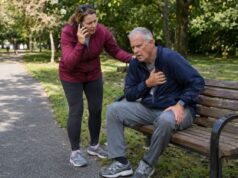
Stop exercising and seek urgent medical care for chest pressure or pain, fainting, severe shortness of breath, new neurologic symptoms, or symptoms that suggest a cardiovascular emergency. A racing heartbeat with dizziness or near-fainting also deserves prompt evaluation.
If a pre-exercise blood-pressure reading is extremely high, do not use exercise as an immediate “treatment” to force it down. Rest, recheck correctly, and follow your clinician’s plan. Severe readings with concerning symptoms need urgent assessment.
Do not judge a workout by the blood pressure during exercise
Blood pressure normally rises during dynamic exercise because the heart is pumping more blood to working muscles. Systolic pressure can climb substantially during a brisk walk, bike ride, or strength set, while diastolic pressure often changes less. That temporary rise is different from having chronically elevated resting blood pressure. The training benefit is judged mainly by what happens to resting and ambulatory blood pressure over time, not by trying to keep the exercise reading low.
This is also why checking blood pressure in the middle of a home workout is rarely helpful unless a clinician has specifically asked you to do so. Consumer cuffs are not designed to give reliable readings while you are moving. If you want to track response, measure at rest under consistent conditions—often at the same times of day, seated quietly, with the correct cuff size—and compare averages over several days.
Medication can change how exercise feels. Beta-blockers may blunt heart-rate response, diuretics may increase the chance of dehydration, and vasodilating medicines can contribute to lightheadedness after exercise. Do not change medication timing or dose on your own to accommodate workouts. Instead, use symptoms, perceived effort, and clinician guidance to adjust training.
Warm up and cool down
Spend 5–10 minutes gradually increasing effort before the main session. Afterward, taper down rather than stopping abruptly. This is particularly helpful if you take blood-pressure medication, because some people become lightheaded when they stop suddenly or stand up quickly.
Stay hydrated and be careful in heat
Dehydration and high temperatures can alter blood pressure and heart rate. On hot days, reduce intensity, choose cooler times, or exercise indoors. Some diuretics and other cardiovascular medicines can affect fluid or electrolyte balance, so ask your clinician about hydration if you are unsure.
A Simple Beginner Workout Plan
A beginner plan should feel repeatable. The purpose of the first few weeks is to build the habit and learn how your body responds, not to maximize intensity.
Week 1
- Monday: 20-minute brisk walk.
- Tuesday: 15-minute easy walk plus 1 set of 6–8 strength exercises.
- Wednesday: 20-minute brisk walk.
- Thursday: 10–15 minutes of easy walking or rest.
- Friday: 20-minute brisk walk plus short wall-sit practice if tolerated.
- Saturday: 25-minute comfortable walk, bike ride, or swim.
- Sunday: Rest or gentle activity.
Weeks 2–4
Gradually build toward 30 minutes of aerobic exercise on five days per week. Add a second full-body strength session. If you tolerate isometrics, use them two or three days weekly without turning them into maximal-effort tests.
Track consistency rather than perfection. If 30 minutes feels too long, do 15 minutes twice. If your knees hurt during walking, use a bike or pool. If strength training leaves you exhausted for several days, reduce the volume. Progress only one variable at a time—duration, frequency, or intensity.
Home blood-pressure readings can be useful, but measure under standardized conditions rather than immediately after a hard session. Rest quietly first and follow proper cuff technique. Over several weeks, look for a trend rather than expecting every workout to produce a lower number.
The best program is not the one with the most impressive exercise on paper. It is the one you can perform safely four, five, or six days each week while still recovering well. That consistency is what turns exercise from a one-time blood-pressure drop into a long-term cardiovascular habit.
Progress works best when it is boring enough to repeat. If you are starting from a low activity level, add time before intensity. For example, begin with 15 to 20 minutes of comfortable walking on five days, then add five minutes to one or two sessions each week until you can handle 30 minutes. After that, you can make selected sessions brisker or add hills while keeping other days easy. This gradual approach makes soreness, fatigue, and abrupt blood-pressure responses less likely to derail the habit.
Keep a simple log for two to four weeks: type of exercise, minutes completed, effort level, and any symptoms. If you also track home blood pressure, use readings taken at standardized resting times rather than immediately after training. The log helps you see whether the plan is sustainable and gives your clinician useful context if medication or exercise limits need adjustment. Stop and seek urgent care for chest pressure, fainting, severe shortness of breath, or new neurologic symptoms during exercise.
Recovery is part of the prescription. Hard sessions on consecutive days are not required to improve blood pressure, and they can make a new routine harder to sustain. Alternate more demanding workouts with easy walking, mobility work, or rest, especially when adding strength training. Sleep, hydration, and regular meals also affect how exercise feels. A session that suddenly seems much harder than usual can be a clue to slow down and check for illness, dehydration, medication effects, or inadequate recovery.
People taking beta blockers or other medicines that change heart rate should not rely only on age-predicted heart-rate zones. The talk test and a 0-to-10 effort scale can be more practical: moderate activity usually feels like about 5 or 6 out of 10, where breathing is faster but conversation is still possible. Your clinician may set different limits if you have coronary disease, arrhythmias, valve disease, heart failure, or very high resting blood pressure. The safest plan is specific enough to guide you but flexible enough to adjust to symptoms and medical advice.
References
- 2024 European Society of Hypertension clinical practice guidelines for the management of arterial hypertension 2024 (Guideline)
- Personalized exercise prescription in the prevention and treatment of arterial hypertension: a Consensus Document from the European Association of Preventive Cardiology (EAPC) and the ESC Council on Hypertension 2022 (Position Statement)
- Exercise training and resting blood pressure: a large-scale pairwise and network meta-analysis of randomised controlled trials 2023 (Systematic Review)
- Isometric Resistance Training to Manage Hypertension: Systematic Review and Meta-analysis 2023 (Systematic Review)
- Effects of different exercise training modalities on 24-hour ambulatory blood pressure in adults with hypertension: a network meta-analysis of randomised controlled trials 2026 (Systematic Review)
Disclaimer
This article provides general exercise information and is not a substitute for medical evaluation or a personalized exercise prescription. If your blood pressure is severely elevated, you have known cardiovascular disease, or exercise causes chest pain, fainting, severe shortness of breath, or neurologic symptoms, seek medical guidance before continuing or increasing intensity.