Yoga can modestly lower blood pressure when it is practiced regularly, especially when sessions combine movement, slow breathing, and relaxation. The best evidence is not for a single pose or a dramatic one-time drop. It is for repeated practice over weeks as part of a broader blood-pressure plan that also includes medication when needed, regular aerobic activity, healthy eating, sleep, and sodium control.
For most people with hypertension, gentle Hatha, restorative yoga, beginner Iyengar-style classes, and slow breath-focused practices are easier to use safely than hot, highly vigorous, or advanced classes. The goal is steady movement without breath-holding or prolonged straining. A 2025 meta-analysis found average blood-pressure reductions in people with prehypertension or hypertension, although the quality of evidence was very low and results varied widely between studies. That means yoga is best viewed as a useful adjunct, not a replacement for proven treatment. If your blood pressure is severely elevated or you have cardiovascular disease, recent surgery, glaucoma, balance problems, or pregnancy, ask a clinician about appropriate modifications.
Table of Contents
- How yoga may lower blood pressure
- Which yoga styles are best for blood pressure
- Breathing and relaxation may matter most
- How often and how long to practice
- Poses and practices to use carefully
- How to build a safe beginner routine
- When yoga is not enough
How yoga may lower blood pressure
Yoga appears to help blood pressure through several pathways rather than one special mechanism. Slow breathing can reduce sympathetic nervous system activity, the “fight-or-flight” drive that raises heart rate and tightens blood vessels. Relaxation and meditation may reduce stress reactivity, while the physical practice adds light-to-moderate activity, mobility work, and sometimes muscular endurance.
A 2025 systematic review and meta-analysis of 30 randomized trials involving 2,283 participants with prehypertension or hypertension found that yoga lowered systolic and diastolic blood pressure compared with wait-list controls. The average differences were about 8 mmHg systolic and 5 mmHg diastolic, but the evidence was rated very low quality because studies were heterogeneous and often small. Compared with active controls, the advantage was smaller and less certain.
That distinction matters. Yoga may look especially effective when compared with doing nothing, but the difference can shrink when it is compared with another active lifestyle intervention. A 2022 systematic review found that programs combining postures, breathing, and meditation or relaxation were more often effective than programs centered mainly on poses. That supports the idea that yoga’s blood-pressure value is not simply stretching.
A separate 2023 randomized trial added 15 minutes of yoga or stretching to regular aerobic exercise in people with hypertension. Both groups were already exercising, which is closer to a real treatment plan than comparing yoga with no activity. The study found additional cardiometabolic benefits in the yoga group, suggesting yoga can complement rather than replace standard exercise.
The effect also depends on your starting blood pressure. People with higher baseline values often have more room to improve than people whose pressure is already normal. If you are trying to understand whether your readings are truly high, review blood-pressure ranges and what they mean rather than judging one reading in isolation.
Which yoga styles are best for blood pressure
For blood-pressure management, the most practical styles are generally those that encourage slow breathing, controlled movement, and relaxation without prolonged straining.
| Style | Typical intensity | Blood-pressure fit |
|---|---|---|
| Gentle Hatha | Low to moderate | Good starting choice for most beginners |
| Restorative | Very low | Useful for relaxation, stress, and recovery |
| Beginner Iyengar-style | Low to moderate | Props and alignment can make poses easier to modify |
| Yin | Low | Can be calming, but long holds may be uncomfortable for some |
| Vinyasa | Moderate to vigorous | Can be appropriate when controlled and not overly fast |
| Power yoga | Vigorous | Not the best first choice for uncontrolled hypertension |
| Hot yoga | Moderate to vigorous plus heat stress | Use caution because heat can affect hydration and blood pressure |
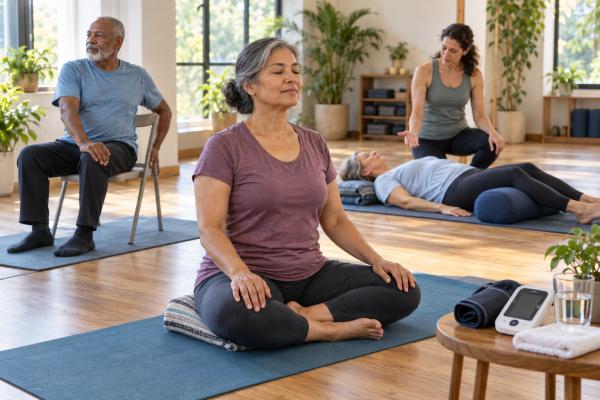
Gentle Hatha is often the easiest default because it usually combines standing and floor poses with pauses and deliberate breathing. Restorative yoga uses supported positions, bolsters, blocks, and longer relaxation periods. It is not a cardiovascular workout, but it can be useful when stress and poor sleep are major contributors.
Beginner Iyengar-style teaching can also work well because it emphasizes alignment and uses props. The exact class matters more than the label: an experienced instructor should be willing to modify inversions, long isometric holds, and transitions that make you dizzy.
Vinyasa is more variable. A slow class with controlled breathing may be appropriate for a fit person with well-managed hypertension, while a rapid heated flow can produce much higher cardiovascular strain. “Yoga” covers a wide range of intensity, so read the class description rather than assuming every style has the same effect.
Class culture matters too. A technically gentle style can become strenuous if the teacher encourages long breath holds, repeated fast sun salutations, or competitive end-range stretching. Before class, tell the instructor that you have hypertension and ask whether poses can be modified without inversions or prolonged straining. A good instructor should be comfortable offering a wall, chair, blocks, or a shorter hold rather than pushing everyone through the same sequence.
If you are choosing between online and in-person sessions, beginners often benefit from at least a few supervised classes so alignment, breathing, and transitions can be checked. After you know the movements, home practice can make consistency easier. The best format is the one you can do safely several times per week, not the one that looks most advanced.
Hot yoga is not necessary for blood-pressure benefit. Heat dilates blood vessels but also increases sweating and can reduce circulating blood volume. This can cause lightheadedness and a rapid heart rate, especially in people taking diuretics or other blood-pressure medicines. If you enjoy hot yoga and your pressure is well controlled, discuss it with your clinician and pay close attention to hydration and symptoms.
Breathing and relaxation may matter most
Slow, controlled breathing is one of the most plausible blood-pressure components of yoga. A 2026 systematic review and meta-analysis of pranayama in people with hypertension found a reduction in heart rate and possible modest blood-pressure benefit, although the evidence base remained limited.
The safest starting approach is simple: breathe slowly through the nose if comfortable, keep the breath smooth, and make the exhalation slightly longer than the inhalation. For example, inhale for about four seconds and exhale for five or six seconds for five minutes. The exact count is less important than staying relaxed and avoiding air hunger.
Avoid forceful breathing practices if you have uncontrolled hypertension unless a qualified clinician or experienced therapeutic-yoga professional has specifically cleared them. Fast breathing, repeated breath retention, or forceful abdominal techniques can produce large short-term changes in intrathoracic pressure and autonomic activity. They are not required to obtain the relaxation benefits of yoga.
Breath-holding during poses also matters. People naturally perform a Valsalva maneuver when they strain: they close the airway and push against it. That can cause large temporary blood-pressure swings. If you cannot breathe comfortably through a pose, reduce the effort, use a prop, or come out of it.
Meditation and final relaxation may add value too. Research comparing yoga programs suggests that interventions including breathing and mental relaxation tend to perform better than posture-only programs. If stress is a major driver of your readings, pair yoga with other stress-reduction habits for blood pressure rather than relying on exercise intensity alone.
For people who prefer a simpler practice, breathing exercises for blood pressure can be done without a full yoga session.
How often and how long to practice
Consistency matters more than a marathon session. Many yoga trials have used programs lasting 8 to 12 weeks or longer, often with multiple sessions per week. A practical beginner target is 20 to 40 minutes on three to five days per week, with shorter breathing or relaxation sessions on other days.
You can start with less. Ten to 15 minutes is enough to build the habit, especially if you are new to exercise or have joint limitations. Increase duration gradually as long as you are not getting dizziness, unusual shortness of breath, chest discomfort, or excessive fatigue.
A simple weekly pattern might look like this:
- Monday: 25 minutes of gentle Hatha.
- Tuesday: 5 to 10 minutes of slow breathing and a walk.
- Wednesday: 30 minutes of gentle yoga.
- Thursday: Rest or another form of light activity.
- Friday: 25 to 35 minutes of yoga with a longer relaxation period.
- Weekend: One optional class, walk, or mobility session.
Yoga should complement aerobic and resistance exercise, not crowd them out. For most adults, blood-pressure management benefits from regular walking, cycling, swimming, or similar aerobic activity along with strength training. If you are starting from inactivity, a beginner exercise plan for high blood pressure can help you combine these pieces safely.
Measure success over weeks rather than immediately after one class. Blood pressure often falls temporarily after exercise or relaxation, but long-term improvement depends on repeated practice and the rest of your treatment plan. If you monitor at home, use the same schedule and technique so a change in routine does not masquerade as a treatment effect.
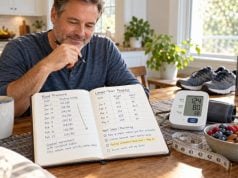
A useful way to test whether yoga is helping is to collect a baseline home average for about a week before you begin, then repeat the same morning-and-evening schedule after four to eight weeks. Keep medication, cuff, posture, and measurement timing as consistent as possible. Looking at weekly averages prevents you from overreacting to a single excellent or poor reading.
Also track outcomes that blood pressure alone misses. Better sleep, less perceived stress, improved balance, fewer tension headaches, or greater confidence with movement may be meaningful benefits even if your systolic pressure changes only a few points. Conversely, if you become lightheaded after sessions or your pressure is trending too low while on medication, tell your clinician. Lifestyle improvements can change treatment needs, and low blood pressure can matter just as much as high readings.
Poses and practices to use carefully
Most gentle yoga poses are well tolerated by people with controlled hypertension, but certain practices deserve caution.
Deep or prolonged inversions place the head below the heart and can increase pressure in the head and eyes. Full headstand and shoulder stand are poor starting choices for people with uncontrolled blood pressure, glaucoma, retinal disease, neck problems, or a history of stroke unless a qualified professional specifically clears them. Mild positions such as legs up the wall may be different, but even those should be stopped if they cause pressure, headache, or dizziness.
Long isometric holds can also raise blood pressure temporarily because muscles compress blood vessels while contracting. Warrior poses and chair pose are not automatically unsafe, but holding them to exhaustion while straining and holding your breath is unnecessary. Use shorter holds and keep breathing normally.
Rapid transitions from floor to standing can provoke dizziness, especially if you take blood-pressure medicine or have orthostatic symptoms. Move slowly, pause in kneeling or sitting, and use support when needed.
Avoid practicing through warning symptoms. Stop and sit or lie down safely if you develop chest pressure, severe shortness of breath, faintness, new neurologic symptoms, or a pounding irregular heartbeat. These are not signs that yoga is “detoxing” or releasing tension.
People with very high blood pressure should not use strenuous yoga as an emergency treatment. If your reading is around 180/120 mmHg or higher and remains that high after a few minutes of quiet rest, follow your clinician’s urgent-care plan. Severe readings with chest pain, shortness of breath, weakness, confusion, or vision changes need emergency assessment.
How to build a safe beginner routine
A blood-pressure-friendly session can be simple and does not require advanced flexibility. Use a chair, wall, blocks, or cushions as needed.
- Start with two to three minutes of quiet breathing while seated or lying comfortably.
- Add five minutes of gentle mobility: shoulder rolls, ankle circles, cat-cow, and easy spinal movements.
- Practice 10 to 15 minutes of supported standing poses such as mountain pose, a short warrior stance, and gentle side bends.
- Add five to ten minutes of floor work such as bridge preparation, a comfortable seated stretch, or supported hip mobility.
- Finish with five to ten minutes of slow breathing or supported relaxation.
Keep the effort at a level where you can speak in short sentences and breathe normally. You should feel that you are practicing, not testing your maximum strength. An instructor who understands hypertension should be able to offer alternatives without making the class feel like a competition.
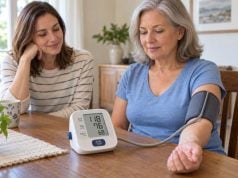
If you track blood pressure, do not measure during a pose or immediately after standing up. Sit quietly for at least five minutes and use proper technique. The same rule applies after exercise. Repeated home averages are more useful than trying to capture the lowest number after a relaxing session.
Pair yoga with the lifestyle changes that have stronger and more consistent evidence. A DASH-style eating pattern, lower sodium intake, regular aerobic activity, weight management when appropriate, adequate sleep, and prescribed medication all remain central.
A good sign that the routine fits you is that it is easy enough to repeat. If a class leaves you exhausted, dizzy, or sore for several days, choose a gentler version. Blood-pressure benefits come from sustainable practice, not from pushing through discomfort.
On busy days, a shortened version still counts. Five minutes of slow breathing plus ten minutes of easy postures can preserve the habit and may be more useful than skipping practice because a full 45-minute class is impossible. This is especially helpful for people using yoga primarily for stress regulation rather than fitness.
When yoga is not enough
Yoga is an adjunct treatment. It should not replace antihypertensive medication when medication is indicated, and it should not delay evaluation for persistently high readings.
If your average home blood pressure remains above your target after several weeks of lifestyle changes, talk with your clinician. You may need medication, an adjustment to existing treatment, or evaluation for contributing problems such as sleep apnea, kidney disease, medication side effects, or endocrine causes.
Do not stop medicine because yoga appears to lower your readings. As fitness, weight, diet, and stress improve, medication needs can sometimes change, but dose reductions should be supervised. Blood pressure can rebound if treatment is stopped abruptly.
Yoga is most useful when it fills a specific role: a form of gentle activity, a stress-management practice, a way to improve mobility, or a structured breathing routine. If you dislike yoga, you do not need it for good cardiovascular health. Walking, cycling, swimming, resistance training, and other relaxation methods can provide many of the same benefits.
The best style is the one that is safe, enjoyable, and repeatable. For many people with hypertension, that means moderate, non-heated yoga with controlled breathing and a meaningful relaxation component. Start gently, measure your blood pressure correctly, and judge the result over weeks rather than after one class.
References
- The effect of yogic breathing (Pranayama) on heart rate and blood pressure in patients with hypertension: A systematic review and meta-analysis 2026 (Systematic Review)
- A systematic review and meta-analysis of yoga for arterial hypertension 2025 (Systematic Review)
- Effects of yogic practices on physiological and biochemical parameters of hypertensive patients: A systematic review of clinical trials 2025 (Systematic Review)
- Yoga Nidra for hypertension: A systematic review and meta-analysis 2024 (Systematic Review)
- Content, Structure, and Delivery Characteristics of Yoga Interventions for Managing Hypertension: A Systematic Review and Meta-Analysis of Randomized Controlled Trials 2022 (Systematic Review)
- Impact of Yoga on Global Cardiovascular Risk as an Add-On to a Regular Exercise Regimen in Patients With Hypertension 2023 (RCT)
Disclaimer
This article provides general information and does not replace individualized medical advice. If you have uncontrolled hypertension, cardiovascular disease, glaucoma, balance problems, pregnancy, or another condition that may affect exercise safety, ask your clinician which yoga practices are appropriate. Do not stop or change prescribed blood-pressure medication because of yoga without medical guidance.