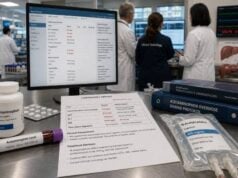
Theophylline is an older asthma and COPD medicine that can still be useful for some people, but it needs careful blood level monitoring because the safe dose range is narrow. A theophylline blood test measures how much theophylline is in the bloodstream so a clinician can see whether the dose is likely to help breathing symptoms, too low to work well, or high enough to raise the risk of side effects. This test is most often used when someone takes oral theophylline, receives aminophylline in a hospital, has possible theophylline toxicity, starts or stops smoking, develops a fever or liver problem, or begins a medicine that can change theophylline clearance. The result is usually reported in micrograms per milliliter, written as mcg/mL or sometimes mg/L. Because symptoms and blood levels do not always match perfectly, the result is interpreted with dose timing, age, smoking status, other medicines, and current symptoms.
- A typical adult therapeutic range for theophylline is about 10–20 mcg/mL, but some clinicians aim lower when possible to reduce side effects.
- Levels above 20 mcg/mL are often considered potentially toxic, especially if nausea, vomiting, tremor, fast heartbeat, agitation, or seizures occur.
- The most useful routine sample is usually a trough level, drawn shortly before the next scheduled dose.
- Smoking can lower theophylline levels, while stopping smoking can raise them and may require a dose reduction.
- Fever, liver disease, heart failure, older age, and several antibiotics or seizure medicines can change theophylline levels.
- Severe symptoms such as seizures, fainting, chest pain, confusion, or a dangerous heart rhythm need urgent medical care.
Table of Contents
- What the Theophylline Blood Test Measures
- Therapeutic Range and Toxic Levels
- When the Test Is Ordered
- How to Prepare and Time the Sample
- How Results Are Interpreted
- Causes of High or Low Theophylline Levels
- Toxicity Symptoms and Urgent Care
- Follow-Up and Dose Adjustment
What the Theophylline Blood Test Measures
A theophylline blood test measures the concentration of theophylline circulating in the blood. Theophylline is a methylxanthine bronchodilator, a drug class related to caffeine. It can relax airway smooth muscle, stimulate breathing, and have mild anti-inflammatory effects, but it can also stimulate the heart, stomach, and nervous system. That mix of effects explains why blood level monitoring matters.
Theophylline has a narrow therapeutic window. That means the difference between a dose that may help and a dose that may cause harm can be small. Two people can take the same dose and end up with very different levels because the body clears the drug at different speeds. A safe dose for one person may be too much for someone who is older, has liver disease, has heart failure, has a fever, or recently stopped smoking.
The test is part of therapeutic drug monitoring, often shortened to TDM. Instead of checking whether the drug is present at all, TDM asks a more practical question: is the amount in the blood appropriate for the person’s current treatment plan?
Theophylline may be prescribed as an oral tablet, capsule, or liquid. In hospital settings, aminophylline may be used intravenously; aminophylline is converted to theophylline in the body, so monitoring still focuses on the theophylline level. Results are usually reported as:
- mcg/mL, which means micrograms per milliliter
- mg/L, which is numerically the same as mcg/mL
For example, a theophylline result of 12 mcg/mL is the same concentration as 12 mg/L.
The test does not diagnose asthma or COPD. It does not show lung function directly, and it does not prove that shortness of breath is caused by a low theophylline level. It simply measures drug concentration. Clinicians compare that number with symptoms, side effects, oxygen levels when relevant, spirometry or peak flow when available, and the person’s full medication list.
Therapeutic Range and Toxic Levels
The commonly cited therapeutic range for theophylline is about 10–20 mcg/mL. Many people begin to have more side effects as levels approach or exceed the upper end of that range. Because modern asthma and COPD treatment often relies on inhaled medicines with better safety profiles, some clinicians aim for the lowest level that provides benefit, sometimes around 5–15 mcg/mL, especially when the goal is modest symptom improvement rather than aggressive bronchodilation.
Reference ranges can vary by laboratory, formulation, age group, and clinical situation. A result should always be read against the range printed on the lab report and the prescriber’s target.
| Blood level | Common interpretation | Typical next consideration |
|---|---|---|
| Below 5 mcg/mL | Often too low for meaningful bronchodilator effect | Check adherence, timing, dose, smoking status, and whether the medicine is still needed |
| 5–10 mcg/mL | May help some people, but may be below the traditional target | Interpret with symptoms and side effects before changing the dose |
| 10–20 mcg/mL | Traditional therapeutic range | Continue monitoring if stable; adjust only if symptoms, side effects, or risk factors change |
| Above 20 mcg/mL | Potentially toxic, especially with symptoms | Hold or reduce dose only under medical direction; assess urgently if concerning symptoms occur |
| Above 30 mcg/mL | Higher toxicity risk | Prompt medical assessment is usually needed, even more so with vomiting, tremor, or fast heartbeat |
| Above 40–50 mcg/mL | Severe toxicity risk | Emergency care may be needed because seizures and dangerous heart rhythms can occur |
The same number can mean different things depending on the situation. A stable outpatient with a trough level of 9 mcg/mL, good breathing control, and no side effects may not need a higher dose. A person with worsening wheeze and a trough of 4 mcg/mL may need a medication review. A person with vomiting, tremor, and a level of 24 mcg/mL needs a different response because symptoms suggest toxicity.
Theophylline levels can also rise after a dose even if the trough is acceptable. This is why timing matters. Extended-release products, immediate-release products, missed doses, extra doses, and changes in food intake can all affect how the number should be interpreted.
When the Test Is Ordered
A theophylline blood test may be ordered for routine monitoring, dose adjustment, suspected toxicity, or a sudden change in health status. The test is especially useful when a person has symptoms that could come from either too little medicine or too much medicine.
Routine monitoring may be used after starting theophylline, after changing the dose, or after switching between formulations. Extended-release products are not interchangeable in a simple one-to-one way for every person, so a new level may be needed after a formulation change.
The test may also be ordered when asthma or COPD symptoms are not controlled. In that setting, the result helps separate several possibilities. The dose may be too low, the person may not be absorbing or taking the medicine consistently, smoking may be increasing clearance, or the breathing problem may need a different treatment approach. Theophylline monitoring should not replace a careful review of inhaler technique, trigger exposure, infection, oxygen status, or whether the current diagnosis still fits.
Clinicians often check a level when side effects appear. Nausea, vomiting, reflux, headache, insomnia, tremor, palpitations, and restlessness can occur even near the therapeutic range, but they become more concerning when the blood level is high. Because theophylline can affect heart rhythm, the test may be part of an evaluation that also includes vital signs, an ECG, electrolytes, and sometimes a potassium blood test.
A level is also important after major changes that affect clearance. Theophylline is mainly metabolized in the liver. Drug clearance can fall during acute illness, fever, liver disease, heart failure, and in older adults. The level can rise even if the dose has not changed. The result may be checked along with liver markers, especially if illness or medication interactions are suspected; a broader liver function test panel may help explain why clearance changed.
The test is commonly ordered when medication interactions are possible. Some antibiotics, antifungals, heart medicines, antidepressants, seizure medicines, and ulcer medicines can change theophylline metabolism. The risk is not limited to prescription drugs. Over-the-counter medicines, caffeine intake, and smoking changes can complicate interpretation.
How to Prepare and Time the Sample
A theophylline blood test is usually a standard blood draw from a vein in the arm. Most people do not need to fast unless another test is being drawn at the same time. The most important preparation is knowing exactly when the last dose was taken and what type of theophylline product is being used.
For routine monitoring, clinicians often prefer a trough level, drawn shortly before the next dose. A trough is useful because it shows the lowest concentration during the dosing interval. If the trough is high, the person may be spending much of the day at an unsafe level. If the trough is very low, the medicine may not be providing steady benefit.
Timing can vary by product. Immediate-release theophylline, extended-release tablets, extended-release capsules, oral liquid, and intravenous aminophylline have different absorption patterns. A prescriber may request a level at a specific number of hours after a dose if they want to assess a peak or a steady-state level. Follow the exact instructions from the care team or lab.
A single random level can still be useful in suspected toxicity. If someone has symptoms such as repeated vomiting, severe tremor, confusion, seizures, fainting, chest pain, or a racing heartbeat, medical care should not wait for perfect timing. In urgent situations, clinicians may draw a level immediately and repeat it later to see whether the concentration is rising or falling.
Before the test, write down or bring:
- The theophylline dose and product name
- Whether it is immediate-release or extended-release
- The time of the last dose
- Any missed or extra doses
- Recent smoking changes, including quitting or restarting
- Recent fever, infection, vomiting, or diarrhea
- New medicines, antibiotics, seizure medicines, supplements, or caffeine changes
Do not skip, double, or delay a dose unless the prescriber gives that instruction. Changing the schedule on test day can make the result harder to interpret. If a dose was missed or taken late, tell the lab or clinician rather than trying to hide it. That detail often explains the number.
How Results Are Interpreted
A theophylline result is interpreted as a concentration, not as a stand-alone diagnosis. The number is useful only when connected to dose timing, symptoms, age, health status, and other medicines.
Low results
A low result means the blood concentration is below the expected target. This may happen when the dose is too low, doses are missed, the sample is drawn too late, the person smokes, or another medicine increases clearance. Low levels may also occur if the person switched products or has trouble absorbing the medicine.
A low level does not automatically mean the dose should be raised. If breathing is stable and theophylline is being used as a small add-on treatment, the clinician may accept a lower level. If symptoms are uncontrolled, the care plan may focus on inhaled controller therapy, inhaler technique, trigger control, or another medication rather than pushing theophylline higher.
Therapeutic results
A result in the target range suggests the dose is producing an expected blood concentration. If symptoms are controlled and side effects are absent, the same dose may continue. Monitoring may still be repeated periodically because theophylline clearance can change with age, smoking status, illness, and drug interactions.
A therapeutic result does not guarantee safety. Some people feel side effects at levels that are technically within range. Others may tolerate higher levels but still have increased risk. The prescriber considers the whole pattern, not just the lab flag.
High results
A high result means the theophylline concentration is above the desired target. The risk rises further when the person has symptoms, took an extra dose, has a new interaction, or has a health condition that slows metabolism. Levels above 20 mcg/mL deserve attention, and much higher levels can be dangerous.
High levels may lead the clinician to hold doses, reduce the dose, repeat the level, check an ECG, measure electrolytes, or assess kidney and liver function. In more serious cases, emergency treatment may be needed. When overdose or poisoning is part of the concern, theophylline may be evaluated alongside other drug and poison tests such as a toxicology blood test panel.
Changing trends
Trend matters. A level rising from 11 to 18 mcg/mL after a new antibiotic may be more concerning than a single stable level of 18 mcg/mL in someone who feels well. A level falling from 12 to 6 mcg/mL after restarting smoking may explain reduced benefit. Repeated levels help clinicians see whether the body is clearing the drug normally.
Causes of High or Low Theophylline Levels
Theophylline levels change because of dose, timing, metabolism, absorption, and interactions. The same prescribed dose can produce different results from month to month.
Common causes of high levels
High levels often occur when the body clears theophylline more slowly than expected. Causes can include:
- Taking too much theophylline or taking doses too close together
- Switching to a different formulation without careful monitoring
- Stopping smoking after the dose was set while smoking
- Fever lasting more than about 24 hours
- Liver disease or reduced liver blood flow
- Heart failure
- Older age
- Certain antibiotics, such as some macrolides or fluoroquinolones
- Cimetidine and some other medicines that inhibit theophylline metabolism
- Acute illness that changes appetite, hydration, or organ function
Stopping smoking is a common trap. Cigarette smoke can speed up the liver enzymes that clear theophylline. When a person quits, those enzymes slow back down. If the dose is not adjusted, the blood level can rise over several days. This is a positive health change, but it should be shared with the prescriber.
Fever can also raise levels. A person who has been stable for months may become toxic during a viral illness or pneumonia, even without a dose change. Ongoing fever, poor intake, and dehydration make side effects harder to interpret because nausea, weakness, and rapid heartbeat can come from both illness and theophylline.
Common causes of low levels
Low levels often occur when the dose is missed, the blood is drawn at the wrong time, or the body clears the drug faster. Causes can include:
- Missed doses or inconsistent dosing times
- Taking the test long after the expected trough time
- Restarting smoking
- High exposure to tobacco smoke
- Some seizure medicines that increase liver enzyme activity
- A dose that is too low for body size or clearance rate
- Product changes or absorption differences
- Vomiting soon after a dose
Low levels are not always a problem. If the person is breathing well and has no symptoms, the prescriber may decide not to chase a traditional target. Modern respiratory care often favors safer inhaled medicines first, with theophylline reserved for selected cases.
Why small changes can have large effects
Theophylline metabolism can become less predictable at higher levels. A modest dose increase may cause a larger-than-expected blood level increase in some people. This is one reason dose changes are usually made carefully. It is also why theophylline should not be adjusted casually based on symptoms alone.
Theophylline can interact with several medicines used for common problems. Anyone taking it should tell every clinician and pharmacist that theophylline is on the medication list. This matters when treating infections, seizures, ulcers, heart rhythm problems, depression, and smoking cessation.
Toxicity Symptoms and Urgent Care
Theophylline toxicity can affect the stomach, brain, heart, and metabolism. Early symptoms may look mild, but they can progress. Symptoms can occur after an acute overdose, such as taking too many tablets, or during chronic toxicity, where the level rises gradually because clearance slows.
Common toxicity symptoms include:
- Nausea or repeated vomiting
- Loss of appetite or stomach pain
- Diarrhea or reflux
- Headache
- Tremor or shakiness
- Restlessness, anxiety, or insomnia
- Fast heartbeat or palpitations
- Sweating
- Dizziness or weakness
More serious symptoms include:
- Confusion
- Fainting
- Chest pain
- Severe agitation
- Seizures
- Irregular heartbeat
- Very fast heart rate
- Low blood pressure
- Severe or persistent vomiting
Theophylline toxicity can also cause metabolic changes, including low potassium, high blood sugar, and acid-base disturbances. These changes can worsen heart rhythm risk. In emergency care, clinicians may check electrolytes, glucose, kidney function, blood gases, ECG findings, and repeat theophylline levels. If muscle injury, dehydration, or low blood pressure occurs, a kidney function blood test panel may help monitor complications.
Severe toxicity needs urgent care because seizures and dangerous arrhythmias can occur without much warning. A person with possible overdose, repeated vomiting, seizure, fainting, confusion, chest pain, or a very fast or irregular heartbeat should seek emergency medical help. Poison control or emergency services can guide immediate steps.
Do not try to treat suspected theophylline toxicity by drinking extra water, using caffeine, forcing vomiting, or skipping several doses without medical advice. The right response depends on the blood level, timing, symptoms, and whether the exposure was acute or chronic. In serious cases, treatment may include activated charcoal, repeated charcoal doses, seizure control, heart monitoring, electrolyte correction, and sometimes extracorporeal removal such as hemodialysis.
Chronic toxicity can be especially dangerous in older adults because the blood level may not be extremely high before serious symptoms appear. A level that might seem less dramatic after a one-time overdose can be more concerning when it has built up over days.
Follow-Up and Dose Adjustment
Follow-up depends on why the test was ordered. A stable routine level may simply confirm that the current dose is reasonable. A low or high level may lead to a dose change, repeat testing, or a broader medication review.
Dose changes should be made by the prescriber. Theophylline is not a medicine to adjust by feel. Symptoms such as wheezing, shakiness, insomnia, nausea, and palpitations can overlap with asthma, anxiety, infection, caffeine use, and toxicity. A blood level helps prevent the wrong adjustment.
After a dose change, the clinician may repeat the level once the drug reaches a new steady state. The timing depends on age, formulation, illness, and organ function. A repeat level may be needed sooner if symptoms appear or if the person starts a medicine known to interact with theophylline.
Helpful follow-up questions include:
- Was the sample drawn at the intended time?
- Was the person taking the exact prescribed product and dose?
- Were any doses missed, doubled, delayed, or vomited?
- Did smoking status change?
- Was there a fever, infection, heart failure flare, or liver problem?
- Were antibiotics, seizure medicines, ulcer medicines, or antidepressants started or stopped?
- Are side effects present even if the level is technically therapeutic?
- Is theophylline still the best treatment option?
Theophylline is now used less often than inhaled corticosteroids, long-acting bronchodilators, leukotriene receptor antagonists, biologic medicines for selected asthma types, and other modern options. For some people, it may still be used when other treatments are not enough, not tolerated, unavailable, or chosen for a specific clinical reason. The blood test helps make that choice safer.
A result should also prompt a practical safety review. Store theophylline away from children. Use one pharmacy when possible so interactions are easier to catch. Avoid taking extra doses for sudden breathing symptoms unless the prescriber specifically instructs it. Rescue inhalers and emergency plans are usually separate from theophylline dosing.
When results are confusing, a medication diary can help. For one or two weeks, record dose times, symptoms, caffeine intake, smoking changes, missed doses, and side effects. That information can make the next level much easier to interpret.
References
- Theophylline: MedlinePlus Drug Information 2024 (Official Patient Information)
- Theophylline 2013 (Review)
- Addition of intravenous aminophylline to inhaled beta(2)-agonists in adults with acute asthma 2012 (Systematic Review)
- Global Strategy for Asthma Management and Prevention 2025 (Guideline)
- Extracorporeal Treatment for Theophylline Poisoning: Systematic Review and Recommendations from the EXTRIP Workgroup 2015 (Systematic Review)
Disclaimer
Theophylline levels can become dangerous, especially after dose changes, illness, smoking changes, or medication interactions. This information is for general education and cannot replace medical advice from the clinician who prescribed the medicine. Seek urgent care for seizures, fainting, chest pain, confusion, repeated vomiting, or a very fast or irregular heartbeat.