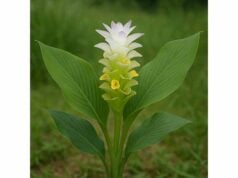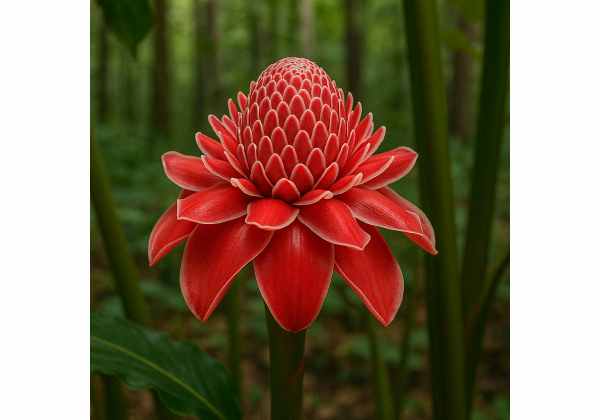
Torch ginger, Etlingera elatior, is one of the rare plants that moves easily between kitchen, garden, and traditional medicine. In Southeast Asia, its unopened flower buds and aromatic inflorescences are valued in food for their bright, citrusy-spicy character. In herbal and scientific settings, the same plant draws interest for a different reason: it contains polyphenols, flavonoids, anthocyanins, volatile compounds, and other bioactive constituents linked to antioxidant, anti-inflammatory, antimicrobial, and tissue-supportive effects.
That combination makes torch ginger genuinely interesting, but it also calls for care. The strongest evidence still comes from laboratory and animal research rather than large human trials. This means torch ginger is best viewed as a promising functional food and medicinal plant with encouraging data, not as a fully standardized self-care herb with a settled daily dose.
Used as food, it has a long record of culinary relevance. Used as an extract, oil, or concentrated preparation, it deserves more caution. The most helpful approach is to understand what torch ginger may do, where the evidence is strongest, how it is traditionally used, and why dosage and safety still require restraint.
Quick Summary
- Torch ginger shows promising antioxidant and anti-inflammatory activity, especially in inflorescence extracts rich in phenolics and flavonoids.
- Experimental work also suggests potential for wound support, gastric protection, and antimicrobial activity.
- Published animal studies have used about 375 to 625 mg/kg of inflorescence extract over 5 days, but no validated human medicinal dose exists.
- Pregnant or breastfeeding people, children, and anyone using prescription medicines should avoid unsupervised medicinal use.
Table of Contents
- What torch ginger is and why it stands out
- Key ingredients and medicinal properties
- Potential health benefits and what the evidence best supports
- Traditional and modern uses of torch ginger
- Dosage and how to use it carefully
- Safety, side effects, and interactions
- How to set realistic expectations and when other herbs may fit better
What torch ginger is and why it stands out
Torch ginger is a tall tropical perennial in the ginger family, Zingiberaceae. It is native to Southeast Asia and is widely recognized for its striking inflorescences, which rise on separate stalks and look almost sculptural when fully open. The plant’s beauty alone has made it valuable as an ornamental, but in daily life it is even more important as an edible flower and aromatic food ingredient. In Malaysia, Indonesia, Thailand, and nearby regions, the flower buds and inflorescences are used in salads, relishes, sour soups, rice dishes, and spice pastes. That culinary identity is not a side note. It shapes how torch ginger should be understood from the start.
Unlike many herbs that reach modern readers through capsules and tinctures first, torch ginger begins as a food plant. That gives it a practical advantage: people have experience with it in ordinary dietary amounts. At the same time, it also creates a common misunderstanding. Because the plant is edible, some assume that concentrated extracts, essential oils, or medicinal doses must also be automatically safe. That is not how herbal safety works. Food use and extract use are related, but they are not interchangeable.
Torch ginger also stands out because most of the research focuses on the inflorescence, not only the rhizome. That is unusual in the ginger family, where rhizomes often dominate medicinal discussion. In Etlingera elatior, flowers, leaves, and essential-oil fractions all matter, and the plant’s chemistry shifts across these parts. Modern research has found broad interest in antioxidant, anti-inflammatory, wound-supportive, anti-tyrosinase, antibacterial, gastroprotective, and metabolic activities. Still, most of these signals come from preclinical work rather than clinical trials in people.
That puts torch ginger in an interesting middle position. It is stronger than a decorative plant with vague folk claims, but not as settled as a standardized medicinal herb with a clear daily dose and a long clinical track record. The plant’s promise is real, yet it is still developing.
The best way to think about torch ginger is to hold three truths together at once:
- It is a serious culinary plant.
- It is a promising medicinal research plant.
- It is not yet a fully standardized consumer herb.
That balance matters because it keeps expectations realistic. Torch ginger can be respected both as a flavorful edible flower and as a bioactive plant with meaningful pharmacologic signals. But those roles should not be collapsed into one idea. A curry garnish, a freeze-dried flower extract, and a laboratory anti-inflammatory assay are connected, yet they do not mean the same thing.
For readers who like aromatic plants that bridge food and wellness, torch ginger belongs closer to the world of edible botanicals than to capsule-first supplements. In that sense, it sits nearer to coriander’s culinary and medicinal overlap than to a strictly therapeutic herb taken only as an extract.
Key ingredients and medicinal properties
Torch ginger has attracted so much scientific interest because its chemistry is broad and layered. The inflorescence contains a meaningful mix of phenolic compounds, flavonoids, anthocyanins, phenolic acids, and aromatic volatiles, while essential-oil fractions reveal a somewhat different profile again. This is not a one-compound herb. It is better understood as a multi-constituent plant whose properties likely arise from several overlapping classes of bioactive molecules.
Among the most discussed compounds are flavonoids and phenolic acids. Recent phytochemical profiling of torch ginger inflorescence has identified flavonoids and phenolic acids such as catechin, chlorogenic acid, astragalin, coumarin, procyanidin B2, and related antioxidant-active compounds. These are important because they help explain why the plant repeatedly shows radical-scavenging and oxidative-stress-modulating activity in test systems. In plain language, torch ginger appears to contain the kinds of compounds commonly associated with cellular protection and inflammatory balance.
Anthocyanins also matter, especially in colored flower extracts. Some experimental work has linked torch ginger’s anti-inflammatory and gastroprotective potential to anthocyanin-rich fractions and polyphenols that can influence pathways related to nitric oxide signaling, oxidative stress, and inflammatory mediators. This does not mean the plant works like a drug. It means it contains constituents capable of acting on biologically important pathways.
The volatile side of torch ginger is equally interesting. Reviews and antibacterial studies have identified compounds such as dodecanal, 1-dodecanol, and other essential-oil constituents in certain preparations. These appear relevant to the plant’s aroma, food identity, and part of its antimicrobial activity. Essential oils from torch ginger leaves and inflorescences have also shown anti-tyrosinase, antioxidant, and anti-melanogenesis interest in cosmetic-style research.
From a medicinal-property standpoint, torch ginger is most reasonably associated with these broad categories:
- Antioxidant activity
- Anti-inflammatory potential
- Antibacterial and antimicrobial activity
- Tissue-supportive and wound-related potential
- Gastroprotective interest
- Cosmetic or skin-focused enzyme-modulating effects
The most important caution is that compound presence does not automatically equal household efficacy. A plant may contain useful molecules and still require the right extraction method, dose, or formulation to produce a meaningful effect. This is especially relevant for torch ginger because the strongest data often come from inflorescence extracts rather than from casual kitchen preparations alone.
Even so, its chemistry gives the plant real credibility. Torch ginger is not just an edible flower with decorative appeal. Its phytochemical profile makes it scientifically plausible as a medicinal food plant and a source of functional ingredients. That is one reason it continues to attract attention from pharmacology, food science, and cosmetic research alike.
Readers familiar with polyphenol-rich botanicals may think of torch ginger as part of a wider class of plants whose antioxidant and tissue-supportive potential comes from dense phenolic chemistry. In that respect, it has more in common with better-known polyphenol-rich plants such as green tea than its dramatic flowers might initially suggest.
Potential health benefits and what the evidence best supports
Torch ginger has a wide list of proposed health benefits, but not all of them rest on the same level of evidence. The strongest way to present the plant is to focus on what preclinical and functional-food research support most clearly, while being honest about the lack of mature human clinical data.
1. Antioxidant support
This is one of the clearest strengths of torch ginger. Multiple studies on the inflorescence and related extracts have shown strong antioxidant activity, supported by high phenolic and flavonoid content. That antioxidant effect is not merely a laboratory curiosity. It helps explain why the plant is repeatedly explored for tissue protection, metabolic support, skin care, and inflammatory balance. In food terms, it also supports torch ginger’s reputation as more than a flavoring plant.
2. Anti-inflammatory potential
Torch ginger extracts have shown the ability to influence inflammatory pathways in experimental systems. Recent work has linked inflorescence extracts to suppression of inducible nitric oxide synthase and changes in COX-2-related signaling in animal models. These findings are promising because they move the plant beyond general antioxidant talk and toward more specific inflammation-relevant mechanisms. Even so, this should still be described as early evidence, not proof of clinical anti-inflammatory effect in people.
3. Gastroprotective and stomach-supportive activity
This is one of the most practically interesting areas. In rat models of ethanol-induced gastric injury, inflorescence extract showed ulcer-reducing and anti-inflammatory activity, with stronger effects at higher tested doses. That lines up with traditional use for stomach discomfort and suggests torch ginger may deserve more attention as a gastroprotective food-herb. Still, animal ulcer models are not the same as validated human treatment protocols.
4. Wound and skin support
Torch ginger has shown notable promise in wound-healing and anti-aging research. Freeze-dried inflorescence extracts have demonstrated antioxidant effects, collagen-related activity, cell-migration support in scratch assays, and mild anti-inflammatory relevance. That makes the plant especially interesting for topical or cosmeceutical development. The evidence is still experimental, but it is coherent enough to take seriously.
5. Antimicrobial activity
The plant’s essential oil and volatile fractions have shown antibacterial effects, including activity against Staphylococcus aureus systems tied to efflux-pump resistance. This is important scientifically, though it should not be exaggerated into a home infection remedy. Antibacterial promise in the lab does not mean the plant replaces antibiotics or works the same way in real-world infections.
6. Metabolic and tissue-protective interest
Some studies and broader reviews suggest a possible role for torch ginger in metabolic and organ-protective models, including oxidative stress and glucose-related complications. These findings are promising, but still better described as experimental than clinically ready.
So where does the evidence feel strongest overall? Torch ginger is most convincing today as a plant with antioxidant, anti-inflammatory, gastroprotective, skin-supportive, and antibacterial potential. The main limitation is that almost all of this evidence remains preclinical. That does not weaken the plant’s importance, but it does change how it should be used.
If your main goal is inflammation support from a herb with a more developed human-use evidence base, boswellia for inflammation-related support is still the more practical choice. Torch ginger is promising, but it is not yet as clinically grounded.
Traditional and modern uses of torch ginger
Torch ginger is unusual because its traditional and modern uses overlap more naturally than they do with many herbs. In everyday life, people know it first as an edible aromatic plant. In traditional practice, it has also been used more broadly for stomach discomfort, inflammatory complaints, and general wellness support. In modern product development, it is increasingly explored for functional foods, cosmeceuticals, and bioactive extracts.
The most familiar use is culinary. The unopened flower buds and inflorescences are used to brighten soups, relishes, curries, rice dishes, sauces, and salads. The flavor is floral, citrusy, lightly resinous, and distinctly pungent in a way that is hard to replace. This matters for health discussions because it reminds us that torch ginger’s first defensible role is often as food. For many people, the safest and most meaningful exposure is not a capsule at all, but a culinary ingredient used regularly in small amounts.
Traditional medicinal uses appear to include support for:
- Stomach discomfort
- Inflammation-related complaints
- Minor infections or hygiene-related uses
- General restorative or protective purposes
Modern interest expands these categories further. Today, torch ginger is being investigated in several applied directions:
1. Functional foods and nutraceuticals
Because the inflorescence contains antioxidant-active compounds and remains edible, it is a natural candidate for the functional-food space. This is probably the most realistic bridge between tradition and modern health use.
2. Extract-based research
Ethanolic, aqueous, and hydroethanolic extracts are studied for their effects on oxidative stress, gastric injury, inflammatory signaling, and tissue protection.
3. Cosmetic and topical development
Some leaf and flower preparations are being explored for anti-aging, wound support, anti-tyrosinase activity, and skin appearance.
4. Natural antimicrobial research
Essential oils and volatile fractions have been investigated as sources of antibacterial compounds.
The most important limitation is that modern use is still heterogeneous. There is no single standard torch ginger product that defines the herb in the way a standardized turmeric or peppermint oil product might. Instead, the plant is moving in several directions at once: culinary ingredient, extract source, cosmetic active, and experimental therapeutic agent.
That diversity makes torch ginger exciting, but it also makes it harder to generalize. A flower used in soup is not the same thing as a hydroethanolic extract tested in rats. A leaf essential oil with anti-tyrosinase interest is not the same thing as an edible flower bud. These forms share a botanical identity, yet their uses and safety profiles differ.
A practical way to think about torch ginger is to keep its uses in their proper lanes:
- As food, it is established and culturally grounded.
- As a medicinal extract, it is promising but still developing.
- As a topical or cosmetic active, it is plausible but still experimental.
- As a stand-alone treatment, it is not yet well enough defined.
That is why it helps to compare torch ginger to more familiar aromatic household herbs such as peppermint. Peppermint already has a clearer place in home self-care. Torch ginger is less standardized, but richer in culinary identity and functional-food promise.
Dosage and how to use it carefully
Torch ginger is one of those plants where food use is clearer than medicinal dosing. That distinction should guide the whole section. There is no validated human therapeutic dose for torch ginger as a tea, tincture, capsule, standardized extract, or essential oil. That is the most important dosage fact to know.
The cleanest and safest use pattern is culinary use, where the inflorescence or bud is included in ordinary food amounts. This is the traditional route most people actually understand. Once the plant moves into concentrated extracts, however, the literature becomes much less consumer-friendly and much more experimental.
Published research provides some animal-study ranges, but these are not ready-made human doses. For example:
- In a gastric-ulcer rat model, inflorescence extract was given orally at 375 mg/kg BW and 625 mg/kg BW over 5 days, with stronger protective effects at the higher dose.
- In an acute-toxicity study, a hydroethanolic inflorescence extract was given to Wistar rats at 1.0, 1.5, and 2.0 g/kg body weight as a single exposure, with no mortality or obvious bizarre behavior observed over 14 days.
These numbers are useful for understanding research intensity and safety margins in animals. They are not instructions for translating torch ginger into a home supplement routine.
That leaves a practical question: how should a careful reader approach the plant?
The best answer is to divide use into three tiers.
Tier 1: Food use
- Flower buds or inflorescences used in ordinary culinary amounts
- Most defensible and culturally grounded
- Lowest-risk form for healthy adults
Tier 2: Mild traditional preparations
- Possible simple food-adjacent uses
- Still poorly standardized
- Best approached conservatively, if at all
Tier 3: Concentrated extracts or oils
- Research-interest territory
- No validated household dose
- Not suitable for guesswork
Several dosage mistakes are especially worth avoiding:
- Do not assume an edible flower automatically has a safe supplement dose.
- Do not convert animal-study mg/kg numbers into casual personal use.
- Do not treat essential-oil or concentrated extract forms like ordinary food.
- Do not mix multiple strong preparations and assume the total exposure is still “natural.”
This is the point where some readers may prefer a more defined medicinal herb. That is reasonable. If you want a plant with a clearer infusion tradition and more practical consumer dosing, chamomile as a better-defined infusion herb is far easier to use well.
So the most honest dose guidance for torch ginger is simple: enjoy it as food if it suits you, but do not pretend that a validated medicinal human dose already exists. The science is promising, yet still too early for confident self-prescribed extract dosing.
Safety, side effects, and interactions
Torch ginger is generally easier to discuss in terms of relative safety by form than in terms of one universal safety rule. In ordinary culinary amounts, it appears to have a relatively reassuring profile. In concentrated extract form, the picture becomes less certain. That difference should shape expectations from the start.
The most encouraging safety signal comes from preclinical work showing that hydroethanolic inflorescence extract did not produce acute mortality or obvious major behavioral toxicity in rats even at fairly high single doses up to 2.0 g/kg body weight. That is helpful, but it should not be over-read. Animal acute-toxicity findings do not establish long-term human safety, do not prove safety in pregnancy, and do not settle interaction questions.
Possible side effects with medicinal-style use are most likely to include:
- Stomach upset
- Nausea
- Loose stool or digestive discomfort
- Headache
- Rash or sensitivity reaction
- Intolerance to concentrated aromatic preparations
Because torch ginger has shown meaningful biologic activity in inflammation, oxidative stress, gastric models, and metabolic contexts, people using prescription medicines should be especially cautious. While firm human interaction data are limited, it is prudent to avoid unsupervised medicinal use if you are taking drugs for:
- Blood sugar control
- Chronic stomach disease
- Inflammation or pain
- Complex cardiovascular conditions
- Multi-drug chronic illness
Pregnant or breastfeeding people should also avoid medicinal self-use because the evidence base is not strong enough to define safety. The same applies to children. A plant can be edible and still be poorly characterized as a concentrated medicinal product in vulnerable groups.
Another useful safety distinction is food versus extract. A torch ginger bud used in a dish is not the same thing as a freeze-dried extract, hydroethanolic fraction, or essential-oil preparation. The stronger the preparation, the less confidence a reader should have in self-directed use.
Topical and cosmetic use also deserves care. Some experimental findings are encouraging for wound support and anti-aging applications, but that does not mean every homemade topical use will be sensible. Patch testing is still wise, especially for people with reactive skin. Concentrated preparations should not be applied to broken skin or mucous membranes without proper formulation.
A good practical summary looks like this:
- Food-level use: usually the easiest and most defensible route
- Short-term mild experimentation: still uncertain and should be conservative
- Concentrated extract or essential-oil use: not a space for guesswork
- Long-term medicinal use: not well characterized
If your real need is a simple, better-understood topical botanical rather than an experimental edible-flower extract, witch hazel for basic external care is usually easier to justify. Torch ginger may prove safe and useful in more settings over time, but current evidence still favors caution over confidence.
How to set realistic expectations and when other herbs may fit better
Torch ginger becomes much more useful once expectations are calibrated properly. It is not a miracle cure, not a standardized clinical herb, and not a plant that should be forced into every health goal simply because it has exciting early data. Its real value lies in being a strong edible botanical with genuine pharmacologic promise.
That promise is worth taking seriously. The plant has broad phytochemical richness, a meaningful culinary role, encouraging antioxidant and anti-inflammatory findings, wound-related relevance, and a growing research literature. Many ornamental edible plants never reach that point. Torch ginger has. But promising and practical are not the same thing.
The most realistic role for torch ginger today is one of these:
1. A functional food plant
This is where the evidence and tradition align most comfortably. As an edible flower used in ordinary culinary ways, it makes sense.
2. A medicinal research plant
This is the second strongest role. Researchers have enough positive signals to keep exploring it for stomach support, inflammation, skin applications, and metabolic health.
3. A possible future standardized extract
This is the most speculative role. It may happen, but the literature is not there yet.
What torch ginger is not yet is a first-choice self-treatment herb for chronic disease. If someone wants proven help for joint pain, ulcers, diabetes, infection, or wound healing, more established strategies already exist. That is not a criticism of torch ginger. It is simply the difference between a plant at the research-to-practice bridge and one that has already crossed it.
This is where better alternatives matter. Depending on the goal, another herb may fit more cleanly:
- For clearer anti-inflammatory use, turmeric or boswellia
- For everyday calming infusions, chamomile or lemon balm
- For topical soothing, calendula or witch hazel
- For familiar culinary-medicinal use, coriander or peppermint
Torch ginger still deserves respect because it may one day occupy more of that space. But at present, its strongest role is supportive and exploratory, not definitive.
There is also a broader lesson here. Herbal writing becomes more trustworthy when it can say two things at once: a plant is interesting, and the evidence is still limited. Torch ginger is a perfect example. It is more than a garnish, yet not fully a mainstream medicinal herb. It is useful to know about precisely because it occupies that middle ground.
If a reader is mainly looking for a better-studied herb for inflammation-related wellness, turmeric as a more established anti-inflammatory botanical will usually be the more practical choice. Torch ginger remains a plant worth watching, enjoying in food, and approaching carefully in medicinal form. That is a strong conclusion, not a weak one. It tells the truth about where the plant stands today.
References
- Trends and multidisciplinary research of torch ginger [Etlingera elatior (Jack) R.M.Sm.]: A systematic review 2026 (Systematic Review)
- Etlingera Elatior Inflorescence Extract Mitigates Acute Gastric Ulcers by Suppressing the Expression of Inducible Nitric Oxide Synthase in Ethanol-Induced Wistar Rats 2025
- Phytochemical profile and antioxidant activity of torch ginger (Etlingera elatior) inflorescence extract after in vitro simulated digestion 2024
- Assessing the Anti-Aging and Wound Healing Capabilities of Etlingera elatior Inflorescence Extract: A Comparison of Three Inflorescence Color Varieties 2023
- Antioxidant Activities, Acute Toxicity and Chemical Profiling of Torch Ginger (Etlingera elatior Jack.) Inflorescent Extract 2018
Disclaimer
This article is for educational purposes only and is not medical advice, diagnosis, or treatment. Torch ginger is a traditional edible plant with promising medicinal research, but most evidence for concentrated therapeutic use remains preclinical, and no validated human medicinal dose has been established. Do not use torch ginger extracts, oils, or concentrated preparations as a substitute for medical care for ulcers, infections, diabetes, wound problems, or chronic inflammatory conditions. Pregnant or breastfeeding people, children, and anyone taking prescription medicines should avoid unsupervised medicinal use.
If you found this article helpful, please share it on Facebook, X, or any other platform where thoughtful plant and herbal information can help others.