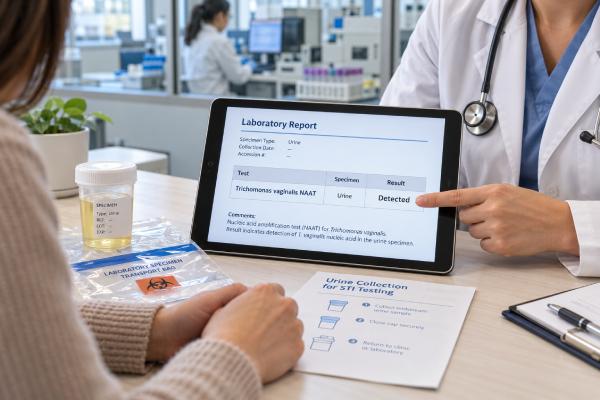
A Trichomonas urine test looks for evidence of Trichomonas vaginalis, the parasite that causes trichomoniasis, a common curable sexually transmitted infection. Modern testing usually uses a nucleic acid amplification test (NAAT), which detects genetic material from the organism and is much more sensitive than older wet-mount microscopy. Urine is convenient because it can often be collected at the same visit as chlamydia and gonorrhea testing, but the best specimen depends on the assay and the person’s anatomy. In many women, a vaginal swab can be at least as sensitive as urine, while several NAAT platforms are validated for male urine. A positive result usually indicates current infection and should prompt treatment plus partner management. A negative result makes infection less likely but does not exclude it if the wrong specimen was used, collection was poor, testing occurred too early, or symptoms strongly suggest another vaginal or urethral infection.
- Most Trichomonas urine tests are NAATs, which detect T. vaginalis DNA or RNA rather than seeing the parasite directly.
- A positive NAAT usually means current trichomoniasis and should be interpreted with sexual history, symptoms, and the assay’s approved specimen types.
- Urine is not always the most sensitive specimen in women: many laboratories prefer or also accept vaginal swabs for T. vaginalis NAAT.
- For persistent symptoms after treatment, NAAT should not be repeated too soon: residual nucleic acid can remain detectable, so CDC guidance advises waiting at least 3 weeks when using NAAT for recurrent or persistent infection.
- Reinfection is common: sexually active women treated for trichomoniasis are generally advised to be retested about 3 months later.
Table of Contents
- What the Trichomonas Urine Test Detects
- Who Should Consider Trichomonas Testing
- Urine vs Vaginal and Other Specimens
- How to Prepare and Collect the Sample
- Positive, Negative, and Invalid Results
- What Happens After a Positive Test
- Retesting, Persistent Infection, and Resistance
- Trichomonas vs UTI and Other STIs
What the Trichomonas Urine Test Detects
The standard modern Trichomonas test is usually a NAAT. Instead of trying to grow the parasite or identify moving organisms under a microscope, the assay amplifies a specific T. vaginalis genetic target until it can be detected. This makes NAAT far more sensitive than traditional wet-mount microscopy, which can miss infections when parasite numbers are low or when the specimen is not examined promptly.
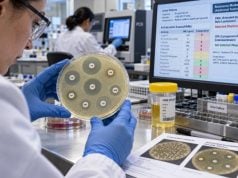
A urine NAAT is therefore not a routine urine culture. Bacterial urine culture grows bacteria on laboratory media and reports colony counts and antibiotic susceptibility. Trichomonas NAAT detects parasite nucleic acid and does not report CFU/mL. It also does not provide the kind of routine antibiotic sensitivity panel used for bacterial UTI.
Depending on the laboratory, a single urine sample may be used in a multiplex STI assay that also tests for organisms such as Chlamydia trachomatis and Neisseria gonorrhoeae. A chlamydia and gonorrhea urine NAAT uses similar molecular principles but targets different pathogens. The fact that tests share a specimen does not mean one negative result rules out the others.
Trichomoniasis can be asymptomatic. When symptoms occur in women, they may include vaginal discharge, irritation, itching, odor, discomfort with urination, or pain during sex. Men may have urethral irritation, burning after urination or ejaculation, or urethral discharge, but many infections cause no obvious symptoms.
Because symptoms overlap with bacterial vaginosis, candidiasis, chlamydia, gonorrhea, UTI, and other conditions, symptoms alone cannot reliably diagnose trichomoniasis. Laboratory testing is the confirmation step.
Who Should Consider Trichomonas Testing
Testing is most clearly indicated when symptoms or exposure make trichomoniasis plausible. Women with new or unexplained vaginal discharge, irritation, odor, or genital burning are commonly tested as part of a vaginitis or STI evaluation. Men may be tested for urethral symptoms, known exposure to a partner with trichomoniasis, or persistent urethritis when other common causes have not explained the symptoms.
Screening people without symptoms is more selective than screening for chlamydia or gonorrhea in many settings. CDC guidance recommends routine annual screening for T. vaginalis in women with HIV. In other women, screening may be considered in settings where infection prevalence is high or when individual risk is elevated, such as a history of STIs, multiple sex partners, exchanging sex for money or drugs, or incarceration. Local prevalence and public health guidance matter because trichomoniasis rates vary substantially between populations.
A known infected partner is a strong reason to seek testing and treatment guidance even if symptoms are absent. Because trichomoniasis can persist silently, waiting for symptoms can miss infection and allow ongoing transmission. At the same time, indiscriminate testing of very low-risk people can produce results that need careful interpretation, especially when prevalence is low.
Testing is also appropriate when a clinician is trying to explain sterile pyuria or urinary burning with a negative bacterial culture. In that situation, Trichomonas testing may be ordered alongside other STI tests rather than as a replacement for them. The goal is to match the test panel to the symptoms and exposure history rather than assuming every urinary complaint is a bacterial UTI.
Urine vs Vaginal and Other Specimens
Urine is convenient, but specimen choice strongly affects test performance. Each commercial assay is validated for specific specimen types, and the laboratory should follow the manufacturer’s instructions.
For women, validated specimens may include vaginal swabs, endocervical swabs, or urine, depending on the platform. Vaginal swabs are often preferred because they sample the anatomical site where organism burden may be higher. CDC guidance notes that vaginal swabs and urine do not have perfect concordance, meaning one specimen can occasionally be positive when the other is negative.
For men, first-catch urine is a common NAAT specimen on platforms cleared or validated for male testing. Some tests can also use urethral swabs. The important point is that “urine Trichomonas test” does not describe one universal method; performance depends on the exact assay and specimen type.
| Specimen | Main advantage | Important limitation |
|---|---|---|
| First-catch urine | Noninvasive and easy to combine with other STI NAATs | May be less sensitive than vaginal swab in some women; assay must be validated for urine |
| Vaginal swab | Highly useful specimen for women and can often be self-collected in clinical settings | Not applicable to every patient and must match assay instructions |
| Endocervical swab | Accepted by some assays during pelvic examination | More invasive and not necessary when other validated specimens are available |
| Urethral swab | Can directly sample urethral infection | More uncomfortable than urine and not required for many modern NAATs |
| Wet mount | Can provide rapid office-based visualization of motile organisms | Much less sensitive than NAAT and requires prompt examination |
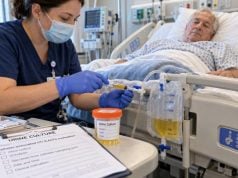
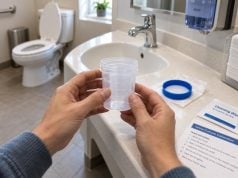
A urine specimen for STI NAAT is often first-catch or first-void urine, meaning the initial part of the stream is collected. That differs from the midstream clean-catch technique commonly used for bacterial urine culture. The first portion is useful for STI NAAT because it can contain organisms and infected cells from the urethra. Patients should follow the specific collection instructions from the laboratory rather than applying UTI culture instructions automatically.
How to Prepare and Collect the Sample
Most Trichomonas urine NAATs require little preparation. Fasting is not needed. The laboratory may ask the patient not to urinate for a period before collection, often around 1 hour, because a recently emptied bladder can reduce the amount of target material in first-catch urine. Requirements vary by assay, so local instructions take priority.
A typical first-catch urine collection looks like this:
- Do not clean or prepare the urethral opening unless the laboratory specifically instructs you to do so.
- Begin urinating directly into the collection cup and capture the first portion of urine rather than waiting for midstream flow.
- Collect only the amount requested; filling the cup excessively can dilute the urethral material the test is designed to capture.
- Close the container securely and return it according to the laboratory’s transport instructions.
If a vaginal swab is used, many NAAT systems allow either clinician collection or patient self-collection in a healthcare setting. The swab is inserted into the vagina, rotated as instructed, and placed into the assay transport tube. A pelvic examination is not always required solely to obtain a vaginal NAAT specimen.
Tell the clinician about recent treatment for trichomoniasis, because testing too soon after therapy can complicate interpretation. Also mention any recent antibiotics or antiprotozoal drugs and whether a sexual partner was treated. For a diagnostic test before treatment, collecting the specimen before medication is ideal when practical.
Menstruation does not automatically invalidate every NAAT, but laboratories may have specimen-specific guidance. Douching or intravaginal products can alter the local environment and may affect some testing situations, so it is reasonable to ask the laboratory when instructions are unclear.
Positive, Negative, and Invalid Results
A positive Trichomonas NAAT means the test detected T. vaginalis nucleic acid. In the correct clinical context and with a validated specimen, this is strong evidence of infection. NAATs are highly specific, so false positives are uncommon, although no diagnostic test is perfect.
A positive result does not tell you when the infection was acquired. Trichomoniasis can persist for months or longer without symptoms, so the result cannot reliably identify which partner transmitted it or when transmission occurred. It also cannot determine whether symptoms are entirely caused by trichomoniasis if another condition is present at the same time.
A negative result means the assay did not detect the target above its detection threshold. This lowers the likelihood of infection but is not an absolute guarantee. Reasons for a false-negative or discordant result can include:
- low organism burden;
- poor sample collection;
- use of a specimen type not validated for that assay;
- urine that is overly dilute or collected incorrectly;
- testing at a site that does not match the infection;
- laboratory inhibition or technical failure.
An invalid, indeterminate, or inhibited result means the assay could not confidently call the sample positive or negative. The laboratory may repeat the test from the original specimen or request a new sample.
Unlike bacterial UTI testing, there is no “high” or “low” Trichomonas level that is routinely used to grade severity. Most clinical NAAT reports are qualitative: detected or not detected. A strong molecular signal does not necessarily mean more severe symptoms, and symptom severity does not reliably predict organism quantity.
What Happens After a Positive Test
A positive result is usually treated because therapy reduces symptoms and transmission. Current U.S. CDC guidance recommends nitroimidazole therapy, with regimen details differing by sex and clinical circumstances. Medication selection can also be affected by pregnancy, HIV status, prior treatment, allergy history, and suspected treatment failure.
Partner management is essential because untreated partners can cause reinfection. Current guidance recommends that sexual partners receive evaluation and presumptive treatment. People are advised to avoid sex until they and their partners have completed treatment and symptoms have resolved. The exact timing depends on the regimen used.
A positive Trichomonas result also creates an opportunity to test for other STIs. CDC guidance recommends testing for HIV, syphilis, gonorrhea, and chlamydia in people diagnosed with trichomoniasis. This is not because a positive Trichomonas test means those infections are present, but because shared sexual transmission risks can overlap.
For someone whose symptoms originally looked like a UTI, a positive Trichomonas NAAT can change the interpretation of a urinalysis. Trichomoniasis and other genital infections can cause urinary burning and sometimes pyuria, so white blood cells in urine do not always mean a bacterial bladder infection. If bacterial culture is negative and an STI test is positive, the STI may better explain the symptoms.
Pregnancy deserves individual medical guidance. Trichomoniasis has been associated with adverse pregnancy outcomes, and symptomatic pregnant patients can be tested and treated with regimens considered appropriate in pregnancy. Screening recommendations for asymptomatic pregnant people are more specific and should follow current obstetric and STI guidance.
Retesting, Persistent Infection, and Resistance
Retesting is important because reinfection is common. CDC guidance recommends retesting sexually active women approximately 3 months after treatment, regardless of whether they believe their partners were treated. If 3-month testing is not possible, retesting at the next medical visit within 12 months is generally encouraged. Evidence is less clear for routine retesting of men after treatment.
This routine 3-month retest is different from testing because symptoms never went away. In persistent or recurrent symptoms, clinicians first consider whether the patient was re-exposed to an untreated partner, did not complete treatment, vomited medication, or had another cause of symptoms.
When NAAT is used to evaluate persistent or recurrent trichomoniasis, timing matters. Testing before 3 weeks after treatment can detect residual nucleic acid from organisms that are no longer viable, creating a positive result that does not necessarily mean live infection remains. Culture can sometimes be used in recurrent cases, but NAAT is common and should be timed appropriately.
True antimicrobial resistance can occur. T. vaginalis resistance is not evaluated through an ordinary urine-culture “sensitivity panel.” For infections that persist despite appropriate treatment and no re-exposure, specialized susceptibility testing for metronidazole and tinidazole may be available through public health laboratories such as CDC. These tests use different methods and do not have the same standardized susceptible/resistant breakpoints used for routine bacterial cultures.
Persistent symptoms with a negative Trichomonas retest should prompt evaluation for other causes rather than repeated empiric treatment. Bacterial vaginosis, candidiasis, chlamydia, gonorrhea, Mycoplasma genitalium, urinary infection, vulvar irritation, and noninfectious conditions can overlap clinically.
Trichomonas vs UTI and Other STIs
Trichomoniasis can resemble UTI because both can cause burning with urination and urinary discomfort. The tests answer different questions. A UTI urinalysis looks for inflammatory and bacterial clues in urine, while a Trichomonas NAAT looks specifically for T. vaginalis nucleic acid.
| Feature | Trichomoniasis | Bacterial UTI |
|---|---|---|
| Primary cause | Sexually transmitted protozoan parasite | Usually bacteria ascending into the urinary tract |
| Common molecular test | *T. vaginalis* NAAT | Not usually needed for routine UTI |
| Culture role | Specialized culture is possible but NAAT is generally more sensitive | Routine urine culture is standard when confirmation or susceptibility is needed |
| Partner treatment | Important to prevent reinfection | Not routinely required for ordinary bacterial cystitis |
| Specimen emphasis | First-catch urine or genital swab, depending on assay | Usually midstream clean-catch urine for culture |
Coinfection is possible. A person can have trichomoniasis and bacterial UTI at the same time, or trichomoniasis plus another STI. That is why a positive result should not be used to dismiss severe urinary symptoms, fever, flank pain, or other findings that suggest an additional diagnosis.
The most useful interpretation is therefore test-specific: a properly collected, validated positive Trichomonas NAAT strongly supports T. vaginalis infection; a negative result lowers the probability but may need reconsideration if the specimen or timing was suboptimal. Follow-up should focus on completing treatment, ensuring partner treatment, avoiding premature retesting, and checking again at the recommended interval when reinfection risk is significant.
A negative urine NAAT should also be interpreted in light of specimen type and exposure timing. In women, a vaginal swab can be more sensitive than urine for some NAAT platforms, so persistent symptoms after a negative urine result may justify testing with the specimen type recommended by the assay or evaluation for other causes. Dysuria and discharge can also come from chlamydia, gonorrhea, bacterial vaginosis, candidiasis, or a bacterial UTI. A single negative result should therefore close the question only when the test timing, sample type, and clinical picture all fit.
References
- Diagnostic accuracy of real-time polymerase chain reaction assay for the detection of Trichomonas vaginalis in clinical samples: A systematic review and meta-analysis 2025 (Systematic Review)
- Diagnosis and Management of Trichomonas vaginalis: Summary of Evidence Reviewed for the 2021 Centers for Disease Control and Prevention Sexually Transmitted Infections Treatment Guidelines 2022 (Review)
- Diagnostic Accuracy of Rapid Antigen Tests for Trichomoniasis: A Meta-Analysis 2025 (Systematic Review)
- Trichomonas vaginalis Susceptibility Testing 2025 (Guideline)
- Trichomoniasis – STI Treatment Guidelines 2021 (Guideline)
Disclaimer
This article is for general education and does not replace STI testing or treatment from a qualified healthcare professional. Test choice, specimen type, treatment, partner management, pregnancy considerations, and retesting timing should follow the assay instructions and current clinical guidance for the individual patient. Anyone with persistent symptoms, a positive result, pregnancy, or concern about reinfection should seek individualized care.